September 19/20, 2023 UPDATE:This course is now available onUdemy.com: https://www.udemy.com/course/progressive-breath-awareness-booster. Even though in a way I got the option I requested of them, I’ve decided since Insight Timer didn’t give notice or choice but made all their courses available only to Plus Members I’ve put the course on Udemy to reach a wider audience of those wanting one off purchases. If anyone wants to do the course outside of these platforms please contact me.
June 27, 2023 UPDATE:Progressive Breath Awareness Booster – New Bonus Mini Coursenow available as an Insight Timer Plus audio free for members. From what I remember, under the older rules, before opening up to all teachers, this mini bonus course is essentially stuff I couldn’t include in the main course because I was limited to 15 minutes per day and had to pitch a detailed plan before starting piecing together production.
The Progressive Breath Awareness Booster course primarily addresses the breath through approaches, observations, perceptions, practice ideas, and with inquiries ranging from simple, commonplace, practical and broad overviews to the bizarre, obscure, esoteric, and minutia. This aim of this course is not to overwhelm, for overthinking, for comparison, or judgement; rather, it primarily intends leveraging cutting edge material to increase and enhance the likelihood of maintaining and prolonging bare awareness of breath for and during breath practices as well as in everyday life.
Since I find being aware of breath (for longer periods) very helpful, yet at the same time quite challenging, the intent to discover new and better ways to deepen and prolong breath awareness brought through most everything in this course to contemplate, meditate with and experience each part piece by piece.
The decision to initially keep private much of the material in this course came when assembling 2020’s Breath: Questions for Contemplation; Perceptions and Practice Ideas which is highly recommended as prerequisite. Since Part One wasn’t designed for Insight Timer’s course format it didn’t make since to use the same title and then tack on a “Part Two” hence the rename Progressive Breath Awareness Booster while also siding with releasing as a course for wider adoption and benefit.
In addition to this public presentation the private portion may be given if working with me, or may be released later. Much of what’s public is aggregated from other public sources while the private includes material I’m unsure of what portion is public and what portion is not.
“Being unsure of what portion is public and what portion is not” mostly means there’s really no simple way to verify what’s considered as new and original for this course hasn’t already been put out there in some shape, form or manner and to what degree of (dis)similarity.
The choice for this type of release also brought up and includes the classic question of whether or not it’s OK to charge for meditation instructions. Below is a portion of my email response to this very consideration (with additions and edits in brackets for retrospective clarity):
. . . I thought and pondered this long and hard while making this course. I even reached out to Insight Timer to request an option for this course to not be sold individually while still making it available to plus members who [more or less] donate to the platform (to support all the free users) and then [plus] members get access to all the courses (amongst other features) and then insight timer in turn more or less donates to teachers if I’m getting all this right.
I made sure nothing included in the course, to my current knowledge, came directly from any Buddhist canon nor directly from any Buddhist teachers (other than a handful of descriptive word choices) as it’s obvious Buddhist teachings are provided freely in the spirit of generosity.
As soon as Insight Timer offers the option to only make this course available to [donating] members I’ll choose that and even better if I will be allowed to mention that anyone interested in this course can contact me directly and get it freely. I surely plan to mention this on my website for the announcement write up for this course too.
. . .
I invite further thoughts, feelings and advice about all this
The female barefoot in the desert image above, as well as the windblown male silhouette for this blog post’s main image were both rejected by Insight Timer. They write, “for courses, we recommend using, clean, warmer, minimalistic, bold, and compelling images that generate positive emotions in our audience.”
And (then) check out the course entirely free for Insight Timer Plus members (currently $60/year which includes a 7-day free trial), or the easy to remember: tinyurl.com/breathcourse. There’s a multiple choice reflective question at the end of each of the five days on Insight Timer with no right or wrong answer as well as a virtual classroom for students to ask (me) questions.
As a bonus, after finishing the course listen to Progressive Breath Awareness Booster – New Bonus Mini Course anInsight Timer Plus Premium Track free for members. From what I remember, under the older rules, before opening up course creation to all teachers, this mini bonus course is essentially stuff I couldn’t include in the main course because I was limited to 15 minutes per day and had to pitch a detailed plan before starting piecing together production.
It’s also currently $19.99 via: https://www.udemy.com/course/progressive-breath-awareness-booster. Even though in a way I got the option I requested of them, I’ve decided since Insight Timer didn’t give notice or choice but made all their courses available only to Plus Members I’ve put the course on Udemy to reach a wider audience of those wanting one off purchases. If anyone wants to do the course outside of these platforms please contact me
Born of necessity for more optimal breath meditation and almost even just being able to use breath as a meditation object nearly at all, I wish the best optimal outcomes to all who come across this course.
[Brief notes before the ai assisted summary that Ajahn Dhammasiha requested audio only and requested I kept my camera on so he could see me while we talked and recorded on Dec 1, 2025. I also didn’t edit out anything and there’s lots of my stammering. Apologies if any of this comes off as too much about “me and my practice” however Ajahn skillfully leverages this on multiple levels making it applicable across many demographics and often universally too.
I’m also very grateful for him for making new connections and suggestions about practice that hadn’t occurred to me before and some of them very subtle that while I don’t really seem to be able to grasp the full depth and potential of some of these now there’s a type of intuitive sense that these seeds have potential for major impact and fruit down the line when wisdom and pāramī ripen. Also, I reflexively stopped the recording too early so it ends abruptly truncating Ajahn’s closing thanks]
(Ai assist:) Ajahn Dhammasiha (from Dhammagiri Forest Hermitage, Brisbane) and I explore the Buddha’s instructions on Ānāpānasati (mindfulness of breathing) from MN 118. We emphasize that breath meditation is meant to be joyful — “breathing in having fun, breathing out having fun” — and that true joy arises from wholesome, non-sensual happiness (pīti & sukha). The discussion covers the importance of strong ethical foundations (sīla) and good kamma, the difference between worldly and spiritual happiness, how the breath is experienced as whole-body energy/prāna, the value of calming thought completely, when to supplement ānāpānasati with other practices (especially mettā), practical challenges of maintaining the breath in daily lay life, and the need to stay aware not only of the breath but also of the state of the mind itself.
Chapters:
0:00 – Introduction & weather small-talk 0:50 – Jumping into Ānāpānasati – “Breathing in having fun” 2:18 – The Buddha’s own words: training in rapture (pīti) & happiness (sukha) 3:51 – Wholesome vs unwholesome “fun”; the Bodhisatta’s past mistake 5:51 – The Bodhisatta’s journey: jhāna → austerity → middle way under the rose-apple tree 7:23 – The 16 steps of Ānāpānasati (MN 118) & why it was the Buddha’s favourite practice 9:12 – Common challenges & the absolute necessity of foundations (sīla + puñña) 13:03 – Personal stories: healing, giving up alcohol, the power of precepts 17:20 – Recalling goodness & mettā before sitting; breath as whole-body energy/prāna 20:15 – Reflection/contemplation vs silent observation in meditation 22:16 – Calming thought completely – the unique gift of ānāpānasati 26:05 – When the mind “can’t take more quiet” → switch to walking + reflection 29:07 – Training wholesome thinking first, then silencing it 32:32 – Ānāpānasati in daily life & jobs – be realistic, use transitions (e.g. mettā) 37:29 – Supplementing breath meditation with mettā, compassion, body contemplation, etc. 39:58 – Continuity of practice & retreat vs lay-life realities 43:24 – Awareness of the breath AND awareness of the state of the mind 45:58 – Closing thanks & invitation to Dhammagiri Forest Hermitage 46:33 – Monastery info, daily program, Bodhi trees in Brisbane — Related link mentioned: https://integratingpresence.com/2020/12/21/historical-trees-of-enlightenment/
Power of Bodh Gaya, Place of Buddha’s Enlightenment | Mahabodhi Temple | Vajirasana Diamond Throne | Ajahn Dhammasiha July 14, 2025 https://overcast.fm/+pBqoCSfJc
I initially found Dhammagiri through searching a Venerable Kalyano that a Dhamma friend mentioned and found a different Venerable Kalyano and was fascinated by this: How Do Relics Appear? | Ajahn Kalyano | Ascent to Stupa on Summit | Dhammagiri Stupa Consecration 02 https://www.youtube.com/watch?v=Nf_FiVkO41Q . . . (shorter audio selection version: https://overcast.fm/+pBqqcGP7Y)
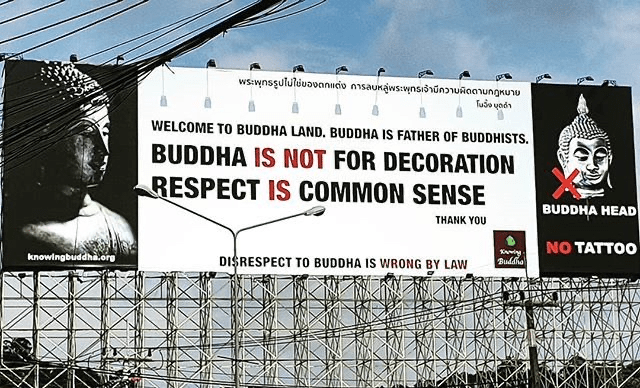
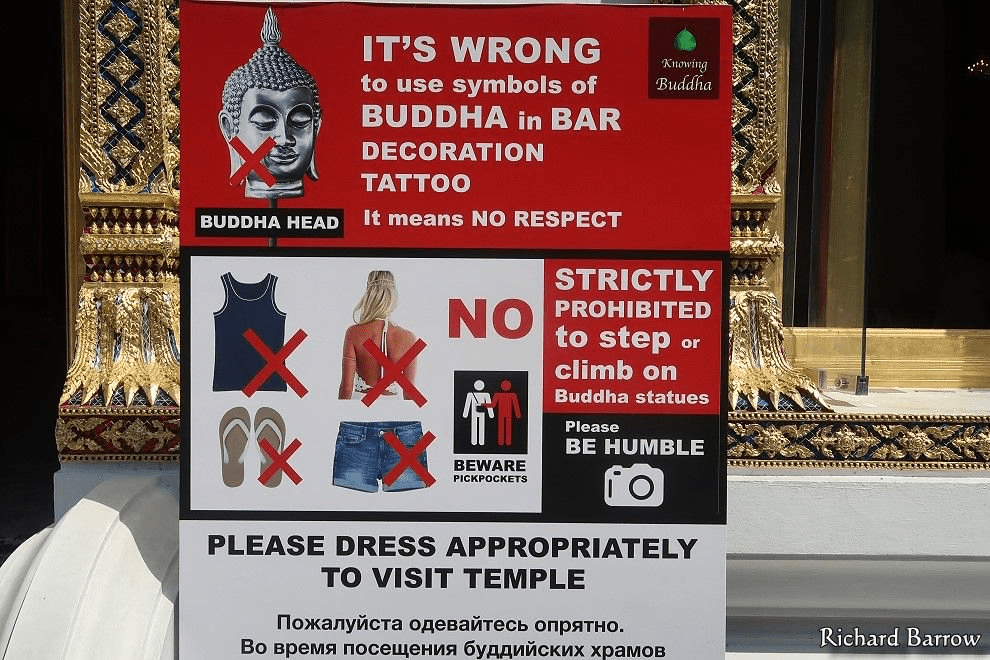
Things change and I’m due back in Denmark earlier than originally planned. In this fortieth installment of the ongoing live series with Wendy Nash inquiring into meditation practice on and off the cushion we delve into the areas of worship, respect and inspiration. How can some activities like pujas (easily) get attributed to worship when they are not actually that? How can we not fall into (blind) worship? Where and how does inspiration and that which deserves respect play into this? And where does all this fit into meditation practice? (This episode was originally spurred primarily by the billboard below)
In Buddhism, and in other religions, access to and dwelling in the heart-tone of bright kamma is occasioned by devotion and recollection. In Buddhism, this is called ‘pūja’ – an act of raising up, and honouring that which is worthy of our respect. The very fact that there are human models and actions that one can feel deep respect for is itself a blessing to take note of: honouring opens and uplifts the heart. With pūja, we attend to a skilful felt meaning, linger there and allow the effects to nourish the citta. From this basis, it’s likely that inclinations or even specific ideas in line with bright kamma will arise. Either that, or the mind easily settles into a state that supports meditation. This is how and why one should linger in any bright kamma.
So in the act of honouring the Buddha, one first opens the heart in respect and brings to mind the meaning of an Awakened One: someone of deep clarity; a speaker of truths that penetrate and bring healing to the human condition; one accomplished in understanding and action – a sage whose teachings can still be tested and put into action. If one has a Buddha-image, it’s something that should be held with respect – one cleans it, illuminates it with light, and offers flowers and incense to it. We place it on an altar, bow to it and chant recollections and teachings.
This is not a mindless activity; we use ritual means and resound words and phrases because this full engagement embodies and strengthens the quality of respect in a way that thinking can’t. With the openness of heart that these attitudes bring, any aspect of the teaching that’s brought to mind goes deeper.The act of offering that begins a pūja is a case in point: offering flowers symbolizes bringing forth virtue, offering light is about bringing forth clarity, and incense does the same for meditative concentration. In this way, pūja introduces the heart to important Dhamma themes.
Pūja is especially helpful when people perform it as a group. Then we are participating in the Dhamma as both the expression and the Way of awakening, as well as in the collective commitment to, and engagement with, that Dhamma. This collective engagement ritualizes the ‘Sangha’, that is, the assembly of disciples. Chanting in a group has a harmonizing, settling effect: sonorous and unhurried, it steadies bodily and mental energies and supports an atmosphere of harmony with fellow practitioners. Tuning in and participating brings us out of ourselves and into a deep resonance with heart-impressions of the sacred. We can be touched by a sense of timeless stability, purpose and beauty. If these intentions, felt senses and recollections are established regularly, we know where to find good heart, how to attend to it, and how to allow ourselves to be uplifted. Such kamma feels bright.
The expressions that are used in recollecting Dhamma are that it is experienced directly (not just as a theory), is of timeless significance, and is accessible and furthering for those who practice it. So that gives us an encouragement to look into what the Buddha taught and modeled: the way to the end of suffering and stress. With this, we recollect aspiration, learning and commitment as our common touchstone, and suffering and ignorance as our common challenge. Then we no longer feel so alone with our difficult mind-states, and we can handle them in a more open and aware way. Recollection of Sangha reminds us that although there is greed, anger and confusion in the human world, there are also people who cultivate a way out of that.
If you use pūja on a regular basis, it aligns you to the ‘Triple Gem’ – Buddha, Dhamma and Sangha – by presenting content in terms of images, ideas and themes, and values and practices that guide the heart. It also occasions acts of steering and composing attention. So pūja works both on what the mind is dealing with, and how it operates.
‘At any time when a disciple of the noble ones is recollecting the Tathāgata … the Dhamma … the Sangha … their own virtues: “[They are] untorn, unbroken, unspotted, unsplattered, liberating, praised by the wise, untarnished, conducive to concentration.” At any time when a disciple of the noble ones is recollecting virtue, his mind is not overcome with passion, not overcome with aversion, not overcome with delusion. His mind heads straight, based on virtue. And when the mind is headed straight, the disciple of the noble ones gains a sense of the goal, gains a sense of the Dhamma, gains joy connected with the Dhamma. In one who is joyful, rapture arises. In one who is rapturous, the body grows calm. One whose body is calmed experiences ease. In one at ease, the mind becomes concentrated.
‘Mahānāma, you should develop this recollection of virtue while you are walking, while you are standing, while you are sitting, while you are lying down, while you are busy at work, while you are resting in your home crowded with children.’
~ (A.11:12; B. BODHI, TRANS.)
. . . . ‘Or is there then, Vāseṭṭha, a single one of the Brahmans up to the seventh generation who has seen Brahmā face to face?’
‘No, indeed, Gotama!’
‘Well then, Vāseṭṭha, those ancient Rishis of the Brahmans versed in the Three Vedas, the authors of the verses, the utterers of the verses, whose ancient form of words so chanted, uttered, or composed, the Brahmans of to-day chant over again or repeat; intoning or reciting exactly as has been intoned or recited—to wit, Aṭṭhaka, Vāmaka, Vāmadeva, Vessāmitta, Yamataggi, Aṅgirasa, Bhāradvāja, Vāsettha, Kassapa, and Bhagu—did even they speak thus, saying: “We know it, we have seen it, where Brahmā is, whence Brahmā is, whither Brahmā is?”’
‘Not so, Gotama!’
‘Then you say, Vāseṭṭha, that none of the Brahmans, or of their teachers, or of their pupils, even up to the seventh generation, has ever seen Brahmā face to face. And that even the Rishis of old, the authors and utterers of the verses, of the ancient form of words which the Brahmans of to-day so carefully intone and recite precisely as they have been handed down—even they did not pretend to know or to have seen where or whence or whither Brahmā is. So that the Brahmans versed in the Three Vedas have forsooth said thus: “What we know not, what we have not seen, to a state of union with that we can show the way, and can say: ‘This is the straight path, this is the direct way which makes for salvation, and leads him, who acts according to it, into a state of union with Brahmā!’”
*There’s naturally an ongoing open call for meditation (related) questions for the (roughly) monthly “Meditation Q & A” either by the various social media means listed; integratingpresence[at]protonmail.com or just showing to type/ask live.*
Background
Regular, current and past visitors to Integrating Presence may recall the monthly series “Ask Us Anything” I did with Denny K Miu from August 2020 until January 2022 — partially including and continuing on with Lydia Grace as co-host for awhile until March 2022.
For a fewmonthsthereafter I did various Insight Timer live events exploring potential new directions and/or a continuation of the Ask Us Anything format while weaving in other related teachings to these events.
Then, after chats with meditation coach Wendy Nash, it became clear to start a new collaboration similar to “Ask Us Anything” simply and clearly called “Meditation Q & A” especially due to the original intent of the Ask Us Anything’s being “discussions about meditation and related topics.”
Audio: Worship, Respect, Inspiration | “Meditation Q & A With Wendy Nash” #40
(Ai assist:) Saw Myint(a 52-year-old woman originally from Myanmar, now living in Sydney, Australia) shares her personal journey of healing from childhood trauma and mental health challenges through practical, non-religious insights inspired by Buddhist teachings.
Saw Myint is a qualified mortgage broker with a background in accounting who has also ventured into property development. She describes her difficult early years under age 10. Living in a comfortable but neglectful family environment in Myanmar, she endured exploitation and mistreatment by an aunt who lived in the household, treating her like a servant (tasks such as washing and ironing) while her parents—often fighting—remained unaware or uninvolved. This unresolved trauma lingered as painful memories and attachments, nearly leading her toward destructive paths, but she avoided them and instead channeled the experience into building resilience, humility, and strong interpersonal skills that later fueled her professional success in business and client relations.
Since her early 20s, Saw Myint has dedicated time, money, skills, and connections to helping others, particularly immigrants and those in need in her home country and Australia. At age 30, she deepened her engagement with Buddhist principles—not as a religion, but as a pragmatic, testable approach to reality emphasizing self-reliance, impermanence (anicca), and the end of stress/dukkha. She credits these insights with her recovery and forgiveness, enabling her to view even the abuse as a paradoxical gift that shaped her positively while rejecting any justification for harm.
Through her charity Wake Up, she promotes mental health awareness, urging people to seek help via helplines and professionals, especially in confusing or grey areas of suffering. She emphasizes promoting accessible support, as those in pain often feel too confused or scared to reach out.
Saw Myint presents two practical steps for well-being, accessible without formal meditation:
The Easy Step: In daily life, observe that good and bad experiences (pleasure, pain, success, loss) arise and pass quickly. What remains is memory, imagination, and attachment—not the events themselves, which are gone. By recognizing impermanence, one avoids clinging to the past or chasing endless satisfaction, fostering balance, reduced stress, and peaceful acceptance—even in facing death, illness, or loss.
The Advanced Step: Drawing on science (mind and body processes moving millions of times per second) and simplified Buddhist psychology, she explains that feelings (good or bad) always lag behind reality—based on what has already ceased. Thus, experiences feel dream-like or illusory: “nothing is real, everything is an image.” Believing this (even without direct meditative insight) shifts behavior toward letting go, presence, and equanimity. . . . .
[Note: I, Josh, forgot to mention it during recording so added in the intro that this perception in the advanced step requires strong ethical commitment to non-harming and must not excuse any misconduct because if there is not strong ethical commitment, and there’s a unbalanced perception of “nothing is real” then this could falsely provide grounds for giving excuses for harming a la “it doesn’t matter, it is not real.” If nothing is real and nothing matters then this could also incentivize lack of right effort because “there’s no point to anything if nothing is real”. This is not what Saw means. I just wanted to put this in here to clear up any potential misunderstandings. I also forgot to mention that I find that belief and disbelief are not necessary when it comes to this. Belief and disbelief can be set aside while picking up these steps to try them out for oneself]
Throughout, Saw Myint stresses human imperfection (“we’re all a little crazy”), the value of feeling emotions without dragging them on, comparing oneself only to one’s past self, and letting go repeatedly for a balanced, happier life. She avoids dogma, aligns teachings with universal science, and expresses a desire to spread these ideas decentralized (inspired by S.N. Goenka’s model) via communities rather than centralized centers.
The episode concludes with her invitation to connect via her Facebook page for direct help or collaboration in teaching others, and a warm reminder: good and bad feelings pass—feel them, then move on and let go.
Takeaways:
Saw emphasizes the importance of mental health awareness.
Buddhism offers practical strategies for personal growth.
Good and bad feelings are temporary and should not be clung to.
Childhood experiences can shape our adult lives significantly.
Helping others is a key part of healing oneself.
Impermanence is a fundamental aspect of life that we must accept.
Self-awareness is crucial for emotional well-being.
Letting go of attachments can lead to a more balanced life.
The mind and body are interconnected in our overall health.
Charity and community support are vital for mental health advocacy.
(Approximate) Chapters:
0:00 Intro & Important Ethics Disclaimer 1:07 Guest Introduction – Saw Mint from Myanmar/Australia 2:25 From Accounting to Mortgage Broking – Life & Charity Path 3:12 Childhood Trauma & Early Mental Health Struggles 11:15 How the Aunt’s Treatment Shaped Her (and the Silver Lining) 13:59 Moving to Australia & Starting to Help Others 15:19 Discovering Buddhism at 30 – Recovery & Forgiveness 16:10 Charity “Wake Up” – Why the Name & Mission 17:49 Impermanence Basics: Good & Bad Things Don’t Last 19:37 Memory, Imagination & Attachment – What’s Really Causing Pain? 20:58 Easy Step 1: Notice Feelings Pass in Daily Life (No Formal Meditation Needed) 22:37 Death Reminder – Wake Up, Everything Changes Anytime 25:04 Advanced Step 2: Science + Buddha – Mind/Body Moving Millions Times/Second 26:51 Everything We Feel Is Already Gone – Dream-Like Reality 29:34 “Nothing Is Real” – Letting Go of the Illusion 33:18 Mind Precedes All Things – Dhammapada Insight 36:05 Practice Tip: Focus on Yourself, Be Present, Compound Effect 39:26 No True Present Moment – Continuous Letting Go 41:30 Feel It, Then Let It Go – We’re Still Human 44:22 Acceptance & Turning Pain into Growth 46:13 How to Connect with Saw Mint & Spread the Teachings 47:56 Final Message: Good & Bad Don’t Last – Just Move On 49:13 Closing & Goodbye
Audio: Wake Up! Nothing Lasts Forever: Saw Myint’s Practical Steps to Release Stress And How Certain Concepts Of Impermanence Can Help Heal Trauma And Build Balance
Unedited transcript via YouTube:
And just a brief disclaimer for this upcoming episode
when she uses this step two technique
that basically kind of arrives at a concept a perception of nothing is real,
everything is an image. Um, she’ll go into detail. I don’t want to spoil too much, but with as with any
of these types of things in spirituality, even though it came up at the time, I didn’t say it that it needs
to be taken with ethics and it’s not an excuse
to behave however you want or do anything you want because nothing is real. It’s all a dream. So, who cares
what I think, say, and do? It doesn’t matter if everything isn’t real like a dream, right? That’s not what we’re
saying. So there needs to be a strong commitment to nonharming in ethics when
we take on a concept or perception like this and you’ll see the relevance as she
explains it into the episode. So thanks and enjoy. Hello. Hey, this is Josh from
Integrating Presence and today I have Saw Mint with me. So how’s it going today?
Good, good, good. The sun is shining over here 11 10 11 a.m. in Sydney,
Australia. Everything good? How’s everyone? Yeah, thanks for having me here, George.
You’re you’re welcome. And so I was from Bur Burma, Myanmar, and where my
meditation teacher happens to be from too. So I’m um glad to to speak with
her. And yeah, I’m um we talked a little bit before about politics. We’re not going to get into that today. So who is
Saw? What kind of work does she do? Okay. So, it’s just a lady.
I am 52 years old. I have a husband and a son and a girl.
The son is 30 years old. The girl is 17. Um, I’m CBA qualified. I got to
Australia when I was 17. Now I’m 52. Um I used to do accounting but uh for the
past 10 years I’ve been mortgage broking. Lately I get involved in property development etc as my way up to
retirement so I could do more charity and um but I’m here to talk about my
passion. Okay. Um it’s all about mental health and um Buddha helped me but I’m
not in distri I’m not in any way distributing religion and but I want to appreciate who helped
me that’s why I mentioned his name um but you know I also suffer
mental health issue when I was young and I was so young under 10 that I didn’t
know how to get help and now I learned enough that I forgive
forget and I got over and that’s why I wanted to help others what I can not
everyone going to resonate with me I understand you know but um I’m here out
there opening up my story to help others okay well great yeah you know so so many
people that get interested in Buddhism you know there’s other reasons but a lot of people I meet is what I call the
ducador right come through the ducador or when things get really um let’s just
say really challenging and there’s no way to deny it anymore. That’s kind of how I did. But like what would you say
um what do you feel comfortable sharing about your story? Um and then how did you address it and maybe how did some of
the Buddhist uh Buddhist teachings um help with that? And uh you know it’s
it’s okay if we do talk about orthodox or modern Buddhism or whatever. But I I
don’t even like to word use the word ism. That’s a a western thing to me. I just look at it as okay here’s um a very
wise being um or even beyond that right it means awake and this is he shared
some things and he said go check it out for yourself. To me it’s just okay this
is reality. this is how I this is um the best um see seeing things for how they
actually are and then the best way and the best way to go about it. That’s how I look at it. Not as a religion, you
know, because there’s nothing to believe. You don’t have to believe anything. Yeah. No, no. See it for yourself. That’s what
he said. You know, like nobody helping you, no God helping
you. We got to help ourself. But he gave us the strategy and we have to practice
to find ourself you know we looking outside you know we finding others every
day but what about you you know and like people who are successful who are busy
also um busy busy but we never look at ourselves so we don’t usually look after
ourselves so we die young etc you know so it’s just a thing about balancing you
still have to live your life etc. Um so in the beginning what you said in my
story I I don’t mind sharing okay I started on social media um about this um
you know Facebook because I’m good at it mortgage broking I do video to add value
people come to me so but then social media they see me as a woman you know
what whatever I say however I look I look I don’t look pretty sexy right but
then people see me as a woman But here I think you guys have the right audience.
So that helped me you know. So yeah and Buddha even said you know um like
he said there’s only sand like the sw and the water in the wall. Okay there’s
a lot of swah in the world but he was only able to help handful of swah you
know. So you know what he teach is not a relating it’s the facts of life but not
everyone will resonate with him now same here you know I’m not saying any method
is right or wrong there’s different way and different people resonate with different thing I’m here out there if
even if I could help one person you know because I needed help and I didn’t know
how to get help and in every develop country there’s a lot of like help life.
I think we should promote more. You know, people who need help, they too
scared to come to you. We have to be like come come you know they may be
adult I was a child you know child don’t naturally know but even if you are adult
you people who are suffering especially mental health and that it’s a very gray area they don’t know how to get help
they’re very confused we got to promote our help you know that’s why I’m here to do what I can okay um also I think we
should promote helpline etc every developed country has all these help lines Right. Um yeah, even Australia,
Australia is very safe with gun etc. all these fightings and can’t I don’t know
what do you call you know m uh yeah I don’t know what they call but uh but there was Sydney famous beach
bondai you know there was a terror attack uh last week a week ago or so um
yeah 15 Jewish people died a lot of people injured um so it’s all to do with
mental health okay uh back to my story okay is it too long you want to cuz you
want me to go on specifically. No, I would just I’ll just echo that. You know, uh well-being, you know, the
um I don’t know if you’re referring to the suta, the handful of leaves, you know, where he he said he took the monks
of the forest, you know, what’s what’s more in my hand. The leaves in my hand are leaves in the forest. Of course there’s the leaves in the forest but in
his hand he said this is but this is I know everything or you know my knowledge is as vast as all the leaves in the
forest but all I teach is this handful of leaves suffering and the end of suffering or duka and the end of dooka
or we could say stress and the end of stress or even unsatisfactoriness and the end of unsatisfactoriness that
gets more subtle but yeah stress people can relate with this right and where do we turn so it this is about well-being
March 2, 2026 Update: Things have changed and I’ve relinquished my retreat slot to a practitioner eager to return to winter retreat and take my place and am in UK for a short time until returning to Denmark
If you only have a chance to listen to this podcast or meditate, please meditate
Audio: Update: On Retreat February and March Plus New Episodes Scheduled During
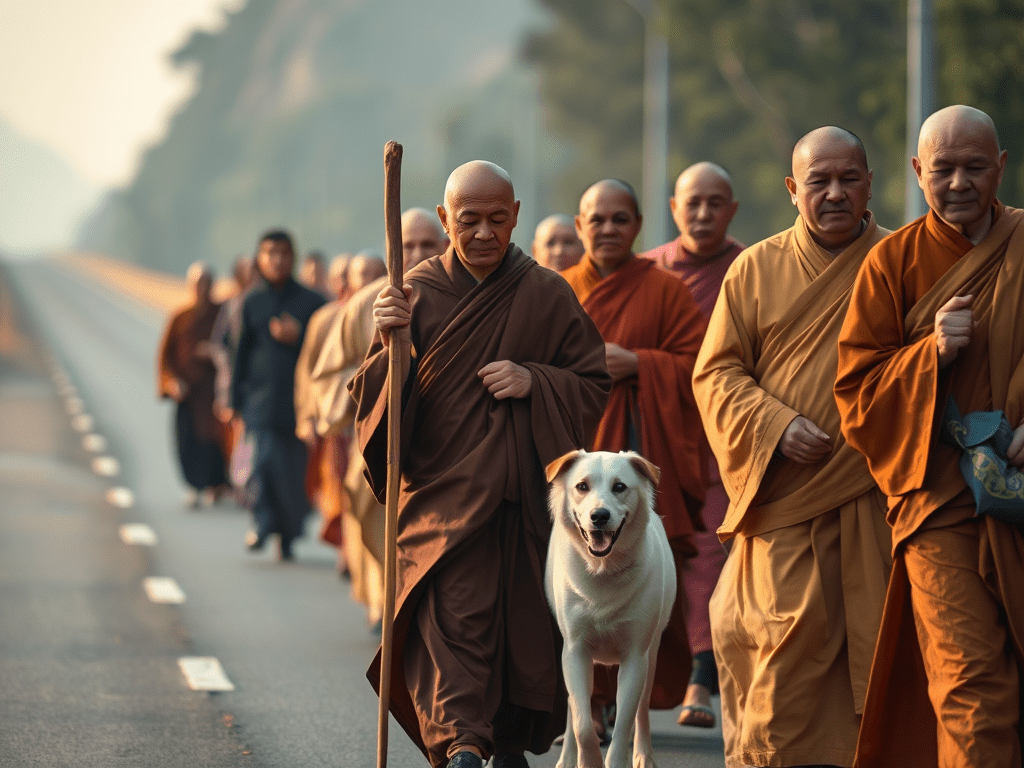
(Ai assist:) In this wide-ranging Dharma conversation and a kind of follow up episode, Asoka and I discuss types of identity and self-exploration (e.g., her ongoing shaved-head practice as a lay eight-precept holder despite no longer living monastically), then pivot to the viral Walk for Peace—a 120-day, ~2,300-mile pilgrimage by ~18–26 Vietnamese/Theravada-aligned Buddhist monastics from Huong Dao Vipassana Bhavana Center in Fort Worth, Texas, to Washington, D.C. (started October 26, 2025; expected end mid-February 2026). Accompanied by rescue dog Aloka, they promote inner peace, compassion, non-harming, and healing through meditative walking (inspired by traditional Thudong but with an engaged-Buddhism focus), drawing thousands of supporters, media attention, and occasional challenges (e.g., confrontations with preachers, a traffic accident injuring monastics).
Key themes include:
Inner peace as the foundation for outer peace (start within via mind training, resolving inner conflict before external action).
The Brahma Viharas (loving-kindness/metta, compassion/karuna, sympathetic joy/mudita, equanimity/upekkha—sometimes reframed as resilience) as tools for relating to self/others and dissolving the three poisons (or poisonous roots of greed, hatred/ill will, delusion).
Non-duality as interdependence, seeing self/other reflections, loosening grasping/stickiness to stories and identity (anatta/non-self), while avoiding pitfalls like “idiot compassion” (over-giving without boundaries/dignity) or spiritual bypassing.
Paradoxes in practice (conventional vs. ultimate reality; restriction vs. freedom; empathy vs. action).
Practical applications: ethical precepts for merit/wishes fulfilled, spatial/situational awareness, breath-focused meditation (e.g., resting in natural awareness at breath pauses), middle way balance (avoid extremes), contentment/freedom from distractions (including digital ones), compassion even for flawed leaders/politicians by separating person from defilements.
Modern concerns: AI/delusion risks, generational tech shifts, accelerating change, need for lineage verification, open inquiry (ehipassiko: come and see for yourself), and preserving authentic Dharma amid impermanence.
Inspirations: Bodhgaya as unifying pilgrimage site across traditions; merit of hearing Dharma; freedom from (vs. freedom to); contentment with little.
“Inner peace is your strength.” “You can only rely on your own inner peace.” “Compassion for others starts with compassion for yourself.” “Freedom from desire leads to true contentment.” “Navigating duality requires a strong foundation in ethical practice.” “The middle way is about finding balance in all aspects of life.” “Self-honesty is a form of self-love.” “Everything can disappear from your life in just one instant.” “The seeds of inner peace grow from consistent practice.”
Chapters:
00:00 Introduction and Identity Exploration 02:28 The Walk for Peace: Purpose and Impact 06:32 Challenges and Encounters on the Journey 09:04 Inner Peace and the Brahma Viharas 13:30 The Role of Politics in Personal Peace 18:42 Non-Duality and Interdependence 28:39 Dissolving Boundaries: Self and Other 32:00 The Dangers of Idiot Compassion 36:24 Embracing Paradoxes in Spirituality 40:44 Understanding Compassion and Boundaries 47:28 Compassion in Politics and Society 51:42 The Importance of Authentic Teachings 57:32 The Significance of Pilgrimage Sites 58:25 Preserving Teachings Amidst Impermanence 01:00:00 Unity in Diversity: Bodhgaya’s Role 01:02:21 Defining Salvation and Inner Peace 01:05:09 Freedom from Distractions 01:07:14 Navigating Modern Challenges with Mindfulness 01:13:58 Building Resilience Through Inner Peace 01:18:18 The Middle Way in Practice
[Note: There will likely be no Meditation Q and A with Wendy Nash for February and March 2026. Perhaps consider it a type of delayed winter holiday break]
In this thirty-ninth installment of the ongoing live series with Wendy Nash inquiring into meditation practice on and off the cushion we delve into Hiri and Ottappa. Hiri is often translated as moral shame, awe and conscience. Ottappa as moral fear, fear of wrongdoing, moral dread, compunction, respect. Together they are the bright Guardians of the World
Wendy and I welcome all to engage with progressing towards clarifying and understanding Hiri and Ottappa from various teachings and from our own lives servings as foundational support for meditation practice and well being. And, in turn, how our meditation practice helps strengthen Hiri and Ottappa.
A list of further importances of Hiri and Ottappa (– although some of these we did not get too –) from our own experience (and beyond) like: the ups and downs involved, challenges, a related dream I recently had, successes, (lack of) progress, inversions / reversals, (balancing out new age) misunderstandings and dismissals, hypocrisy, taboos, contemplation, accountability, getting support, and how Hiri and Ottappa relate to the five precepts.
Please chime in in the comments on what we got right and what we fell short on. Or share rectifying resources. Helping clarify our misunderstands helps us and the audience
Ai summarizes this chat thus followed by takeaways:
Josh Dippold and Wendy Nash explore the concepts of hiri and ottappa in meditation, discussing their significance in ethical behavior and self-perception. They delve into the complexities of goodness, intention, and the impact of shame and guilt on personal growth. The dialogue emphasizes the importance of understanding the craving for self-image and the role of mindfulness in navigating emotions like anger and hurt. Through personal anecdotes and insights, they highlight the need for education and awareness in fostering a compassionate society.
Takeaways
Hiri and Ottappa are essential for ethical meditation practice.
Being good is not solely defined by behaviors.
The craving to see oneself as good can lead to inner conflict.
Intention drives actions, but hiri reflects moral conscience.
Shame and guilt can be both constructive and destructive.
Training behaviors is crucial for ethical living.
Anger often stems from feeling hurt and unsafe.
Humor can provide perspective in difficult situations.
Education is vital for fostering compassion in society.
Meditation helps in processing emotions and reducing regrets.
Bhikkhus, these two bright principles protect the world. What are the two? Shame and fear of wrongdoing. If, bhikkhus, these two bright principles did not protect the world, there would not be discerned respect for mother or maternal aunt or maternal uncle’s wife or a teacher’s wife or the wives of other honoured persons, and the world would have fallen into promiscuity, as with goats, sheep, chickens, pigs, dogs, and jackals. But as these two bright principles protect the world, there is discerned respect for mother … and the wives of other honoured persons.”
Those in whom shame and fear of wrong Are not consistently found Have deviated from the bright root And are led back to birth and death.
But those in whom shame and fear of wrong Are consistently ever present, Peaceful, mature in the holy life, They put an end to renewal of being.
*There’s naturally an ongoing open call for meditation (related) questions for the (roughly) monthly “Meditation Q & A” either by the various social media means listed; integratingpresence[at]protonmail.com or just showing to type/ask live.*
Background
Regular, current and past visitors to Integrating Presence may recall the monthly series “Ask Us Anything” I did with Denny K Miu from August 2020 until January 2022 — partially including and continuing on with Lydia Grace as co-host for awhile until March 2022.
For a fewmonthsthereafter I did various Insight Timer live events exploring potential new directions and/or a continuation of the Ask Us Anything format while weaving in other related teachings to these events.
Then, after chats with meditation coach Wendy Nash, it became clear to start a new collaboration similar to “Ask Us Anything” simply and clearly called “Meditation Q & A” especially due to the original intent of the Ask Us Anything’s being “discussions about meditation and related topics.”
Audio: Hiri and Ottappa | “Meditation Q & A With Wendy Nash” #39
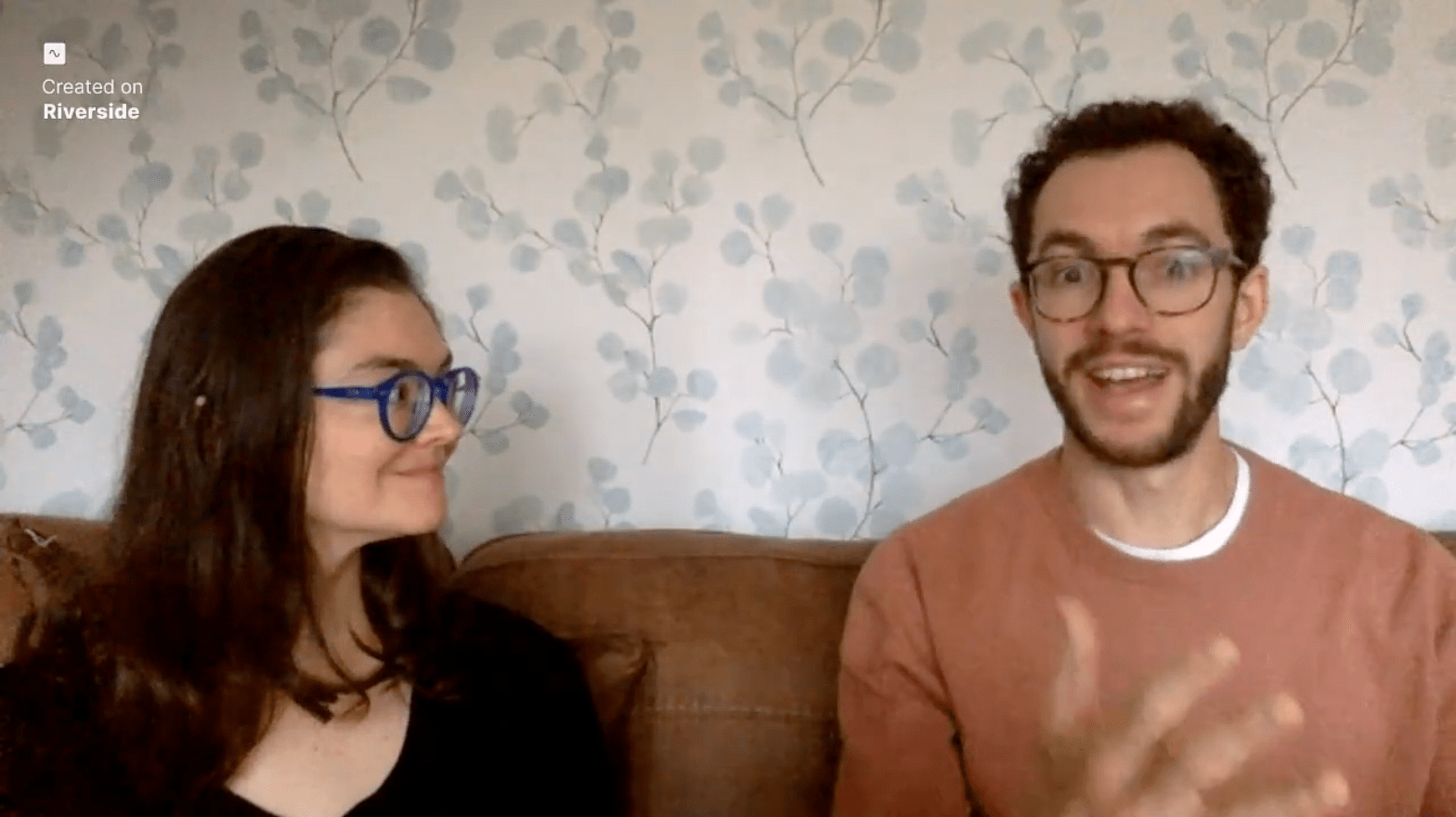
Josh Dippold (00:01.058) Holness, welcome. This is Josh Dippold and from Interskilled Integrating Presence and again, once again, Wendy Nash. Wendy, how are you?
Wendy Nash (00:11.049) I’m in Gabby Gabby country in Queensland in Caboolture and I have a range of fans around me because I need to. also have I got some of those bales of sugarcane mulch and lucerne mulch and everything and they’re actually creating insulation because it gets so hot in this room. It’s got all the heat coming in on that one so that’s what I’m doing there.
Josh Dippold (00:37.859) Well, tell me about the sugar cane mulch. What do you mean? I don’t know what that is because we don’t have sugar in the Midwest. I know what sugar cane is, but what is the mulch? What are you doing with that? What is that?
Wendy Nash (00:47.465) You know, obviously when you’ve got the end at the end of the sugar cane after the sugar has been done Then you’ve got the sugar cane you just cut it down and that gets turned into mulch It’s like a lucerne
Josh Dippold (00:58.904) But inside, so you’re going to plant things inside with it or why is it inside?
Wendy Nash (01:02.665) No, no, no, it’s like these huge packets of lucerne just to create, you know, so imagine you had a straw bale house, but you don’t actually, just, you have the bits of plastic wrapped bales, which a bale is too big a word. It’s a plastic packet really. And just pushed up against the wall, just to kind of cut, because it’s cheap. Yeah, it’s just insulation. So that’s what I’m doing.
Josh Dippold (01:27.743) Insulation, sure. Better than fiberglass. I remember I would get so itchy with that fiberglass insulation.
Wendy Nash (01:37.021) And I just wanted to, I wanted a quick hack because it gets so hot here. So I just wanted something cheap and quick and all the rest. Now, Josh, this is a new format on Riverside and I’m just looking for where is the chat so we can see what people are gonna say.
Josh Dippold (01:53.144) yeah, we did it one time. Let’s see, on the right hand side, it says chat for me at least, but I don’t know if it’s gonna show up for you. studio chat, no, okay. So I guess we need some, no. So I guess you’ll have to bring up the blog post on my website. So should be the first blog post and then the YouTube.
Wendy Nash (02:03.751) Yeah, that’s a studio chat. It doesn’t say, yeah. Host, producers and guests, yeah, no.
Josh Dippold (02:21.76) in bed should be there. And while you’re doing that, I’ll read our description. So yeah, welcome everyone to our 39th meditation Q &A. And this one’s on hiri and otapa. I also say, I also pronounce otapa. I’ve heard it pronounced that way too, but I think otapa is probably better. So bear with me if I pronounce it both ways and I’ll get into what that is in a second here.
Wendy Nash (02:22.117) I’ll… I’ll… I’ll do that.
Okay, cool.
Josh Dippold (02:48.718) And I have this written, in this 39th installment of the ongoing live series with Wendy Nash, inquiring into meditation practice on and off the cushion, we plan to delve into hiri and otapa. Hiri is often translated as moral shame and conscience. Otapa is moral fear, fear of wrongdoing, moral dread, compunction, respect.
Together they are the bright guardians of the world. Wendy and I welcome all to engage with progressing towards clarifying and understanding Haryana Otapa from various teachings and from our own lives serving as foundational support for meditation practice and well-being. And in turn, how our meditation practice helps strengthen Haryana Otapa. We may or may not also explore some further importances of Haryana Otapa from
our own experiences and beyond, like the ups and downs involved, challenges, a related dream I recently had, successes, progress, lack of progress, inversions, reversals, balancing out new age misunderstandings and dismissals, hypocrisy, taboos, accountability, getting support, and how here in Otapa relate to the five precepts. And actually I’m gonna put in…
contemplation in there too. And maybe we’ll talk about how that is involved.
Wendy Nash (04:22.141) You might’ve had a dream, but I had a really good insight, was all about being good.
Josh Dippold (04:29.526) Okay, let’s hear it.
Wendy Nash (04:30.919) the desire to hear, okay, so it was just an insight that I had on Sunday morning. So today it’s Thursday evening. And basically what I realized is that it’s me who desires to see myself as good.
And that it’s actually my own desire to see myself as good that is triggering the whole conversation about am I a good person? Because I’m just always wanting to see myself as good. And then I’m going, yeah, but I’m not good, not good, I’m not good, da da da. But it’s actually only me who seeing that as that. So what I then realized is that it’s a kind of a lie that I was telling myself. You can only be lied to if you have a
an unconscious desire to believe the lie. You cannot be lied to once you’ve seen through the lie, once you’ve seen it, you know, you can’t be lied to so you have to be complicit in the lie. And then what I realized is that underneath that desire, so a couple of things about that, one is if it’s me who seeks, who wants to see myself as good, then what I saw is that
Actually, being good is nothing to do with the behaviors you do. So for instance, I went down just now before I came on to water the garden and I can water the garden at the end of the day and the consequence of doing that is that the plants feel healthier. It’s got nothing to do with whether I’m a good person or a bad person, that is irrelevant to whether the water, whether the garden gets watered.
So that was very interesting to just go, oh, this is straight cause and effect. Everything is just cause and effect, but actually to see that and to go, oh, the whole being good thing. Well, that’s just a load of rubbish. It’s got nothing to do with anything. And it solves that question about when does a good person who does bad things become a bad person? Because it’s all about the consequences. So it’s about cause and effect.
Wendy Nash (06:48.593) Anyway, and so I’m almost done. And then underneath that is actually hurt. I feel hurt. And then the other side of that, because I feel hurt, I actually want to hurt somebody back. Now I haven’t fully, fully unpacked it, but I thought that was a really cool one for Hirie and Otapa because what I noticed in reading the notes is that I had the outer awareness of consequences.
the knowing if I do this, harm will follow for me or for others. It includes regard for others for cause and effect for the web you’re part of, not fear-based guilt, but sober clarity. Otapa is pausing because you see where this leads. So that was 100 % the insight that I had. Whereas hiri, which is moral conscience, which is an inner sense of integrity, that
That one was nowhere to be seen. So it really made me think. You have to be good-hearted or kind-hearted to think, actually, I don’t want to shaft people. So that’s the end of my little drama and insight. So there you go.
Josh Dippold (08:10.606) No, this is great. I’d like to jump into this and not picking on Wendy, but just kind of use this as a general thing. what struck me is this notion of selfing in this. if there’s just kind of goodness or acting out of goodness instead of
like whatever, but once there’s an I, I want to be seen as, then there’s like conceit involved, right? But as soon as we remove kind of the I mean mine, you know, then there’s just kind of the verb, right? There’s just kind of action from the heart is what I got. like, yeah, let’s unpack this a little bit. Do you see the selfing involved in this?
you know, once there’s kind of like a less of a selfless nature. But then, you know, I have to say, well, there can also be kind of quote unquote evil that’s selfless too, that people are just acting on, you know.
probably unskillful, unwholesome. this is also, like this, you know, when we say good and bad, that means a lot of different things to a lot of different people, right? So I would say if we, it seems, if we reframe it as to, okay, what is skillful that’s gonna bring about the consequences that are gonna be of benefit for me and those around me, instead of I’m a good boy or I’m a bad boy kind of thing. You know what I mean? Yeah.
(Ai assist:) Enter Laura Geller and Willie Kunert—a married couple who met at Oberlin College almost 20 years ago, began meditating together as undergrads, lived in Southeast Asian monasteries, and now combine deep Buddhist practice with psychotherapy.
Laura (an assistant teacher under Beth Upton in the Pa-Auk tradition) and Willie (hospice chaplain, grief therapist) share their unlikely entries into the Dharma, their travels and practice in Vietnam, Laos, Cambodia and Thailand, the profound (and sometimes challenging) practice of ānāpānasati, pairing loving-kindness with the breath, Pa-Auk’s systematic depth, complete approach, the seduction (and pitfalls) of “leveling up,” and how Internal Family Systems (parts work) beautifully complements insight practice.
Also: long-term practice as partners and parents, working with mortality and grief, and their joint therapy practice MetaMind.
Suggested for anyone interested in householder practice, blending Dharma + therapy, making the breath genuinely joyful, or going deep in the Pa-Auk lineage.
00:00 – Intro & Welcome
00:54 – Who are Laura Geller & Willie Kunert?
02:07 – How both stumbled into meditation in college
05:50 – Jacques Rutzky – the teacher who looked genuinely happy
06:54 – Mortality, parental loss, and the spark of Dharma
08:07 – Josh’s entry via Beat Generation literature
10:22 – Traveling & practicing in Southeast Asia (Vietnam, Laos, Cambodia, Thailand)
14:08 – First Goenka course + finding a quiet forest monastery near Chiang Mai
15:08 – Shout-out to Jacques Rutzky episode https://www.youtube.com/watch?v=KyoK_VroQKM
17:14 – The full spectrum of Goenka experiences
18:00 – Laura as Beth Upton assistant teacher – the real Pa-Auk system
20:04 – It’s not just “hard jhanas” – why the training feels so complete
23:23 – Tunnel vision & the danger of “leveling up”
25:06 – Willie’s current practice with Jacques + lasting appreciation for Pa-Auk
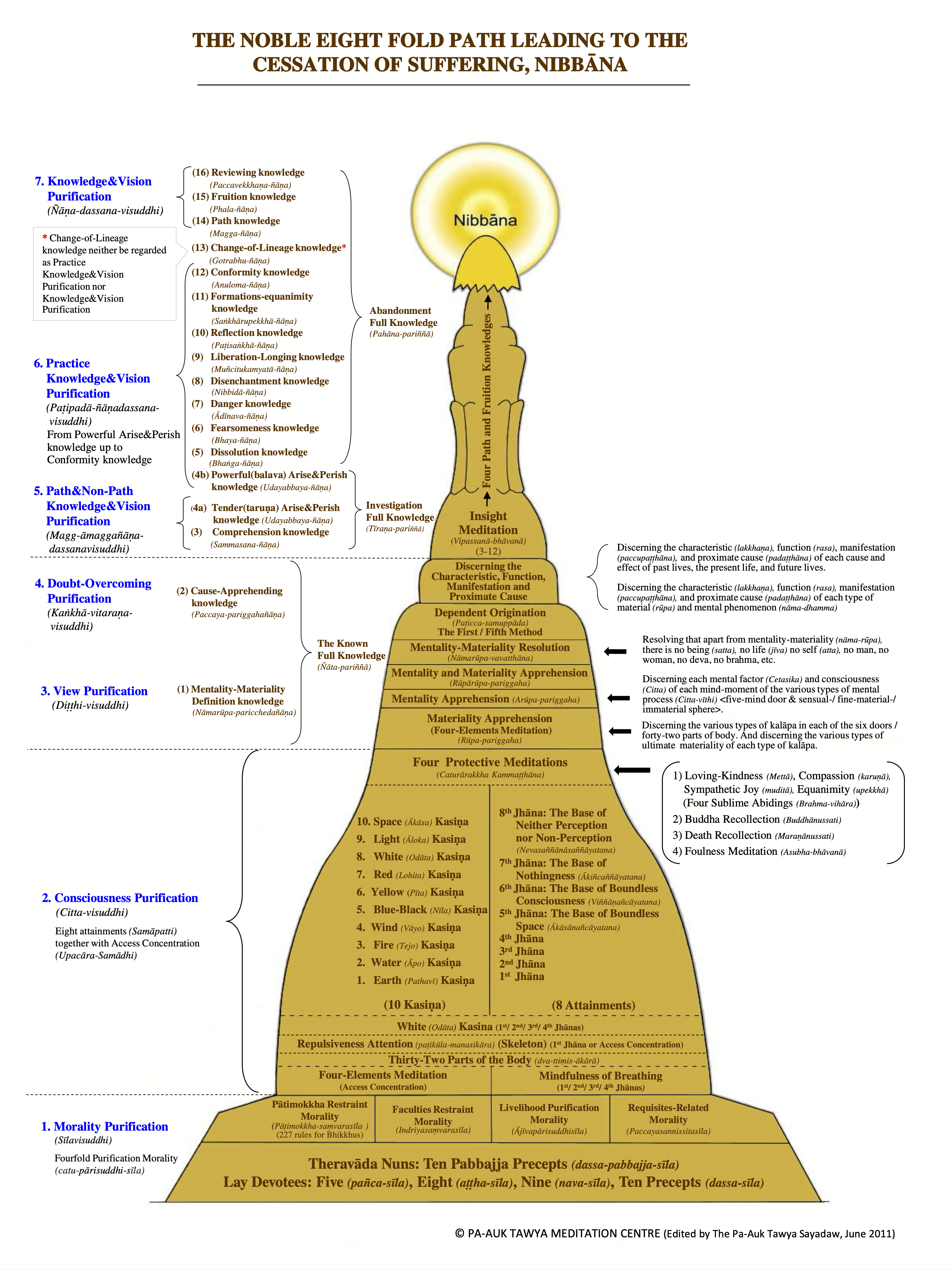
28:31 – The (in)famous Pa-Auk stupa diagram story
31:30 – Ānāpānasati deep dive – how we actually practice
32:00 – Bhante Guṇaratana + Ajahn Brahm influence: metta + beautiful breath
33:06 – “The breath was hard for me too”
34:40 – “So delicate” & breath like wind blowing
39:20 – MetaMind Therapy – IFS/parts work meets Dharma (Laura Geller & Willie Kunert)
41:13 – Willie’s specialty: grief, mortality & spiritual companionship
42:46 – Final messages: Enjoy the breath + it’s okay to change teachers
43:35 – Goodbye & thanks
Audio: Ānāpānasati with Heart, Parts Work & Grief | Ānāpānasati Series With Laura Geller & Willie Kunert
Here’s an ai assisted, cleaned up transcript:
Josh: Wholeness. Welcome. This is Josh of Integrating Presence and today I have Willie and Laura with me — Laura Geller and Willie Kunert. Hey guys!
Laura & Willie: Hey! Hello!
Josh: I’m happy to talk to you guys because we’ve practiced together in meditation groups. This is part of the Ānāpāna series, but I have a habit of covering all kinds of different topics, so it won’t be the only thing. For those who don’t know, who are you guys and what kind of work do you do?
Laura: We met in various meditation communities, a couple of different ones, mostly in the Pa-Auk lineage with teachers we’ve been working with the past few years. That takes up a good chunk of my time — many hours a week in meditation of various kinds. Professionally I work as a counselor/therapist, licensed independent social worker, and I specialize in Internal Family Systems and parts work. We also have an eight-year-old daughter named Felicity.
Willie: Laura and I met at Oberlin College almost twenty years ago. We started meditating together as sophomores/juniors in college, got especially interested in Buddhism a few years after that, and had the privilege of spending several months in Southeast Asia — Vietnam, Laos, Cambodia, Thailand — seeing Buddhism where it came from and spending time in monasteries. I lived in Zen practice centers for a while in the U.S., then practiced in the Pa-Auk tradition with Beth Upton and Brother Win. Professionally I worked for many years as a hospice chaplain and now we have a private practice together, MetaMind Therapy, where I focus more on grief counseling and individual clients.
Josh: I’m always interested — when I meet people in the Dharma — how did you first get exposed to it?
Laura: The first spark for me was working at a summer program for high school youth in Missouri. A colleague led guided meditations and it sparked this interest in something deeper, in the spiritual realm. I hadn’t been interested in spirituality at all before that. I got into Sufi poetry, yoga nidra, and then back at college we ended up meeting Jacques Rudski, who became our meditation teacher. Slowly over time I felt more and more drawn to the path of letting go. He was the first person over fifty I had met who seemed genuinely happy, and I thought, “I want to go in that direction.”
Willie: My parents got interested in Buddhism after both of their parents died close to each other. As a middle-schooler my mom got me to meditate with her a few times — I found it mostly torturous, but one sit something happened. In college I was really struggling with depression and anxiety. Meditation became something I turned to — not exactly as a coping strategy, more wanting to escape — but it produced spiritual experiences that changed the direction of my life. After college we went to Southeast Asia, lived in monasteries, and that’s when I really wanted to dig into the Buddhist thing in particular.
Josh: (shares his own story via the Beat poets and immediate relief in 2012)
Josh: Tell us about your time in Asia.
Willie & Laura: We spent several months in Vietnam, Laos, Cambodia, Thailand about eleven years ago, and another month this past fall in Thailand. One funny thing — when we first arrived in Vietnam and saw people bowing and praying for wealth and business success I thought, “This is what I hate about religion!” Now I’m more accepting — that’s just humans. We ended up at a monastery in the mountains outside Hanoi, waking at 3 a.m., practicing with the community — our first real retreat. From there we did a Goenka course in Cambodia, then several months at a quiet forest monastery outside Chiang Mai recommended by Jack Arpen. We had lots of access to the abbot and that’s where we really sank our teeth into practice.
Josh: You’re not casual spiritual tourists. Laura is one of Beth Upton’s assistant teachers in the Pa-Auk lineage. Can you give us the nutshell on why this training feels so deep and complete?
Laura: Most people on Reddit think Pa-Auk = hard jhanas. Yes, there’s a lot of time building purity of mind, but it’s all in service of vipassanā and the specific discernments. It’s wild how detailed and systematic it is. For someone like me who is not naturally systematic, I was daunted for a long time, but when I finally dove in I kept being blown away. The teachings on dependent origination, the five aggregates — everything the Buddha talked about comes alive. At the same time, it’s easy to get tunnel vision: “If I just get the next jhana, the next object…” We have to remember that’s not the point.
Willie: I practiced several years in Pa-Auk with Beth and Brother Win and it opened things nothing else had — especially the Brahma-vihāras. Now I mostly practice with Jacques again, but I still have huge appreciation for the system. It feels complete, yet you don’t have to do every single piece to awaken.
Josh: Let’s talk ānāpānasati.
Laura: It’s been my main practice as long as I can remember. I was very influenced by Bhante Guṇaratana and Ajahn Brahm — pairing metta with the breath, cultivating ease, relaxation, joy, loving-kindness first, then bringing that happy mind to the breath so the breath itself becomes beautiful.
Willie: The breath has actually been one of the harder objects for me. This summer Brother Win told me, “The breath was hard for me too.” That was incredibly validating! Two things that helped: one teacher saying “so delicate… let the breath be so delicate,” and realizing I can experience breath like wind blowing — no need to control it.
Josh: We close with their therapy practice.
Laura & Willie: Our practice is called MetaMind Therapy — metamindtherapy.com. We both use Internal Family Systems / parts work, which lines up beautifully with working with the hindrances. Willie specializes in grief, death & dying, and spiritual companionship. Laura does individual and group psychotherapy and deeper coaching for meditators. Many clients have no Buddhist background, but the work is the same: offering care, attention, and loving-kindness to the parts of ourselves we usually reject.
Laura (closing): If there’s one thing I’d encourage listeners: experiment with ways to genuinely enjoy the breath.
Willie (closing): It’s okay to have different teachers at different times in our practice. Keep cultivating the beautiful mind states however they arise.
In this thirty-eighth installment of the ongoing live series with Wendy Nash inquiring into meditation practice on and off the cushion we to delve into the influence of language in meditation. Recently a podcast guest mentioned a turning point when a teacher described the breath as: oh so delicate. There’s also an exercise some insight teachers do of getting into a meditative state and then reading off a list of words that are quite emotionally charged both positive and negative and then noticing the effects when dropped into meditation. (We do something like this with various words related to acceptance.) And if we can notice how impactful this is in meditation, how does that translate off the cushion? Also, how can language hinder and how can it help liberate? All this and more
0:00 – Introduction and Weather Chat
1:38 – Topic Introduction: The Influence of Language in Meditation
2:58 – Onomatopoeia and How Words Sound in Different Languages
6:26 – Language and Thought in Meditation
8:30 – Auditory vs Visual Thinking and Word Choice in Instructions
10:57 – Precision in Meditation Language and Over-Reliance on Words
13:53 – Guided Exercise: Dropping Acceptance Words into Meditation
16:32 – Discussion on the Acceptance Words Exercise
21:10 – Radical Acceptance and Wisdom in Arising Thoughts
49:51 – Meditation Helping with Reactions and Regret
51:15 – Internal Self-Talk and Judgment
54:55 – Moral Shame, Self-Deprecation, and Humble Brags
59:20 – Wrapping Up: Kindness and Christmas Advice
1:00:21 – Goodbye
Ai summarizes it thus:
1. **The Power of Words in Meditation Instruction**
– Certain phrases from teachers can create breakthroughs (e.g., describing the breath as “oh so delicate”).
– Subtle differences in wording matter: “observe the breath” feels distancing and dualistic, while “notice the breath” feels more open and direct.
– Historical translations of Pali terms (e.g., “enlightenment”) carry outdated Victorian-era cultural baggage that can mislead modern practitioners.
2. **Language as Sensory and Bodily Experience**
– Words land differently depending on the person: Wendy is highly auditory; others are more visual or kinesthetic.
– Onomatopoeia and sound symbolism show how some words mimic real-world sounds or sensations and affect the body more vividly.
– Reference to a research article: certain words (especially vivid, concrete, or emotionally charged ones) are more “surprising,” grab attention, and stick in memory longer.
Josh guides a short meditation, rapidly reading a list of gentle acceptance-oriented words/phrases (e.g., allow, permit, embrace, soften, surrender, tenderness, “it is like this,” “this belongs”).
– Wendy notes varied reactions: “allow” feels effortless and empowering; “embrace” or “surrender” can feel forced or trigger personal associations (e.g., childhood memory of unwanted physical affection).
– Highlights how the same instruction lands uniquely for each person and can reveal resistance, memories, or personality traits.
4. **Language Off the Cushion: Daily Life and Relationships**
– Harsh, passive-aggressive, or veiled toxic speech can be more damaging than overtly angry words.
– Discussion of “wise speech” (right speech): avoiding harm, gossip, deception, and “acting with a twist.”
– Gender observations on meanness: women sometimes use subtle, relational aggression; men more direct/physical.
– The importance of honesty as the foundation; lying (even to oneself) removes safeguards.
– Self-talk mirrors external speech: judgmental inner dialogue spills into how we treat others.
5. **Meditation as a Safe Space**
– The cushion amplifies sensitivity to language and emotion, making it easier to notice habitual patterns, reactivity, and inner narratives.
– Meditation creates space for response rather than reaction, revealing unconscious motivations and reducing self-inflicted drama.
– Keeping precepts (especially wise speech) reduces mental “gunk” that arises during sits.
6. **Closing Reflections**
– Shame can be healthy when it signals ethical awareness rather than self-beating.
– Humble-bragging and false humility are pitfalls; sincerity and kindness are the goal.
– Final holiday advice: be kind, give yourself slack, avoid excess alcohol, and choose words that bring peace.
Overall, the conversation emphasizes that language is not neutral—it shapes perception, emotion, bodily sensation, relationships, and meditative depth. Mindful attention to words (in instructions, self-talk, and daily speech) can liberate, while careless or harmful language hinders both practice and life. The tone is warm, honest, and practical, blending personal stories, Buddhist insight, and linguistic research.
*There’s naturally an ongoing open call for meditation (related) questions for the (roughly) monthly “Meditation Q & A” either by the various social media means listed; integratingpresence[at]protonmail.com or just showing to type/ask live.*
Background
Regular, current and past visitors to Integrating Presence may recall the monthly series “Ask Us Anything” I did with Denny K Miu from August 2020 until January 2022 — partially including and continuing on with Lydia Grace as co-host for awhile until March 2022.
For a fewmonthsthereafter I did various Insight Timer live events exploring potential new directions and/or a continuation of the Ask Us Anything format while weaving in other related teachings to these events.
Then, after chats with meditation coach Wendy Nash, it became clear to start a new collaboration similar to “Ask Us Anything” simply and clearly called “Meditation Q & A” especially due to the original intent of the Ask Us Anything’s being “discussions about meditation and related topics.”
Audio: Language | “Meditation Q & A With Wendy Nash” #38
In this fourth episode of the anapanasati series Integrating Presence welcomes meditation teacher Jacques Rutzky for a deep, personal conversation on mindfulness of breathing (anapanasati) and its role in daily life. Jacques shares his 50+ year journey into meditation—starting at age 16 in Detroit, discovering the Pali Canon, a pivotal 1974 retreat with Joseph Goldstein, and 45 years under Thai teacher Dhiravamsa (formerly Phra Bhikkhu Dhammasuddhi). He emphasizes practical, individualized breath practice over rigid methods, adapting to where students naturally feel the breath (nose, chest, abdomen). The discussion explores modern challenges like screen addiction and fragmented attention, hindrances (craving, aversion, etc.), and using breath as both anchor and refuge. Jacques advocates experimentation, slowing down, and viewing the mind as one tool among many—not the only one.
0:00 – Intro: Mind as a Tool, Not the Only One
0:53 – Guest Intro: Who is Jacques Rusky?
1:58 – Jacques’ Background: From Psychotherapy to Meditation Teaching
3:19 – How Josh Discovered Jacques via Students
4:12 – Preference for Deep, Personal Teacher-Student Connections
7:44 – Jacques’ Early Dharma Path (Age 16, Pali Canon, No Teacher)
9:05 – First Retreat (1974 with Joseph Goldstein)
11:17 – Meeting Teacher Dhiravamsa: Hitchhiking, Cooking, 45-Year Bond
20:13 – Dhiravamsa’s Lineage: Thai Theravada, Forest vs. Scholarly Traditions
26:34 – Anapanasati: Why Breath? Always Available, No Need to Create
28:39 – Teaching Breath: Individualize Where You Feel It (Nose/Chest/Abdomen)
30:50 – Breath as Concentration + Insight Tool; Refuge from Chaos
33:29 – Modern Challenges: Screen Addiction, Stimulation Overload


















 Integrating Presence