Trauma, Teachings And Textual Interpretations: Buddhism And Beyond With Randi Green (Part 1)

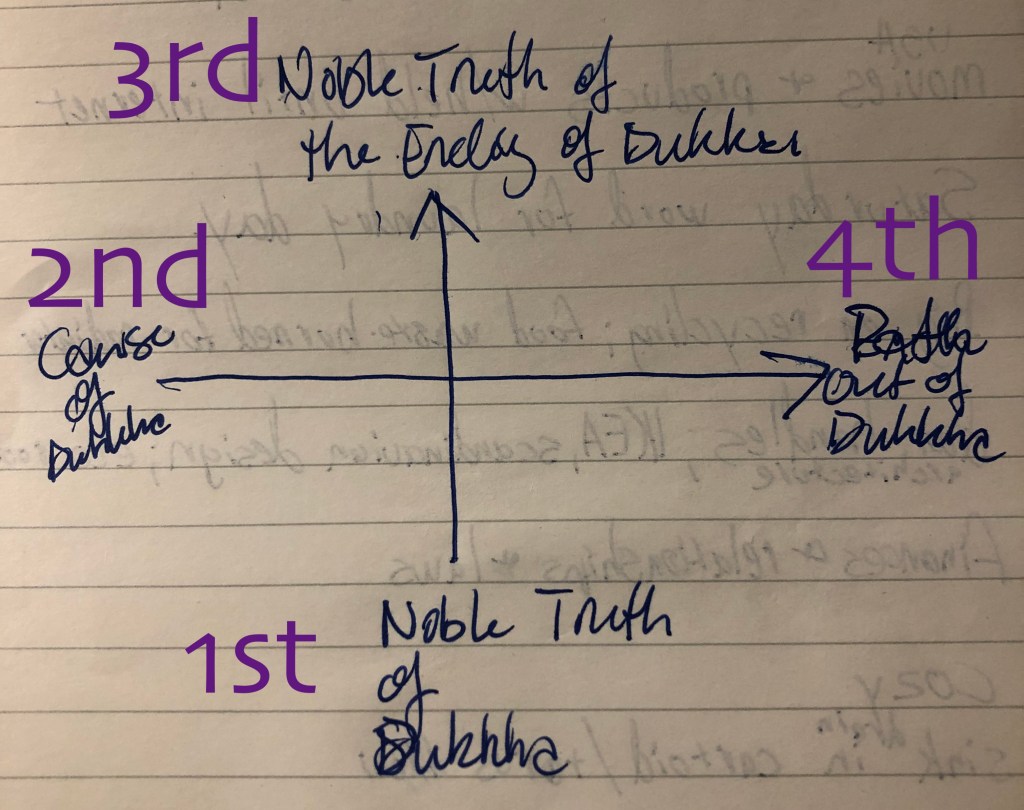
At the beginning of February 2023 Randi Green and I did a couple more recordings on somewhat Buddhist related topics in addition to our chat New Inner Domain Races and New Intervention Protocol. Besides the topics listed in the title this first one starts off addressing dukkha, but we really wait until the second chat (part 2) to dive into dukkha more deeply and from more angles. In this one, amongst other things there’s also (mentions of):
  • (My) various disclaimers and approaches including inviting corrections
  • Parallels and comparisons to the Christian gospels
  • Rajas
  • Nagas
  • Essence
  • Importance of and methods for studying texts including:
    • etymology
    • word roots
    • syntax
    • context
    • various meanings
    • cross-referencing
    • changing definitions
  • being turned into an “-ism”
  • truth and reality
  • avoidance and non-avoidance
  • various facets of trauma and those qualifications for working with it
  • poem Autobiography in Five Short Chapters by Portia Nelson:

Chapter I

I walk down the street.
There is a deep hole in the sidewalk.
I fall in.
I am lost… I am hopeless.
It isn’t my fault.
It takes forever to find a way out.

Chapter II

I walk down the same street.
There is a deep hole in the sidewalk.
I pretend I don’t see it.
I fall in again.
I can’t believe I am in this same place.
But it isn’t my fault.
It still takes a long time to get out.

Chapter III

I walk down the same street.
There is a deep hole in the sidewalk.
I see it there.
I still fall in… it’s a habit… but,
my eyes are open.
I know where I am.
It is my fault.
I get out immediately.

Chapter IV

I walk down the same street.
There is a deep hole in the sidewalk.
I walk around it.

Chapter V

I walk down another street.

poem Autobiography in Five Short Chapters by Portia Nelson
  • Buddha leaving his wife and child
  • The Buddha’s teachers and (fellow) practitioners
  • Who the Buddha taught and how he did it
  • Mendicant lifestyle
  • Authenticity of the Buddhist texts including accuracy, errors when copying texts
  • Oral teaching traditions
  • No native Pali speakers
  • Lack of consensus of meaning on some Pali words
  • Time period differences
  • Kamma, (fruits of) past actions [12 types of kamma]
  • Randi’s YouTube series My Take on Buddhism
  • Value of meditation, contemplation, loving-kindness, compassion, equanimity and other Buddhist practices
  • Call to directly investigate Buddhist cosmos today
  • A specific symbol appearing in the light in the center of the head
  • Various Buddhist cosmological beings
  • Where and how did the Buddha gain all his knowledge and wisdom?
  • Levels (or rings) of the Buddha’s entourage and followers: his attendant, chief disciples, monks of the order, lay practitioners and commoners

For more information regarding the work of Randi Green visit:


Some of Randi’s YouTube series:


Audio: Trauma, Teachings And Textual Interpretations: Buddhism And Beyond With Randi Green (Part 1)

Or listen via Insight Timer (app or website)


Continue reading “Trauma, Teachings And Textual Interpretations: Buddhism And Beyond With Randi Green (Part 1)”

Love And Brahmaviharas | Feb 9, 2023 “Meditation Q & A With Wendy Nash” #05


In this fifth installment of the ongoing live series with Wendy Nash inquiring into meditation practice on and off the cushion we explored some of what can skillfully be conveyed about love, and/or more specifically, the four sublime expression of love aka the Brahmaviharas. It is after all February which is often associated with love (or at least the current day commercial holiday Valentines Day). And due to no Q & A in January we’re doing two in February.

We chat about what we’ve picked up from others in addition to our own current understandings, views, practices, and application of these four immeasurables — loving-kindness, compassion, joy/rejoicing/vicarious joy, and equanimity/peace. We also explore related avenues like how the Buddha is said to have taught forrest dwelling monks loving-kindness for protection, (non-)forgiveness, gratitude, hardness, armoring, pitfalls of Valentines Day, how noticing things in others can unveil blindspots in how we view loved ones, etc.


Wendy mentions this movie

*There’s naturally an ongoing open call for meditation (related) questions for the (roughly) monthly “Meditation Q & A” either by the various social media means listed; integratingpresence[at]protonmail.com or Wisdom App to type/ask live.*


(Or other ways to) join these Q & A’s when they happen live:


Background

Regular, current and past visitors to Integrating Presence may recall the monthly series “Ask Us Anything” I did with Denny K Miu from August 2020 until January 2022 — partially including and continuing on with Lydia Grace as co-host for awhile until March 2022.

For a few months thereafter I did various Insight Timer live events exploring potential new directions and/or a continuation of the Ask Us Anything format while weaving in other related teachings to these events.

Then, after chats with meditation coach Wendy Nash, it became clear to start a new collaboration similar to “Ask Us Anything” simply and clearly called “Meditation Q & A” especially due to the original intent of the Ask Us Anything’s being “discussions about meditation and related topics.”


Past chats with Wendy:


Audio: Love & Brahmaviharas | Feb 9, 2023 “Meditation Q & A With Wendy Nash” #05

Or listen via Insight Timer (app or website)


Continue reading “Love And Brahmaviharas | Feb 9, 2023 “Meditation Q & A With Wendy Nash” #05”

Translations And Musings On The Last Words Of The Buddha

Not due to its prevalence of distortion, but due to the number of misattributed Buddha quotes (to name one reason in particular) it seems prudent to take a closer look at perhaps one of the most important utterances of the historical Buddha: the Tathāgata’s last words passed down in Pali as:

“vayadhammā saṅkhārā appamādena sampādethā”

Collected here are various translations, similar utterances, suttas, passages, articles and the like exploring what is my own hobbled together translation at the moment:

“Conditions and all compounded things break apart and disappoint. Reach successful consummation through care and heedfulness”


Translations of ‘vayadhammā saṅkhārā appamādena sampādethā

“Conditions are subject to decay. Work out your salvation with care.” (A slight yet significant change from “Work out your salvation with diligence.”  — Rhys Davids)

The Buddha’s Last Word: Care (appamāda)

“All compounded things, all experiences (mental and physical), all phenomena by their very nature decay and die, and are disappointing: it is through being not-blind-drunk on, obsessed by, or infatuated with, the objects of the senses that you succeed in awakening, or obtain liberation.”

Or more succinctly:

“All things are disappointing, [it is] through vigilance [that] you succeed.”

https://www.jayarava.org/buddhas-last-words.html

‘His final sentence was appamadena sampadetha: Reach consummation through heedfulness’

https://www.dhammatalks.org/Archive/Writings/CrossIndexed/Uncollected/MiscEssays/TheBuddha’sLastWord.pdf

Then the Buddha said to the mendicants:
Atha kho bhagavā bhikkhū āmantesi:

“Come now, mendicants, I say to you all:
“handa dāni, bhikkhave, āmantayāmi vo,

‘Conditions fall apart. Persist with diligence.’”
vayadhammā saṅkhārā appamādena sampādethā”ti.

These were the Realized One’s last words.
Ayaṁ tathāgatassa pacchimā vācā.

Long Discourses 16
Dīgha Nikāya 16
The Great Discourse on the Buddha’s Extinguishment
Mahāparinibbānasutta

Confusions with: lamp, light, truth, island, refuge?

Maybe it is just me, but until I looked all this up I was unsure whether the general notion above were the last words or there were somehow (also) mentions of lamp, light, truth, island and/or refuge as some of the quotes below show up from time to time in spiritual circles.

Turns out most of these translated word choices actually seem to be derived from the same textural source the Mahā-Parinibbāna Sutta (Dīgha Nikāya 16) but are spoken to Ananda before the last words:

So Ānanda, live as your own island, your own refuge, with no other refuge. Let the teaching be your island and your refuge, with no other refuge. Tasmātihānanda, attadīpā viharatha attasaraṇā anaññasaraṇā, dhammadīpā dhammasaraṇā anaññasaraṇā.

And how does a mendicant do this Kathañcānanda, bhikkhu attadīpo viharati attasaraṇo anaññasaraṇo, dhammadīpo dhammasaraṇo anaññasaraṇo?

It’s when a mendicant meditates by observing an aspect of the body—keen, aware, and mindful, rid of desire and aversion for the world. Idhānanda, bhikkhu kāye kāyānupassī viharati atāpī sampajāno satimā, vineyya loke abhijjhādomanassaṁ.

They meditate observing an aspect of feelings
Vedanāsu …pe…
mind …
citte …pe…
principles—keen, aware, and mindful, rid of desire and aversion for the world. dhammesu dhammānupassī viharati ātāpī sampajāno satimā, vineyya loke abhijjhādomanassaṁ.

That’s how a mendicant is their own island, their own refuge, with no other refuge. That’s how the teaching is their island and their refuge, with no other refuge.
Evaṁ kho, ānanda, bhikkhu attadīpo viharati attasaraṇo anaññasaraṇo, dhammadīpo dhammasaraṇo anaññasaraṇo.

Whether now or after I have passed, any who shall live as their own island, their own refuge, with no other refuge; with the teaching as their island and their refuge, with no other refuge—those mendicants of mine who want to train shall be among the best of the best.” Ye hi keci, ānanda, etarahi vā mama vā accayena attadīpā viharissanti attasaraṇā anaññasaraṇā, dhammadīpā dhammasaraṇā anaññasaraṇā, tamatagge me te, ānanda, bhikkhū bhavissanti ye keci sikkhākāmā”ti.


[definition(s) for the compounded dhamma saraṇa:]

dhamma masculine (& neuter)

  1. how the world of experience works, the processes by which it works and is explained (especially as formulated in cattāri ariyasaccānī and paṭiccasamuppāda), and the possibility and way of transcending it, as understood by the Buddha and taught by him (so that knowledge and understanding of it might bring awakening, arhantship, to others)
  2. the (stages to) freedom from the world of experience, culminating in nibbāna
  3. (singular) the behavior, conduct, practice required to realize and understand the way the world of experience works; the way to arahatship
  4. (plural) a quality or element of behavior or practice according to the Buddha’s dhamma; a constituent of prescribed practice; an element of the teaching; a doctrine; appropriate and beneficial practice
  5. the substance of the teaching of the Buddha; the teaching as collected in the canon; the texts
  6. a constituent of experience; an aspect or quality of existence; physical sensation; a mental state or quality (good or bad); (sometimes merely) thing, phenomenon, matter; the nonindependent, conditioned constituents of processes and events, progressively more and more minutely analyzed into fundamental types of event or fundamental regularities
  7. mental constructs, concepts, ideas, what is to be cognized by the mind, that which is the object of mental activity
  8. for the sangha: a rule; the offense against that rule; the punishment or reparation for that offense; a procedure; ~ especially the special requirements (garudhammā) imposed on bhikkhunis
  9. an interpretation of reality of other religious teachers or philosophers; their teaching; a non-buddhist doctrine; a theory
  10. the way things are; a natural law, custom, tradition; the essential nature, the way, of men or animals
  11. the way things ought to be; the way one should act (depending on who one is); right, appropriate conduct; duty; what is right; law, justice
  12. good practice; a good quality or characteristic or attainment
  13. a quality or characteristic; any element of behavior or practice or attainment

saraṇa neuter

  1. protection; help; refuge; a shelter
Selection (with Suttacentral.net definitions) from:
Long Discourses 16
Dīgha Nikāya 16
The Great Discourse on the Buddha’s Extinguishment
Mahāparinibbānasutta

Another translation of the key part:

Tasmātihānanda, attadīpā viharatha attasaraṇā anaññasaraṇā, dhammadīpā dhammasaraṇā anaññasaraṇā.

Dwell making yourself your island (support), making yourself your refuge, and not anyone else your refuge.

Literal translation by Walpola Sri Rahula from ‘What The Buddha Taught’

But then the following translations seems, at least to me, to add on the words truth, light, lamp, shelter and/or mix both the last words and what was told to Ānanda:

“Make an island of yourself, make yourself your refuge; there is no other refuge. Make truth your island, make truth your refuge; there is no other refuge.”

via https://www.beliefnet.com/columnists/healingandtransformation/2018/09/3-universal-truths-buddhism.html

via Crazy Wisdom: The Controversial Way To Enlightenment https://www.youtube.com/watch?v=sFUDdcmwqWg

“Be your own light, be your own refuge, the Dharma is your light and refuge. Things naturally decay: win through by mindfulness!”

https://ratnaprabha.net/2015/11/29/the-buddhas-last-words

Be your own lamps. Be your own shelters. Hang on to the truth as a lamp. Hang on to the truth as a refuge.

https://rare-gallery.com/686910-buddha-quote.html

On the positive side these three kind of combine helpful elements to get the most bang for the buck. Conversely though they may cause confusion if and when used for deeper study, accuracy and context. (Also “hang on” seems a bit too clingy.)


Then there’s the more common occurrence throughout the pali cannon itself — multiple similar utterances throughout different texts, sometimes exact, sometimes with differences:

So karohi dīpamattano!
Khippaṃ vāyama paṇḍito bhava!
Niddhantamalo anaṅgaṇo,
na punaṃ jātijaraṃ upehisi.

Make an island unto yourself!
Strive hard and become wise!
Rid of impurities and cleansed of stain,
you shall not come again to birth and decay.

Dhammapada 18.238 via pariyatti.org [mp3]

Finally a poem to get more to the heart and spirit of all this:

The Buddha’s Last Instruction
by Mary Oliver

“Make of yourself a light,”
said the Buddha,
before he died.
I think of this every morning
as the east begins
to tear off its many clouds
of darkness, to send up the first
signal — a white fan
streaked with pink and violet,
even green.
An old man, he lay down
between two sala trees,
and he might have said anything,
knowing it was his final hour.
The light burns upward,
it thickens and settles over the fields.
Around him, the villagers gathered
and stretched forward to listen.
Even before the sun itself
hangs, disattached, in the blue air,
I am touched everywhere
by its ocean of yellow waves.
No doubt he thought of everything
that had happened in his difficult life.
And then I feel the sun itself
as it blazes over the hills,
like a million flowers on fire —
clearly I’m not needed,
yet I feel myself turning
into something of inexplicable value.
Slowly, beneath the branches,
he raised his head.
He looked into the faces of that frightened crowd.

From: House of Light

Copyright ©: Mary Oliver

New Inner Domain Races and New Intervention Protocol With Randi Green

I sit down with Randi Green of HAL Future Humanity to converse about her new video “New Inner Domain Races and New Intervention Protocol” from the 2023 Higher Order Systemic Energetic New Reality (HOSE NR) Challenges Updates.

SEA Forum at RandiGreen.one
HAL Academy at toveje.dk

Also mentioned and discussed:


Audio: New Inner Domain Races and New Intervention Protocol with Randi Green

Or listen via Insight Timer (app or website)


Continue reading “New Inner Domain Races and New Intervention Protocol With Randi Green”

Meditation Support Language: Some Alternatives For “Ignore”

Samatha is one meditation method, training or technique for cultivating samadhi. Often times taught with a single meditation object, it’s been said samatha is a practice of non-attention. One trains to collect, gather, unify, steady, stabilize, settle attention and the mind — not flitting from object to object, from noticing disparate phenomena after phenomena.

Sometimes samatha instructions are given to “ignore” everything except the meditation object in order to build the muscle of being able to focus on, place attention on, and then remain on a single meditation object for long periods of time with the intent to later apply this skill for various purposes. The word “ignore”, while effective for some strikes me as often too close to “ignorance.”

While not meant as all or nothing replacements, the following are some alternative language suggestions for the instruction of “ignore (it)” — along with some opposites for contrast — to help point at, indicate, allow access to, align with, streamline, express, and connect to the same kind of spirit and purpose of the instructions “just ignore it and come back to the meditation object”:

  • drop
  • renounce
  • place
  • set aside
  • shelf
  • disengage
  • return
  • disentangle
  • revert
  • divert
  • divest
  • overlook
  • supercede
  • leave
  • bring back / put back / pull back / slide back
  • seize
  • cohere
  • adhere
  • remain
  • abandon
  • reject
  • seclude
  • withdraw (although has modern negative psychological connotations)
  • detach (also contains modern negative psychological connotations)
  • attach
  • discharge
  • unplug
  • disconnect
  • (un)subscribe
  • (un)follow
  • comments disabled
  • recover / restore / backup / save
  • no interaction / non-interactive
  • [after meditation:] evaluate / rate
  • unhook
  • unbait
  • cease
  • stop
  • halt
  • reunity / reunite
  • focus
  • streamline
  • retract
  • dissolve
  • (re)constitute
  • solidify
  • crystallise
  • aggregate
  • compound
  • kneed (together)
  • allow erosion, decay, neglect
  • prioritise
  • exclusive intimacy
  • glom on (to)
  • teflon / slide off
  • back off
  • break off / split away / split off
  • discard
  • disregard
  • commit
  • target
  • aim
  • lock on / lock in
  • evade
  • infuse / steep
  • absorb
  • blend
  • merge
  • accompany
  • be with
  • occupy
  • join / conjoin / disjoin
  • sever

Now reread these as categories of inclusivity as well as (categories of) how to exclude and not exclude.

When is using the word “ignore” helpful in meditation and when is it not?

What happens when intending and practicing with the opposite of all these for opposition, contrast, polity to see and know it even better?


An Integrating Presence Meditation: The Sublime Abidings Of Compassion And Loving-kindness — January 4, 2023, At Love Yourself Chiropractic

This now edited recording from the January 4, 2023, guided meditation on the Sublime Abidings of compassion and loving-kindness (via Insight Timer live and) from new location Love Yourself Chiropractic [facebook.com/loveyourselfchiropractic] in Wentzville, Missouri, started with a brief instructional talk. The audio needed noise reduction and does not include real life discussion nor the five simple Qi breathing exercises.


lycwellnesscenter.com


Audio: An Integrating Presence Meditation: The Sublime Abidings Of Compassion And Loving-kindness — January 4, 2023, At Love Yourself Chiropractic

Or listen via Insight Timer (app or website)


Love Yourself Chiropractic


Wednesday, January 4th 2023 — 12:00pm – 12:45pm

Also via Insight Timer Live: https://insig.ht/NQy7ZMRkawb

Cost: Generosity inspired donation


A Response To A Reader About Troubling Thoughts

Without background, context, or previous replies, I’m including most of my latest email reply to a reader who has wrote to me where I currently feel some of this may be helpful, in a supplemental way, for some where now on their plate they find such a topic:

Due to potential risk of liabilities with the nature of my work I must say the standard statement that if you’re having suic*d*l thoughts seek help sooner rather than later from a professional.

I can just share some musings on this that are not meant as a substitute for professionally addressing such troubling thoughts. When something like this would briefly occur years ago I was a little shocked because it was the complete opposite of how I would ever act and be. A loving-kindness practice — especially towards myself — helped me tremendously, particularly when authentically wishing myself safety internally and externally with the same, or greater energy than the opposite.

I was later taught to ask, “what if such thoughts where not actually one’s own?” What if they were being empathed from the collective (un)consciousness? Seen this way, and then sincerely practicing loving-kindness or well-wishing, or unstoppable friendliness for myself and others, and all beings everywhere — as well as compassion — was/is the biggest antidote, at least on the physical and astral/emotional levels. Things that were not kind would sometimes come up while doing this so they could be seen and cleared or released. 

. . . .

May you be safe inside and out, may you be happy and joyful, may you be healthy and strong, may you live knowing peace and ease, and may you realize awakening and be free!

Solutions With Kazandra

https://odysee.com/@IntegratingPresence:3/Solutions-With-Kazandra:f


August 17, 2023 Update:

Help bring Kazandra home from Hawaii

Hi my name is Jennee Jay and I have started this fundraiser to help bring my friend Kazandra home. Due to unforeseen circumstances she is stranded in Hawaii with no way to get back to Canada. The devastation in Hawaii is real and it breaks my heart to know she’s stranded there.

So please if you can at least share this post or donate if you have the means to every contribution is greatly appreciated and every little bit helps.

Places to watch/listen:


Perhaps too hot for Youtube and regular podcast outlets, I chat with Kazandra, where we touch briefly on some of the underbellies and undercurrents of humanity’s challenges in order to acknowledge this pain then shifting and placing the main focus and energy on the potentially best and more novel ways, means and methods to solve and dissolve them in the following areas and more:

  • economy
  • communities and living
  • food
  • environment
  • health care (systems)
  • government(s)
  • various levels of the correctional and justice systems
  • energy and infrastructure
  • defense and policing
  • education
  • co-opts
  • media

Contact Kazandra at kazgnosis888@gmail.com

Spontaneity

Topics from this November 12, 2022 Insight Timer Live event include:

  • Overplanning
  • Fun
  • Expectation
  • Balance
  • Squirrels
  • Making deliberate small differences for bigger changes to occur
  • Comfort zone
  • Awkwardness
  • David Lynch art
  • Spontaneous Combustion
  • Zen Masters
  • Self-control
  • Self-awareness
  • Restraint
  • Spice of life
  • Outsourcing life to entertainers
  • Looking at the clock
  • Travel
  • Things in life happening beyond our wildest dreams and goals
  • Causes and conditions
  • Habits
  • Stability
  • Intention
  • Neuroplasticity
  • Stumble Upon
  • Ambidexterity
  • Drawing exercise without looking
  • Having no structure or stability

Audio: Spontaneity

Or listen via Insight Timer (app or website)


Continue reading “Spontaneity”

Towards Mastering Holiday “Celebrations” | 12/21/2022 “Meditation Q & A With Wendy Nash” #04


In this fourth installment of the ongoing live series with Wendy Nash inquiring into meditation practice on and off the cushion, we planed to, and did look quite a bit at “…Christmas, family, tense conversations, New Year, alcohol, partying – and how they relate to meditation and ethics.”

Amongst other topics we also look at right (or wise, skillful or whole) effort, whole speech, whole livelihood and some who are calling off holidays around this time of year altogether.


Join these Q & A’s when they happen live:


*There’s naturally an ongoing open call for meditation (related) questions for the (roughly) monthly “Meditation Q & A” either by the various social media means listed; integratingpresence[at]protonmail.com or Wisdom App to type/ask live.*


Background

Regular, current and past visitors to Integrating Presence may recall the monthly series “Ask Us Anything” I did with Denny K Miu from August 2020 until January 2022 — partially including and continuing on with Lydia Grace as co-host for awhile until March 2022.

For a few months thereafter I did various Insight Timer live events exploring potential new directions and/or a continuation of the Ask Us Anything format while weaving in other related teachings to these events.

Then, after chats with meditation coach Wendy Nash, it became clear to start a new collaboration similar to “Ask Us Anything” simply and clearly called “Meditation Q & A” especially due to the original intent of the Ask Us Anything’s being “discussions about meditation and related topics.”


Past chats with Wendy:


Audio: Towards Mastering Holiday “Celebrations” | 12/21/2022 “Meditation Q & A With Wendy Nash” #04

Or listen via Insight Timer (app or website)


We didn’t get to gratitude but here’s some links to the science behind its benefits (via the show above https://www.corbettreport.com/solutionswatch-givingthanks/):

Gratitude is positively related to increased subjective well-being

Robert Emmons: Benefits of Gratitude

Thanks! How the new science of gratitude can make you happier by Robert Emmons

2008 study: “Gratitude predicted greater subjective sleep quality and sleep duration, and less sleep latency and daytime dysfunction.”

2015 study: benefits of gratitude for heart failure patients
2016 study: relationship between gratitude intervention and reduced blood pressure

2017 study: relationship between gratitude and hemoglobin A1c

Is Gratitude Good for Your Health?

Stuff To Blow Your Mind podcast – From the Vault: Thankful: The Science of Gratitude


Continue reading “Towards Mastering Holiday “Celebrations” | 12/21/2022 “Meditation Q & A With Wendy Nash” #04″