Before I toss this over to AI to summarize / describe our conversation I want to take back that I said Tina “completed the grueling Samatha phase” which of course is anything but grueling. In fact, it is actually beautiful in the beginning, beautiful in the middle and beautiful in the end. I was reaching for, and came up short for something to describe the high level of innercraft often required to complete such an extensive meditative training that includes attaining the four form jhanas and four formless jhanas under strict qualifying criteria for long durations and doing so for the 40 traditional meditation objects from the Visuddhimagga (to the extent of jhana they allow for) plus jhanic mastery which involves attainment at will, prolonging the state, emerging at will, reviewing the jhāna accurately, and being able to shift between jhānas fluidly
There’s also quite a surprisingly refreshing emphasis towards the end on teacher and community scandal, solutions, ethics, prevention, safeguards, and accountability
OK, Ai now takes the reins:
Tina Rasmussen is a meditation teacher and author with deep experience in both the Theravāda and Dzogchen traditions. Ordained as a Buddhist nun by Pa Auk Sayadaw, she emphasizes practical and accessible pathways to deep states of meditative absorption (jhana) and awakening.
🧘♀️ Topics Discussed:
Background and Early Path: Tina shares her transition from spiritual seeking to formal Buddhist practice, including her early influences and ordination in Burma.
The Jhana Journey: A deep dive into Tina’s jhana training under Pa Auk Sayadaw, what distinguishes her approach, and how she supports modern practitioners engaging with these deep states.
Theravāda and Dzogchen: Exploration of integrating two seemingly distinct traditions: the focused absorptions of Theravāda and the open awareness of Dzogchen. Tina speaks on how these methods can complement rather than contradict.
Dealing with Subtle Attachments: Insight into how even refined meditative experiences can lead to subtle clinging—and how awareness practices help unwind them.
How to Choose Practices Wisely: Practical advice on selecting practices based on one’s temperament and developmental stage on the path.
Meditation and Trauma Sensitivity: Tina speaks on navigating deep meditation as a trauma survivor or working with students with trauma, and the role of embodiment.
Subtle Energies and the Body: Observations about somatic intelligence, subtle energy movements, and their role in meditative development.
Non-Linear Awakening: Tina describes the nuanced, non-hierarchical nature of awakening, and how deep states don’t necessarily equate to realization.
Common Misconceptions: Tina challenges assumptions about jhana as escapism, or Dzogchen as bypassing, and clarifies their roles in deep insight and transformation.
Mentorship and Teaching Style: How Tina works with students, what she emphasizes in transmission, and how she remains grounded and accessible.
In this thirty-first installment of the ongoing live series with Wendy Nash inquiring into meditation practice on and off the cushion we went into formal compassion practice and how it can help with demonstrating compassion in daily life
Ai basically summarizes thus:
This episode Compassion in Action explores how mindfulness fosters a deeper, more engaged form of compassion. We discuss the difference between passive empathy and taking meaningful action, sharing practical insights on integrating compassion into daily life while maintaining balance and self-care. The discussion also highlights societal barriers to compassion and strategies for overcoming them, offering listeners valuable perspectives on making kindness an intentional, sustainable practice.
Wendy also introduces “confelicity” as another translation for Muditā (Pāli and Sanskrit: मुदिता) the dharmic concept of joy, particularly an especially sympathetic or vicarious joy—the pleasure that comes from delighting in other people’s well-being
*There’s naturally an ongoing open call for meditation (related) questions for the (roughly) monthly “Meditation Q & A” either by the various social media means listed; integratingpresence[at]protonmail.com or just showing to type/ask live.*
Background
Regular, current and past visitors to Integrating Presence may recall the monthly series “Ask Us Anything” I did with Denny K Miu from August 2020 until January 2022 — partially including and continuing on with Lydia Grace as co-host for awhile until March 2022.
For a fewmonthsthereafter I did various Insight Timer live events exploring potential new directions and/or a continuation of the Ask Us Anything format while weaving in other related teachings to these events.
Then, after chats with meditation coach Wendy Nash, it became clear to start a new collaboration similar to “Ask Us Anything” simply and clearly called “Meditation Q & A” especially due to the original intent of the Ask Us Anything’s being “discussions about meditation and related topics.”
This is Josh. And today, I’m joined with Wendy Nash again for our thirty first meditation q and a called Compassion in Action. Wendy, what’s going on?
Well, I’m here on Gubbi Gubbi Country in Queensland. It’s wet and tropical. It’s the March, so it’s the end of summer for us and coming into autumn. So it’s yeah. We noticed the the rain.
We’ve had monsoons. So that’s how we are. Oh, wow. So there you go. Well, we had a cyclone between the last time I saw you and today.
So a monsoon’s nothing. Wow. That’s, it’s it’s wild here in Denmark. The weather is fairly mild and stable, you know, and we’re getting out of winter and into spring here. So, yeah, it’s, yeah, not it’s either usually overcast or sunny and temperature stable.
But alright. Today, I have in this thirty first installment of the ongoing series with Wendy Nash inquiring into meditation practice on and off the cushion, we plan to go into formal compassion practice and how it can help with demonstrating compassion in daily life. So I think, where ought we start with this? Oh, one of the things I think might be helpful is what do we mean by compassion to begin with? I know there’s some, kind of disagreement on what this even is.
I think most of us know intuitively kind of what it is, but I wonder if help giving language and and wording to it, might help, not just in our conversation here, but in in the general sense too of how this how we encountered this in our daily lives or not. Compassion. That’s a good one. So, you know, they talk about compassion. So they talk about compassion as sort of with desire, with passion kind of thing.
But, you know, that’s a Catholic, that’s a Christian in the Christian sense. Compassion in the Buddhist sense is quite different. You would know more than me, but my understanding is that compassion is that you don’t want other people to suffer, actually. And and dukkha, you know, I don’t mean by suffer as in. I mean, suffer as in to experience Samsara for longer than you need to.
You know, you you need to compassion in action is the topic today. And it is basically compassion is action in is essentially that. That’s what I’ve that’s my take on it. I don’t know. What do you reckon?
That’s a that’s a beautiful way to to put it and, kind of one of the definitions I’ve heard or ways to to perceive it is, you know, it is one of the Brahmavaharas, like what he was saying, and we’re not talking about kind of to, yeah, with passion. You know, that’s almost, kind of the opposite in in in a sense. It’s it’s I think it’s when when the heart is free from hindrances and, like, things that are blocking it, let’s just say, when the heart meets suffering such as stress. Let’s just say stress. When when the heart meets stress, its its natural response is compassion.
In this thirtieth installment of the ongoing live series with Wendy Nash inquiring into meditation practice on and off the cushion we explore the Eight Vicissitudes or Worldly Winds. I sometimes consider these as somewhat a psychology class crash course. While these don’t often seem to have a direct connection with formal meditation practices they are so interwoven into nearly every aspect of our lives in this world that their residues can easily carry over onto the cushion while the benefits from our practice naturally allow us to more skillfully navigate, meet and respond to gain and loss, pleasure and pain, praise and blame, fame and disrepute
vicissitude /vĭ-sĭs′ĭ-too͞d″, -tyoo͞d″/
noun
A change or variation.”an economy vulnerable to the vicissitudes of the oil market.”
A usually unforeseen change in circumstance or experience that affects one’s life, especially in a trying way: synonym: difficulty.”the vicissitudes of childhood.”Similar: difficulty
The quality of being changeable; mutability.”the vicissitude of fortune.”
In pairs, along with some alternate translations, the Worldly Vicissitudes:
Gain & Loss
Profit & Deficit
Acquisition & Deprivation
Wealth & Poverty
2. Pleasure & Pain
Happiness & Suffering
Joy & Misery
Delight & Discomfort
3. Praise & Blame
Approval & Disapproval
Compliments & Criticism
4. Fame & Disrepute
Honor & Dishonor
Recognition & Obscurity
Renown & Defamation
Fame & Infamy / Ill Repute
*There’s naturally an ongoing open call for meditation (related) questions for the (roughly) monthly “Meditation Q & A” either by the various social media means listed; integratingpresence[at]protonmail.com or just showing to type/ask live.*
Background
Regular, current and past visitors to Integrating Presence may recall the monthly series “Ask Us Anything” I did with Denny K Miu from August 2020 until January 2022 — partially including and continuing on with Lydia Grace as co-host for awhile until March 2022.
For a fewmonthsthereafter I did various Insight Timer live events exploring potential new directions and/or a continuation of the Ask Us Anything format while weaving in other related teachings to these events.
Then, after chats with meditation coach Wendy Nash, it became clear to start a new collaboration similar to “Ask Us Anything” simply and clearly called “Meditation Q & A” especially due to the original intent of the Ask Us Anything’s being “discussions about meditation and related topics.”
I’ll go into detail of lots of stuff from the notes of noticing and observations I’ve had around the direct experience of (group) chanting practice which doesn’t come easily and naturally to me and yet can be quite a profound practice at times
AI basically summarized my talk thus:
Podcast Episode: Exploring the Depths of Chanting Practice
Episode Summary:
In this episode I dive into some reflections and experiences of chanting practice. From participating in group chanting sessions during retreats to understanding the nuances of sound, resonance, and mindfulness, this episode sheds light on how chanting influences our awareness, emotions, and energy.
Topics Covered:
• Personal Experience with Chanting: Daily group chanting practice during a winter retreat and exposure to different traditions.
• Authenticity in Chanting: Overcoming initial reluctance and embracing the practice with confidence.
• Sound and Space Awareness: How acoustics, echoes, and resonance affect the chanting experience.
• Listening and Harmony: Balancing one’s own voice with the group while maintaining mindfulness.
• Breath and Body Awareness: Observing the connection between breath, vibration, and physical sensations.
• Emotional and Psychological Aspects: How chanting can evoke deep emotions, from joy to humility.
• Judgments and Preferences: Observing likes, dislikes, and personal biases during chanting sessions.
• Group Dynamics: The role of personality types, confidence, and collective energy in chanting.
• Language and Meaning: The impact of chanting in different languages, including Korean, Pali, and English.
• Chanting as an Energetic Practice: How chanting balances and shares energy among participants.
Key Takeaways:
• Chanting is not just about reciting words; it’s an embodied experience involving sound, space, and awareness.
• The emotional impact of chanting can range from profound joy to deep humility.
• The language of chanting can influence how we engage with it, freeing us from preconceptions when we don’t understand the words.
• Group chanting can create a sense of unity, harmony, and energetic exchange.
• Ultimately, chanting is a practice that transcends thought—it’s about being present with the sound, breath, and collective experience.
• Have you ever practiced chanting? What was your experience like?
• Have you tried solo vs. group chanting? How did they compare?
• Do you have a favorite chant or tradition that resonates with you?
Drop us a message or share your thoughts in the comments!
Connect With Us:
• Subscribe to our podcast for more discussions on mindfulness and spiritual practices.
• Support the podcast by sharing with your friends and leaving a review.
[Note: Randi of https://toveje.dk uses her own terminology so it mixes around the standard, currently established notion of the three realm classification* of desire realm, form realm and formless realm. However, plenty still meshes and aligns with this standardization too. She brings her direct experience to bear on this sutta of which a few translations are below]
Randi Green and I conduct an in-depth study of the Aṅguttara Nikāya 8.64, a discourse from the Pali Canon. In this session, Green explores the concept of progressing contact beyond the human realm, delving into the sutta’s teachings on transcending ordinary sensory experiences and understanding higher states of consciousness. The discussion emphasizes practical applications of the sutta’s insights, aiming to guide practitioners in deepening their meditation practice and expanding their awareness beyond conventional human experiences.
Key Themes & Discussion Points:
1. Introduction to the Sutta (AN 8.64)
Some context for the sutta.
The text describes how the Bodhisattva (pre-awakened Buddha) first perceived light but not forms, then progressed through eight stages of realization.
Discussion of different translations and interpretations, particularly the distinction between “light” and “auras.”
2. The Eight Stages of Realization
The Buddha’s progression in spiritual perception unfolds as follows:
Perceiving light but not seeing forms.
Perceiving both light and forms but not engaging with deities (or higher beings).
Engaging with deities but not knowing their realm or classification.
Determining the realm or classification of the deities.
Understanding the past karma that led to their birth in that realm.
Determining their sources of pleasure, pain, and sustenance.
Understanding their lifespan.
Recognizing whether he had lived among them in past existences.
3. Deities, Realms & the Nature of Consciousness
Discussion on how the Buddha classified realms, distinguishing between rupa (form) and arupa (formless) realms.
Debate on terminology: “deities,” “divine beings,” or “entities”—what best describes these beings?
Tibetan Buddhism’s perspective: Randy shares insights from Tibetan esoteric teachings, particularly the Kalachakra system and nature spirits.
The role of karma in rebirth: How past actions determine where beings are reborn.
4. The Nature of Divine Realms & Food in Higher Realms
How higher beings “consume” sustenance—is it physical food or subtle energy?
The concept of beings feeding on bliss, energy, or emotion, rather than material substances.
Correspondences between jhana (meditative absorption) and different realms.
5. The Buddha’s Awakening & Past Lives
The Buddha’s night of awakening involved recalling past lives and understanding the karmic consequences of actions.
Question: Did the Buddha previously exist in higher realms before being reborn as a human?
Exploration of whether contact with higher beings implies past-life connections.
6. Scholarly vs. Experiential Approaches to Texts
Discussion on Buddhist councils and how scriptures evolved over time.
Debate over commentaries & sub-commentaries—are they helpful interpretations or later distortions of original teachings?
The importance of direct experience over relying solely on texts.
7. The Importance of the Number Eight
The Eightfold Path, eight jhanas (meditative states), and the eight levels of realization in the sutta.
The symbolism of the number eight in Buddhist philosophy.
8. Conclusion & Next Steps
Reflections on how this sutta serves as a roadmap for contemplation.
Recognizing the progressive nature of spiritual insight.
Teaser for the next episode, which will explore a Zen story in contrast to this structured Buddhist discourse.
Final Thoughts:
The episode combines Buddhist textual analysis with esoteric insights, exploring how the sutta relates to personal experiences, meditative practice, and broader spiritual traditions. The discussion provides an in-depth, nuanced examination of consciousness, karma, and awakening.
*In Buddhist cosmology, the realms below the human realm are part of the Kāmadhātu (Desire Realm). These include:
1. Preta (Hungry Ghost) Realm – Beings in this realm are driven by extreme craving and suffering.
2. Naraka (Hell) Realms – Beings here experience intense suffering due to past negative karma.
Both of these realms, like the human and animal realms, belong to the Desire Realm (Kāmadhātu) because beings there still experience sensory desires and suffering based on attachment and aversion.
Only the Rūpadhātu (Form Realm) and Arūpadhātu (Formless Realm) are above the human realm and involve progressively subtler states of existence.
And “see”/ listen to “Part 2” on my other site innerskilled.com “The Subtle Art of a Cat: A Zen Story Reading & Commentary With Randi Green” • The Subtle Art of a Cat: A Zen Story … (which is actually a stand-alone and not really related)]
At one time the Buddha was staying near Gayā on Gayā Head. There the Buddha addressed the mendicants:
“Mendicants, before my awakening—when I was still not awake but intent on awakening—I perceived light but did not see forms.
Then it occurred to me, ‘What if I were to both perceive light and see forms? Then my knowledge and vision would become even more purified.’
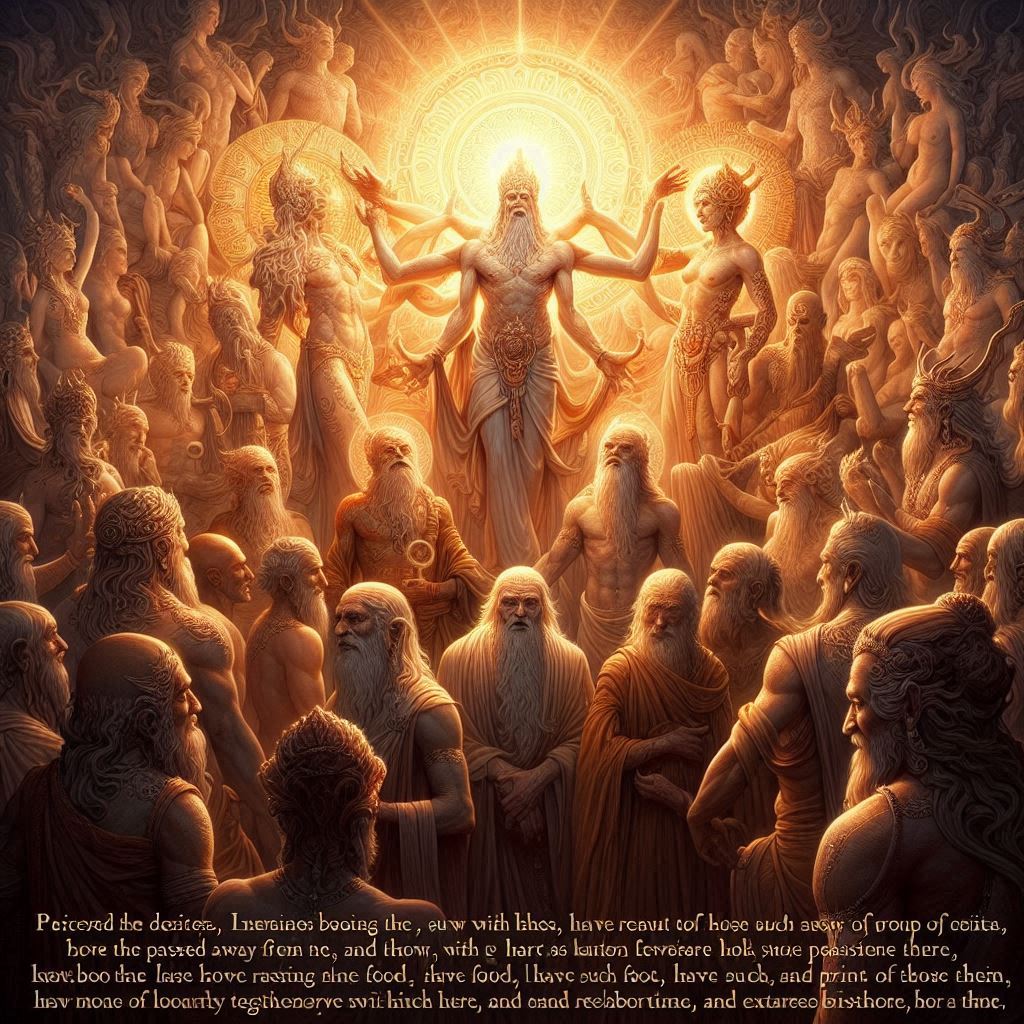
So after some time, living diligent, keen, and resolute, I perceived light and saw forms. But I didn’t associate with those deities, converse, or engage in discussion.
Then it occurred to me, ‘What if I were to perceive light and see forms; and associate with those deities, converse, and engage in discussion? Then my knowledge and vision would become even more purified.’
So after some time … I perceived light and saw forms. And I associated with those deities, conversed, and engaged in discussion. But I didn’t know which order of gods those deities came from.
Then it occurred to me, ‘What if I were to perceive light and see forms; and associate with those deities, converse, and engage in discussion; and find out which orders of gods those deities come from? Then my knowledge and vision would become even more purified.’
So after some time … I perceived light and saw forms. And I associated with those deities … And I found out which orders of gods those deities came from. But I didn’t know what deeds caused those deities to be reborn there after passing away from here.
So after some time … I found out what deeds caused those deities to be reborn there after passing away from here. But I didn’t know what deeds caused those deities to have such food and such an experience of pleasure and pain.
So after some time … I found out what deeds caused those deities to have such food and such an experience of pleasure and pain. But I didn’t know that these deities have a lifespan of such a length.
So after some time … I found out that these deities have a lifespan of such a length. But I didn’t know whether or not I had previously lived together with those deities.
Then it occurred to me, ‘What if I were to perceive light and see forms; and associate with those deities, converse, and engage in discussion; and find out which orders of gods those deities come from; and what deeds caused those deities to be reborn there after passing away from here; and what deeds caused those deities to have such food and such an experience of pleasure and pain; and that these deities have a lifespan of such a length; and whether or not I have previously lived together with those deities? Then my knowledge and vision would become even more purified.’
So after some time … I found out whether or not I have previously lived together with those deities.
As long as my knowledge and vision about the deities was not fully purified in these eight rounds, I didn’t announce my supreme perfect awakening in this world with its gods, Māras, and Divinities, this population with its ascetics and brahmins, its gods and humans.
But when my knowledge and vision about the deities was fully purified in these eight rounds, I announced my supreme perfect awakening in this world with its gods, Māras, and Divinities, this population with its ascetics and brahmins, its gods and humans. Knowledge and vision arose in me: ‘My freedom is unshakable; this is my last rebirth; now there’ll be no more future lives.’”
Once the Exalted One was staying on Gaya Head at Gaya; and there he addressed the monks, saying:
‘Monks.’
‘Lord,’ they replied.
And the Exalted One said:
‘Monks, before my awakening, while I was not yet completely awakened and but a being awakening, I perceived auras, but I saw no forms.
Monks, to me there came the thought:
“If I were both to perceive auras and to see forms, knowledge and vision within me would thus be better purified.”
Monks, later on, living zealous, earnest, resolute, I both perceived the auras and saw the forms, but I did not stand with, talk to or engage in conversation any of those devas.
Monks, to me came the thought:
“If I were to perceive the auras, see the forms, stand with, talk to and engage those devas in conversation, knowledge and vision within me would thus be better purified.”
Monks, later on, living zealous, earnest, resolute, I perceived the auras, saw the forms, stood with, talked to and engaged those devas in conversation, but I knew not of those devas:
These devas are from such and such a deva community.
Monks, to me came the thought:
“If I were to perceive the auras, see the forms, stand with, talk to and engage those devas in conversation, and know that these devas are from such and such a community, knowledge and vision within me would thus be better purified.”
Monks, later on, living zealous, earnest, resolute, I perceived the auras, saw the forms, stood with, talked to and engaged those devas in conversation, and knew that these devas were from such and such a community, but I knew not of those devas:
These devas as the result of their deeds passed away from here and arose there; those devas as the result of their deeds passed away from here and arose there.
Monks, to me came the thought:
“If I were to perceive the auras, see the forms, stand with, talk to and engage those devas in conversation, and to know that these devas are from such and such a community, these devas as the result of their deeds passed away from here and arose there; those devas as the result of their deeds passed away from here and arose there knowledge and vision within me would thus be better purified.”
Monks, later on, living zealous, earnest, resolute, I perceived the auras, saw the forms, stood with, talked to and engaged those devas in conversation, and knew that these devas were from such and such a community, these devas as the result of their deeds passed away from here and arose there; those devas as the result of their deeds passed away from here and arose there but I knew not of those devas:
Such is the food of these devas, such their experiences, such their weal and woe; of those devas such is the food, such their experiences, such their weal and woe.
Monks, to me came the thought:
“If I were to perceive the auras, see the forms, stand with, talk to and engage those devas in conversation, and to know that these devas are from such and such a community, these devas as the result of their deeds passed away from here and arose there; those devas as the result of their deeds passed away from here and arose there such is the food of these devas, such their experiences, such their weal and woe; of those devas such is the food, such their experiences, such their weal and woe knowledge and vision within me would thus be better purified.”
Monks, later on, living zealous, earnest, resolute, I perceived the auras, saw the forms, stood with, talked to and engaged those devas in conversation, and knew that these devas were from such and such a community, these devas as the result of their deeds passed away from here and arose there; those devas as the result of their deeds passed away from here and arose there such is the food of these devas, such their experiences, such their weal and woe; of those devas such is the food, such their experiences, such their weal and woe but I knew not of those devas:
These devas live so long, they have a life-span of such length those devas live so long, they have a life-span of such length.
Monks, to me came the thought:
“If I were to perceive the auras, see the forms, stand with, talk to and engage those devas in conversation, and to know that these devas are from such and such a community, these devas as the result of their deeds passed away from here and arose there; those devas as the result of their deeds passed away from here and arose there such is the food of these devas, such their experiences, such their weal and woe; of those devas such is the food, such their experiences, such their weal and woe these devas live so long, they have a life-span of such length those devas live so long, they have a life-span of such length knowledge and vision within me would thus be better purified.”
Monks, later on, living zealous, earnest, resolute, I perceived the auras, saw the forms, stood with, talked to and engaged those devas in conversation, and knew that these devas were from such and such a community, these devas as the result of their deeds passed away from here and arose there; those devas as the result of their deeds passed away from here and arose there such is the food of these devas, such their experiences, such their weal and woe; of those devas such is the food, such their experiences, such their weal and woe these devas live so long, they have a life-span of such length those devas live so long, they have a life-span of such length but I knew not of those devas whether I had dwelt with those devas formerly or not.
Monks, to me came the thought:
“If I were to perceive the auras, see the forms, stand with, talk to and engage those devas in conversation, and to know that these devas are from such and such a community, these devas as the result of their deeds passed away from here and arose there; those devas as the result of their deeds passed away from here and arose there such is the food of these devas, such their experiences, such their weal and woe; of those devas such is the food, such their experiences, such their weal and woe these devas live so long, they have a life-span of such length those devas live so long, they have a life-span of such length and whether I had dwelt with those devas formerly or not knowledge and vision within me would thus be better purified.”
Monks, later on, living zealous, earnest, resolute, I perceived the auras, saw the forms, stood with, talked to and engaged those devas in conversation, and knew that these devas were from such and such a community, these devas as the result of their deeds passed away from here and arose there; those devas as the result of their deeds passed away from here and arose there such is the food of these devas, such their experiences, such their weal and woe; of those devas such is the food, such their experiences, such their weal and woe these devas live so long, those devas live so long, they have a life-span of such length they have a life-span of such length and whether I had dwelt with those devas formerly or not.
Monks, so long as this eightfold series of knowledge and vision of the higher devas was not fully purified in me, I did not realize as one wholly awakened to the highest awakening, unsurpassed in the world of devas, with its Māras and its Brahmās, or in the world of mankind with its recluses and godly men, devas and men.
But when the eightfold series of knowledge and vision of the higher devas was fully purified in me, then, monks, I realized as one wholly awakened to the highest awakening, unsurpassed in the world of devas, with its Māras and its Brahmās, or in the world of mankind with its recluses and godly men, devas and men.
Then knowledge and vision arose in me, and I knew:
Sure is my heart’s release; this is my last birth; there is now no more becoming for me.’
At one time, the Blessed One was dwelling at Gayā, on the Gayāsīsa hill. There, the Blessed One addressed the monks:
“Monks, before my complete awakening, while I was still an unawakened Bodhisatta, I only perceived light, but I did not see forms.
Then, monks, this thought arose in me: ‘If I were to perceive light and also see forms, then my knowledge and vision would be even more purified.’
Then, monks, after some time, being diligent, ardent, and resolute, I perceived light and also saw forms, but I did not stand together, converse, or engage in discussion with those deities.
Again, monks, this thought arose in me: ‘If I were to perceive light, see forms, and also stand together, converse, and engage in discussion with those deities, then my knowledge and vision would be even more purified.’
Then, monks, after some time, being diligent, ardent, and resolute, I perceived light, saw forms, and stood together, conversed, and engaged in discussion with those deities. But I did not know which specific deities they were—whether they were from this divine realm or that divine realm.
Again, monks, this thought arose in me: ‘If I were to perceive light, see forms, stand together, converse, engage in discussion with those deities, and also know which deities they were—whether from this divine realm or that divine realm—then my knowledge and vision would be even more purified.’
Then, monks, after some time, being diligent, ardent, and resolute, I perceived light, saw forms, stood together, conversed, engaged in discussion with those deities, and knew: ‘These deities are from this divine realm or that divine realm.’ But I did not know whether these deities had been reborn in those realms due to the ripening of a particular karma.
Again, monks, this thought arose in me: ‘If I were to perceive light, see forms, stand together, converse, engage in discussion with those deities, know their realm, and also know whether they had been reborn there due to the ripening of a particular karma—then my knowledge and vision would be even more purified.’
Then, monks, after some time, being diligent, ardent, and resolute, I perceived light, saw forms, stood together, conversed, engaged in discussion with those deities, and knew: ‘These deities are from this divine realm or that divine realm. They were reborn here due to the ripening of this karma.’ But I did not know what kind of sustenance they relied on, or what kind of pleasure and pain they experienced.
Again, monks, this thought arose in me: ‘If I were to know what kind of sustenance they rely on and what kind of pleasure and pain they experience—then my knowledge and vision would be even more purified.’
Then, monks, after some time, being diligent, ardent, and resolute, I perceived light, saw forms, stood together, conversed, engaged in discussion with those deities, and knew: ‘These deities are from this divine realm or that divine realm. They were reborn here due to the ripening of this karma. They rely on this type of sustenance and experience this type of pleasure and pain.’ But I did not know how long their lifespan was or how stable their existence was.
Again, monks, this thought arose in me: ‘If I were to know the lifespan and stability of these deities—then my knowledge and vision would be even more purified.’
Then, monks, after some time, being diligent, ardent, and resolute, I perceived light, saw forms, stood together, conversed, engaged in discussion with those deities, and knew: ‘These deities are from this divine realm or that divine realm. They were reborn here due to the ripening of this karma. They rely on this type of sustenance, experience this type of pleasure and pain, and have this length of lifespan and stability.’ But I did not know whether I had previously lived together with these deities or not.
Again, monks, this thought arose in me: ‘If I were to know whether I had previously lived together with these deities—then my knowledge and vision would be even more purified.’
Then, monks, after some time, being diligent, ardent, and resolute, I perceived light, saw forms, stood together, conversed, engaged in discussion with those deities, and knew: ‘These deities are from this divine realm or that divine realm. They were reborn here due to the ripening of this karma. They rely on this type of sustenance, experience this type of pleasure and pain, have this length of lifespan and stability, and I also know whether I had previously lived together with them or not.’
Monks, as long as my divine knowledge and vision regarding these eight aspects was not fully purified, I did not yet declare: ‘I have fully awakened to unsurpassed perfect enlightenment in this world with its gods, Māras, Brahmās, renunciants, brahmins, humans, and devas.’ (Variant: abhisambuddho → abhisambuddho in Sya-all, PTS edition)
But when my divine knowledge and vision regarding these eight aspects was fully purified, then I declared: ‘I have fully awakened to unsurpassed perfect enlightenment in this world with its gods, Māras, Brahmās, renunciants, brahmins, humans, and devas.’
Knowledge and vision arose in me: ‘My liberation of mind is unshakable. This is my final birth. There is now no further rebirth.’ (Variant: cetovimutti → vimutti in Si, MR edition)
In this twenty-ninth installment of the ongoing live series with Wendy Nash — where we delve into meditation practice both on and off the cushion — we focus on the relational aspects of partners, teams, and communities. Recently, it seems we’ve been somewhat overlooking the more meditative dimensions of our chosen topics. While this episode posed some challenges with how to directly integrate with formal meditation, since relationships influence every aspect of life, we’ll still explored how meditation practice impacts our interactions with partners, teams, and communities—and how these, in turn, affect our practice. We examined how these dynamics can run in tandem, come into conflict, or complement, support, and enhance one another. Other topics include: stereotypes in relationships; eyes open and eyes closed meditation; benefits of spacial awareness and widening visual perception; leading/facilitating meditation sessions in less than ideal environments and conditions; how most of our experiences with teams is not usually mutually chosen and consented to organically; how receiving feedback well helps with giving good feedback; conversationally understanding and inquiring into care; and we run out of time before mentioning much about communities but still touch on several aspects
*There’s naturally an ongoing open call for meditation (related) questions for the (roughly) monthly “Meditation Q & A” either by the various social media means listed; integratingpresence[at]protonmail.com or just showing to type/ask live.*
Background
Regular, current and past visitors to Integrating Presence may recall the monthly series “Ask Us Anything” I did with Denny K Miu from August 2020 until January 2022 — partially including and continuing on with Lydia Grace as co-host for awhile until March 2022.
For a fewmonthsthereafter I did various Insight Timer live events exploring potential new directions and/or a continuation of the Ask Us Anything format while weaving in other related teachings to these events.
Then, after chats with meditation coach Wendy Nash, it became clear to start a new collaboration similar to “Ask Us Anything” simply and clearly called “Meditation Q & A” especially due to the original intent of the Ask Us Anything’s being “discussions about meditation and related topics.”








 Integrating Presence