Being And Living As Better Beautiful Humans: In Conversation With David Hults

Despite an ambulance, trash truck and airplanes this still very listenable podcast recorded July 14th joins an in real life caffeinated conversation already underway between David Hults and I about a wide variety of topics including:

  • nature
  • environment
  • fear
  • destruction
  • separation
  • unity
  • negativity bias
  • stewardship
  • self-responsibility
  • power
  • trauma
  • pain
  • four great elements (in the body)
  • aether
  • sacred geometry
  • architecture
  • Buckminster Fuller
  • fourth phase of water
  • expanding water to move it
  • photonic nature of light
  • (the rapidly arising and passing) ultimate materiality
  • mentality
  • Abhidhamma
  • perception
  • (without) Masters
  • not clinging to (teaching) systems
  • (3D) manifestation
  • holographic waveforms
  • (changing nature of) consciousness
  • neuroscience
  • urging science to use concentration and consciousness (in double blind experiments) in addition to instruments
  • quantum (everything)
  • time crystals
  • two truths
  • the requirement of seeing and knowing truth / reality for oneself
  • comparing and contrasting perception and “this is my truth”

Question
What some say is the truth,
Others say is false.
So they argue, disagreeing;
Why don’t the ascetics teach one truth?

Buddha
Indeed the truth is one, there’s not another,
about this the One who Knows
does not dispute with another,
but the Samaṇas proclaim their varied “truths”
and so they speak not in the same way.

Why do they speak such varied truths,
these so-called experts disputatious—
Are there really many and various truths
Or do they just rehearse their logic?

Buddha
Indeed, there are not many and varied truths
differing from perception of the ever-true in the world;
but they work upon their views with logic:
“Truth! Falsehood!” So they speak in dualities.

Based on what is seen, heard,
On precepts and vows, or what is cognized,
They look down on others.
Convinced of their own theories,
pleased with themselves,
They say, “My opponent is a fool, no expert.”

They consider themselves expert for the same reasons
That they despise their opponent as a fool.
Calling themselves experts, they despise the other,
Yet they speak the very same way.

And since perfected in some extreme view,
puffed with pride and maddened by conceit,
he anoints himself as though the master-mind,
likewise thinking his view’s perfected too.

If their opponent says they are deficient,
They too are of deficient understanding.
But if they are wise and knowledgeable,
Then there are no fools among the ascetics.

“Anyone who teaches a doctrine other than this,
Has fallen short of purity and perfection.”
This is what followers of other paths say,
Passionately defending their very different views.

“Here alone is purity,” so they say,
“There is no purity in the teachings of others.”
This is what followers of other paths strongly assert,
Each entrenched in their own different path.

Strongly asserting their own path,
What opponent would they take to be a fool?
They would only bring trouble on themselves
By calling an opponent a fool of impure teachings.

Convinced of their own theories,
Comparing others to oneself,
They get into more disputes with the world.
But by leaving behind all theories,
They don’t have any problems with the world.

Despite dropping the recording device, airplanes, an ambulance and trash truck, the recording is still very listenable

Selection from the Cūlaviyūha Sutta — Smaller Discourse on Quarreling from Sutta Nipāta 4.12

  • living in a story about reality instead of living in reality itself
  • sovereignty
  • not condemning others for their belief systems
  • actions matter
  • acceptance
  • thinking for yourself
  • followers
  • non-harming
  • “if everyone was doing what I was doing what would the world look like”
  • stress / suffering and its end
  • dignity
  • worthiness
  • (self-)love
  • right lifestyle
  • honesty
  • mindfulness:
    • balancing factor
    • creates space
    • responding instead of reacting
    • ability to linger on an object/topic
    • greater choices seen and made
    • better discernment
  • “know thy self”
  • orgonite
  • tensor rings
  • harmonization devices
  • transmuting negativity

  • not taking things personally
  • everything in relationship
  • community building:
    • attracting beings of similar affinity
    • everyone already being in community
    • identifying current communities and envisioning and planning ideal communities for ourselves, those closest to us, on up to larger levels while respecting each other’s sovereignty and those choosing segregation while allowing equal opportunity to do so and still maintain interconnectedness
    • trust
    • faith
    • risk management
    • voluntary contributions based on skill sets
    • allotting more money to community than war
    • non-aggression principle
  • non-harm
  • David’s withdraw from signing up for military
  • military industrial complex and intel tactics
  • trying to find non-violent media
  • black ops
  • black budgets
  • accusations of making stuff up based on movies
  • pentagon and intel agencies consulting on movies
  • environmental, societal, psychological, energetic impact of de-littering spaces
  • clearing work

David’s site AlternativeLiveGuide.com:

Past chats with David:

Some of David’s orgonite and resonance art:


Audio: Being And Living As Better Beautiful Humans: In Conversation With David Hults

Or listen via Insight Timer (app or website)

Continue reading “Being And Living As Better Beautiful Humans: In Conversation With David Hults”

Spoken Mastery With Brenden Kumarasamy

On July 7th speech coach Brenden Kumarasamy and I talked:

  • Brenden’s start doing case competitions in business school turning into coaching others
  • Brenden’s video about mastering silence and replacing ums and a’s with pauses
  • not judging how we speak and present now
  • him not doing videos about mistakes
  • communication in every moment of life
  • communication as life fulfillment instead of a chore
  • how would your life change if you became an exceptional communicator?
    • *for me, as of now, the answer seems to be: more effectiveness in all areas of life which is a reminder of the power of speech and how important it is for speech to come from wise, skillful and wholesome views and intents*
  • the most profound thing we’ll ever do is speak with another human being
  • non-verbal communication
  • “it’s not about what you’re doing it’s all about how you’re being with other people”
  • tips for podcasters:
    • a daily five minute practice question drill for guests to be proactive instead of reactive by asking yourself one question someone may ask about your expertise
    • for hosts the pre-show is the show — creating the environment. “How can I make this the best interview you’ve ever had in your life?”
  • hearing one’s voice played back to them
  • unlearning:
    1. communication as a chore and it being mandatory in school
    2. appointed topics in school and not being allowed to present much on things of interest
    3. presentations being tied to punishment
  • make a list of top five people who support you (and send them a short thank you video message)
  • regaining interest in learning
  • a tiktok about Tylor Swift mentioning the future woman of the year and subsequent youngest woman of the year Billie Eilish matching Swift’s mention then extrapolated to the next (unknown) Elon Musk spurring Brenden’s inspiration to become the best communications coach to unlock the genius in all to advance the human race at lightning speed
  • service work
  • becoming soft by becoming addicted to convenience (of texting) and not wanting to challenge ourselves
    • dating culture reflecting this and how it can lead to stifling advancement and fulfillment
  • great communication deescalates or abolishes arguments
  • mindfulness of speaking:
    • Buddha:
      • true
      • kind
      • helpful
      • right time
      • necessary
    • Brenden:
      • reframe of empathy as communicating not to who we are but to who we used to be
      • since many listeners are wondering if they can even be great communicators Brenden skips advanced tips to focus on inspiration
      • using mirroring and energetic adaptation to add ease to interaction and serve audience
      • creating relationship vision to create willingness to be mindful
      • contemplating what ideal relationships look like by sitting down and exploring questions around this to inner/over/understand perspectives
  • focusing on one’s response in challenging situation instead of unconsciously matching another’s energy
  • instead of sidestepping as a cute question spend five to fifteen minutes answering the question: How would (the world and/or) your life change if you were an exceptional communicator?

Find Brenden online at:

https://www.youtube.com/c/MasterTalks

https://rockstarcommunicator.com to register for free zoom workshops every three weeks

https://www.facebook.com/mastertalkyt

https://www.linkedin.com/in/brendenkumarasamy


Audio only version

Audio: Spoken Mastery With Brenden Kumarasamy

Or listen via Insight Timer (app or website)


Continue reading “Spoken Mastery With Brenden Kumarasamy”

Studying And Practicing With “The Iddhipāda-Vibhaṅga Sutta — An Analysis Of The Bases Of Power”: Perceptions Of Night, Daytime And Light (5 of 7)


Article shortcut: https://tinyurl.com/basesofpower


Series introduction:

While I reference some non-Buddhist material most everything in the notes and podcasts for this series on The Iddhipāda-Vibhaṅga Sutta are solely my effort to relate considerations, questions, experiences, explorations, suggestions, interpretations and practices involved and associated with this sutta.

This series comes via seven categories/blog posts/podcasts:

  1. Introduction; the key encapsulation/encoding/summary paragraph of the whole sutta which includes and weaves in the four powers; and a reading of one of two translations for the sutta
  2. Unpacking of the hindrances and the other of two translations for the sutta
  3. A (type of) situational awareness
  4. 32 parts of the body
  5. Perceptions of night, daytime and light
  6. “Psychic Powers,” practice combinations and miscellany
  7. Summary, findings, observations and comparisons

In more detail, the four Iddhipāda — sometimes translated as bases of psychic power, basis of psychic power, bases of power, base of spiritual power, wings to success, paths of accomplishment, accomplishments, or roads to power — are:

  1. chanda: desire; enthusiasm; purpose; wish
  2. viriya: persistence; determination energy; effort; will
  3. citta: intent; consciousness; knowing mind; mental development; devoting mind to; heart-mind
  4. vīmaṃsā: investigation; inquiry; discernment; discrimination; reason; interest; intelligent curiosity; [(perhaps a new contribution, or for chanda:) balanced and helpful enthrallment, fascination]; feedback and fine tuning, adjustment; learn from doing; circumspection

Along with aiding our even mundane accomplishments and mastery, perhaps the Iddhipāda play a significant role in approaching will — the way one decides on and initiates action — and at the core of The Iddhipāda-Vibhaṅga Sutta is an analysis of will along with instructions for its training, development, and use.


Perceptions of Night, Daytime and Light

nemo malux felix — “The treacherous can not withstand the daylight”

The first two portions of this podcast are without notes. [There I mention all actions involve intent. I guess some exceptions in the mundane sense could be instincts and “temporary insanity”.]

The last part of the podcast references my notes, mainly regarding the following portion of the “The Iddhipāda-Vibhaṅga Sutta — An Analysis Of The Bases Of Power”:

“And how does a monk dwell by night as by day, and by day as by night? There is the case where a monk at night develops the base of power endowed with concentration founded on desire & the fabrications of exertion by means of the same modes [permutations] & signs & themes that he uses by day, and by day he develops the base of power endowed with concentration founded on desire & the fabrications of exertion by means of the same modes & signs & themes that he uses by night. This is how a monk dwells by night as by day, and by day as by night.

“And how does a monk—by means of an awareness open & unhampered—develop a brightened mind? There is the case where a monk has the perception of light, the perception of daytime [at any hour of the day] well in hand & well-established. This is how a monk—by means of an awareness open & unhampered—develops a brightened mind.

[The above discussion is then repeated for persistence, intent, & discrimination.]

or translated:

“And how does a mendicant meditate as by day, so by night; as by night, so by day? It’s when a mendicant develops the basis of psychic power that has immersion due to enthusiasm and active effort, with the same features, attributes, and signs by day as by night. And they develop it with the same features, attributes, and signs by night as by day. That’s how a mendicant meditates as by day, so by night; as by night, so by day.

And how, with an open and unenveloped heart, does a mendicant develop a mind that’s full of radiance? It’s when a mendicant has properly grasped the perception of light, and has properly grasped the perception of day. That’s how, with an open and unenveloped heart, a mendicant develops a mind that’s full of radiance.”

[above portion repeated three more times, but swapping out “enthusiasm” for “energy,” then swapping out for “mental development,” and finally for “inquiry”]


I practiced with the former translation which contains more specific detail than the latter.

Three groups of bigger and primary questions:

  1. Why these instructions? See later parts in this series for my speculation
  2. How exactly does one meditate as by day, so by night; as by night, so by day to develop “the basis of psychic power that has immersion due to enthusiasm and active effort, energy and active effort, mental development and active effort, and inquiry and active effort”? or the translation desire & the fabrications of exertion; persistence & the fabrications of exertion; intent & the fabrications of exertion; & discrimination & the fabrications of exertion. BTW, if you haven’t noticed, the Buddha was big on exertion and effort.
  3. For contemplation and meditation: What are the various (relative) perception(s)(, processes and dynamics) of: day; night; night and day; day and night; light; darkness; varying degrees and amounts of light and darkness together; (and how about the uncommon perceptions of daytime during night; nighttime during the day; light when dark; and darkness when light)? How about more metaphorical perceptions for light such as awakening, knowledge, realization, benevolence, vision, illumination and for darkness such as ignorance?

How do we discern and detect day (and night) (in the body)?

Some examples of modes [permutations], signs, themes, features, and attributes for day:

  • sunlight
  • activity, energy
  • (mass) movement
  • sounds of birds
  • warmth
  • depending on season and location, elements of earth (physical objects) and air (movement) may be more prevalent during the day
  • numerous, albeit superficial connections amongst fellow human beings

Some examples of modes [permutations], signs, themes, features, and attributes for night:

  • protection
  • rest
  • comfort
  • sleep
  • stillness
  • sounds of insects and night creatures
  • depending on season and location, elements of fire (warmth/coolness) and water (bathroom at night and more challenging to find) may be more prevalent at night
  • fewer, but deeper, more intimate connections
  • How do we connect with perceptions? Perhaps via contact, feeling or sensing, and active thought.
  • To what significant extent are consciousness and energy involved with this? How are they involved?
  • Light’s role in the snake/stick perception/misperception
  • Holding in awareness (one or various) perceptions of light and day during night and (one or various) perceptions of night during day as meditation objects for these two time periods.
  • Stark, and sometimes intense, exploration in/of polarity
  • Can there be jhanas with/using: “by day he develops the base of power endowed with concentration founded on desire & the fabrications of exertion by means of the same modes & signs & themes that he uses by night” or “immersion due to enthusiasm, and active effort, with the same features, attributes, and signs by day as by night” as the meditation object since immersion and concentration is involved?
  • How does/would prolonged and consistent meditation and dwelling “by night as by day, and by day as by night” influence those one lives with and/or near? Are practical measures needed with this? If so, what and why?


Audio: Studying And Practicing With “The Iddhipāda-Vibhaṅga Sutta — An Analysis Of The Bases Of Power”: Perceptions Of Night, Daytime And Light (5 of 7)

Or listen via Insight Timer (app or website)


Out of this placement of King and Priest as the highest offices of this world emerged the restatement of the ancient ritual of establishing two pillars at the entrance of every temple, oriented to the rising sun (rising son = Horus Rising or Horizon) coming over the horizon on the first day of spring on the vernal equinox. These two pillars represent the Line of the King and the Line of the Priest, who established their lineages to control the Land and the Law throughout history to the present time.

The storyline of the Isis and Osiris mystery cult is simple and quite instructive. There are nine godheads in the primary Egyptian Pantheon known as the Ennead. Anu sits at the top of the Council of Nine (the Ennead). Below him are two sets of brother/sister twins (husband and wife) that embody the physical Earth in its primordial elements: Earth, Air, Fire and Water. Out of these emerge another two sets of brother/sister twins (husband and wife), representing the polarity of dark and light in the false light matrix of the hologram containment field. These are Isis and Osiris on the light side, from who emerges the prodigal Sun/Son Horus, who rises in the east at the Horizon (Horus Rising). Set and Nephthys counter the light as it is extinguished on the western horizon by Set as he removes the light of the day at Sun-Set and gives it over to his sister/wife to cover the Night. Light and Dark, Black and White, the never-ending polarity, displayed for all to see on every Masonic temple floor, in Westminster Abbey and many more.

from p.43 and p.104 of An Overview of the World System of Bondage and Separation from Life


Continue reading “Studying And Practicing With “The Iddhipāda-Vibhaṅga Sutta — An Analysis Of The Bases Of Power”: Perceptions Of Night, Daytime And Light (5 of 7)”

What Is Sexual Energy? Categories For Contemplation

The description for this now heavily edited version of the July 7th Insight Timer live event:

There is the training precept to refrain from misusing sexual energy. This event aims to not do much more than list topics and categories for later investigating and discerning, “what is sexual energy and how does it work”

See the October 2021 of the Pāramitā (Attainments/Perfections) Challenge for more exploration on refraining from misuse of sexual energy

List of categories and topics for contemplation:

  • types
  • attraction/repulsion
  • arousal
  • performance/action
  • aftermath
  • causes
  • conditions
  • habits/rituals
  • ideas
  • patterns/cycles/repeats
  • choice
  • will
  • internal strife/conflict
  • hedonism
  • agony
  • ecstacy
  • heedfulness
  • heedlessness
  • emotions
  • fantasy
  • reproduction
  • culture
  • (misery) programs
  • carnal knowledge
  • myths
  • legends
  • origins
  • allure
  • danger
  • escape
  • protection
  • deception
  • revenge
  • taboos
  • shame
  • blame
  • guilt
  • regrets
  • control
  • other beings’ modes of birth:
    • egg
    • water/moisture born
    • mind/transformation/miraculous materialization
  • perversion
  • deviations
  • normalizations
  • secrets
  • exposure
  • entanglement
  • (energy) cords
  • connections
  • obsession
  • rejection
  • abandonment
  • core wounds:
    • abuse
    • neglect
    • co-dependence
    • loss
  • beauty
  • love
  • distortions
  • inversions
  • reversals
  • sacred sexuality
  • power
  • feeding
  • harvesting
  • confusion/bewilderment
  • devastation
    • dominance/submission
  • imagery
  • thought forms
  • desire
  • relationships
  • change/variance/variation
  • (unconscious) programs from:
    • religious
    • familial
    • cultural
    • spiritual communities
    • institutions
    • groups
    • organizations
    • traditions
  • ancestry (past, present, future)
  • wisdom
  • skill
  • wholesomeness
  • values
  • mood
  • display/presentation
  • internal
  • external
  • goals
  • games
  • genes/genetics/DNA/genome

Related:

Sexual Energy Misuse & Its Opposition — Feb 14, 2024 Open Wisdom Wednesday:


Audio: What Is Sexual Energy? Categories For Contemplation

Listen to the full unedited version of this talk with or without the Wisdom Apphttps://join.wisdom.audio/oxBs


Continue reading “What Is Sexual Energy? Categories For Contemplation”

Putting Humans First With Rob Krecak

On June 21 Rob Krecak of humansfirst.us and I talked about:

  • Who Rob is and his work
  • technology mindfulness (consulting)
  • screen time
  • 4 hour work week and 4 day work week
  • burnout
  • productivity
  • Facebook and social media
  • email
  • video games
  • addiction
  • virtual reality and augmented reality
  • retreating into fantasy worlds
  • anxiety of notifications and constantly checking (average of once every six minutes)
  • technology activates our sympathetic nervous system
  • sleep
  • various habits around tech devices
  • not having any email access on cell phone
  • the value of attention and how companies capitalize on it
  • how to minimize cell phone notifications
  • distractions
  • continuity of attention required for productivity, presence, and flow state
  • companies adopting a Standards of Communication to make clear what needs to be communicated when and how
  • using desktop or laptop instead of phone to save time
  • adding a second monitor to increase productivity
  • Rob’s offer for a free 30 minute technology Mindfulness consultation via emailing rob [at] humansfirst.us

Standards of Communication template mentioned on podcast:

https://www.dropbox.com/s/rppyz16e00bu4z7/Humans%20First%20Standards%20of%20Communication%20Template.docx?dl=0

https://www.humansfirst.us

https://www.tiktok [dot] com/@humans_first


Audio: Putting Humans First With Rob Krecak

Or listen via Insight Timer (app or website)


Continue reading “Putting Humans First With Rob Krecak”

Transmosis Healing With Tracey Whittet

On June 13th intuitive guide, teacher, and energy healer Tracey Whittet and I chatted about her integrative healing method Transmosis, corporate America, how she works with folks in healing and energy work and clearing, meditation, channeling, A Course In Miracles, Love Is Letting Go Of Fear, reiki, inner realms, archetypes, love, energetic hygiene, Tracey’s training and teaching as a healer, multidimensional body balancing, DNA, epigenetics, embodiment, deserts, free will, equanimity, light and dark, darkness as ignorance, interconnectivity, empowerment, service work, transmutation, consciousness, golden light, self-care, wholistic care, inspiration, support, etc.

An unconscious transfer and assimilation of higher energies to raise the recipients energy to equal the source energy

Definition of transmosis

https://traceywhittet.com

Tracey’s twitter

Presence — original art work from Tracey’s book The Magi Within

Audio: Transmosis Healing With Tracey Whittet

Or listen via Insight Timer (app or website)


Continue reading “Transmosis Healing With Tracey Whittet”

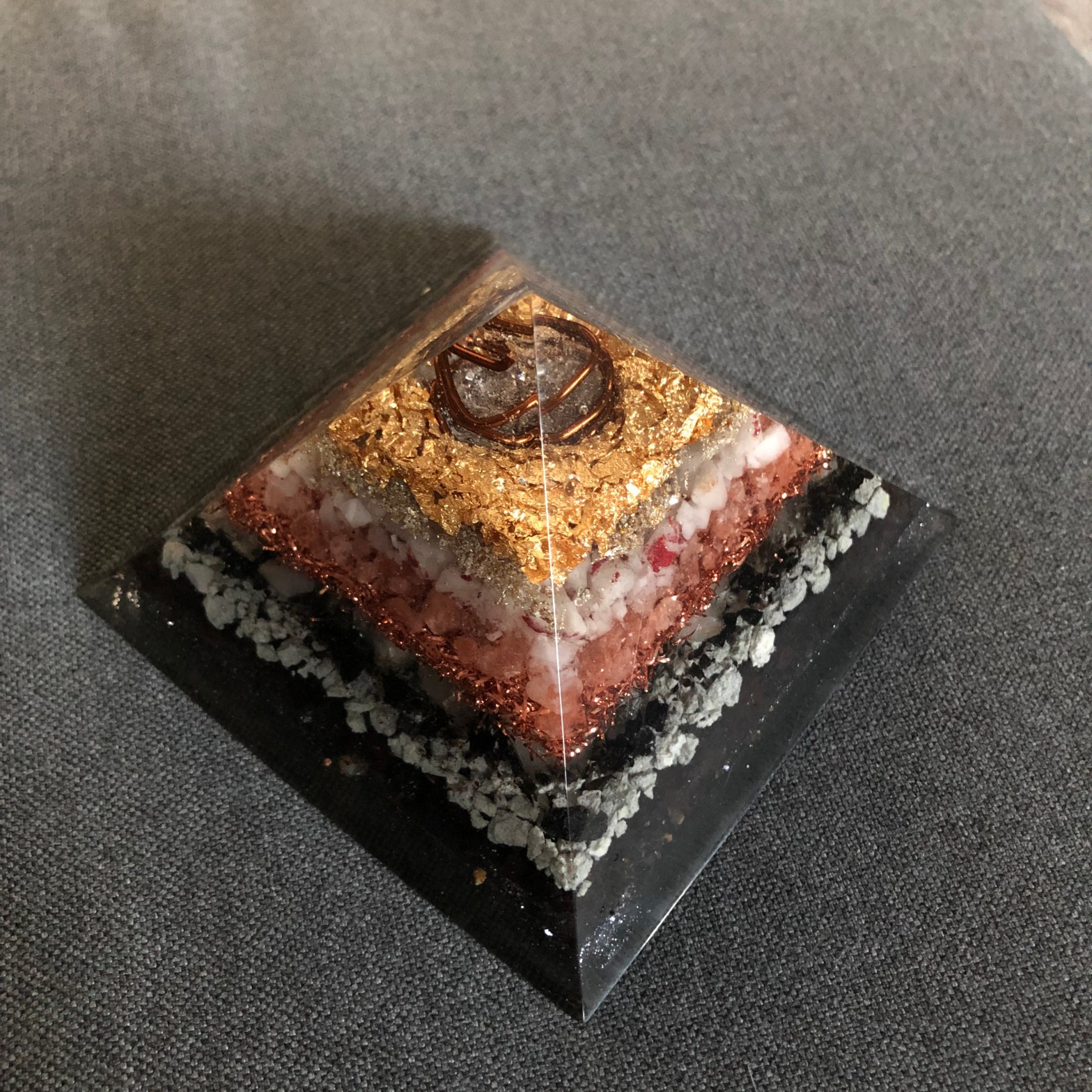
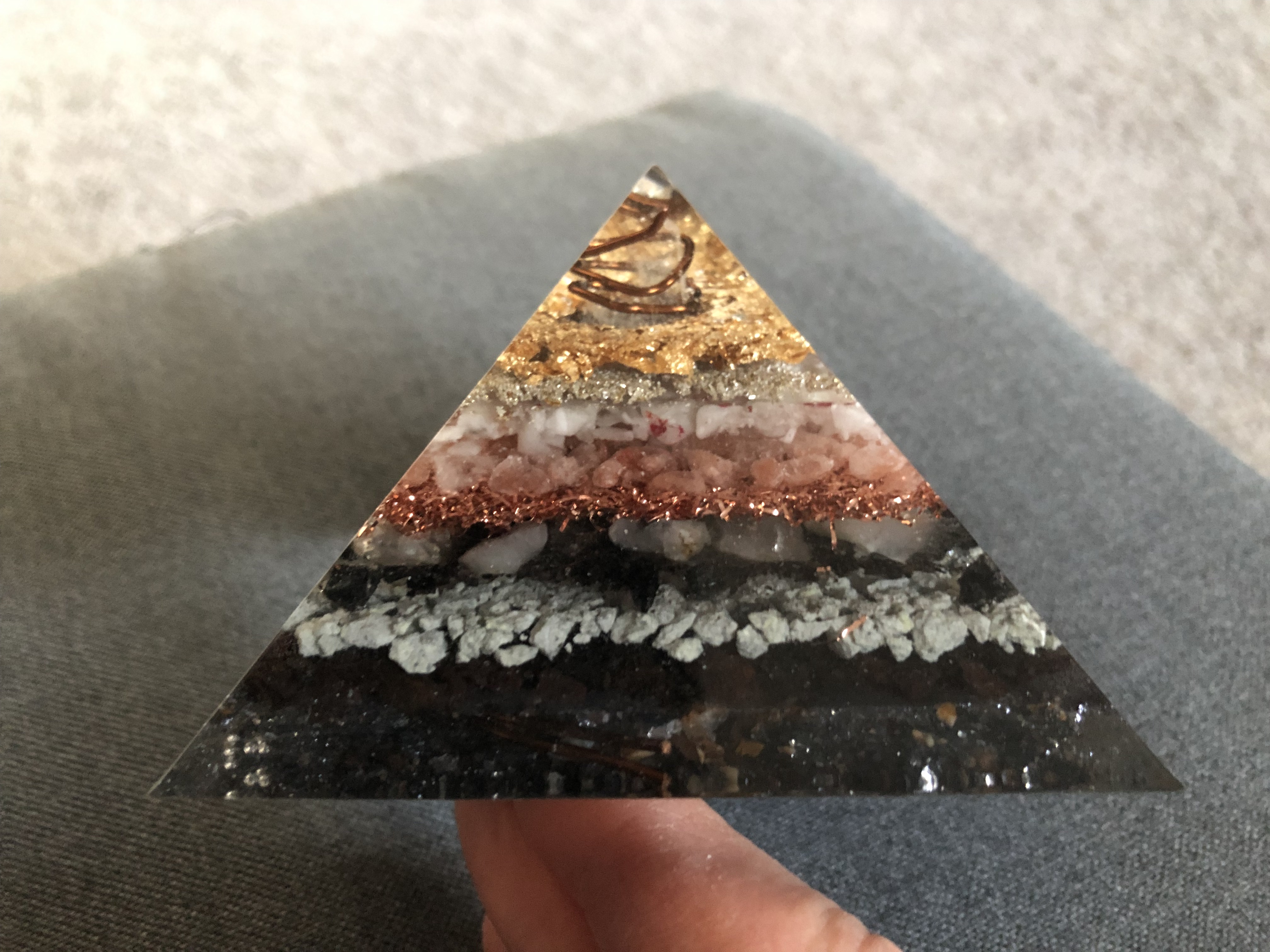
Alchemical, Transmutative, And Transformational Orgonite

Custom Orgonite from alternativelifeguide.com where I provided the crystals (except for the wire wrapped quartz) and the intent: “to support any and all required transformations and transmutations for the well-being, awakening and liberation of all as allowed by, and in alignment with true cosmic law”

The included stones are sources for some of the seven traditional (external) alchemical metals. Shout out to Peace, Love, Happy for the gold flakes. Salt and sulfur (and mercury) significantly mentioned in alchemical lore are also included.

May you all share in its beneficial intent and resultant beneficial merit

You Teach Me

This June 23 Insight Timer live event was described thus:

A (brief) experiment where (you) the audience teach me anything you’d like. It could be from the spiritual journey, inner work, everyday life, work, play, groups, family, friends, enemies, frenemies, relationships, etc. I may fill in gaps with how to approach teachers and others for information, wisdom, knowledge, teachings, etc.

“When the student is ready the teacher/master will appear. When the student is really ready the teacher/master will disappear.”

Related blog posts:


Listen to the full unedited version of this talk with or without the Wisdom Apphttps://join.wisdom.audio/oxBs


My pre-event notes:

  • Mostly teachers in buddhist groups
  • Intent? Genuine, sincere interest (not (just) to look smart, gain merit, etc)
  • Audience and time allotted/involved
  • clear and concise (pre-formulated or not)
  • Appropriate honor and respect: not too much or too little
  • prioritize questions and requests for maximum benefit for all
  • relatable antidotes necessary and helpful and appropriate?
  • current perceptions of Eastern/Buddhist lay audiences as Westerner:
    • Pros (some also in western:)
      • respect
      • honor
      • appreciation
      • inspiring
      • valuable
      • humility
      • order
      • cohesiveness
      • harmony
      • functionality
      • community
    • Cons:
      • “I didn’t know how to act.” “Me either.”
      • Am I being perceived as opposite of aforementioned qualities (and also disruptive)? Why would this be important?
      • I shy away if strange/foreign formalities so importance of training
      • Assimilation/hive mind?
      • How is hierarchy different?
      • Compare and contrast Eastern and Western perceptions of less than, greater than, equal to
  • Ask others, friends and teachers for recommendations based on interests and intent/goals
  • If it’s not apparent and someone’s body of work is large and you just discovered them ask where/what of theirs to start with
  • How does one’s informal methods differ from formal and how could you find out?
  • How about with mentoring?
  • Depending on their workload it’s a good sign if you seek them out and they ask to take you on (without you asking first)
  • How do you approach folks to gather information? Is it like:
    • CIA/FBI
    • asking for directions
    • mafia
    • buying something
    • handout
    • from a friend
    • from family
    • need help
    • want to help
    • via small talk (starters)
    • mutual interests/connections

I somehow did not mention that the greatest teacher is the inner teacher

Audio: You Teach Me

Or listen via Insight Timer (app or website)

Continue reading “You Teach Me”

Get Happy With Dannie De Novo

On June 9th Happiness Coach Dannie De Novo chatted about her story, what she does, how she helps folks, honesty, vulnerability, forgiveness, addressing shame, worthiness, pain, and plenty more. From her website:

Dannie De Novo is a happiness coach and international bestselling author. After having battled depression and anxiety for most of her early life, Dannie set out on a course to learn what true happiness was for her and for the sake of her baby girl. Now, Dannie regularly appears on ABC, Fox, NBC, and CBS TV news and talk shows as an expert on creating happiness, combating loneliness and depression, and managing anxiety.

Audio: Get Happy With Happiness Coach Dannie De Novo

Or listen via Insight Timer (app or website)


Find Danny online at:

Continue reading “Get Happy With Dannie De Novo”

(My) Mentions To Ajahn Amaro: Unconcoctibility, Always-Other-Than-That Reality & “Is That So?”

Grateful and fortunate enough to put a few things to Ajahn Amaro via his zoom teaching on the Niramisa Sutta hosted by Mid America Buddhist Association on May 22, 2022. Also thankful for the patience of the audience while I stammered and stuttered around in the process of sharing and question formulation with plenty of “I-making” — even more noticeable in the full unedited version which I encourage all to watch below (which includes my (guess) response to a question Ajahn asks):


Audio: (My) Mentions To Ajahn Amaro: Unconcoctibility, Always-Other-Than-That Reality & “Is That So?”

Or listen via Insight Timer (app or website)


Experimental and unedited transcript (attempt) of this podcast via assemblyai.com:

I would make a comment, maybe question about Atayamata at the end here. But I really wanted to just thank you for this long talk of yours that I listened to a podcast on the island book, The Island, all about the goal. And I love how it was structured because there were readings from the entire book, but then there was also discussions and questions and answers. I found it really helpful and how just kind of dug into that and just kind of turn over every stone and would come back later with references that came up and included those. So I’m very grateful for that too. In the lineage of A Johnson, I wanted to relate very briefly kind of teaching that I’ve benefited up here. Is that so? Question and then so I found that really helpful. So I have to skip the story. I’ll tell Yamata. I’ve also heard it. If I’m getting this right, uncocked ability. Thought that was a very interesting way to put it too. And if I’m getting this right too, whatever we think the truth is, the truth is always other than that, maybe my question would just be to kind of wrap up the stuff that I said and if addressing the accuracy or expanding on those points. Thanks again. Yeah, thank you. Unconcoctability. I think that’s Ajun Santi Caro’s translation of atomic. And he was Agin Buddhasa’s translator for quite a number of years. And they worked together, they did a lot of person to person collaboration. And Buddha Dasa had quite a bit of English as well. I was there visiting Swanwalk when he was giving talks on this. And he would sometimes stop Santa Cara and say, no, not that it should be like this. So unconcompatibility that is Charlotte translation. So all of those are relevant. So Ajim. Buddhasa would also say this is the final divorce of the mind from the conditioned realm. I ain’t going to mess with you no more with Santa caros of more kind of Midwestern rendering, I ain’t going to mess with you no more. And it’s that kind of a tone of there’s no more of this unconscionibility. So it’s one of those terms you can’t really find a perfect English word for it. But that’s why I was saying how it’s in a way, most important to get a feel, a felt sense of what this quality is in our own practice, in our own hearts, and then let the word follow the reality as it’s known, rather than trying to pin down the perfect word. Somebody gave me a copy of Jean Paulo Sarka’s being and Nothingness a few weeks ago and a very substantial tone. The way that there’s this effort to try and pin everything into the reality, into the words, I keep getting this feeling of starting from the wrong place. Guys, I realize that could be a bit of an inflated perception, but I feel one of the great blessings of Buddhist practice is you’re starting with the experience, letting the words match the experience, or evoke that as best they can, but you can’t pin that down. So the passage you’re quoting, the party is ya and yatati. Whatever you conceived to be the reality is necessarily other than that. So, again, not to belittle Jean Paul Sartre and his efforts and the other good European philosophers, but to me that’s an extraordinarily potent and useful principle. Whatever you conceived to be the reality is necessarily other than that. But you can’t put three dimensional tea into a drawing of a two dimensional drawing of a tea cup. The reality has got too many dimensions to fit into concepts and language. So that’s one of the reasons why I say, with my attire, you’re letting go of time, identity, location, causality, language, time, even number. Those are conditioned constructions that we give more reality and substantiality to than they really possess. So that simple phrase or whatever you can see if it to be the truth, is always other than that. It doesn’t mean that you guessed the wrong answer to the puzzle. No, it’s like saying words can’t do it. You can’t put three dimensional t into the drawing of a teacup. It won’t go. It’s got too many dimensions. That’s why it’s not that if you just had a better drawing, it would work. No, the concept hasn’t got enough dimensions. So in that level of realization of practice, it’s letting the heart abide in that three dimensional or more higher dimensional reality and not trying to represent the fundamental reality just in concepts and words, which is one of the reasons why the Buddha was quite happy to not try and describe the nature of ultimate reality, but spend 99% of his time pointing to the pathway to realize it for the individual. Rather than trying to describe the nature of the goal or the qualities of the goal, he put 99% of his attention on the pathway to the realization of that. And then it’s like how to make a teacup rather than how to draw the perfect teacup, how to actually make a three dimensional teacup that can contain the t. Thank you. Thank you, Josh, for the question. We have several other questions, and a lot of them are focusing on the mechanics, suggestions of types of meditation, how to sustain and move on to the next levels and function in the world. There’s various different approaches. I think what I was saying at the end and also what Josh was quoting about this practice of the Virginia asking the questions, is that so or so? That both informal meditation. But also, the more we develop it in formal meditation, the more that can be applied in the flow of everyday activity is to use that kind of questioning, who is meditating? Does this moment have an owner who is here to progress or to not progress? It’s not that the effort is not being made or direction is not being given. But it’s flagging that I’m making and mind making the mamancara habits to flag those, to illuminate those and as soon as that is known, it’s like shining the light on those habits. It’s like you’re slowing the film down so you can see how the conjurer did the trick. It’s like that intrinsically, seeing how the eye is that there’s an eye being formed here. Oh, that’s a formation, that’s a presumption, a heart. So that by using that kind of reflection, questioning who is walking, who’s asking this question that it’s shining a light on those eye making and mind making habits and then the effect of shining that light because it’s not just like a mantra that you’re repeating just to who am I, who am I? Who’s walking? Who’s walking? Who’s walking? Who’s thinking? Who’s thinking? It’s not a simple repetition. The more it’s a genuine question, then the more that breaks up the habits of I’m making and mind making. And then what that does is rather than disabling our life from attunement or effectiveness in the world like that non attachment or non identification, non fashioning, it doesn’t mean we suddenly freeze in the middle of the sidewalk and suddenly stopped existing. I need someone to come along and start moving my limbs again. That’s not the way it works at all. It’s rather that when their eye making and mind making is recognized and let go of, then the system of this life functions in a far more attuned and effective way.”