In this thirteenth installment of the ongoing live series with Wendy Nash inquiring into meditation practice on and off the cushion we explore why one would even bother meditating in the first place. And what’s so important about meditation anyway?
(Or other ways to) join these Q & A’s when they happen live:
*There’s naturally an ongoing open call for meditation (related) questions for the (roughly) monthly “Meditation Q & A” either by the various social media means listed; integratingpresence[at]protonmail.com or just showing to type/ask live.*
Background
Regular, current and past visitors to Integrating Presence may recall the monthly series “Ask Us Anything” I did with Denny K Miu from August 2020 until January 2022 — partially including and continuing on with Lydia Grace as co-host for awhile until March 2022.
For a fewmonthsthereafter I did various Insight Timer live events exploring potential new directions and/or a continuation of the Ask Us Anything format while weaving in other related teachings to these events.
Then, after chats with meditation coach Wendy Nash, it became clear to start a new collaboration similar to “Ask Us Anything” simply and clearly called “Meditation Q & A” especially due to the original intent of the Ask Us Anything’s being “discussions about meditation and related topics.”
Randi I talk about new frames of reference in regards to the UAPs (Unidentified Aerial Phenomenon); the investigation of these from the scientific communities; and Randi’s realtime information on what we see on screen including a different angle to the UAPs and why they are here.
Randi’s HAL Academy website and courses: https://toveje.dk and the Reality Sciences and consulting services of her HIGHER ORDER DE1 WORK INSTITUTE: https://randigreen.one
Well, we’re alive. What does that mean? Animate, sensitive, growing, moving, participating in a context whereby we breathe what’s around us, consume it and are made conscious by it. Consciousness is an intelligence that serves the animate being (me) by reporting on what’s happening around and within it. So our experience has external and internal aspects, it’s viññāṇa, a dualistic awareness that presents experience as a ‘world’ (get to that later) and a ‘self’ experiencing it (better get to that later too). It separates into subject and object. Its program (saṅkhāra) is to maintain the life and coherence of a separate living being. That is – ‘see this so that you know what to do about it’. In the Buddha’s analysis, consciousness is dependent on ‘form’ (rūpa) – that is, something detected by a sense base. Because of the eye, we experience a visible world – if there’s nothing to see, visual consciousness is inert. But what that visible form looks like depends on the kind of consciousness we have – we don’t see what a butterfly sees. Furthermore, mental consciousness adds naming (nāma) – various programs that determine what we attend to and how we respond to form. What is New York like to a Congolese pigmy? And if I walk through a tropical forest with a native person, I just see trees, but she/he ‘sees’ something far more intricate and vivid. So nāma adds a further degree of subjectivity to ‘my world’ – in fact ‘naming’ shapes the ‘me’ bit of any experience.
Moreover, consciousness itself depends on a sensory form (aka body) as a platform. It seems separate, but actually it’s inextricably linked to name and form, self and world.
All this weave is further complicated by the fact that consciousness operates through not one but six senses – seeing, hearing, smelling, tasting, touching, and conceiving. That sequence presents an increasing sense of involvement and intimacy, but they all refer to the living body. Seeing places the world at a distance in front of our body, with hearing it’s around us, then we experience being entered (by smell and taste) and wrapped (by skin) and eventually tossed around in and creating a world that extends through time (by mind). These various sensory messages don’t add up to anything cohesive (and we need a coherent reality in order to function) but mind weaves a few aspects of sense-data and subjective impressions into a workable model – complete with preferences, assumptions, and blind-spots, and we are shaped by all this. Thus we ‘become’ (bhava) an individual self, constantly busy weaving and being bound to ‘my world’. But the self that is created has tunnel vision, it forms in the ‘ego-tunnel’ of ‘my world’ with its self-view.
This tunnel is largely mind-made. Mind-consciousness (mano-viññāṇa) both overrides the bodily sense with its receptivity and responsive energies, and holds the body to be a vehicle, a kind of donkey, or a robot with awkward pains and flushes. Thus mind extricates the ‘me bit’ into an autonomous self that pretends it’s separate from the body and indeed the rest of creation, while dominating and consuming it. Thinking depends on embodied energy, and just as we consume and devastate the planet because we assume we’re not part of it (and yet are affected by that devastation), so we ignorantly consume and devastate our bodily energies. Hence the domination and exploitation paradigm has dire consequences: externally there is climate-crisis, pollution, and bio-extinction – and internally there’s stress, anxiety, depression and mental illness. It’s an inextricable cosmos. We have to be touched by it and handle all of it (internal, external) with respect.
But … there is a way out of the world –in this very body. (see A.4:45). So be careful of exclusion. The way to where ‘my world’ ceases is through gaining perspective on and dispassion around nāma. You do this by sensing how nāma affects your body, through focusing and stimulating (or suppressing) the somatic energies that act as a basis for consciousness. Huh? For example, what does craving feel like in your body? And how about ill-will? Or gratitude, or joy? Two of these impulses twist you up, two give you openness and ease. Bad and good kamma. Like that, you’re going to feel craving and aversion for the poisons that they are, and work on reducing them. And you’re going to incline towards the good stuff. Your inner body can relax compulsive impulses and widen attention into a more receptive mode; it can step out of the ego-tunnel to the end of ‘my world’. That internal process has external consequences.
However, let’s avoid getting upset or excited about our internal stuff; it’s just conditioned by consciousness, don’t claim it. Let good and bad move through – and you can do that by tracking these energies in your body. So there’s no need to create an identity. Just be in a shared world with conscience and concern, and tune in to the gift and grace of that.
So Paula Conroy and I recorded this on Aug 29, 2023. I was in a nature park and from a full charge from the start my cell phone connection somehow drained completely out by the end. Luckily the service we used continued recording Susan and I on both ends separately. I finished uploading my portion from my laptop later after I got back online. The magical internet. If it seems disjoined or incongruent that’s because I removed a couple of parts at the end where I unknowingly talk over her after the connection drops.
Topics include:
Rites of Passage
Paula’s transition from Corporate Banking into Mature Feminine Leadership development
initiation
trusting intuition when going through unknowns
phases of decay and renewal
indigenous wisdom
power of telling and listening to each other’s stories around a fire
transitioning from one stage of life to the next in a healthy way
Frequency Circles
levels of consciousness expressed at various types of events
Paula is a transformational leader who supports women to transition from one stage of life to the next in a really healthy way. She uses the ancient wisdom inherent in traditional Rites of Passage processes to bring awareness to the elements that are required to ensure that these inevitable transitions in life are done well.
Paula’s main focus is to support women to become aware of their fragmented parts, recognize how to self-source to heal these aspects of self, and bring them into wholeness, therefore discovering the possibility of moving powerfully into their next stage of maturity and into their full potency of Womanhood.
Paula spent 15 years in Senior Leadership positions within Global Banking, managing large, complex, multi-jurisdictional teams. She recognizes the criticality of Conscious Leadership of Self as an essential capacity to cultivate, prior to taking on the responsibility to lead others. Feminine leadership capacities have been buried under the current culture and way’s of training, and Paula is stewarding women through transformational journey’s to discover this for themselves.
Magic Barclay is not an ultrastar hybrid NBA player combining the rebounding acumen of Charles Barkley and the MVP assists of Magic Johnson. She is however a very keen and intrepid wholistic practitioner of the health and healing arts and sciences. On August 19, 2023 we got pretty deep into exploring:
relief and/vs root of ill health
the PNEI of trauma
kids health and independence
pesticides and gluten
why there may be so many autoimmune diseases now
various levels of the immune system
living in fear and toxicity
child rearing and parental wisdom
home gardening
mold toxicity, causes and best practices
briefing on lymphatic system health
the importance of what we do now going forward outweighing the past
Biography
Magic has been a single mother of two for the past 10 years. In that time, stress and the roller coaster of life has seen her face her mortality a number of times. A cancer, Lyme disease, stroke, Diabetes, Heart attack and hypoxia survivor Magic has seen how treating root cause of any illness gives you the tools to acquire a level of health you only dreamed possible. Magic is a Mould Toxicity Master Practitioner, an expert in the PNEI (Psycho Neuro Endo Immunology) of Trauma, an Advanced Immune Practitioner and an Advanced Practitioner in Innate Immunity and Functional Health Solutions. Magic is also a practitioner of Lymphatic Mojo and CMLD (Complex Manual Lymphatic Drainage)
This intake form allows me to help find root cause of a client’s illness. Once the form is sent through to my team, I evaluate it, rabbit hole anything I need to and then jump on a complimentary call with the client. They leave this 45 minute session with more health answers than they even have had before and an outline of a suggested treatment plan. I often hear during this call “why doesn’t my doctor know this” or “why didn’t my doctor ever tell me that”.
Times are for Central European Summer Time zone — for those that may not see this in other places:
Today @ 5pm (Central European) it's *Open Wisdom Wednesday* on @InsightTimer Live where we hold mutual office hours. I ask unplanned general & specific questions for your wisdom. And you ask me. In between questions we share openly to get at our wisdom https://t.co/VnzkXis1NEpic.twitter.com/cqslHdweO5
Irregular Wisdom Office Hours. I ask unplanned general & specific questions for your wisdom & you ask me. In the meantime we share openly — likely from whatever is currently happening — to get at our wisdom
Silent meaning me not talking. Come stand together in meditation, virtually, for 15 minutes. I suggest choosing a comfortable, stable standing stance and meditating on one object. Suggestions: contact at the feet; body posture; or the breathing body.
Irregular Wisdom Office Hours. I ask unplanned general & specific questions for your wisdom & you ask me. In the meantime we share openly — likely from whatever is currently happening — to get at our wisdom
On August 23, 2023, Keith Kristich and I talked about slowing down, practical mysticism, practices, opening to what is, truth, the divine, emptiness, nothingness, somethingness, form and formlessness, space between thought and sound, buzzing in ears from too much caffeine before meditation, silence, listening to inner sound of silence, sky as metaphor for our true nature, awareness practices, Rupert Spira, essentialness, ego, conceit, integration, contemplative prayer, letting go, objectless awareness, monasticism, words/language, famous Christian mystics like Father Thomas Keating, Thomas Murton, Anthony de Mello, Meister Eckhart, Jakob Böhme
Last time we talked about wise speech in various modes and contexts but didn’t get around to mentioning much about our always on worldwide internet society. In this twelfth installment of the ongoing live series with Wendy Nash inquiring into meditation practice on and off the cushion we return to wise speech this time in light of today’s instantaneously interconnected and increasingly globalist world. We also address frivolous and abusive speech as well as wise speech when it comes to women, men, men and women together, and other gender related stuff including pronouns, confusion and addressing beings from the heart. And how do we practice and work with this in a meditative context?
*There’s naturally an ongoing open call for meditation (related) questions for the (roughly) monthly “Meditation Q & A” either by the various social media means listed; integratingpresence[at]protonmail.com or Wisdom App to type/ask live.*
Background
Regular, current and past visitors to Integrating Presence may recall the monthly series “Ask Us Anything” I did with Denny K Miu from August 2020 until January 2022 — partially including and continuing on with Lydia Grace as co-host for awhile until March 2022.
For a fewmonthsthereafter I did various Insight Timer live events exploring potential new directions and/or a continuation of the Ask Us Anything format while weaving in other related teachings to these events.
Then, after chats with meditation coach Wendy Nash, it became clear to start a new collaboration similar to “Ask Us Anything” simply and clearly called “Meditation Q & A” especially due to the original intent of the Ask Us Anything’s being “discussions about meditation and related topics.”
On August 2, 2023, Spiritual Teacher, Author, and Professor Swami Nityananda and I spoke to/about non-dual awareness, joy, grace, everyday life, her teacher Swami Shankarananda and her lineage which includes Kriya Yoga and the Venerable Yogananda, presence, energy, inspiration, light, the infinite, perceptions of limitation, being in a body, identity, awareness, vastness, balance, experience, purpose, being grounded, how to move through psychic attack and existential crisis, wisdom, (unconditional) love, being of service, the highest good, calm, generosity, integration, unfoldment, illusion of separateness, expansion, absence of conflict, community, relationship, kindness, purification, responsiveness, entry and connection points to continually living in awakeness, inspiration and moving in the energy of all this.
Swami Nityananda is the spiritual teacher of the Awake Yoga Meditation community. She was consecrated by Swami Shankarananda as a Swami in 2014. Her teachings helps listeners and readers connect with the reality of love, wisdom, liberation, joy, harmony, and kindness. People who meditate with her find Swami Nityananda practices a selfless way of living in the world that asks, “How may I be of service?” and models through open-hearted, generous, and effervescent guidance, a path for us all to recognize our own inherent divine qualities, and to see the same in everyone.
As Juniper Ellis, she is Professor of English at Loyola University, where she teaches American Literature and World Literature Written in English. She earned her PhD at Vanderbilt University. She has held Fulbright grants in New Zealand and Germany, and other national awards including an Andrew W. Mellon Fellowship and an NEH grant. Her book Tattooing the World: Pacific Designs in Print and Skin was published by Columbia University Press. Her scholarly articles have appeared in respected journals in many English-speaking countries.
What the heck does “parimukhaṁ” mean? It’s mentioned in classic Buddhist meditation instructions and is often translated as something like “bring mindfulness to the fore.” Some other translations of this Pali word “parimukhaṁ” — found in the essential Satipaṭṭhāna and Ānāpānasati Suttas — are:
establish mindfulness in front
focuses their mindfulness right there
establishes mindfulness as foremost
arousing mindfulness in front of him
arouses mindfulness in the object of meditation, namely, the breath which is in front of him
keeps his body erect and his mindfulness alert. [Literally, “setting up mindfulness in front.”]
establishing mindfulness to the fore
setting mindfulness to the fore [lit: the front of the chest]
More on this topic from different angles later but first various translations of sutta selections where mukha appears to get an idea of how it works in the suttas.
The various translations below are from the following Pali portion of the Satipatthana Sutta — Discourse on Applications of Mindfulness:
It’s when a mendicant—gone to a wilderness, or to the root of a tree, or to an empty hut—sits down cross-legged, with their body straight, and focuses their mindfulness right there. Just mindful, they breathe in. Mindful, they breathe out.
Monks, a monk who has gone to the forest, to the base of a tree, or to an empty building sits down, crosses his legs, sets his body upright, and establishes mindfulness as foremost. One breathes in mindfully, one breathes out mindfully.
And how, monks, does a monk fare along contemplating the body in the body? Herein, monks, a monk who is forest-gone or gone to the root of a tree or gone to an empty place, sits down cross-legged, holding his back erect, arousing mindfulness in front of him.
Here, O bhikkhus, a bhikkhu, gone to the forest, to the foot of a tree, or to an empty place, sits down, bends in his legs crosswise on his lap, keeps his body erect, and arouses mindfulness in the object of meditation, namely, the breath which is in front of him.
Herein, monks, a monk, having gone to the forest, to the foot of a tree or to an empty place, sits down with his legs crossed, keeps his body erect and his mindfulness alert.3 [3] Literally, “setting up mindfulness in front.”]
“And how does a monk remain focused on the body in & of itself?
“There is the case where a monk—having gone to the wilderness, to the shade of a tree, or to an empty building—sits down folding his legs crosswise, holding his body erect and establishing mindfulness to the fore [lit: the front of the chest].6 Always mindful, he breathes in; mindful he breathes out.
Note(s):
6. To the fore (parimukhaṁ): An Abhidhamma text, Vibhaṅga 12:1, defines this term as meaning “the tip of the nose or the sign of the mouth.” However, the term appears as part of a stock phrase describing a person engaged in meditation, even for themes that have nothing to do with the body at all, such as sublime-attitude (brahma-vihāra) meditation (AN 3:64). Thus it seems more likely that the term is used in an idiomatic sense, indicating either that mindfulness is placed face-to-face with its object, or that it is made prominent, which is how I have translated it here.
The same selection of Pali appearing above also appears in the Ānāpānasati Sutta — (often translated as Mindfulness of Breathing):
“There is the case where a monk, having gone to the wilderness, to the shade of a tree, or to an empty building, sits down folding his legs crosswise, holding his body erect, and establishing mindfulness to the fore.1
Same Note:
1. To the fore (parimukhaṁ): An Abhidhamma text, Vibhaṅga 12:1, defines this term as meaning “the tip of the nose or the sign of the mouth.” However, the term appears as part of a stock phrase describing a person engaged in meditation, even for themes that have nothing to do with the body at all, such as sublime-attitude (brahma-vihāra) meditation (AN 3:64). Thus it seems more likely that the term is used in an idiomatic sense, indicating either that mindfulness is placed face-to-face with its object, or that it is made prominent, which is how I have translated it here.
Here a bhikkhu, gone to the forest or to the root of a tree or to an empty hut, sits down; having folded his legs crosswise, set his body erect, and established mindfulness in front of him, ever mindful he breathes in, mindful he breathes out.
It’s when a mendicant has gone to a wilderness, or to the root of a tree, or to an empty hut. They sit down cross-legged, with their body straight, and establish mindfulness right there. Just mindful, they breathe in. Mindful, they breathe out.
[Or, it looks like there’s slight editing tweak since I first started working on this article:] It’s when a mendicant—gone to a wilderness, or to the root of a tree, or to an empty hut—sits down cross-legged, sets their body straight, and establishes mindfulness in front of them.
Established mindfulness in front of him (parimukhaṁ satiṁ upaṭṭhapetvā) = having placed (ṭhapayitvā) mindfulness (satiṁ) facing the meditation subject (kammaṭṭhānābhimukhaṁ). Or alternatively, the meaning can be treated here too according to the method of explanation given in the Paṭisambhidā, which is this: Pari has the sense of control (pariggaha), mukhaṁ (lit. mouth) has the sense of outlet (niyyāna), sati has the sense of establishment (upaṭṭhāna); that is why parimukhaṁ satiṁ (‘mindfulness as a controlled outlet’) is said” (Paṭis I 176). The meaning of it in brief is: Having made mindfulness the outlet (from opposition, forgetfulness being thereby] controlled.
I’ve kind of wondered for awhile how exactly one “establishes mindfulness to the fore.” And in the suttas this seems more a prerequisite than an end goal as in one ought actually to establish mindfulness first before getting into the training. This may be in contrast to the perception of training the Four Foundations of Mindfulness and Ānāpānasati to result in (greater) mindfulness. (Although, granted, it seems likely a meditator both uses whatever degree of mindfulness is available from the get-go as well as training to cultivate mindfulness.)
. . . Just above this, we had one sits down cross legged, holds one’s body erect, and sets up mindfulness before oneself. I would say yeah, if you can sit cross legged, great. But we have these evil things called chairs. And they’ve screwed up our ability to sit cross legged. So sit in a chair, be on a bench, lie down if necessary. If you lie down to meditate, pull your knees up, so your feet are flat on the bed or floor or whatever you’re lying on. And your knees are up making a little triangle bear with your feet and your point where your knees touch each other. Okay. And then one sets up mindfulness before oneself, so literal translation, one sets up mindfulness at the mukha. Mukha means mouth, but I think it’s like the mouth of a cave, the opening, and I’m assuming that’s the opening at the nostrils.
As far as I know the Buddha never explicitly says to do the particular samatha technique (sometimes taught) of paying attention to the breath on just the edges of the nostrils and upper lip, or the “Ānāpāna spot.” Could this samatha technique originate, or partially originate from the word mukha or parimukhaṁ [as mentioned briefly in the aforementioned Leigh Brasington event] sometimes translated as mouth; face; entrance; opening; or front?
And could this mukha, this front entrance (also be extrapolated to) mean the opening(s) of/at the sense gates — body, nose, taste, sight, sound, and mind — the threshold where contact happens (and/or the noticing of phenomena arising and perishing wherever and however that happens and is sensed)?
If so, in meditation practice, how about taking it a step further by bringing attention and awareness to (certain) skillful and unskillful phenomena at the sense gates? And in particular paying attention to sense phenomena in the most conducive way(s) to further approach realizing full awakening as well as vice versa: what not to attend to in what way(s) in order to eradicate any and all sabotaging of eventual Nibbana?
So are there diplomatic compromises to all these different thoughts, ideas and translations especially in the context of mediation practice? How about something like practicing with the breath’s foremost (important) place? Perhaps, at least from time to time, this constitutes a physical association with the body and breath. Perhaps at other times it’s an energetic association with the body and breath. Maybe it’s some other association. And maybe it’s a combination. Can this include the”Ānāpāna spot” at times as well as the entire body as a whole? Why or why not is this legit?
Other stuff coming to mind around the word parimukhaṁ:
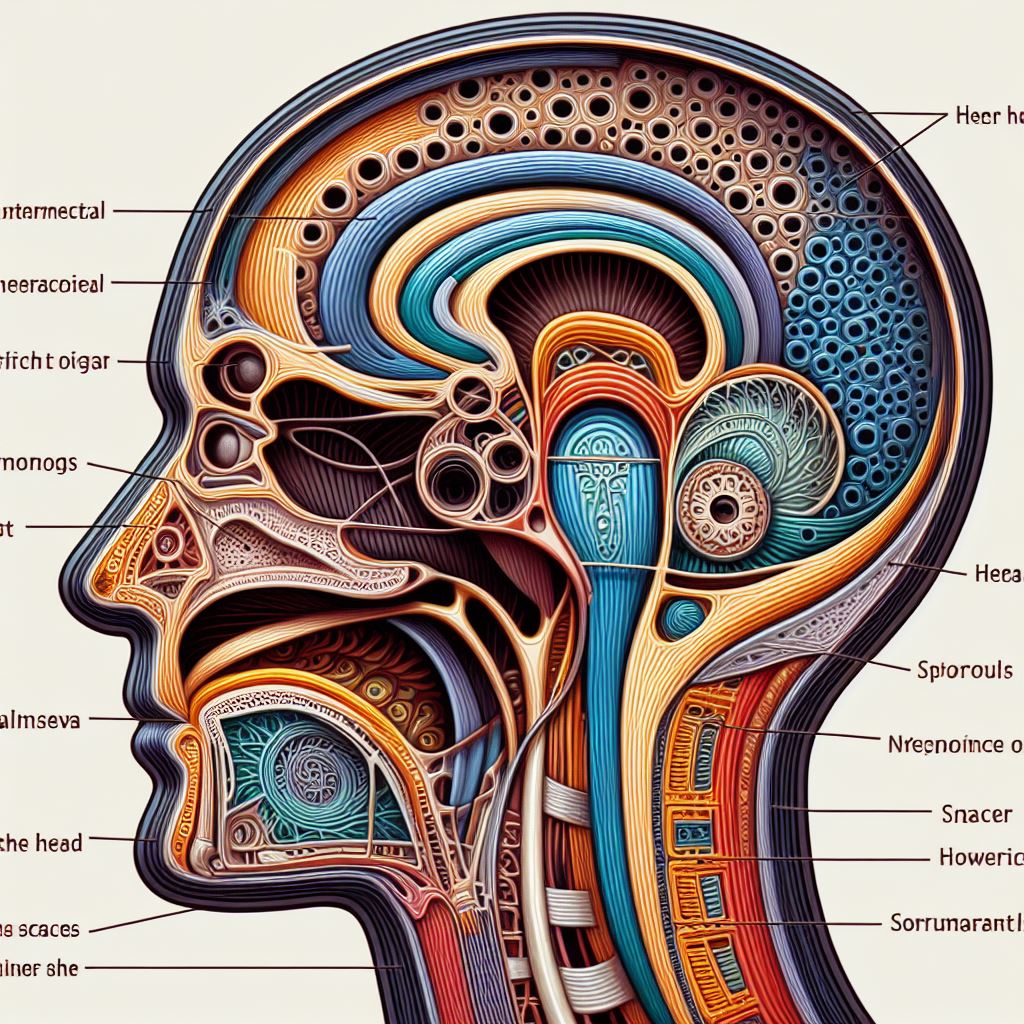
If it’s like the opening of a cave could this include (all) the passageways in the head like the nasal passages, ear openings and tubes, throat spaces, mouth and what the difference of this more external, upper beginning and end point breath energy when compared to the breath energy of air passages deeper (down) in the body?
If I’m getting this right, “pari-” is a prefix used with the connotation of around, about, all over, or that of completeness. Could this be like parinibbāna where “pari” means something like ultimate or complete or best overall then mixing with “mukhaṁ” as mouth, opening, entrance and/or any of the other mentioned interpretations for “mukhaṁ“?
There’s also the similar prefix “para”:
Definitions:
1. Beside; near; alongside: parathyroid.
2. Beyond: paranormal.
3. Incorrect; abnormal: paresthesia.
4. Similar to; resembling: paratyphoid fever.
5. Subsidiary; assistant: paraprofessional.
6. Isomeric; polymeric: paraldehyde.
Etymology:
para- (1)
before vowels, par-, word-forming element of Greek origin, “alongside, beyond; altered; contrary; irregular, abnormal,” from Greek para- from para (prep.) “beside, near; issuing from; against, contrary to” (from PIE *prea, from root *per- (1) “forward,” hence “toward, near; against”).
It is cognate with Old English for- “off, away.” Originally in English in Greek-derived words; it has been active in English mostly in scientific and technical words, but until recently was not usually regarded as a naturalized formative element in English.
para- (2)
before vowels par-, word-forming element of Latin origin meaning “defense, protection against; that which protects from,” from Italian para, imperative of parare “to ward off,” from Latin parare “make ready” (from PIE root *pere- (1) “to produce, procure”). It figures in parachute, parasol, parapet, etc.
Take and apply “para” in this meditative context. Perhaps this lends to more a vagueness and non-conventionality to what regularly experiences in worldly life, beyond what things seem on the surface. “Para” also brings to my mind “two” as in “pair.” In terms of breathing and mediation, there are plenty of pairs. In and out being the biggest. The in and out breath, two pauses between them, a start and an end to the in-breath, a start and an end to the out-breath, two nostrils and two lungs, an area preceding the nostrils and areas inside the body outside of the lungs.
The etymological “that which protects from” and “to ward off” seems reminiscent of the mindfulness instructions to guard the sense doors. Where, how and what is being allowed to go into and out of the body, senses, mind, etc. or going in and out without being allowed? How is the protection and friendliness?
This somehow reminded me of the Freemasonic notion of the Middle Chamber and the Buddha’s enlightenment poem which you’ll have to look both these up on your own and do your own contemplation on this if you feel there’s any relevance and/or helpfulness to come from it
It’s a stretch but could there kind of be the English words “muck” and “ham” in mukhaṁ and parimukhaṁ?
To be in the muck means to be in the thick of something one wouldn’t likely like to be in. Dirt. Challenging topics. Underbellies and the like. Or a muckraker is someone reporting on topics of the like.
The Chinook Jargonmuckamuck means food and muckamuck, sometimes derogatory means a person in a position of power or authority
A “ham” is someone who is the center of attention and acting in a way to be so. Obviously, ham is also a particular choice part of meat from a pig.
The “Dharmāloka-Mukhaṁ” (text) is translated as “Entrance into the Light of the Dharma”
Śraddhā Mārṣā Dharmāloka-mukham- Sirs, the faith entrance into the light of the Dharma
abhedy-āśayatāyai saṁvartate, opens the way to unbroken intention,
Thanissaro Bhikkhu mentions parimukhaṁ literally means “the front of the chest.” A few more modern sayings perhaps seem relavant to relating to parimukhaṁ in this way:
“that old chestnut”
“get that off my chest”
“hold _______ close to the heart”
“keep/hold your cards close (to your chest)”
So after examination and contemplation, how might be some other ways to approach (all) this in practice?
Placing All This Into Practice Possibilities
When examining, contemplating and playing with the words and notions for the translations of mukha and/or parimukhaṁ perhaps consider the following practice concepts in light of the corresponding instruction laid out in the Ānāpānasati and Satipatthana Suttas ‘Idha, bhikkhave, bhikkhu araññagato vā rukkhamūlagato vā suññāgāragato vā nisīdati, pallaṅkaṁ ābhujitvā, ujuṁ kāyaṁ paṇidhāya, parimukhaṁ satiṁ upaṭṭhapetvā‘ :
How about as a contemplation / meditation object sitting with: what does this “bring awareness to the fore” really mean and how ought it be implemented?
How about attention itself as a meditation object? Noticing the where/location, how and quality of attention from moment to moment?
And these, a mix of interpretation, perception and (meta-like, overarching) practice instructions:
Open up to the practice of [mindfulness]
Open/create a/the mindful(ness) space for [mindfulness practice]
Hold the/one’s intent [of cultivating mindfulness] close to the heart
Enter into (formal) mindfulness practice
Establishes a set, setting and utmost priority [for mindfulness (practice)]
One recalls, is aware of and realizes the distinction between inner and outer, interior and exterior of the body [for mindfulness cultivation]
Or maybe establishing mindfulness to the fore is an overall summation and preview of what one will be doing and/or what one does when practicing the Four Foundations of Mindfulness and Ānāpānasati?














 Integrating Presence