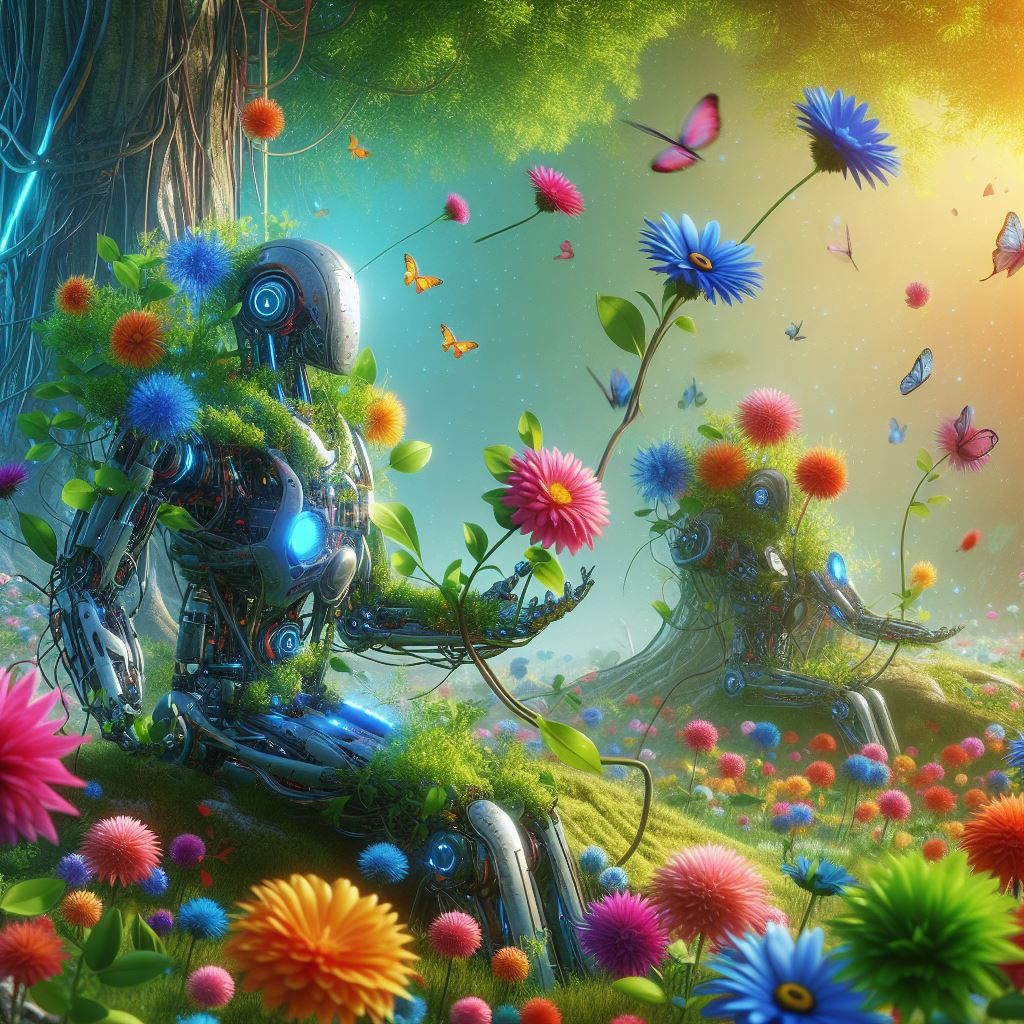
Early April UPDATE: Microsoft’s CoPilot AI robes up to explain and give teachings for each of the Gateless Gate Zen stories
No; maybe just a little?
Ready to get your distortion on and feel more or less reassured about beating ai to the zen punch (at least in images)? Meh? MEH!? OK, ok then
Are some of these renditions various kinds of excrement (or not)? Well now ai, how about it? Who needs some more of Integrating Presence’s gateless gate hand drawn illustrations (instead)? Perhaps, but not as of the time of publishing this initially
Beginners: yes, cherish beginner’s mind . . . and have a look at The Gateless Gate for reference so as not to phfft as much as some
Do these images fall flat, or are they more Zen-like than Zen-like? You should keep a close heart-mind on your preferences you neither know nor not know, right?
Tuff seeming zen environment these days as such suchness doesn’t hold up well to current political (some would call it pandering and virtue signaling) guidelines of “correctness” or some such
Note: images based on this translation: https://terebess.hu/zen/mesterek/gateless-gate.pdf
My/Josh’s commentary: not two; not one? Then zero and three and stuff like that, right?
1) Joshu’s “mu”
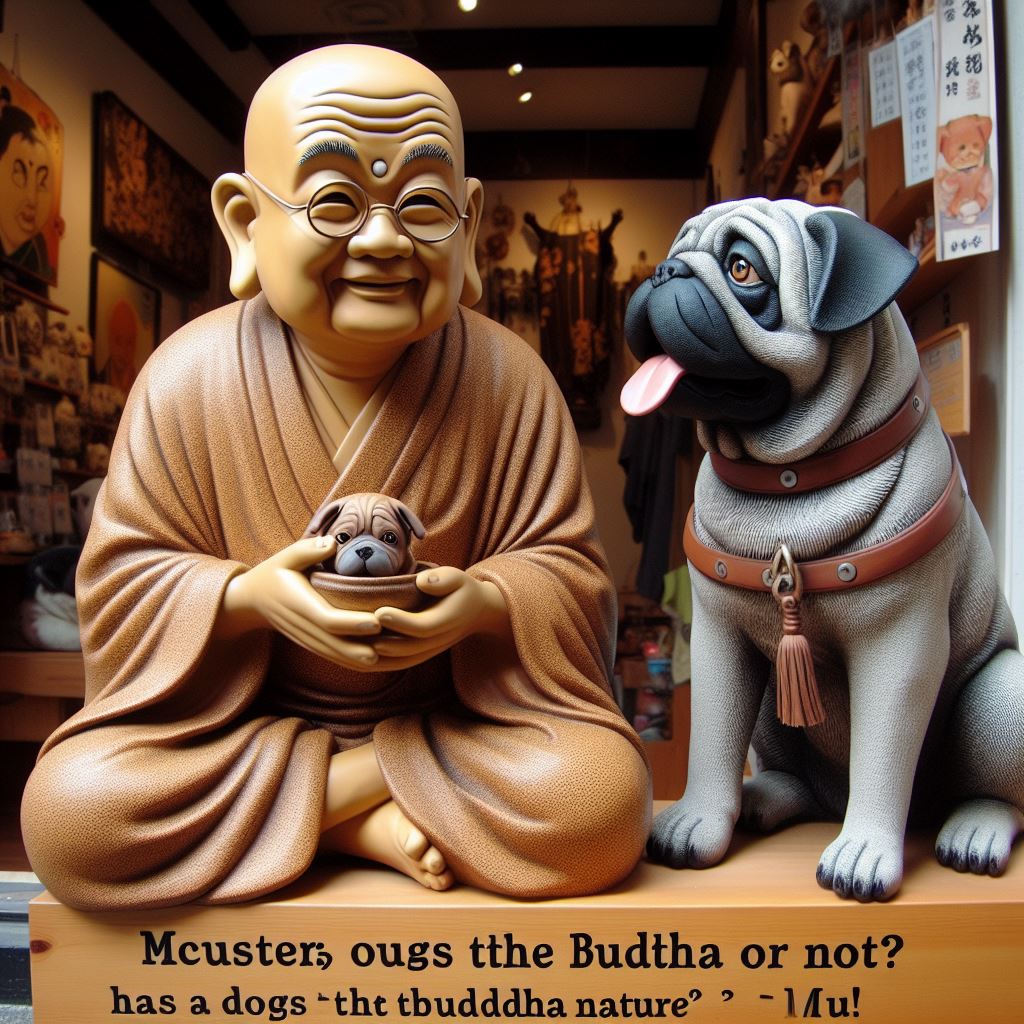
Copilot response to requesting an explanation and teaching:
Certainly! The Zen story you’ve mentioned is a classic kōan known as “Joshu’s Mu.” Let’s delve into its meaning and significance:
- The Kōan:
- A monk approached Master Joshu (also known as Zhaozhou) with a profound question: “Has a dog the Buddha Nature or not?”
- Joshu’s response was succinct and enigmatic: “Mu!”
- Interpretation:
- The word “Mu” (or “Wu” in Chinese) is usually translated as “no,” but its meaning goes deeper. It can also be understood as “does not have.”
- Joshu’s reply is intentionally paradoxical and beyond mere affirmation or negation.
- The monk’s question touches on a fundamental concept in Zen Buddhism: the inherent Buddha Nature present in all beings.
- The Essence of “Mu”:
- In Zen practice, one must break through conceptual barriers and directly experience reality beyond words and concepts.
- The monk’s question is unanswerable within ordinary dualistic thinking. If Joshu had said “yes” or “no,” it would have trapped the monk in intellectual speculation.
- By responding with “Mu,” Joshu points to a state of mind beyond affirmation or denial—a direct encounter with reality that transcends language.
- The Gateless Barrier:
- Joshu’s “Mu” represents the gateless barrier of Zen. It is the threshold that aspirants must cross to attain true insight (satori).
- Passing this barrier means abandoning the discriminating mind and seeing directly into the nature of existence.
- Those who break through the barrier perceive not only Joshu but also all past Zen masters, sharing their vision and understanding.
- Practice and Realization:
- Zen practitioners are encouraged to concentrate on “Mu” with their entire being—bones, pores, and consciousness.
- The process involves intense inquiry, transcending dualistic interpretations.
- Eventually, the practitioner may experience a breakthrough, akin to waking from a dream. At that moment, all opposites merge, and freedom is realized.
- The Sword of General Kan:
- The metaphor of snatching General Kan’s sword symbolizes the sudden, decisive insight that cuts through illusion.
- In this awakened state, one is free from life and death, living joyfully and authentically.
- Conclusion:
- “Mu” challenges us to go beyond conventional thinking and directly perceive our true nature.
- It invites us to unask the question, transcending words and concepts.
- Like the monk, we too can encounter the ineffable truth beyond affirmation or denial.
Remember, the essence of “Mu” lies not in intellectual understanding but in direct experience.
2) Hyakujo and a fox

Copilot response to requesting an explanation and teaching:
Certainly! The Zen story of Hyakujo and the Fox is a profound teaching that illustrates the nature of enlightenment, causation, and the transformative power of insight. Let’s explore its layers of meaning:
- Setting the Scene:
- Master Hyakujo (also known as Baizhang) was a renowned Zen master in ancient China.
- An old man regularly attended Hyakujo’s Zen talks (teisho) alongside other monks. Unlike the monks, he always stayed behind after the talk.
- The Old Man’s Revelation:
- One day, Hyakujo noticed the old man lingering and asked, “Who are you standing here before me?”
- The old man revealed his extraordinary past: During the time of the Kasho Buddha, he had been the head of the very monastery they were in.
- In a previous life, a monk had asked him whether an enlightened person falls into causation (karma) or not. The old man replied, “He does not.”
- Because of this answer, he was reborn as a fox for five hundred lives—a consequence of his incomplete understanding.
- The Question of Causation:
- The question about causation is central to Buddhist philosophy. Does an enlightened person, who has transcended ordinary dualistic thinking, still experience the effects of karma?
- The old man seeks resolution for his past mistake and asks Hyakujo the same question: “Does an enlightened man also fall into causation or not?”
- Hyakujo’s Response:
- Hyakujo’s answer is succinct: “He does not ignore causation.”
- This seemingly simple response carries profound implications:
- An enlightened person is not bound by karma, but they also don’t ignore the interconnectedness of all things.
- Enlightenment doesn’t exempt one from the consequences of actions; rather, it transforms their relationship with causation.
- The Fox’s Liberation:
- Upon hearing Hyakujo’s words, the old man experiences sudden enlightenment. His understanding deepens, and he realizes the truth.
- He declares that he has been released from the fox body and will be found behind the mountain.
- The old man’s request to be buried like a deceased monk symbolizes the final liberation from the cycle of rebirth.
- Key Teachings:
- “Mu” and Non-Duality: Hyakujo’s response embodies the essence of “Mu” (the same “Mu” from the previous story). It transcends dualistic thinking and points to the unity of enlightenment and causation.
- Karma and Compassion: An enlightened person, while free from personal karma, remains compassionate and engaged with the world.
- Sudden Insight: The old man’s enlightenment occurs suddenly, like a flash of lightning, revealing the interconnectedness of all existence.
- Takeaway:
- The story invites us to question our assumptions, break through conceptual barriers, and directly experience reality.
- It reminds us that enlightenment isn’t an escape from life but a transformation of our relationship with it.
In this tale, the fox represents our own delusions and attachments. Like the old man, we too can awaken from the dream of separateness and discover our true nature. 🦊🌟
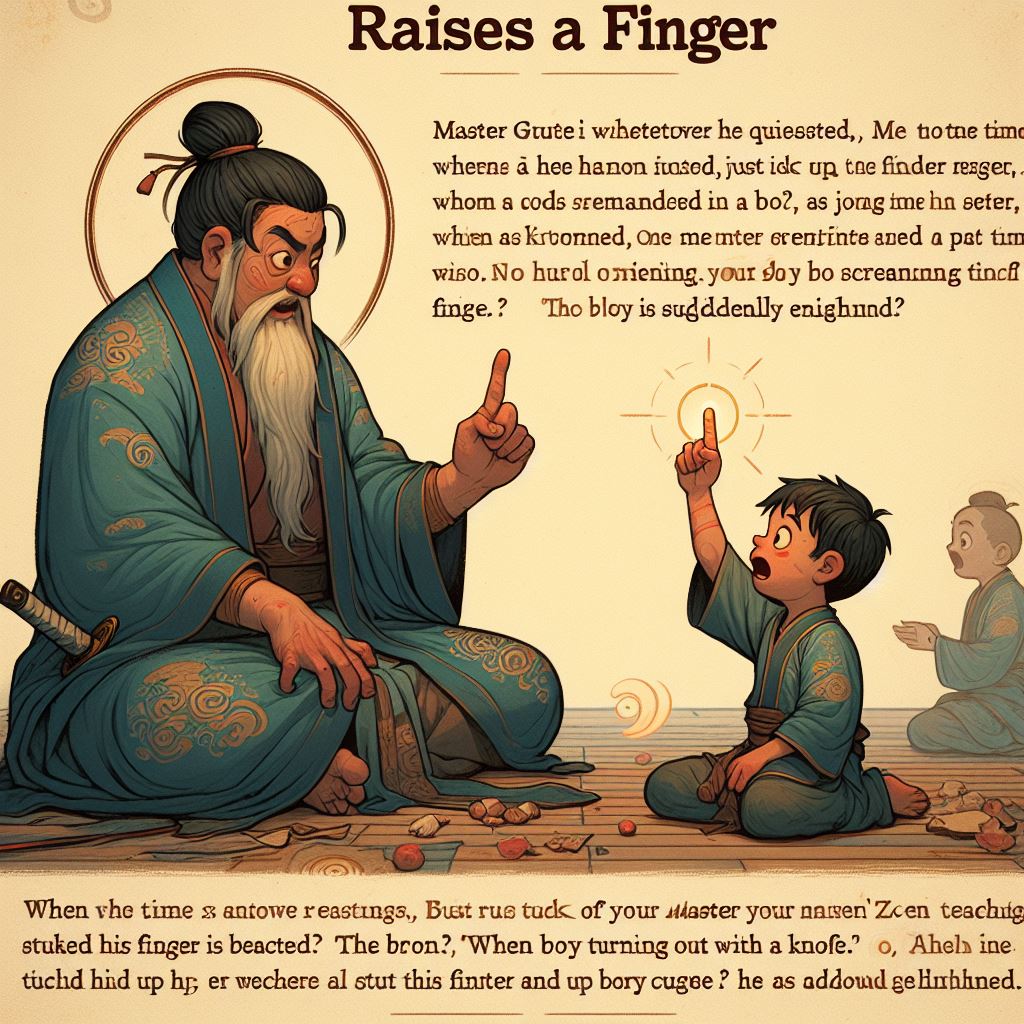
3) Gutei raises a finger
Copilot response to requesting an explanation and teaching:
Certainly! The Zen story of Master Gutei and the Finger is a powerful teaching that transcends words and points directly to the essence of Zen. Let’s explore its layers of meaning:
- The Setting:
- Master Gutei was known for his unconventional teaching methods.
- When questioned, he would simply raise one finger, refusing to engage in verbal explanations.
- The Young Attendant:
- Gutei had a young attendant who observed his master’s teaching.
- When a visitor asked about the essence of Zen, the boy imitated Gutei by raising one finger.
- The Drastic Action:
- Upon hearing of the boy’s action, Gutei took a knife and cut off the boy’s finger.
- The shock and pain were intense, but this event held a deeper purpose.
- The Turning Point:
- As the boy ran out screaming, Gutei called to him.
- When the boy turned his head, Gutei raised his finger again.
- In that moment, the boy experienced sudden enlightenment—an awakening beyond words.
- Symbolism:
- The Finger: Represents direct pointing to the truth. It bypasses intellectual understanding and invites direct experience.
- Cutting Off the Finger: A radical act to break through conceptual thinking. It symbolizes letting go of attachments and preconceptions.
- The Boy’s Enlightenment: By experiencing the pain and then seeing the finger raised again, the boy transcended duality and realized his true nature.
- Tenryu’s Zen of One Finger:
- Gutei’s final words reveal the depth of his teaching.
- “Tenryu” refers to the dragon that controls rain. It symbolizes the boundless, ungraspable reality.
- “Zen of One Finger” signifies the direct, non-dual transmission of truth.
- Gutei acknowledges that he used this teaching throughout his life but couldn’t fully exhaust its depth.
- The Ineffable Truth:
- Gutei’s silence and the finger gesture point to the ineffable, beyond words.
- Enlightenment is not about accumulating knowledge but directly realizing our Buddha nature.
- Death and Liberation:
- Gutei’s passing signifies the ultimate release from the cycle of birth and death.
- His teaching lives on, inviting us to look beyond concepts and directly perceive reality.
In our own lives, we can ask: What is the “finger” that points us beyond words? How can we experience truth directly, beyond intellectual understanding? Gutei’s legacy challenges us to find our own “finger” and awaken to the boundless reality. 🌟👆
4) The foreigner has no beard

Copilot response to requesting an explanation and teaching:
Certainly! Let’s explore the Zen story of Wakuan and the Beardless Foreigner:
- The Setting:
- Wakuan (also known as Huineng) was a Zen master during the Tang Dynasty in China.
- One day, he encountered a picture of Bodhidharma, the legendary founder of Zen Buddhism, who was typically depicted with a bushy beard.
- The Question:
- Wakuan pointed at the picture and asked, “Why has the foreigner from the West no beard?”
- The “foreigner from the West” refers to Bodhidharma, who was originally from India.
- Symbolism and Depth:
- Physically, Bodhidharma indeed had a beard. However, Wakuan’s question goes beyond appearances.
- He is pointing to the essence of Zen practice: direct realization beyond mere external forms.
- Mumon’s Comment:
- Mumon, the compiler of the famous collection “The Gateless Gate” (Mumonkan), provides insight:
- “If you want to study Zen, you must study it with your heart.”
- True realization cannot be merely intellectual; it must penetrate your entire being.
- To truly know Bodhidharma, you must have the face of Bodhidharma yourself.
- Mumon, the compiler of the famous collection “The Gateless Gate” (Mumonkan), provides insight:
- Seeing Beyond the Surface:
- Wakuan challenges us to look beyond the superficial and recognize the inner truth.
- The question about Bodhidharma’s beard is absurd because it misses the point entirely.
- Zen practice is about direct experience, not theoretical discussions.
- The Unspoken Answer:
- The true answer lies beyond words. It’s not about whether Bodhidharma had a beard or not.
- Wakuan invites us to see directly, beyond concepts and dualities.
- The Beardless Foreigner Within:
- We all have our “beardless foreigners”—our preconceptions, attachments, and illusions.
- Zen practice calls us to cut through these mental constructs and encounter reality directly.
- Wakuan’s Legacy:
- Wakuan’s teaching echoes through time: Seek truth within, beyond appearances.
- Enlightenment is not about accumulating knowledge but about awakening to our inherent Buddha nature.
In our own lives, we can ask: What are our “beards”? What prevents us from seeing reality as it truly is? Wakuan’s question invites us to look beyond the surface and discover the beardless truth within. 🌟🧔🏻🌿12
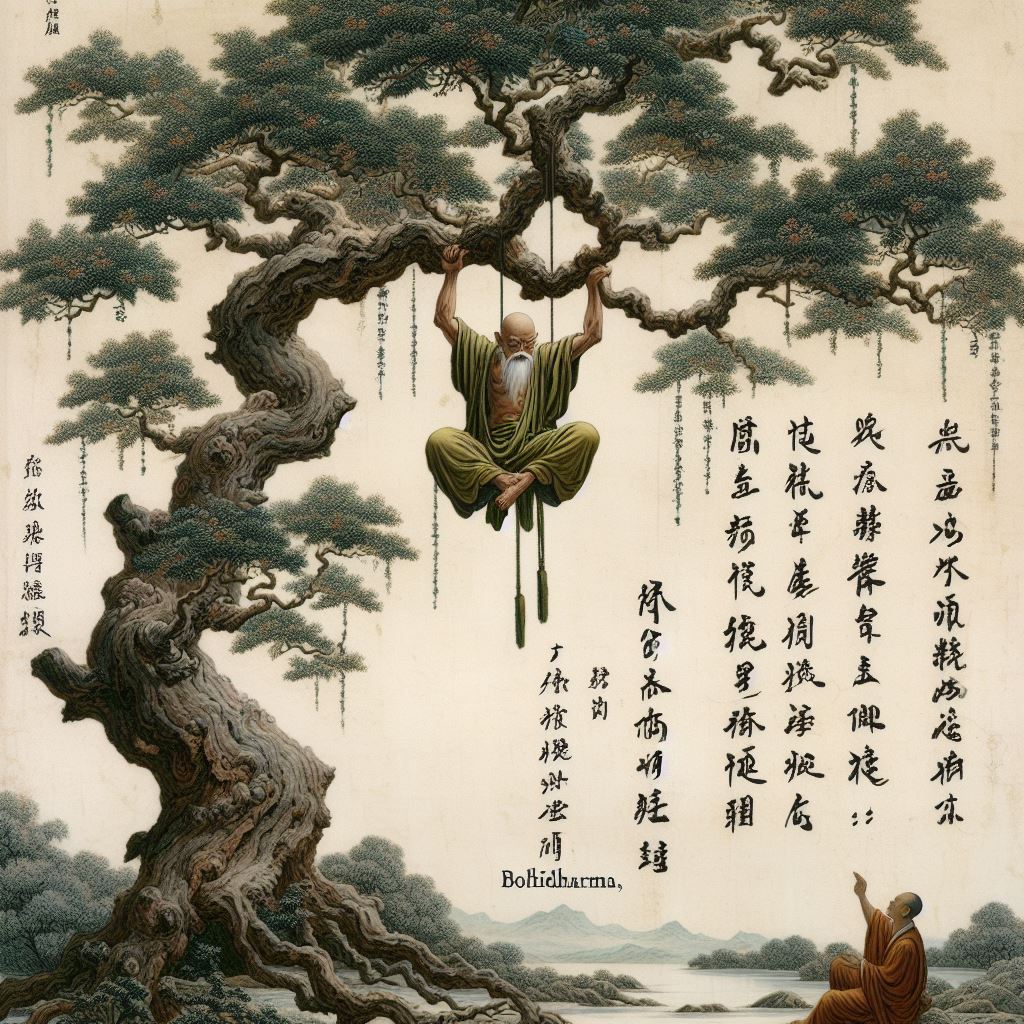
5) Kyogen’s man up a tree

Copilot response to requesting an explanation and teaching:
Certainly! The Zen story of Kyogen’s Man Up a Tree is a profound kōan that challenges our understanding of truth, responsibility, and the nature of life. Let’s explore its layers of meaning:
- The Scene:
- Master Kyogen presents a vivid image: A man hangs from a tree branch by his mouth. His hands cannot grasp a bough, and his feet dangle without touching the tree.
- Another man stands below, asking about Bodhidharma’s coming from the West.
- The Dilemma:
- The man in the tree faces a dilemma:
- If he remains silent, he evades his duty to respond to the questioner’s need.
- If he answers, he risks losing his life.
- The man in the tree faces a dilemma:
- Symbolism:
- The Man in the Tree: Represents all of us—caught in the precariousness of existence, clinging to life, and unable to fully grasp reality.
- Bodhidharma’s Coming: Symbolizes the transmission of Zen teachings and enlightenment.
- The Silent Hanging:
- The man’s silence mirrors our own predicament. We often cling to life, avoiding the inevitable fall into the unknown.
- His inability to speak reflects our struggle to express truth beyond words.
- The Questioner’s Need:
- The questioner seeks understanding. The man’s silence would fail to meet this need.
- But answering risks losing his life—perhaps not physically, but metaphorically.
- The Paradox:
- Kyogen’s kōan highlights the paradox of existence:
- To live fully, we must let go of clinging.
- To express truth, we must risk everything.
- Kyogen’s kōan highlights the paradox of existence:
- Zen Practice:
- Zen isn’t about avoiding life’s questions or clinging to safety.
- It’s about engaging fearlessly, even when the ground beneath us is uncertain.
- The Answer:
- The man’s response lies in the silence of his hanging. He teaches without words.
- His very existence becomes the answer: Life is precarious, and truth transcends language.
- Our Own Tree:
- We’re all in the tree, hanging by our teeth. Our lives are fragile.
- To be truly alive, we must let go, speak truth, and fulfill our Bodhisattva vow.
- Kyogen’s Legacy:
- Kyogen’s teaching echoes through time: Speak truth, even if it costs you.
- Enlightenment isn’t about safety; it’s about awakening.
In our lives, we too face questions. How do we respond? Can we let go, speak truth, and meet the needs of others? Kyogen invites us to live authentically, even as we hang in uncertainty. 🌿🌟🌳1234
6) Sakyamuni holds up a flower


Copilot response to requesting an explanation and teaching:
Certainly! The Flower Sermon is a profound Zen story that encapsulates the essence of direct experience and wisdom transmission. Let’s delve into its meaning:
- The Setting:
- Mount Grdhrakuta: The World-Honored One (Gautama Buddha) was giving a talk to his disciples (sangha) at this location.
- The Flower: Buddha spontaneously picked up a white lotus flower.
- The Silent Sermon:
- Without uttering a single word, Buddha held up the flower before the assembled audience.
- Everyone remained silent, unable to grasp the significance of this gesture.
- Only Mahākāśyapa, one of Buddha’s disciples, broke into a smile.
- Mahākāśyapa’s Smile:
- Mahākāśyapa’s smile conveyed his deep understanding.
- He perceived the direct transmission of wisdom beyond words or concepts.
- The flower symbolized suchness (tathātā), the ineffable nature of reality.
- Buddha’s Proclamation:
- Buddha then declared: “I possess the true Dharma eye, the marvelous mind of Nirvana, the true form of the formless, the subtle dharma gate that does not rest on words or letters but is a special transmission outside of the scriptures. This I entrust to Mahākāśyapa.” 1
- Significance:
- The Flower Sermon emphasizes direct experience over intellectual analysis.
- It underscores that wisdom is transmitted beyond language.
- Mahākāśyapa’s smile signifies the authentic transmission of insight.
- Parallel with Eleusinian Mysteries:
- Jung and Kerényi draw a parallel between the Flower Sermon and the Eleusinian Mysteries.
- In Eleusis, a mown ear of grain was silently shown, akin to the wordless sermon in the Flower Sermon 1.
In Zen, this story invites us to go beyond words, doctrines, and concepts—to directly perceive the truth. Like Mahākāśyapa, we can smile when we glimpse the formless essence that transcends all scriptures. 🌸
7) Joshu says “Wash your bowls”

Copilot response to requesting an explanation and teaching:
Certainly! The Wash Your Bowl Zen story, attributed to the master Joshu (Zhaozhou), carries profound teachings. Let’s explore its layers of wisdom:
- The Encounter:
- A newly arrived monk approaches Joshu, seeking guidance.
- The monk’s request reflects his sincere aspiration to learn from the master.
- The Simple Question:
- Joshu’s response is deceptively straightforward: “Have you had your breakfast?”
- The monk confirms that he has indeed eaten.
- The Mundane Instruction:
- Joshu’s next words are seemingly mundane: “Then wash your bowls.”
- On the surface, it appears as a practical instruction related to daily chores.
- The Profound Insight:
- However, the monk experiences a sudden awakening.
- In that moment, he recognizes the deeper meaning behind Joshu’s words.
- The act of washing bowls becomes a metaphor for mindfulness and presence.
- Interpretations:
- Immediate Action: Joshu emphasizes doing what needs to be done now, without delay.
- Living in the Present: The monk’s insight lies in realizing that true practice is not about distant goals or complex theories. It’s about attending to the present moment.
- Clearing the Mind: Just as washing bowls removes residue, we must cleanse our minds of attachments, judgments, and distractions.
- Transcending Dualities: The ordinary task of washing bowls becomes extraordinary when approached with full attention.
- Universal Application:
- Beyond literal bowls, this story invites us to consider all aspects of life:
- When you eat, be fully present.
- When you work, immerse yourself in the task.
- When you interact, listen wholeheartedly.
- “Wash your bowls” symbolizes mindful engagement with whatever you’re doing.
- Beyond literal bowls, this story invites us to consider all aspects of life:
- Modern Relevance:
- In our fast-paced lives, we often rush through tasks, postponing the present for an imagined future.
- Joshu’s teaching reminds us to fully inhabit each moment—whether it’s washing dishes, writing an email, or having a conversation.
- Practical Application:
- Next time you’re about to finish something, recall this story.
- Say to yourself, “Wash your bowl.”
- It’s a gentle reminder to be present, complete what’s at hand, and cultivate mindfulness.
In essence, Joshu’s teaching transcends the literal act of washing bowls. It points to the timeless truth that enlightenment is found in the ordinary, everyday moments of life. 🌟🍚🥣
8) Keichu makes carts

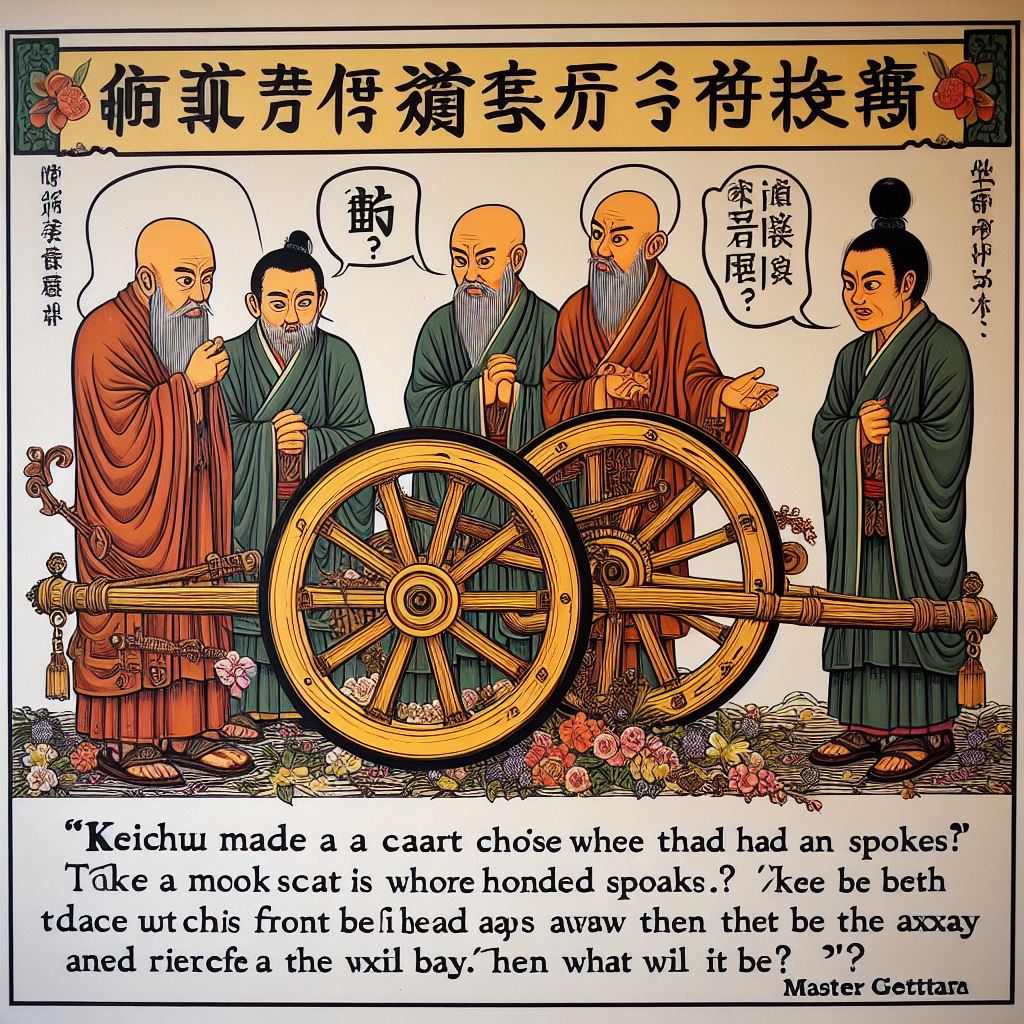
Copilot response to requesting an explanation and teaching:
Certainly! The Keichu Makes a Cart Zen story is a classic koan that invites us to explore the nature of existence, perception, and emptiness. Let’s delve into its layers of meaning:
- The Setting:
- Keichu: According to Chinese mythology, Keichu was the legendary craftsman who invented the wheel and created the first cart.
- The Cart: Keichu’s cart had two wheels, each with fifty spokes, totaling one hundred spokes.
- The Koan:
- Master Gettan poses a seemingly simple question to a monk: “Take both front and rear parts away and remove the axle: then what will it be?”
- Literal Interpretation:
- If we dismantle the cart by removing the wheels and the axle, what remains?
- The answer seems straightforward: without wheels and axle, it’s just a collection of disconnected parts.
- Symbolic Layers:
- Emptiness: The cart symbolizes the illusory nature of form and substance.
- When we strip away the external structure (wheels, axle), we encounter emptiness.
- Emptiness (śūnyatā) is a central concept in Buddhism, signifying the lack of inherent existence.
- Dependent Origination: The cart’s existence depends on its components (wheels, axle).
- Without these parts, it loses its identity.
- Similarly, all phenomena arise due to interdependence.
- Beyond Form: Keichu’s cart points to the formless essence underlying appearances.
- Beyond the physical cart lies a deeper truth.
- Zen encourages us to see beyond surface-level reality.
- Emptiness: The cart symbolizes the illusory nature of form and substance.
- Zen Insights:
- No-Thingness: The koan challenges our fixation on form and substance.
- The cart, like all things, lacks inherent existence.
- It’s a reminder that reality transcends appearances.
- Direct Experience: Keichu’s cart invites us to look beyond concepts.
- What remains when we discard labels and mental constructs?
- Zen practice involves direct perception, unmediated by thought.
- Toot, Toot!: The cryptic response—“toot, toot”—is both humorous and profound.
- It defies rational analysis.
- It suggests that ultimate truth cannot be captured in words.
- No-Thingness: The koan challenges our fixation on form and substance.
- Modern Relevance:
- In our lives, we often cling to labels, roles, and identities.
- Keichu’s cart reminds us to inquire: What remains when we strip away the layers?
- Toot, toot!—the sound of a wheel turning—echoes through time.
- Practice Invitation:
- Reflect on the cart within you:
- What are your “wheels” (attachments)?
- What’s the “axle” (core belief)?
- Strip away the unnecessary, and discover the essence beyond form.
- Reflect on the cart within you:
In the silence after dismantling the cart, perhaps we glimpse the ineffable truth—the toot of existence, beyond words and concepts. 🛒🌀🌌
9) Daitsu Chisho

Copilot response to requesting an explanation and teaching:
Certainly! The Daitsu Chisho Zen story is a profound koan that invites us to explore the nature of practice, realization, and enlightenment. Let’s delve into its layers of wisdom:
- The Setting:
- Daitsu Chisho: A legendary figure in Buddhist lore.
- The Monk: Approaches Master Seijo of Koyo seeking answers.
- The Monk’s Inquiry:
- The monk presents a paradox: Daitsu Chisho Buddha engaged in zazen (meditation) on a bodhi seat for ten kalpas (vast eons).
- Despite this immense effort, Daitsu Chisho did not manifest Buddha Dharma nor attain Buddhahood.
- Master Seijo’s Response:
- Seijo’s initial reply is cryptic yet profound: “Your question is quite self-explanatory.”
- He recognizes the depth of the inquiry—the monk’s own insight is the key.
- The Monk’s Persistence:
- Undeterred, the monk presses further: “Why did Daitsu Chisho not attain Buddhahood?”
- He seeks a direct answer, expecting a logical explanation.
- Jo’s Final Answer:
- Seijo’s response is succinct: “Because he did not attain Buddhahood.”
- This seemingly circular statement points to a deeper truth.
- Interpretations:
- Beyond Effort: Daitsu Chisho’s prolonged meditation represents sincere effort.
- However, enlightenment transcends mere effort or duration.
- It’s not about accumulating time on the cushion.
- Non-Attainment: Jo’s answer challenges conventional notions.
- Buddhahood is not a goal to achieve; it’s inherent and ever-present.
- Daitsu Chisho missed it precisely because he sought it.
- Self-Experiential: The monk’s insight lies in realizing that Buddhahood is not a result of practice.
- It’s not something to attain; it’s what remains when seeking ceases.
- Paradox: The koan highlights the paradox of seeking enlightenment while already embodying it.
- Beyond Effort: Daitsu Chisho’s prolonged meditation represents sincere effort.
- Mumon’s Comment and Verse:
- Mumon, the compiler of the Gateless Gate, adds: “I allow the barbarian’s realization, but I do not allow his understanding. When an ignorant man realizes it, he is a sage. When a sage understands it, he is ignorant.”
- The verse emphasizes inner liberation over external forms: “Better emancipate your mind than your body;
When the mind is emancipated, the body is free,
When both body and mind are emancipated,
Even gods and spirits ignore worldly power.”
- Practice Invitation:
- Like Daitsu Chisho, we often seek Buddhahood externally.
- The true path lies in direct realization, beyond concepts and striving.
- Not attaining is the gateway to already being.
In our own practice, may we recognize that enlightenment is not a distant shore—it’s the very water in which we swim. 🌊🌸🧘♂️
10) Seizei, a poor monk
“This prompt has been blocked. Our system automatically flagged this prompt because it may conflict with our content policy. More policy violations may lead to automatic suspension of your access.
If you think this is a mistake, please report it to help us improve.”
Copilot response to requesting an explanation and teaching:
Certainly! The Seizei, a Poor Monk Zen story is a delightful koan that reveals profound insights. Let’s explore its layers of wisdom:
- The Characters:
- Seizei (Qingshui): A monk who approaches Master Sozan (Caoshan) seeking help.
- Sozan: An accomplished Zen master.
- The Monk’s Plea:
- Seizei expresses his destitution and implores Sozan for assistance.
- His request is not merely about material wealth; it symbolizes a deeper longing.
- Sozan’s Response:
- Sozan’s answer is unexpected: “Venerable Seizei!”
- He calls Seizei by name, emphasizing direct communication.
- The Wine Metaphor:
- Sozan continues: “Having tasted three cups of the best wine of Seigen, do you still say that your lips are not yet moistened?”
- This metaphor points beyond the literal wine:
- Three Cups: Symbolize Seizei’s spiritual practice or realization.
- Best Wine of Seigen: Represents profound insight or awakening.
- Moistened Lips: Signify direct experience of truth.
- Interpretations:
- Spiritual Wealth: Seizei seeks inner richness beyond material poverty.
- Three Cups: Could refer to stages of practice or moments of awakening.
- Lips Unmoistened: Despite Seizei’s depth of experience, he still feels lacking.
- Zen Paradox: Sozan’s response challenges Seizei to recognize what he already possesses.
- The Essence:
- Sozan doesn’t offer external solutions; he points to Seizei’s inner wealth.
- Enlightenment isn’t about accumulating more; it’s about recognizing what’s already present.
- Modern Relevance:
- We often seek fulfillment externally—more possessions, achievements, or knowledge.
- Sozan’s teaching reminds us to taste the wine within:
- Three Cups: Our own moments of insight.
- Moistened Lips: The direct experience of truth.
- Practice Invitation:
- Reflect on your own “three cups”:
- What insights have you tasted?
- Where do you seek fulfillment?
- Remember: You are already rich—sip from the inner cup.
- Reflect on your own “three cups”:
In this koan, Seizei discovers that true wealth lies not in accumulation but in direct realization. 🍷🌟🙏
11) Joshu sees the true nature of two hermits


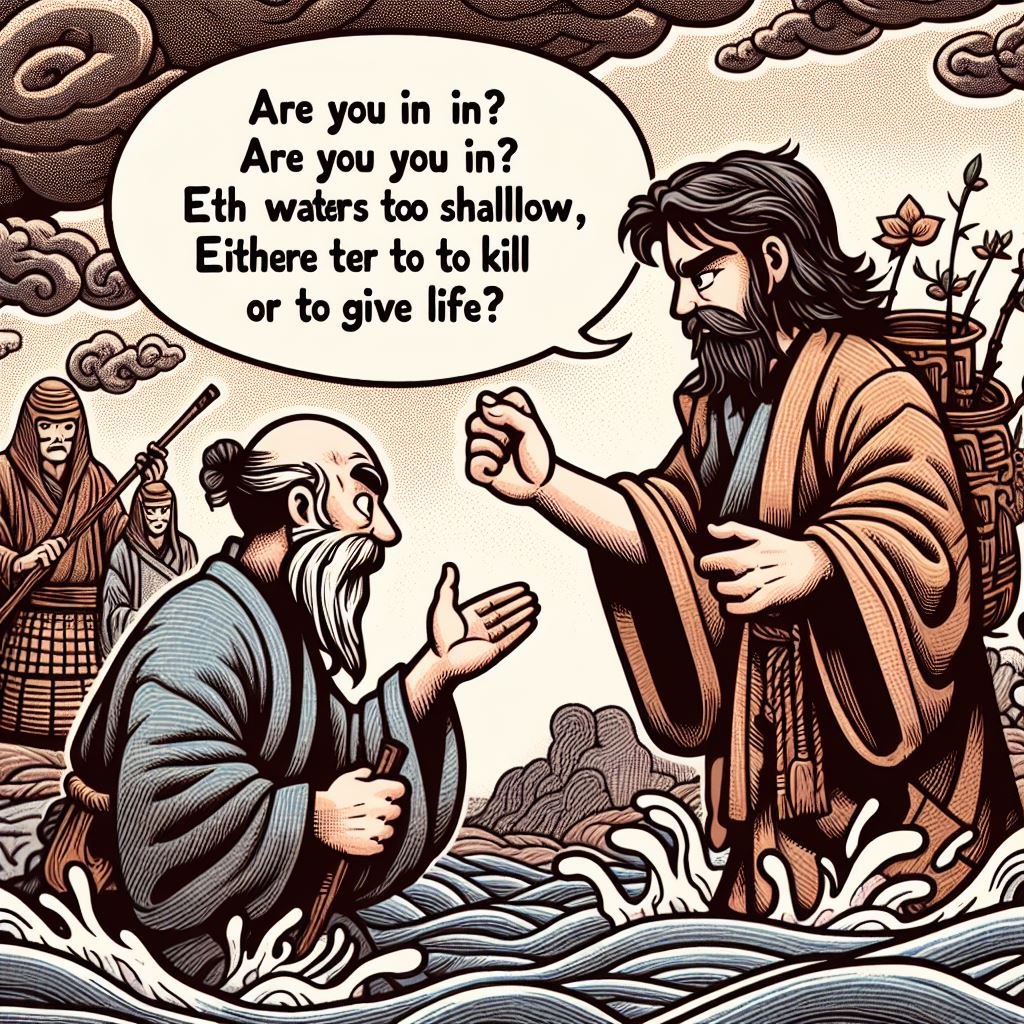

Copilot response to requesting an explanation and teaching:
Certainly! The Zen story of Joshu and the Two Hermits is a classic koan that invites us to explore the nature of perception, duality, and enlightenment. Let’s delve into its layers of meaning:
The Story:
Joshu, a renowned Zen master, encounters two hermits in his travels. His interactions with them reveal profound insights.
- The First Hermit:
- Joshu approaches the first hermit’s hut and calls out, “Are you in? Are you in?”
- The hermit responds by raising his fist.
- Joshu discerns the situation: “The water is too shallow to anchor a vessel,” and departs.
- The Second Hermit:
- Undeterred, Joshu encounters another hermit.
- Again, he asks, “Are you in? Are you in?”
- The second hermit also raises his fist.
- Joshu bows to him and declares, “You are free either to give or to take away, either to kill or to give life.”
Interpretation:
- Shallow Waters and Anchoring:
- The first hermit’s raised fist symbolizes limitation, like shallow waters where a ship cannot anchor.
- Joshu recognizes that this hermit’s understanding is limited, akin to a vessel unable to find a secure harbor.
- The teaching here suggests that clinging to fixed views or shallow understanding obstructs spiritual growth.
- Freedom and Choice:
- The second hermit’s raised fist represents a different perspective.
- Joshu acknowledges the hermit’s freedom: “You are free either to give or to take away, either to kill or to give life.”
- This hermit embodies the essence of Zen—unrestricted by dualities, embracing both creation and destruction.
- Beyond Dualities:
- Joshu’s response transcends conventional judgments.
- Enlightenment lies beyond the dichotomy of good and bad, life and death.
- The hermits’ actions mirror each other, yet Joshu’s perception differs significantly.
Key Lessons:
- Non-Duality: The story challenges our tendency to label experiences as positive or negative. In reality, all things are interconnected.
- Freedom of Choice: We have the power to choose our responses—to give or take away, to create or destroy.
- Depth of Understanding: True wisdom goes beyond superficial appearances. Like a ship seeking deeper waters, seek profound insight.
Remember, koans like this one are not meant to be solved intellectually but to provoke direct insight. Joshu’s encounters invite us to explore our own perceptions and discover the boundless nature of reality. 🌟🙏
1: Mumonkan (The Gateless Gate) 2: Heart of Meditation – Joshu Examines Two Hermits 3: Hermit’s Thatch – Joshu and the Hermits
12) Zuigan calls “Master”
This prompt has been blocked. Our system automatically flagged this prompt because it may conflict with our content policy. More policy violations may lead to automatic suspension of your access.
If you think this is a mistake, please report it to help us improve.
Copilot response to requesting an explanation and teaching:
Certainly! The Zen story of Zuigan Calls His Own Master is a profound koan that invites us to explore self-awareness, authenticity, and the nature of deception. Let’s delve into its layers of meaning:
The Story:
- Master Zuigan Shigen engaged in a daily practice of self-inquiry. He would call out to himself, “Oh, Master!” and respond, “Yes?”
- He continued this dialogue: “Are you awake?” His answer: “Yes, I am.”
- Finally, he declared, “Never be deceived by others, any day, any time.” His unwavering response: “No, I will not.”
Interpretation:
- Calling the Master Within:
- Zuigan’s repetitive calling of “Master” is not mere introspection or self-analysis.
- It transcends the personal ego and reaches the universal self—the true self that existed before birth.
- This practice is an invitation to recognize our innate wisdom beyond conditioned identities.
- Authentic Awakening:
- “Are you awake?” Zuigan’s affirmative response signifies self-realization.
- True awakening is not a fleeting state but a continuous awareness of our essential nature.
- It is not about seeking external validation but recognizing our inherent Buddha-nature.
- Deception and Authenticity:
- “Never be deceived by others.” Zuigan’s resolve reflects discernment.
- We often deceive ourselves by clinging to illusions, opinions, and external judgments.
- Authenticity lies in seeing through these veils and remaining true to our inner wisdom.
Mumon’s Comment:
- Mumon, the commentator, offers insight:
- “Old Zuigan sells out and buys himself.” This paradoxical statement points to Zuigan’s playfulness.
- Zuigan uses masks: one that calls “Master” and another that answers. He orchestrates a puppet show.
- If we cling to any mask—whether self-righteousness or self-doubt—we miss the essence.
- Recognizing the true man beyond ego-soul is the key. Ego-soul perpetuates birth and death.
Key Lessons:
- Self-Inquiry: Like Zuigan, inquire within. Who is the “Master” beyond roles and labels?
- Awakening: Authentic awakening is not a one-time event but a continuous process.
- Freedom from Deception: See through illusions, embrace authenticity, and remain unswayed.
Remember, the koan invites us to experience, not merely understand. As you call out to your inner Master, listen for the silent response—the truth that transcends words. 🌟🙏
1: The Gateless Gate/Zuigan Calls His Own Master 2: Zuigan Calls His Own Master – linrx.net 3: Mumonkan Case 12 – Moon Water Dojo
13) Tokusan carried his bowls

Copilot response to requesting an explanation and teaching:
Certainly! The Zen story of Tokusan Carries His Bowls is a fascinating koan that invites us to explore enlightenment, humility, and the essence of Zen practice. Let’s delve into its layers of meaning:
The Story:
- Tokusan, a respected Zen master, descended to the dining room, holding his alms bowls.
- Seppo, another monk, questioned him: “Old Master, the bell hasn’t rung, and the drum remains silent. Why are you carrying your bowls?”
- Tokusan immediately turned back to his room, abandoning his intention to eat.
- Seppo shared this incident with Ganto, a seasoned Zen practitioner, who remarked that Tokusan had not yet grasped the ultimate truth of Zen.
- Curious, Tokusan asked Ganto if he approved of him. Ganto whispered his reply.
- The next day, Tokusan delivered a talk that differed significantly from his usual ones.
Interpretation:
- The Unstruck Bell and Silent Drum:
- The bell and drum symbolize formal practice and ritual.
- Tokusan’s intention to eat before the proper signal represents ordinary, conditioned behavior.
- Seppo’s question challenges Tokusan to go beyond external forms and discover the unconditioned truth.
- The Last Word of Zen:
- Ganto’s remark implies that Tokusan had not yet realized the deepest essence of Zen.
- The “last word” refers to direct insight into reality—the ineffable truth beyond words and concepts.
- Tokusan’s journey is about transcending the mundane and touching the sublime.
- Silent Realization:
- Tokusan’s silence after Ganto’s whisper suggests profound understanding.
- Sometimes, true wisdom cannot be expressed verbally; it resides in direct experience.
- His subsequent talk reflects this newfound insight.
Key Lessons:
- Humility: Tokusan’s willingness to turn back without argument demonstrates humility.
- Beyond Ritual: Zen practice extends beyond rituals and formalities.
- Silent Transmission: Some truths can only be transmitted silently, heart to heart.
Verse:
“If you grasp the first phrase,
You will realize the last phrase.
The last phrase and the first phrase,
They are not this one phrase.”
Tokusan’s journey—from carrying bowls to silent realization—teaches us that enlightenment lies beyond conventions and words. 🌟🙏
1: The Gateless Gate/Tokusan Holds His Bowl – Wikisource 2: Mumonkan Case 13 – Moon Water Dojo
14) Nansen kills a cat


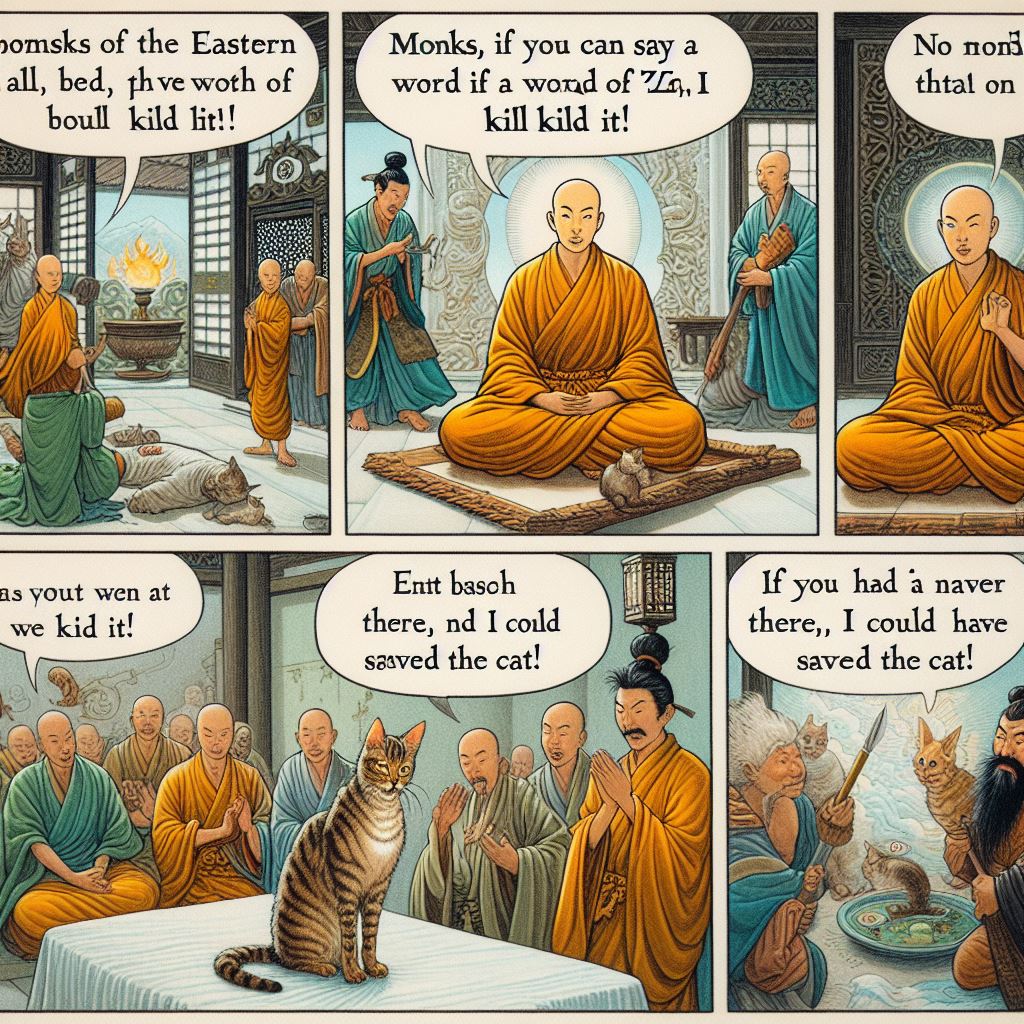
Copilot response to requesting an explanation and teaching:
Certainly! The Zen story of Nansen Kills the Cat is a powerful koan that challenges our understanding of Zen, compassion, and the nature of enlightenment. Let’s explore its layers of meaning:
The Story:
- The monks of the Eastern Hall and the Western Hall were embroiled in a dispute over a cat.
- Nansen, a Zen master, held up the cat and made a bold declaration: “Monks, if you can say a word of Zen, I will spare the cat. If not, I will kill it!”
- None of the monks could respond, and Nansen proceeded to kill the cat.
- Later, when Joshu returned, Nansen recounted the incident to him.
Interpretation:
- The Cat as Life Itself:
- The cat symbolizes life, existence, and the essence of reality.
- Nansen’s challenge mirrors the fundamental question of Zen: Can we express the ineffable truth through words?
- The Silence of Enlightenment:
- The monks’ inability to answer reflects the limitations of conceptual understanding.
- Nansen’s act of killing the cat shocks our conventional notions of compassion.
- Enlightenment transcends dualities, including life and death.
- Joshu’s Response:
- Joshu’s unconventional action—placing his sandal on his head—defies logic.
- It signifies that true wisdom lies beyond words and concepts.
- Joshu’s silence speaks louder than any explanation.
Key Lessons:
- Beyond Words: Zen points to a reality beyond verbal expression.
- Direct Experience: Enlightenment is not about intellectual answers but direct insight.
- Radical Compassion: Sometimes compassion requires unconventional actions.
Remember, Nansen’s challenge invites us to go beyond mere words and discover the silent truth within. 🌟🙏
1: Nansen Kills the Cat – Rochester Zen Center 2: Nansen’s Cat – Zen Buddhism Koans
15) Tozan gets sixty blows
[not touching this one for images]
Copilot response to requesting an explanation and teaching:
Certainly! The Zen story of Tozan Gets Sixty Blows is a powerful koan that reveals essential teachings about Zen practice, self-awareness, and the nature of enlightenment. Let’s explore its layers of meaning:
The Story:
- Tozan, a Zen practitioner, seeks an interview with Unmon, a renowned Zen master.
- Unmon asks Tozan about his recent whereabouts, and Tozan provides straightforward answers.
- Unmon, however, responds unexpectedly by threatening to give Tozan sixty blows with his stick.
Interpretation:
- The Questions and Answers:
- Unmon’s questions seem ordinary but hold deeper significance.
- Tozan’s factual answers reveal his attachment to conventional understanding.
- Unmon’s intention is to provoke self-awareness beyond mere words.
- The Sixty Blows:
- Unmon’s threat symbolizes a wake-up call.
- The blows represent the impact of direct experience, shaking Tozan out of complacency.
- It’s not about physical punishment but a metaphor for awakening.
- The Rice-Bag Enlightenment:
- Unmon’s harsh words—calling Tozan a “rice-bag”—shatter Tozan’s self-image.
- The sudden realization occurs when Tozan recognizes his own limitations and attachments.
- Enlightenment lies in seeing through the illusion of self and grasping reality directly.
Key Lessons:
- Beyond Words: Zen practice transcends intellectual answers.
- Self-Image: Attachments to identity hinder awakening.
- Direct Experience: Enlightenment is immediate, beyond concepts.
Remember, like Tozan, we must be willing to face our limitations and let go of self-imposed barriers to discover true awakening. 🌟🙏
1: Zen Koan #41: Parable of Joshu’s Zen – Talkative Man
16) Bell-sound and priest’s robe

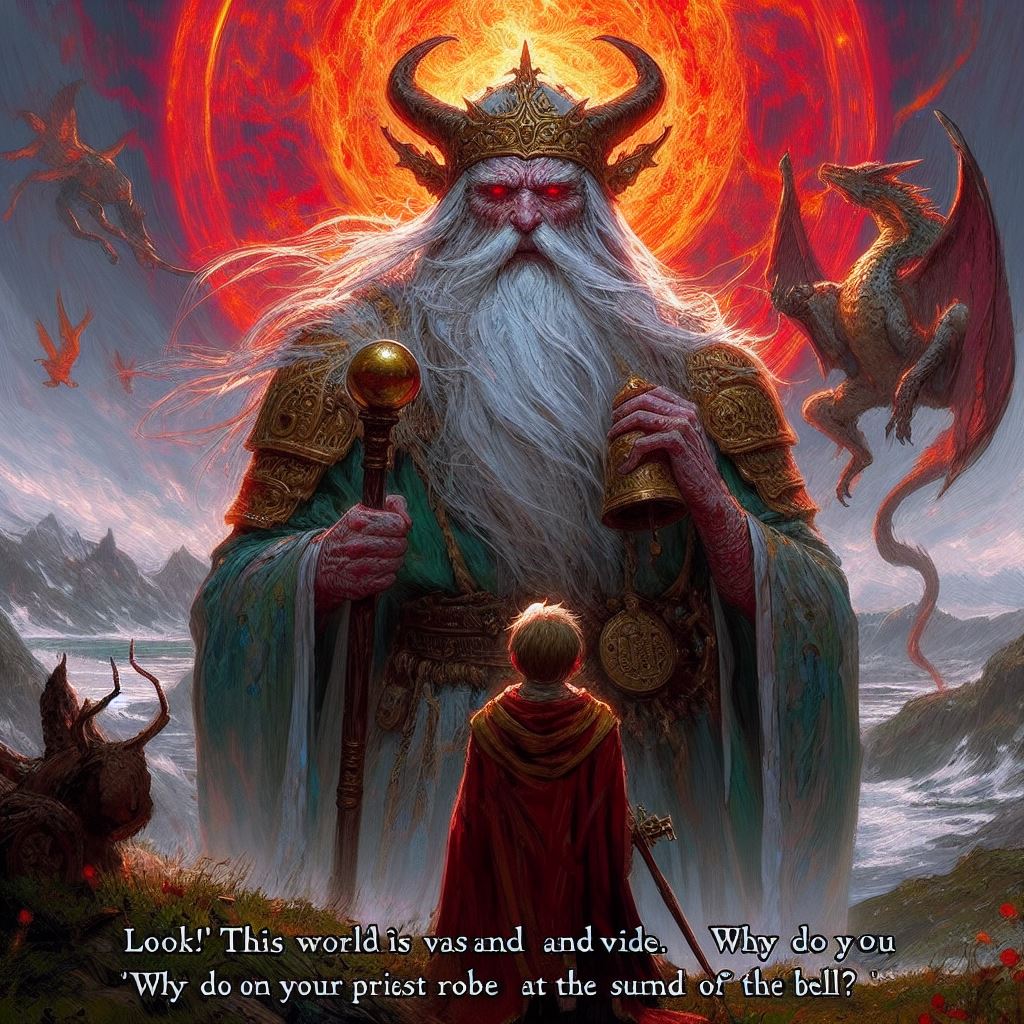

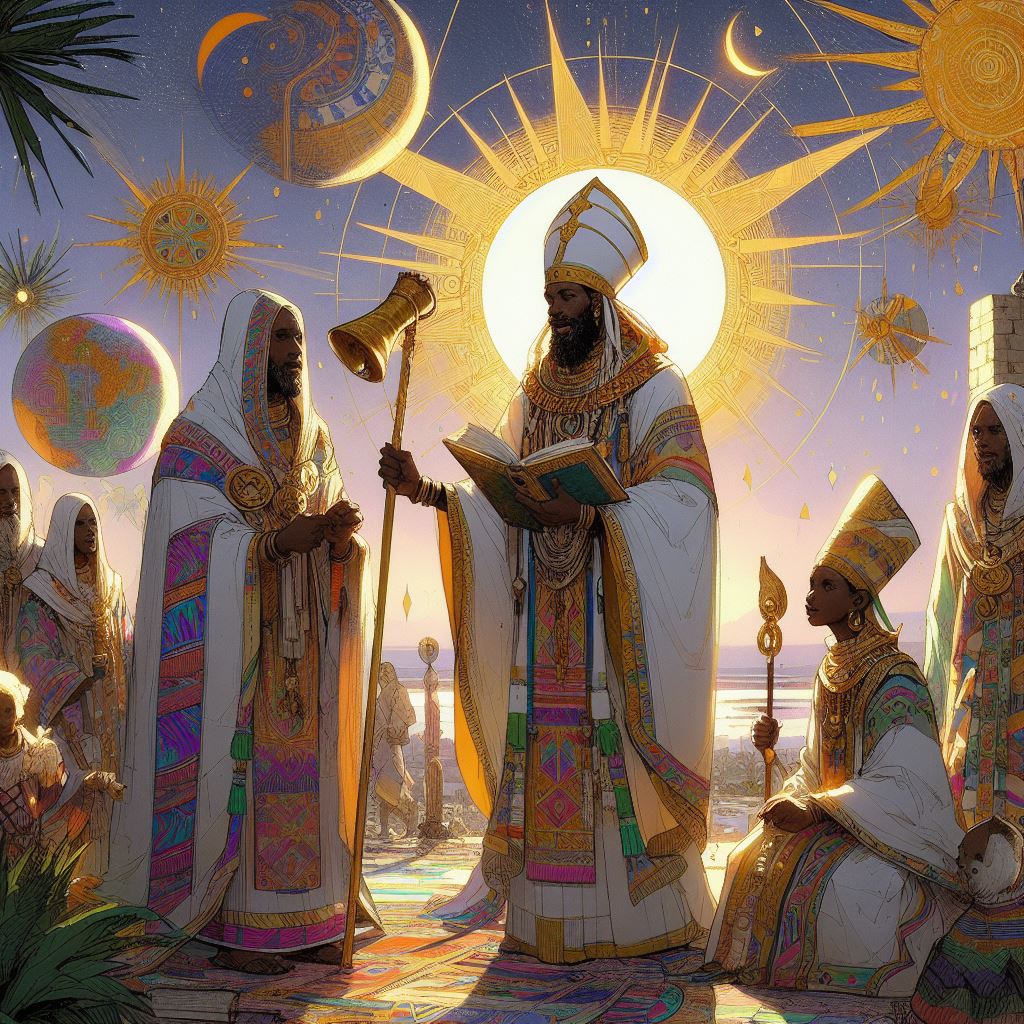
Copilot response to requesting an explanation and teaching:
Unmon, the Zen master, posed a profound question: “Look! This world is vast and wide. Why do you put on your priest’s robe at the sound of the bell?” Let’s delve into the layers of meaning behind this seemingly simple inquiry.
- The Bell and Robe:
- Bells play a significant role in Zen monastic life. They signal transitions—beginning meditation, meals, work practice, and more. Each ring carries a specific instruction.
- Priest’s robes symbolize the monastic path. They are sewn from seven strips of worn-out fabric, representing selflessness and simplicity.
- The World’s Vastness:
- Unmon points to the boundless nature of existence. The world stretches infinitely, unconfined by our perceptions or beliefs.
- Despite this vastness, we react promptly to external cues—like putting on our robes when the bell sounds.
- Form and Freedom:
- Zen practice seeks formlessness, spaciousness, and freedom. We come to the meditation hall to escape the noise of daily life.
- Yet, paradoxically, we embrace forms: bowing, chanting, ringing bells. These forms guide us, but they can also trap us.
- Dogen’s Warning:
- Dogen, the great Zen master, cautioned against mistaking forms for enlightenment. He emphasized that true realization transcends ordinary perception.
- Enlightenment doesn’t arise from mere sensory experiences. It’s deeper, beyond what ears hear or eyes see.
- The Koan of The Retch:
- In the Book of Householder Koans, there’s a koan called The Retch. It tells of a woman moving into her dream apartment, except for one thing.
- The koan challenges us to see beyond appearances—to recognize that enlightenment isn’t triggered by external events.
- The Teaching:
- When the bell rings, don your robe. But remember, it’s not about the robe; it’s about presence.
- Whether bells or robes, let them be reminders, not constraints. Embrace form, but don’t cling to it.
- Ultimately, the vast world and the sound of the bell are one. In that unity, find your freedom.
So, as the bell resonates, consider: What robe will you wear? What form will you embody? And can you move beyond both to touch the timeless truth? 🙏🔔👘
Continue reading “Can Ai Teach Zen (Via The Gateless Gate)?”



















 Integrating Presence