Images For The Minds Of The Three Kinds Of People In The World

The three types of people in the world are likened to a person with a mind like an open sore, a person with a mind like lightning, and a person with a mind like diamond.

And who has a mind like an open sore? It’s someone who is irritable and bad-tempered. Even when lightly criticized they lose their temper, becoming annoyed, hostile, and hard-hearted, and they display annoyance, hate, and bitterness. They’re like a festering sore, which, when you hit it with a stick or a stone, discharges even more. In the same way, someone is irritable and bad-tempered. Even when lightly criticized they lose their temper, becoming annoyed, hostile, and hard-hearted, and they display annoyance, hate, and bitterness. This is called a person with a mind like an open sore.


And who has a mind like lightning? It’s someone who truly understands: ‘This is suffering’ … ‘This is the origin of suffering’ … ‘This is the cessation of suffering’ … ‘This is the practice that leads to the cessation of suffering’. They’re like a person with keen eyes in the dark of the night, who sees by a flash of lightning. In the same way, someone truly understands: ‘This is suffering’ … ‘This is the origin of suffering’ … ‘This is the cessation of suffering’ … ‘This is the practice that leads to the cessation of suffering’. This is called a person with a mind like lightning.


And who has a mind like diamond? It’s someone who realizes the undefiled freedom of heart and freedom by wisdom in this very life. And they live having realized it with their own insight due to the ending of defilements. It’s like a diamond, which can’t be cut by anything at all, not even a gem or a stone. In the same way, someone realizes the undefiled freedom of heart and freedom by wisdom in this very life. … This is called a person with a mind like diamond.

Illustrated: The Buddha’s Five Themes For Addressing Unskillful Thoughts

In the Vitakkasaṇṭhāna Sutta — The Relaxation of Thoughts (MN 20) the Buddha provides five themes to attend to at the appropriate times for those intent on heightening the mind. With accompanying images, they are:


Small Peg Knocking Out Larger One (to attend to another theme)

There is the case where evil, unskillful thoughts—connected with desire, aversion, or delusion—arise in a monk while he is referring to and attending to a particular theme. He should attend to another theme, apart from that one, connected with what is skillful. When he is attending to this other theme, apart from that one, connected with what is skillful, then those evil, unskillful thoughts—connected with desire, aversion, or delusion—are abandoned and subside. With their abandoning, he steadies his mind right within, settles it, unifies it, and concentrates it. Just as a dexterous carpenter or his apprentice would use a small peg to knock out, drive out, and pull out a large one; in the same way, if evil, unskillful thoughts—connected with desire, aversion, or delusion—arise in a monk while he is referring to and attending to a particular theme, he should attend to another theme, apart from that one, connected with what is skillful. When he is attending to this other theme, apart from that one, connected with what is skillful, then those evil, unskillful thoughts—connected with desire, aversion, or delusion—are abandoned and subside. With their abandoning, he steadies his mind right within, settles it, unifies it, and concentrates it.


Disgusted By Wearing Carcass (to know certain thoughts are unskillful, blameworthy, and resulting in stress)

If evil, unskillful thoughts—connected with desire, aversion, or delusion—still arise in the monk while he is attending to this other theme, connected with what is skillful, he should scrutinize the drawbacks of those thoughts: ‘Really, these thoughts of mine are unskillful, these thoughts of mine are blameworthy, these thoughts of mine result in stress.’ As he is scrutinizing the drawbacks of those thoughts, those evil, unskillful thoughts—connected with desire, aversion, or delusion—are abandoned and subside. With their abandoning, he steadies his mind right within, settles it, unifies it, and concentrates it. Just as a young woman—or man—fond of adornment, would be horrified, humiliated, and disgusted if the carcass of a snake or a dog or a human being were hung from her neck; in the same way, if evil, unskillful thoughts—connected with desire, aversion, or delusion—still arise in the monk while he is attending to this other theme, connected with what is skillful, he should scrutinize the drawbacks of those thoughts: ‘Really, these thoughts of mine are unskillful, these thoughts of mine are blameworthy, these thoughts of mine result in stress.’ As he is scrutinizing the drawbacks of those thoughts, those evil, unskillful thoughts—connected with desire, aversion, or delusion—are abandoned and subside. With their abandoning, he steadies his mind right within, settles it, unifies it, and concentrates it.


Looking Away (to pay no mind to unskillful thoughts)

If evil, unskillful thoughts—connected with desire, aversion or delusion—still arise in the monk while he is scrutinizing the drawbacks of those thoughts, he should pay no mind and pay no attention to those thoughts. As he is paying no mind and paying no attention to them, those evil, unskillful thoughts are abandoned and subside. With their abandoning, he steadies his mind right within, settles it, unifies it, and concentrates it. Just as a man with good eyes, not wanting to see forms that had come into range, would close his eyes or look away; in the same way, if evil, unskillful thoughts—connected with desire, aversion or delusion—still arise in the monk while he is scrutinizing the drawbacks of those thoughts, he should pay no mind and pay no attention to those thoughts. As he is paying no mind and paying no attention to them, those evil, unskillful thoughts are abandoned and subside. With their abandoning, he steadies his mind right within, settles it, unifies it, and concentrates it.


From Running To Walking To Standing To Sitting To Lying Down (to relax thought fabrications)

If evil, unskillful thoughts—connected with desire, aversion or delusion—still arise in the monk while he is paying no mind and paying no attention to those thoughts, he should attend to the relaxing of thought-fabrication with regard to those thoughts. As he is attending to the relaxing of thought-fabrication with regard to those thoughts, those evil, unskillful thoughts are abandoned and subside. With their abandoning, he steadies his mind right within, settles it, unifies it, and concentrates it. Just as the thought would occur to a man walking quickly, ‘Why am I walking quickly? Why don’t I walk slowly?’ So he walks slowly. The thought occurs to him, ‘Why am I walking slowly? Why don’t I stand?’ So he stands. The thought occurs to him, ‘Why am I standing? Why don’t I sit down?’ So he sits down. The thought occurs to him, ‘Why am I sitting? Why don’t I lie down?’ So he lies down. In this way, giving up the grosser posture, he takes up the more refined one. In the same way, if evil, unskillful thoughts—connected with desire, aversion or delusion—still arise in the monk while he is paying no mind and paying no attention to those thoughts, he should attend to the relaxing of thought-fabrication with regard to those thoughts. As he is attending to the relaxing of thought-fabrication with regard to those thoughts, those evil, unskillful thoughts are abandoned and subside. With their abandoning, he steadies his mind right within, settles it, unifies it, and concentrates it.


Clenching Teeth (to crush unskillful/evil mind with awareness)

“Just as a strong man, seizing a weaker man by the head or the throat or the shoulders, would beat him down, constrain and crush him . . .”

If evil, unskillful thoughts—connected with desire, aversion or delusion—still arise in the monk while he is attending to the relaxing of thought-fabrication with regard to those thoughts, then—with his teeth clenched and his tongue pressed against the roof of his mouth—he should beat down, constrain, and crush his mind with his awareness. As—with his teeth clenched and his tongue pressed against the roof of his mouth—he is beating down, constraining, and crushing his mind with his awareness, those evil, unskillful thoughts are abandoned and subside. With their abandoning, he steadies his mind right within, settles it, unifies it, and concentrates it. Just as a strong man, seizing a weaker man by the head or the throat or the shoulders, would beat him down, constrain, and crush him; in the same way, if evil, unskillful thoughts—connected with desire, aversion or delusion—still arise in the monk while he is attending to the relaxing of thought-fabrication with regard to those thoughts, then—with his teeth clenched and his tongue pressed against the roof of his mouth—he should beat down, constrain, and crush his mind with his awareness. As—with his teeth clenched and his tongue pressed against the roof of his mouth—he is beating down, constraining, and crushing his mind with his awareness, those evil, unskillful thoughts are abandoned and subside. With their abandoning, he steadies his mind right within, settles it, unifies it, and concentrates it.

Kind Boundaries

To be kind to those who are unkind in return only seems one-sided to the one ‘keeping score’. When reciprocity doesn’t come from people around you, but from the will of the Universe moving through a depiction of characters, you will come to realize how people’s behavior is more reflective of where they are in their journey and never a reflection of your intention or self-worth. While you certainly don’t have to be best friends or lovers with those who ‘take’ with nothing else to ‘give’, because you are serving the will of the Universe, you are always being celebrated by the loving intelligence of divinity for all that you do — even when received by people solely designed to reflect your progress out of the plight of unfairness and into the light of eternal faith.

7/4/2021 Matt Kahn newsletter

The following question recently put to me references the above quote:

A question for you, as stated today in Matt Kahn’s newsletter that you don’t have to be friends with those who are unkind to you, do you think it’s more of a reacting in the moment with kindness and then you are ok to choose not to hang out with them anymore? And then how do you handle this with family or people you are more obligated or even forced to see for some time until you can completely break the relationship? I understand fully those societal obligations can be broken but just curious on your take on repeat interactions with those who are unkind.

Question put to me

My (somewhat revised/edited) response:

Yes this is a little more tricky and complicated. Without knowing specifics, what comes to mind now for more general day to day interactions with those we are more obligated and/or forced to interact with: sometimes the kindest thing we can do for ourselves and others is establish and maintain as firm of boundaries for as long as necessary. And we can do so with kindness, compassion and limiting our time spent in these interactions. While this takes courage and bravery I also feel it’s even more helpful to express our feelings (if possible and without saying they are causing them) and clearly express these boundaries to the involved parties. How exactly this is done — and in what tone and manner — is the rub though.

For example, years ago I got to the point where I just told my mom that we had to take a break — no communications whatsoever except for emergencies for one week. I rarely saw her more upset after I did this and had never seen such benefits in our relationship afterwards. Obviously this is just an example not a suggestion.

We all start where we are. I love Matt Kahn’s teachings. While the effect is not often immediately noticeable, nor step-by-step practical, for me these teachings plant seeds and seem to revolutionize my views, perceptions and ways of being in the world.

And as far as “reacting in the moment with kindness and then you are ok to choose not to hang out with them anymore” I’d say it is even OK to choose not to hang out with someone no matter how you have been or have not been. And just because the choice is made not to hang out doesn’t mean one must keep being kind, or stop being kind to them, whether in their presence or not. I’ve found, eventually though, with a regular loving-kindness practice, loving-kindness is a natural state that arrises more and more without (much) effort once what is in its way starts to dissolve.

And while it is certainly OK, I don’t really see this in terms of equity like “OK, now since I’ve been kind to them I’m OK to stop hanging out with them.” Also, kindness is different from niceness. I feel niceness can range from the inverted “I really don’t want to interact much with you” to the authentic icing on the cake of kindness.

An Integrating Presence Meditation: Breathing Nine Beneficial Energies Into Embodiment — June 29, 2021 At Fat Cat Longevity


In this (now recorded) mediation — also on (the) Insight Timer (app) — we worked with breath to embody the beneficial energies of:

  • Smiling
  • Our most relaxed experience
  • Gratitude [and/or appreciation and thankfulness]
  • Forgiveness
  • Service
  • Loving-kindness
  • Compassion
  • (Vicarious) joy [and/or gladness]
  • Equanimity
  • [Additional beneficial energies not mentioned:]
    • various ideal blessings
    • energies from (being around) your spiritual entourage
    • goodness
    • generosity

With these words dropped in to further amplify and benefit:

  • Open
  • Allow
  • Permit
  • Embrace
  • Inhabit
  • Be with
  • Accompany
  • Free
  • Melt
  • Soften
  • Sooth
  • Safe
  • Surrender
  • Sweetness
  • Gentleness
  • Care
  • Yes
  • Tenderness
  • Ease
  • Expand
  • Relax
  • Release
  • Include
  • Trust
  • It’s OK
  • This too
  • This belongs
  • It IS like this

Not included are these helpful three-way forgiveness phrases:

  1. To those I may have caused harm knowingly or unknowingly through my thoughts words or actions I ask you to consider forgiving me.
  2. To those who have may have caused me harm knowingly or unknowingly through their thoughts words or actions I freely offer my forgiveness as best as I am able at this time.
  3. And for any harm I may have caused myself knowingly or unknowingly through my thoughts my words my actions I offer my forgiveness I forgive myself as best I can at this time.


Meditation Audio: Breathing 9 Beneficial Energies Into Embodiment
Meditation Audio: Breathing 9 Beneficial Energies Into Embodiment— Recorded Live on June 29, 2021 at Fat Cat Longevity

Or listen via Insight Timer (app or website)


Mary’s House of Healing
524 South Main Street
Downstairs at Fat Cat Longevity next to Peace Love Coffee…
St. Charles, MO 63301

May 5, 2021 — 6:00pm – 6:45pm

Doors open: 5:50pm — Doors close: 6:05pm

Cost: Fat Cat Longevity price packagesmonthly membership or generosity inspired donation

Questions To Assess The Office Of The Director of National Intelligence’s ‘Unidentified Aerial Phenomena Assessment Report’

[4/9/2022 UPDATE: Pentagon releases 1,500 pages of secret documents about shadowy UFO programme after four year battle https://www.the-sun.com/news/5053632/us-government-releases-1500-pages-secret-documents-ufo-programme and https://www.livescience.com/ufo-report-human-biological-injuries and some claiming all these documents available at: https://drive.google.com/drive/folders/1lL1b6yHJ_A7bnNEANhKq2w9Y0uuieWh4]

I previously wrote about preparing the general public for mass disclosure, how such a thing may be gone about, and some of the questions, challenges and complications involved.

The Office of the Director of National Intelligence recently released a report called, “Preliminary Assessment: Unidentified Aerial Phenomena Unidentified Aerial Phenomenon [PDF]

Preliminary Assessment: Unidentified Aerial Phenomena Unidentified Aerial Phenomenonhttps://www.dni.gov/files/ODNI/documents/assessments/Prelimary-Assessment-UAP-20210625.pdf

Unsurprisingly, the report’s tone comes off as dismissive, pointing the finger elsewhere than what the alternative information communities have called for, and is largely framed in a war-based context.

I really don’t have much of an assessment about the assessment other than can be drawn from the following questions:

  1. How long has everything in this report already been known within various portions of the intelligence community?
  2. What are the sources of information gathering for this report? What sources were known and weren’t included? Why? What about MUFON?
  3. Can previous credible US Government and Military reports be included in the data? If not, why not?
  4. What kind of action is being taken on suspected unknown sources for information gathering of this sort?
  5. What kind of inter-agency sharing was and wasn’t included in the report?
  6. Why such an emphasis on (technological) sensors?
  7. Who all would be spoofing observations and why?
  8. Who all is the authority on judging observer misperception and what is the criteria for their expertise?
  9. Why is language like “could be” and “may be” being used?
  10. What manner and extent of human intelligence and other forms of non-machine/mechanical/computational/AI/technological intelligence are and are not being used? Why?
  11. Hypothetically, if a non-violent force deemed a UAP was trying to end war and violence on a global/planetary level would this be considered a national security threat? Why or why not?
  12. What is the following sentence implying: “We currently lack data to indicate any UAP are part of a foreign collection program or indicative of a major technological advancement by a potential adversary.” If data is lacking why assume and point this out? What does this indicate given the previously mentioned, “some UAP may be technologies deployed by China, Russia, another nation, or a non-governmental entity”? Why the seeming contradiction? Why include such ambiguous statements?
  13. To what extent will normalizing “future collection, reporting, and analysis” promote biases and increase or decrease data quality? How is this known? What corrective countermeasures are being considered?
  14. To what extent do certain personnel with certain clearances already have access to the recommendations and outcomes of everything mentioned in this report and beyond?
  15. To what extent could this task force be an experiment for other intelligence programs and/or a front program for what kinds of agendas by whom all?

So is this report a tiptoe towards disclosure? How does, and how doesn’t, and how could this all relate to various spiritual paths and meditation practices?


, ,

Also see: https://toveje.dk/hal-new-reality/hal-processes-of-disclosure and https://sites.google.com/view/hal-future-humanities-project/new-narratives/full-disclosure-article

Form And Formless | (6/29/2021 — “Ask Us Anything – LIVE” With Denny K Miu)


“[The three emancipations of] emptiness, signlessness, and wishlessness constitute dualities. The empty is the signless, and the signless is the wishless. If [one achieves] the empty, the signless, and the wishless, then there is no mind, thought, or consciousness. In this single gate of emancipation are the three gates of emancipation. This is to enter the Dharma gate of nonduality.”

From Chapter IX – The Dharma Gate of Nonduality of the Vimalakīrti Sutra

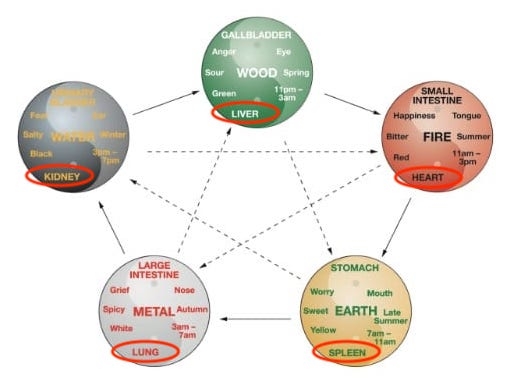
For this month’s regular open-audience, open-discussion “Ask Us Anything LIVE” — continuing discussions about meditation and related topics — Denny draws from, and summarizes the teaching of Master Ji Ru (Shifu) to link together the Four Great Elements, Four “Mighty” Postures, Four Right Knowings, Four Foundations of Mindfulness, Three (or Four) Dharma Seals, and Three Gates of Liberation.


  • Four Great Elements
    • Fire
    • Earth
    • Water
    • Wind
  • Four “Mighty” Postures
    • Standing
    • Sitting
    • Lying Down
    • Walking
  • Four Right Knowings
    • Body (身) ← Standing
    • Feeling (受) ← Sitting
    • Mind (心) ← Lying Down
    • Dharma (法) ← Walking
  • Four Foundations of Mindfulness
    • Body → “Not Firm” (觀身不實)
    • Feeling → Dukkha (觀受皆苦)
    • Mind → “Rising & Fading” (觀心生滅)
    • Dharma → “No Drama” (觀法無法)
  • Three (or Four) Dharma Seals
    • All are Impermanent (諸行無常)
    • Nirvana is Bliss (涅槃寂靜)
    • [Dukkha as the Fourth]
    • All are Empty & Non-Self (諸法無我)
  • Three Gates of Liberation
    • Desireless Gate (無願門)
    • “Signless” Gate (無相門)
    • Emptiness Gate (空門)

Miscellaneous mentions include:

  • Transcendental/reverse dependent origination (the opposite which I mentioned but couldn’t remember the name of)
  • Skandha vs Khandha
    • ‘..the correct word is kandha and NOT skandha for the five “aggregates”. The Pāli (and Sinhala) word kandha means a “pile” (as in a pile of sand) and is still used to denote a hill in Sinhala. I just look up the meaning of “skandha” in Sanskrit and it says  “Hindu god of war”. This is how the true meanings of the original words have been lost due to incorporation of “sophisticated sounding” Sanskrit words with no relevance.’
  • Dharma with a Big D meaning reality and dharma with a little d meaning phenomena, methodology, and the teachings of the historical Buddha
  • 33 Synonyms for Nibbana
  • Standalone Four Elements meditation practices
  • Non-separation of the four elements
  • The entire universe being within the body:

Yet it is just within this fathom-long body, with its perception & intellect, that I declare that there is the cosmos, the origination of the cosmos, the cessation of the cosmos, and the path of practice leading to the cessation of the cosmos.

from the Rohitassa Sutta
  • After the Buddha’s parinibbana the precepts being the teacher and the Four Applications/Foundations of Mindfulness as dwelling place:

My second question is, when the Buddha is in the world, we Bhikshus take the Buddha as our teacher. Whom should we take as our teacher after the Buddha enters Nirvana?”The Buddha said, ” After I enter Nirvana, you Bhikshus should take the precepts as your teacher. The Pratimoksa is your great teacher. If you uphold the precepts, it will be the same as when I am in the world. You should avoid all evil and practice all good deeds.”In the beginning of the Buddha’s teaching career, there were no precepts, but as the Sangha continued to grow, complications inevitably arose. Not everyone was well-behaved. The Buddha established the precepts one by one in response to the needs of the situation. In the final compilation of the precepts, there were 250 precepts for Bhikshus, 348 precepts for Bhikshunis, ten major and forty-eight minor precepts for Bodhisattvas, ten precepts for Shramaneras (novices), and eight precepts and five precepts for laypeople. All these various categories of precepts are aimed at helping people to behave well. People who are well-behaved will be good citizens who can help others and benefit the society. Thus, the moral precepts are the basis for world peace. Therefore, Bhikshus should take the precepts as their teacher.”Now I’ll ask the third question,” continued Ananda. “When the Buddha is in the world, we dwell with the Buddha. We always live and study with the Buddha. After the Buddha enters Nirvana, with whom should the Bhikshus dwell?”

The Buddha answered, “After I enter Nirvana, all the Bhikshus should dwell in the Four Applications of Mindfulness.”

via Sutra of the Merit and Virtue of the Past Vows of Medicine Master Vaidurya Light Tathagata Commentary Part 1 Explained by the Venerable Master Hua
in 1983 at Gold Wheel Monastery in Los Angeles
  • Paccekabuddha (“solitary buddha” or “a buddha on their own”)
  • Various translations of dhammas (5 Hindrances, 5 Aggregates of Clinging, 6 Internal and External Sense Bases, 7 Factors of Enlightenment, 4 Noble Truths) the Fourth Foundations of Mindfulness, as:
    • phenomena
    • contents of mind
    • objects of mind
    • mental objects, etc.
  • The significance of the Satipatthana Sutta now often being translated as The Discourse on the Establishing of Mindfulness instead of The Four Foundations of Mindfulness
  • Turning towards knowledge of the passing away and reappearance of beings in the second watch of the night of the Buddha’s enlightenment

Behold now, bhikkhus, I exhort you: All compounded things are subject to vanish. Strive with earnestness!

The last words of the Buddha: Handa dani bhikkhave amantayami vo: Vayadhamma sankhara appamadena sampadetha.


An Ajahn Punnadhammo talk on Buddhist Cosmology and a YouTube series with Ajahn Sona:


Audio: Form And Formless | (6/29/2021 — “Ask Us Anything – LIVE” With Denny K Miu)

Or listen via Insight Timer (app or website)


Currently, for a chance to experience, practice, and receive Yi Jin Jing instructions from Denny plus more mindful exercise join in free on Saturdays:


Continue reading “Form And Formless | (6/29/2021 — “Ask Us Anything – LIVE” With Denny K Miu)”

June 2021 Full Moon Dhamma Gathering: Truth

“The gift of Truth excels all (other) gifts.

The flavour of Truth excels all (other) flavours.

The pleasure in Truth excels all (other) pleasures.

He who has destroyed craving overcomes all sorrow.”

— Dhammapada 354

Due to a (previously written about) major interest in truth, I answered the call to read a Sutta at Beth Upton’s full moon gathering today. Each of these monthly online get-togethers explores a different topic and offers “a chance to deepen our connections with each other through group meditation and Dhamma discussion.” I considered a Jataka tale featuring goblins. But it is too long. Here’s the takeaway though:

When he had thus exhorted the disciples, the Blessed One said,—“So too in times past, disciples, the men who jumped to the fatuous conclusion that what was no refuge was a real refuge, fell a prey to goblins in a demon-haunted wilderness and were utterly destroyed; whilst the men who clave to the absolute and indisputable truth, prospered in the selfsame wilderness.”

— from the Apannaka Jataka  https://suttacentral.net/ja1/en/chalmers

I read the Cūlaviyūha Sutta — Smaller Discourse on Quarreling (full text included below).

Here I roughly rehash the two main questions we explored:

  • What hinders us from truth?
  • What can help bring more awareness to our relationship with truth?

I did not get around to exploring these four words from the Metta Sutta:

“Let none deceive another . . .”

— Metta Sutta

Does this line mean action should be taken to prevent deception? If so, how and to what extent? (Deception often happens as protection or retribution, btw)


Other potential questions of interest:

  • How much truth revealing is needed in any moment (of interaction)?
  • What if you didn’t mean to fool someone?

(And for those often identifying with feelings) there is the practice of feeling into the truth of something


Cūlaviyūha Sutta — Smaller Discourse on Quarreling from Sutta Nipāta 4.12

Question
Each attached to their own views,
They dispute, and the experts say,
“Whoever knows this understands the Dhamma,
Whoever rejects it is imprefect.”

Arguing like this, they disagree, saying
“My opponent is a fool, and is no expert”
Which of these doctrines is the truth,
Since all of them say they are experts?

Buddha
If by not accepting another’s teaching
One became a fool of debased wisdom
Then, honestly, all are fools of debased wisdom,
Since all are attached to views.

But if people are washed by their own views,
With pure wisdom, experts, thoughtful,
Then none of them has debased wisdom,
For their views are perfect.

I don’t say, “This is how it is”,
Like the fools who oppose each other.
Each of them makes out that their view is the truth,
So they treat their opponent as a fool.

Question
What some say is the truth,
Others say is false.
So they argue, disagreeing;
Why don’t the ascetics teach one truth?

Buddha
Indeed the truth is one, there’s not another,
about this the One who Knows
does not dispute with another,
but the Samaṇas proclaim their varied “truths”
and so they speak not in the same way.

Why do they speak such varied truths,
these so-called experts disputatious—
Are there really many and various truths
Or do they just rehearse their logic?

Buddha
Indeed, there are not many and varied truths
differing from perception of the ever-true in the world;
but they work upon their views with logic:
“Truth! Falsehood!” So they speak in dualities.

Based on what is seen, heard,
On precepts and vows, or what is cognized,
They look down on others.
Convinced of their own theories,
pleased with themselves,
They say, “My opponent is a fool, no expert.”

They consider themselves expert for the same reasons
That they despise their opponent as a fool.
Calling themselves experts, they despise the other,
Yet they speak the very same way.

And since perfected in some extreme view,
puffed with pride and maddened by conceit,
he anoints himself as though the master-mind,
likewise thinking his view’s perfected too.

If their opponent says they are deficient,
They too are of deficient understanding.
But if they are wise and knowledgeable,
Then there are no fools among the ascetics.

“Anyone who teaches a doctrine other than this,
Has fallen short of purity and perfection.”
This is what followers of other paths say,
Passionately defending their very different views.

“Here alone is purity,” so they say,
“There is no purity in the teachings of others.”
This is what followers of other paths strongly assert,
Each entrenched in their own different path.

Strongly asserting their own path,
What opponent would they take to be a fool?
They would only bring trouble on themselves
By calling an opponent a fool of impure teachings.

Convinced of their own theories,
Comparing others to oneself,
They get into more disputes with the world.
But by leaving behind all theories,
They don’t have any problems with the world.


Dharma Questions: Miscellany — Part 5

This irregular “Dharma Questions” series deals with “dharma” meaning both the truth of the nature of reality and some Buddhist teachings. Please see this post on the intensions for questioning and not questioning. Amongst other things these questions can be, but not necessarily:

  • thought experiments
  • borderline musings not meant to be answered
  • from laziness of not contemplating or researching them yet

[FIRST JHANA]

“There is the case where a monk — quite withdrawn from sensuality, withdrawn from unskillful qualities — enters and remains in the first jhana: rapture and pleasure born from withdrawal, accompanied by directed thought and evaluation. He permeates and pervades, suffuses and fills this very body with the rapture and pleasure born from withdrawal. There is nothing of his entire body unpervaded by rapture and pleasure born from withdrawal.

“Just as if a skilled bathman or bathman’s apprentice would pour bath powder into a brass basin and knead it together, sprinkling it again and again with water, so that his ball of bath powder — saturated, moisture-laden, permeated within and without — would nevertheless not drip; even so, the monk permeates, suffuses and fills this very body with the rapture and pleasure born of withdrawal. There is nothing of his entire body unpervaded by rapture and pleasure born from withdrawal

via https://www.accesstoinsight.org/ptf/dhamma/sacca/sacca4/samma-samadhi/jhana.html
  1. How does bath powder work once it’s kneaded together with water? [This is a reference to the quoted passage above. For context, perhaps this first Jhana simile could benefit from an extended visualization and explanation on use once the powder is mixed with water as this is a nonexistent practice in the Western world.
  2. What is the I AM? Where did it come from? How does it work? Why did the Buddha say it was the biggest conceit?
  3. How and why does aligning with truth bring happiness?
  4. Dividing Sangha is said to be a grave offense? What if one divides Sangha unintentionally? Mustn’t the division be intentional? If so, why is this distinction seemingly seldom mentioned?
  5. I’ve heard TM (Transcendental Meditation) can lead to rebirth in formless realms. How?
  6. Does Nirvana know Samsara?
  7. What is the root condition of annica — impermanence?
  8. What is mind made of? What is mind’s essence? Is it made of consciousness and space (elements)? Earth, air, water, fire?
  9. Did the Buddha speak (in) the Pali language we find in the suttas? If so, how do we know? If not, why then was it written down in Pali instead of the language he spoke? And further, was the Pali language then created just to record the Buddha’s words and teachings? Why and how? Who all created Pali, when and for what reason(s)? How do we know?
  10. For keeping the precept of refraining from falsehoods, and developing the pāramī of truth, is it skillful and wise to use language that’s obviously exaggeration and embellishment? For example: “I use olive oil on everything.”
  11. What are some wise, skillful and wholesome ways to relate to ignorance? Specifically, being ignorant to what we’re ignorant of; the ignorance of what’s causing that/this ignorance; and the ignorance of being ignorant of all that is obscuring and blocking knowing we are ignorant, and being ignorant of how to address and relate and respond to all this?
  12. Do nagas have anything to do with the “rainbow body”? What is the origin of the “rainbow body”?
  13. What are any and all similarities and differences between “Para Brahman” and “Nirvana”?
  14. What are the karmic results for (continually) getting upset about being caught in samsara?
  15. Could the differences between the Theravada (immediate) rebirth after death, and the Tibetan intermediate bardo period after death be resolved by taking spontaneous rebirth immediately into a bardo body following human death? Why or why not?
  16. On Abhidhamma/Abhidharma:
    • How did each of the various versions of the Abhidhamma/Abhidharma come to be (the way they are now) and why (the differences)?
    • Has there been any changes in Abhidhamma/Abhidharma since their inceptions, and if not, are they subject to change? Why and/or why not
    • Whom all does Abhidhamma/Abhidharma apply to? All beings everywhere, or just certain beings in certain times and places (or lack of times and places)? Why and/or why not?

Dharma Questions: Miscellany — Part 4

This irregular “Dharma Questions” series deals with “dharma” meaning both the truth of the nature of reality and some Buddhist teachings. Please see this post on the intensions for questioning and not questioning. Amongst other things these questions can be, but not necessarily:

  • thought experiments
  • borderline musings not meant to be answered
  • from laziness of not contemplating or researching them yet

  1. If no longer operating much with — and out of — habit patterns, ought intention be let go of? What kinds of intentions are skillful, wholesome, helpful and wise, and when — and when not — are (these) intentions skillful, wholesome, helpful and wise?
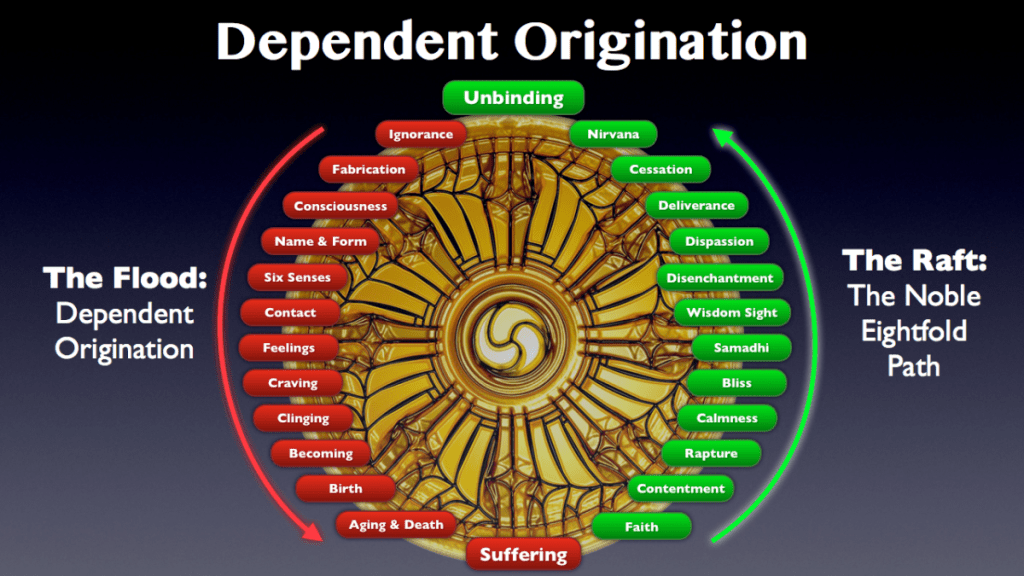
  2. Does aging and death on the 12 links of Dependent Origination condition ignorance? If so, how and why? If not, how is ignorance conditioned?
  3. Addressing “Dosa” as meaning more “ill-will” instead of “hate”: For the three unwholesome roots of greed, hatred and delusion couldn’t hatred just be an unconscious response to fear? Is(n’t) hate a (natural) emotion not to be repressed/suppressed? Can/could hate be a less than desirable response/reaction to something we care about? (For example, because one cares and respects the planet and environment hate could arise when observing people trash the planet and environment. . . Ill-will seems far more dangerous than hate because of ill-will’s intention to harm.) How about “despise”, “contempt”, “hostility”, “degradation”, “antagonism” as alternate interpretations for “dosa”?
  4. Is yoga (practice) mentioned by that name in the suttas?
  5. Why is truth not a perfection/Pāramitā in Mahayana?
  6. Can (the whole cycle of the) 12 links of Dependent Origination go backwards due to retrocausality?
  7. Does/could Bodhidharma’s inventing, teaching, and/or paving the way for kung fu have anything to do with the Buddha not following the traditional path of his warrior cast?
  8. [next 4 are Koan(ish?) like questions:]
  9. What is the root of awareness?
  10. How does awareness know how to know?
  11. Can mind die?
  12. Who/What experiences inconstancy and dukkha? /(or) aka:/ Who’s ever-changing dukkha? /(or) aka:/ What experiences inconstant dukkha?
  13. Could/Does the chant wishing that wishes come quick contribute to time seeming to speed up by people getting their wishes fulfilled quicker and then wanting even more?
  14. Why are the aggregates so convincing as a self? How and why do they heap or bundled together (if this is a correct innerstanding and they actually do so)?
  15. Could any details of how the niyamas work ever become outdated due to impermanence?
  16. Would grafting a (“higher” and/or “lower”) being’s DNA on to plants, or any other species effect karma? If so, how?
  17. How much true credit and merit should thinking get?
  18. What is the appropriate, ideal role of thinking in each moment?

An Integrating Presence Meditation: Classic Mindfulness Imagery — June 2, 2021 At Fat Cat Longevity


This guided meditation practice involves the following classic mindfulness images and similes:

  • a relaxed cowherd after the harvest
  • surgeons probe gathering information before action
  • ploughshare to prep the ground for wisdom
  • elephant’s neck supporting the head of wisdom while turning the full body to look, not just the head, for full attention
  • climbing a platform with detachment for an broader perspective and overview
  • town gatekeeper knowing who to keep out and able to direct who comes in
  • wheel spokes connecting the hub of the body to the outside of the wheel of our experiences while helping to steer
  • hitching post to tame and keep animals from wandering off all the while the strong post remains unmoved
  • balancing aspect like walking with bowl of oil atop the head

Other relevant imagery:

Faith and wisdom are evenly yoked together.

Conscience is its pole, the mind is the rope tied to the yoke, Awareness is the watchful charioteer.

from SN 45:4

Suppose a king had a frontier city with strong ramparts and walls, with six gates. A wise gatekeeper keeps out strangers and admits acquaintances. A swift pair of messengers would come from the east and ask the gatekeeper: “Where is the lord of this city?” He would reply: “He is sitting in the central square.” Then the swift messengers would deliver a message of reality to the lord. …

The meaning here is: ‘The city;’ is a term for the body. ‘The six gates’ is the six internal sense bases. ‘The gatekeeper’ is awareness. The swift messengers are tranquility and insight. ‘The lord of the city’ is consciousness. … ‘The message of reality’ is Nibbāna.

From SN 35:245

Any river can be stopped with the dam of awareness. I call it the flood-stopper. And with wisdom you can close the floodgates.

from Sutta Nipāta v. 1035

Note: A Turner is “One who or that which turns; specifically, one whose occupation involves work with a lathe.” The following sutta selection implies and highlights keeping a steady attention as a whole on the entire piece of lathe wood in addition to the action of cutting into it:

“Monks, just as a skilled turner or apprentice turner who is making a long turn understands ‘I am making a long turn,’ or when making a short turn understands ‘I am making a short turn,’ in the same way, when a monk is breathing in a long breath, he understands ‘I am breathing in a long breath,’ or when breathing out a long breath, he understands ‘I am breathing out a long breath.’ When breathing in a short breath, he understands ‘I am breathing in a short breath,’ or when breathing out a short breath, he understands ‘I am breathing out a short breath.’ He trains in this way: ‘I will breathe in experiencing the whole body.’ He trains in this way: ‘I will breathe out experiencing the whole body.’ He trains in this way: ‘I will breathe in calming the body.’ He trains in this way: ‘I will breathe out calming the body.’

Mahāsatipaṭṭhānasutta—Suddhāso Bhikkhu
10. Great Discourse on the Establishment of Mindfulness

“If, on examination, a monk knows, ‘I usually remain covetous, with thoughts of ill will, overcome by sloth & drowsiness, restless, uncertain, angry, with soiled thoughts, with my body aroused, lazy, or unconcentrated,’ then he should put forth extra desire, effort, diligence, endeavor, relentlessness, mindfulness, & alertness for the abandoning of those very same evil, unskillful qualities. Just as when a person whose turban or head was on fire would put forth extra desire, effort, diligence, endeavor, relentlessness, mindfulness, & alertness to put out the fire on his turban or head; in the same way, the monk should put forth extra desire, effort, diligence, endeavor, relentlessness, mindfulness, & alertness for the abandoning of those very same evil, unskillful qualities.

“But if, on examination, a monk knows, ‘I usually remain uncovetous, without thoughts of ill will, free of sloth & drowsiness, not restless, gone beyond uncertainty, not angry, with unsoiled thoughts, with my body unaroused, with persistence aroused, & concentrated,’ then his duty is to make an effort in maintaining those very same skillful qualities to a higher degree for the ending of the effluents.”

https://www.accesstoinsight.org/tipitaka/an/an10/an10.051.than.html


Meditation space at Fat Cat Longevity

Meditation Audio: Classic Mindfulness Imagery
Meditation Audio: Classic Mindfulness Imagery — Recorded Live on June 2, 2021 at Fat Cat Longevity

Or listen via Insight Timer (app or website)


Mary’s House of Healing
524 South Main Street
Downstairs at Fat Cat Longevity next to Peace Love Coffee…
St. Charles, MO 63301

June 2, 2021 — 6:00pm – 6:45pm

Doors open: 5:50pm — Doors close: 6:05pm

Cost: Fat Cat Longevity price packagesmonthly membership or generosity inspired donation