This irregular “Dharma Questions” series deals with “dharma” meaning both the truth of the nature of reality and some Buddhist teachings. Please see this post on the intensions for questioning and not questioning. Amongst other things these questions can be, but not necessarily:
thought experiments
borderline musings not meant to be answered
from laziness of not contemplating or researching them yet
The following questions explore Arhatship, the way of Bodhisattvas and Buddhahood from a limited innerstanding in order to gain clear, right, true knowledge for the highest good and well-being of all, without preferences. Even if based on proper premises some of these questions may be unanswerable and/or may be better left unanswered for now. Please see this post on why and why not to question for over-arching reasoning behind these types of inquiries.
Is there a Theravada equivalent to purelands/Buddha-fields and if so, do Arhats and Bodhisattvas apply? How?
At Paranirvana what happens to any and all abandoned karma on a mundane level especially if collectivity (ie., collective consciousness and interconnectivity) is involved? Do others then bear it? If so that would make entering Parinirvana kind of irresponsible unless being a great inspiration and benefit by doing so, right?
Could somebody desiring Buddhahood have no opportunity to do so (after becoming enlightened/attaining Arhatship) by hearing teachings from a Buddha (because then one would not be self-awakened)?
Where are passed(paranibbna) Arhats now?
Can arhats obtain Buddhahood (in current life)?
Can (the) arhatship (path) be a step on the Bodhisattva(hood) path and/or vice versa? If not, why?
If the historical Buddha was in previous lives an unenlightened Bodhisattva how/why did he become a Buddha? Wasn’t he supposed to forego enlightenment? (If the term bodhisattva here means something different than the current Bodhisattva vows could this term bodhisattva be misleading?)
Since the Buddha, after full awakening, was no longer subject to kamma in the same way as before, what dynamics or principles governed the situations and events that occurred after his enlightenment? Additionally, among the intentional thoughts, speech, and actions described in the Jātaka tales, which ones are explicitly mentioned in the suttas as having borne fruit for Siddhartha Gautama prior to his enlightenment? Conversely, are there any intentional actions—mental, verbal, or physical—not mentioned in the Jātakas, but referenced in the suttas as bearing fruit for him from previous lives before his awakening?
Where did the notion of saving all beings originate? Do beings need saved in the first place? How did it get like this? Why can’t beings save themselves? And if on an ultimate level there are no beings who/what is saving who/what?
If not completely liberated how can choosing to be reborn again and again until all beings are liberated best help completely liberate others without the knowledge of complete, total and full liberation? In other words, how can we best help others to the fullest capacity, and on/from the highest level if not fully enlightened? The paradox being once completely liberated, there’s no coming back (into a human life) to help liberate others right?
Could Bodhisattvas (attempting the) saving (of) beings interfere with the learning, growth and journey of some?
[Note: if changing the language of “vowing to save all beings” to something more like, “upon request, helping and instructing beings,” it puts to rest many of the “saving all beings” questions]
Could some bodhisattvas be under Mara’s control since choosing to forego full liberation and remain here where Mara is in charge? And could some only be a bodhisattva so as to achieve Buddhahood for themselves?
What if all beings became Bodhisattvas except a few or one?
If/when all but bodhisattvas have realized buddhahood/full enlightenment then how will/is realizing full enlightenment for bodhisattvas happen/gone about?
What happens if buddhahood happens spontaneously while a bodhisattva? Is that breaking the bodhisattva vow?
Could those vowing the Bodhisattva path be tempted with (unskillful, unwise, unwholesome) worldly power feeling they may need worldly power to accomplish vows?
Could more powerful beings lure others on to the Bodhisattva path as a reincarnational trap?
Can bodhisattva vows shy beings away from heavenly realms? If so don’t the heavens also need liberating?
Are there bodhisattvas in the animal realm? If so, who? If not, why not?
Can’t passed Arhats and Buddhas assist in liberating beings without being human here (like from a pureland or Buddha-field)? How could beings yet to realize enlightenment know a Buddha would provide more benefit while in the world?
Is a type of hybrid Bodhisattva/Arhat(/Buddha) possible?
Can Buddhas have been Buddhas in the past before, rejoined samsara, then reestablished Buddhahood?
It is said if one kills an Arhat, realizing enlightenment is impossible in that lifetime. Hypothetical thought experiments follow surround this: what if an Arhat worked as a doctor? What if this doctor had patients who did not comply with certain orders from this doctor that then lead, however directly, or indirectly to this doctor’s death? If say 20 people where involved at varying degrees of complicity, would they all then loose their chances for realizing enlightenment in the current lifetime? Why or why not, and how would this play out? Conversely perhaps, what if hospital administration and/or other authority figures in a way forced the hand of this doctor to not save someone when they could have; and then this was then found out followed by seeking and carrying out revenge; but while resulting only in serious injury to the government and/or authority figures, the death of this doctor Arthat was incurred? Or something else like: what if this doctor was in a coma and other healthcare providers for this doctor decided to pull the plug? And how about if the waters on this coma scenario were further muddied by multiple parties involved at varying degrees of mal-intent?
Could putting off enlightenment in Amitābha pureland due to strict requirements be a condition for dragging on rebirth after rebirth? What about those there being under outside influences to drag on rebirths for their own gain especially if stuck and/or maintain power? Could this happen? Why or why not?
How did the Buddha avoid (ever) being reborn in the pure realms (as he achieved all the formless jhana’s — if it works like that)?
What plan(s) do those on bodhisattva path have for (guaranteeing) encountering true dharma after (and between) dispensations of each Buddha?
Potentially related info, questions and answers from elsewhere:
For this month’s open-audience, open-discussion “Ask Us Anything” — continuing discussions about meditation and related topics — Denny and I address the “McMindfulness” phenomena mostly by exploring the translation of the original Pali word “sati” — often translated as “mindfulness” — by offering up “remembering” as a more original translation. We also touch on some classic sati related topics like:
The Five Hinderances
“Right Mindfulness”
12 Links of Dependent Origination (or “Conditional Genesis” [Pratītyasamutpāda]) especially “Contact” before “Feeling”
Four Foundations of Mindfulness
Also mentioned:
Some of the critiques and upsides of McMindfulness
Story of Shiva and Hindu goddess Sati
Body/Qi/Mind/”Void”
Metaphors/images for mindfulness from the Pali suttas
Below are our original show notes:
(Notes from Josh:)
Overall I don’t maintain a solid sweeping position for or against the popularity of mindfulness. I feel, like pretty much anything, the skillful and wise (pros) vs. the opposite (cons) must be weighed, and mostly on a case by case basis.
Without boots on the ground in many of the areas where mindfulness has gained popularity it’s even more challenging to speak to, or make broad criticisms and (especially) recommendations/solutions, which by the way, seem severely lacking.
This is a complex topic often addressed in an overly simplistic manner, glossing over significant material with many truths and mistruths mixed together.
When something gains popularity, (if it hasn’t already from the onset,) there seems a high likelihood for the agendas from various players — social, political, economic/industrial, religious, organizational, technological, etc. — to jump in and mold to their liking (and not liking) whatever can be molded, often resulting in distortions, divisions, and destruction.
https://www.theguardian.com/lifeandstyle/2019/jun/14/the-mindfulness-conspiracy-capitalist-spirituality — some great points but no real solutions offered, mostly an underlying bashing of the current version of capitalism (which really isn’t capitalism. I don’t plan to mention political systems on the episode. For our notes: We all know the hangups of capitalism. Not a proponent of this version of gangster capitalism, nor a proponent of socialism, communism, or technocracy. Big proponent of solutions though. Some short term: voting with your dollar and paying attention to what you want to give energy to without ignoring or denying anything. Long term: various clues and bread crumbs I won’t go into here.)
Key points in general to address for the episode:
Defining mindfulness
Pros and cons of Popular/ (vs.) Secular/ (vs.) Buddhist mindfulness
Proper mindfulness (leading to awareness, the foundation for wise decision making)
Ethics involved in teaching and learning mindfulness (if mindfulness should be taught on its own)
With so much criticism is it possible for newcomers to dismiss mindfulness entirely, and/or the opposite, can mindfulness’s popularity lead and enforce followers to not properly examine mindfulness?
Potential questions for Denny:
China angle?
Observations from Silicon Valley compared to the Midwest?
What if asked to teach mindfulness to “black ops” military, or corrupt corporations and/or organizations, or anyone who you pretty much know will likely abuse it?
(Notes from Denny:)
Tomorrow we will focus on “McMindfulness and the Mindfulness Industrial Complex”.
Take any self-help/wellness topic (including Mindfulness and more recently Meridian Tapping Therapy), the pitch is always … “if you have Fear, Phobias, Anxiety, Stress, Emotional Trauma, PTSD, Grief, Sadness, Shame, Frustration, Anger, Resentment, Carvings, Addictions, Chronic Pain … and nothing works, try this?!”
Rather than criticizing the McWellness, I think it is more useful for us to properly define “Mindfulness”.
Mindfulness is Sati and the original interpretation is “remembering”.
According to Wikipedia, the English term Mindfulness already existed before it came to be used in a (western) Buddhist context. It was first recorded as myndfulness in 1530, as mindfulnesse in 1561, and finally mindfulness in 1817.
Then in 1881, Thomas Divids, a Pali-language scholar used it to mean Sati, where he wrote in his Buddhist Suttas, “Sati is literally ‘memory’ and is used with reference to the constantly repeated phrase ‘mindful and thoughtful’ (sato sampajâno) ….”
Sati was the name of the Hindu goddess of marital felicity and longevity. She was the first wife of Shiva (one of the three gods who along with Brahma and Vishnu, are responsible for the creation, upkeep and destruction of our universe, respectively).
The legend was that Sati’s royalty parents wanted a daughter and was advised by Brahma to pray before the goddess Adi-Parashakti. Finally she consented and took birth as their daughter but warned them that if she was ever insulted, she would return to her celestial form and disown them.
After Sati grew up, she married Shiva against the will of her parents. She was so devoted to her ascetic husband that when he was insulted by her opulent father, she jumped into the fire to kill herself in order to uphold Shiva’s honor.
Then as promised, Sati returned to being a goddess again and through another reincarnation, came back and became the second wife of Shiva.
Now that’s “remembering”.
Sati is also the name of an outlawed funeral custom in India where a widow immolates herself on her husband’s pyre in order to show her devotion (i.e., remembrance) by taking her own life shortly after her husband’s death.
In conclusion, Mindfulness (念 or Sati) is simply remembering.
The historical Buddha is regularly portrayed as primarily full of love and light in popular culture. While this is just one aspect, another angle this post intends to explore is the Buddha’s decisiveness, diligence, determination, and immense courage in the face of pretty much anything and everything without shying away from squeamishness. It’s also kind of an exercise in using the suttas (and sutras) to back a certain viewpoint — perhaps similar to how some can interpret various parts of the bible to support a vast array of agendas. Obviously doing something like this can range from wise and skillful to the complete opposite.
The Upayakausalya sutra ‘describes a past life of the Buddha as a ship captain, put in an impossible situation of letting a murderer kill passengers, or letting the passengers kill the murderer. In every scenario he foresaw with his psychic power, someone would be killed and people would be reborn in hell. He decided to kill the murderer himself…’:
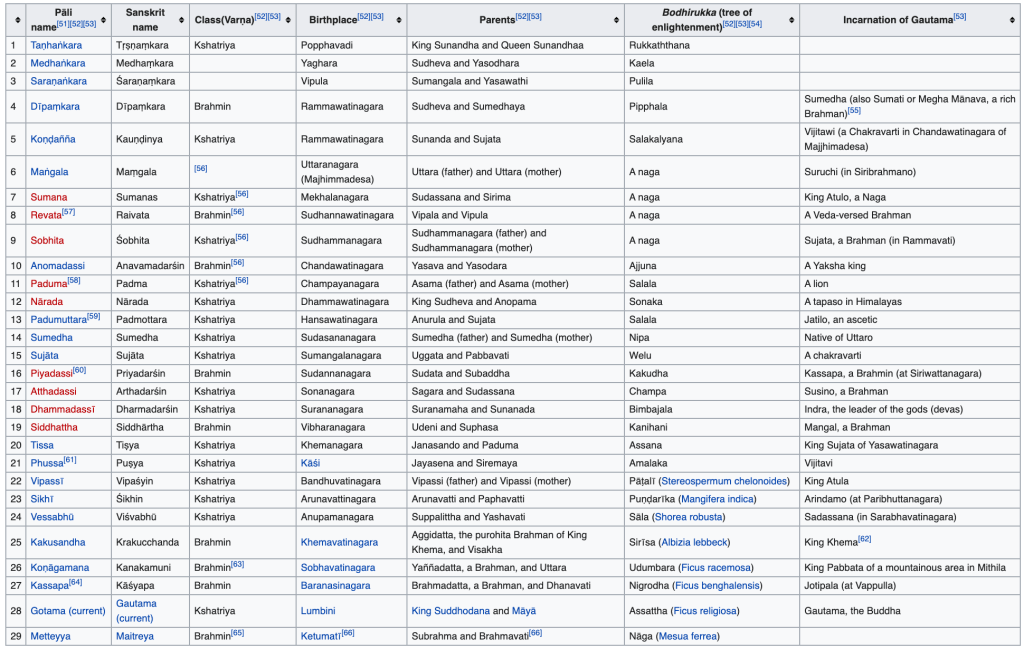
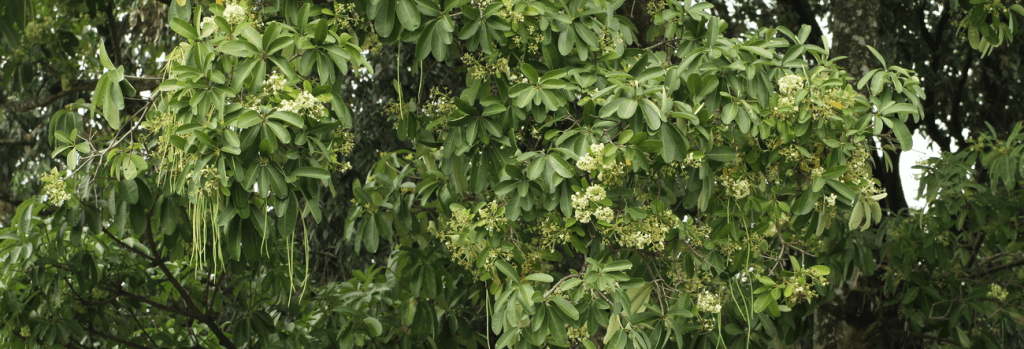
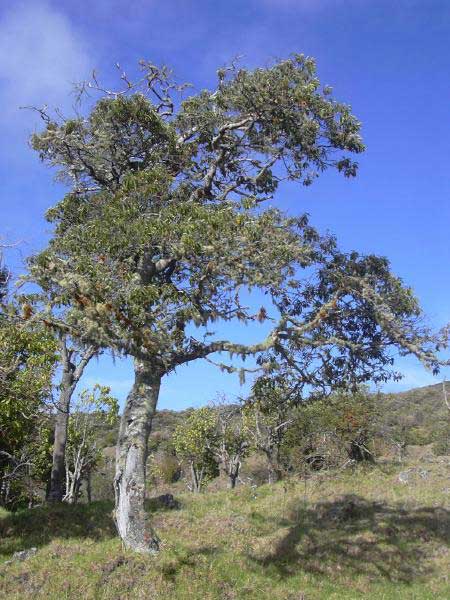
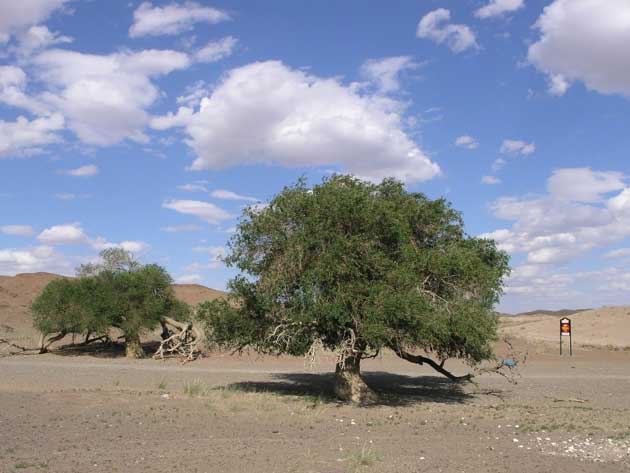
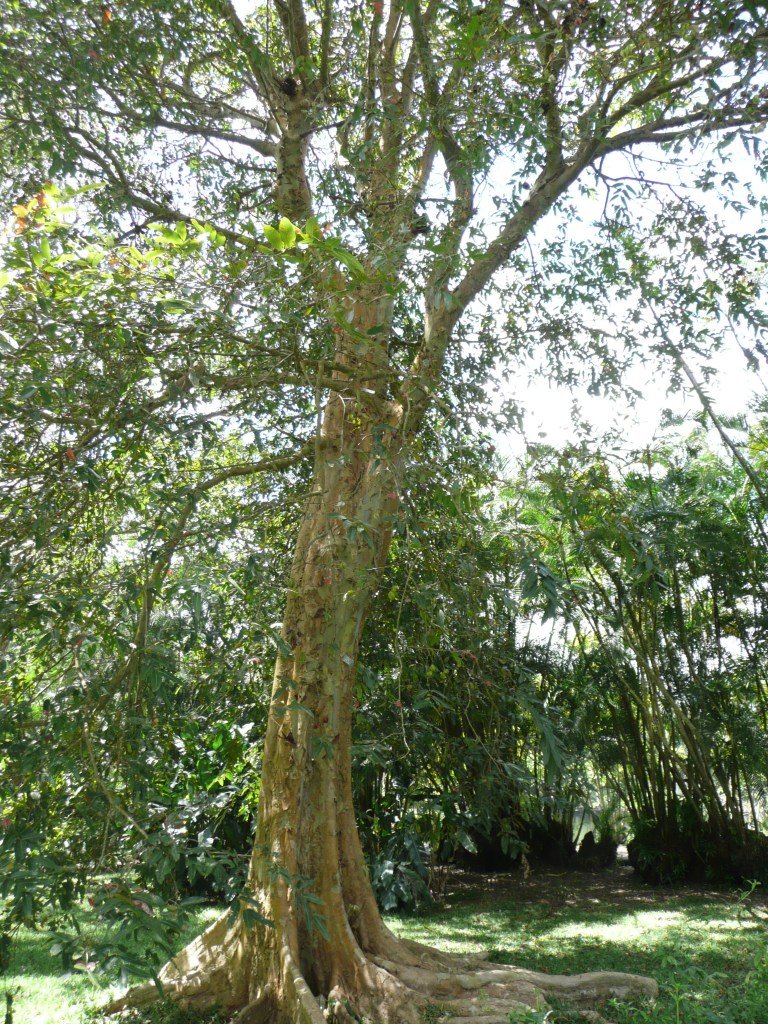
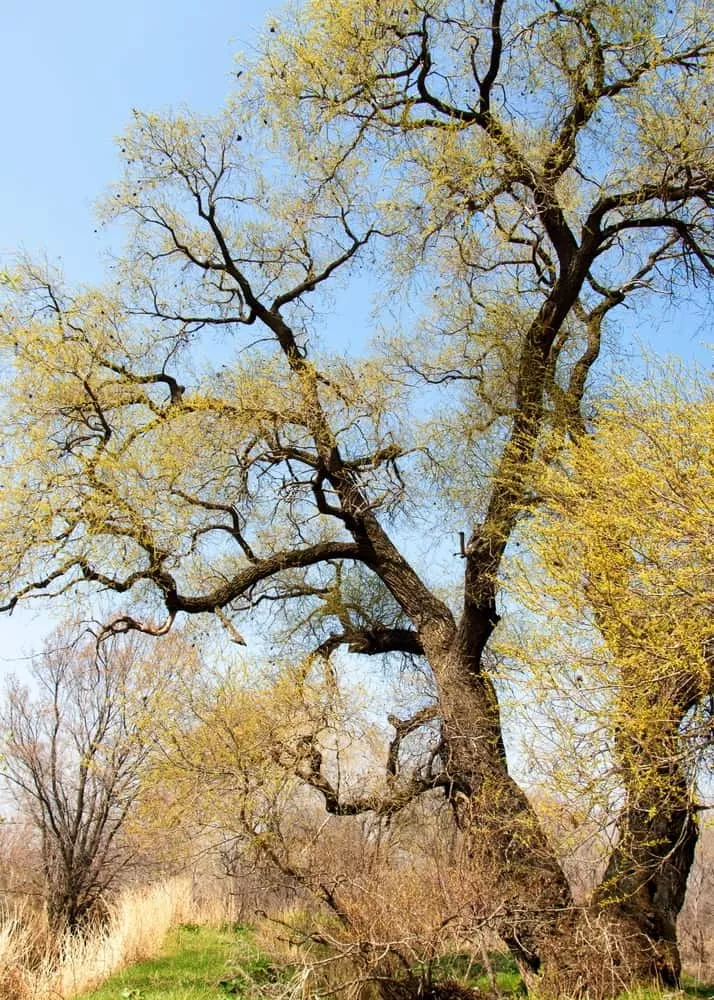
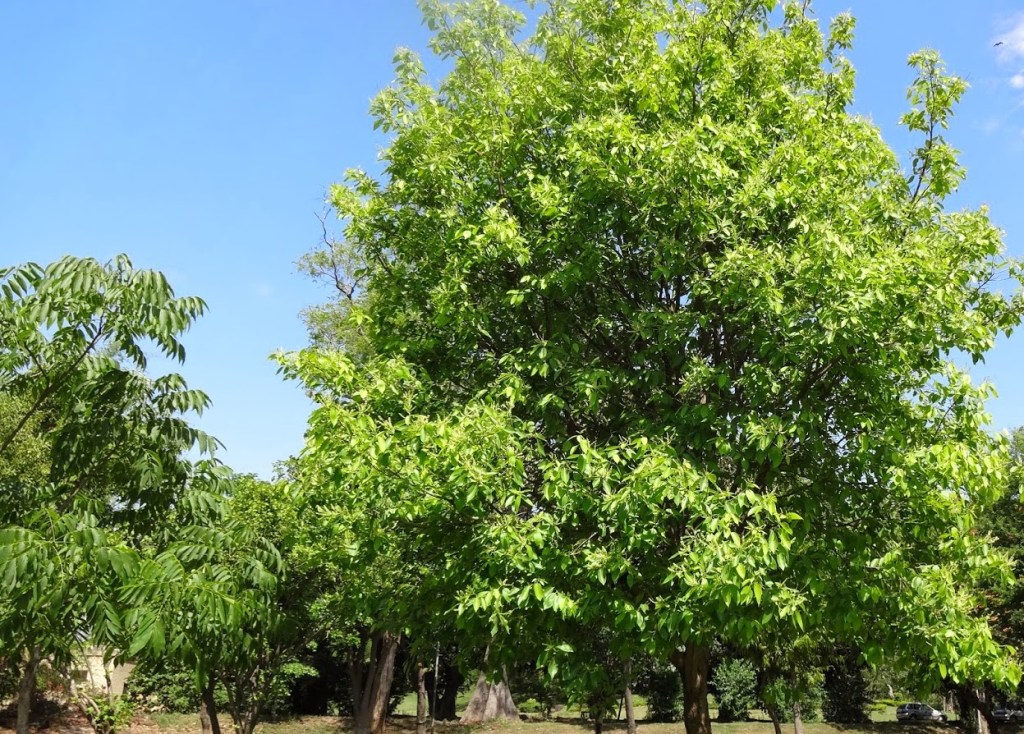
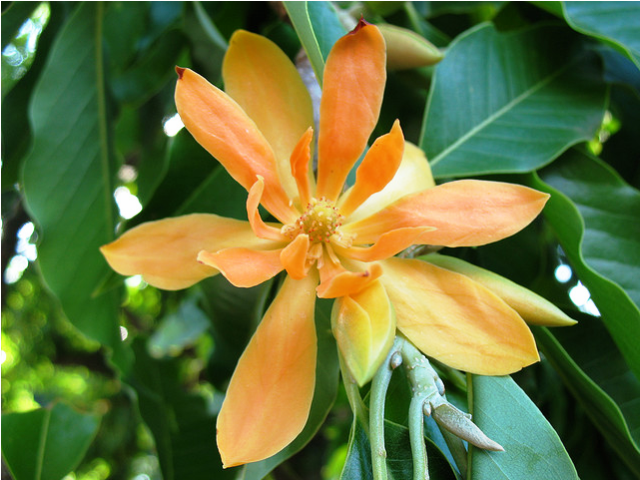
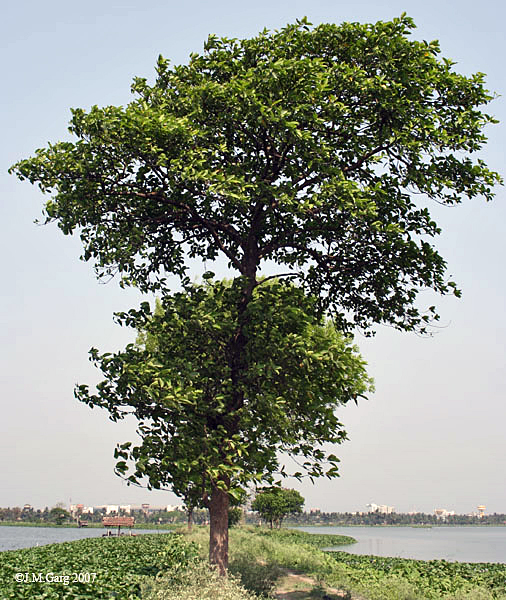
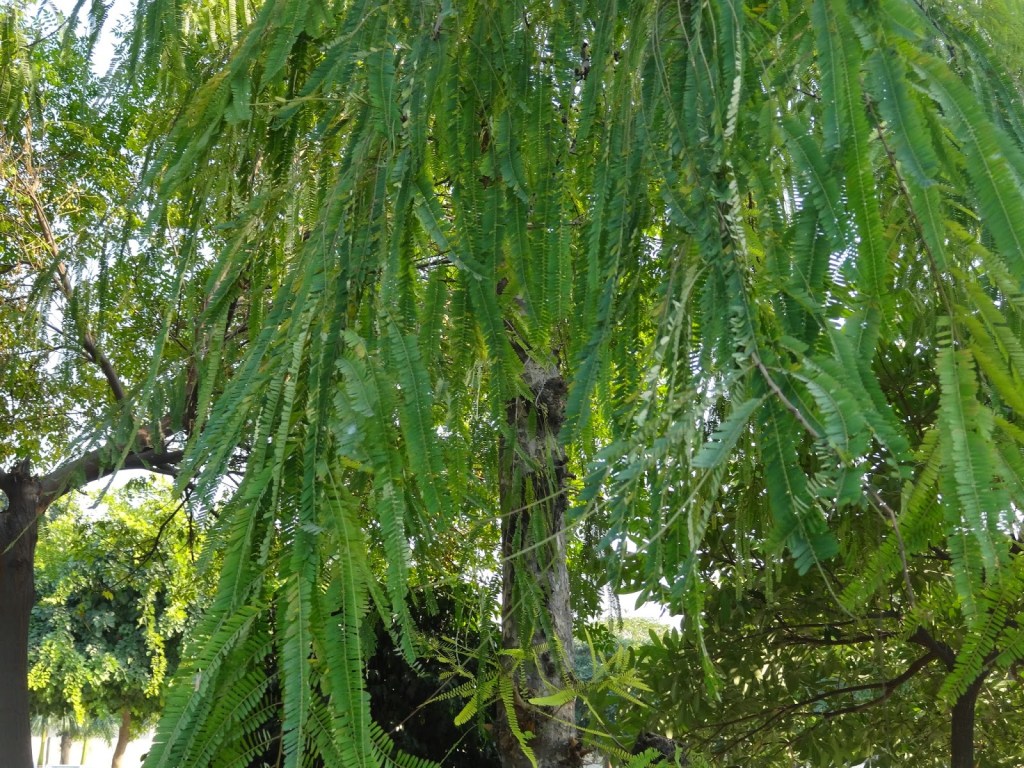
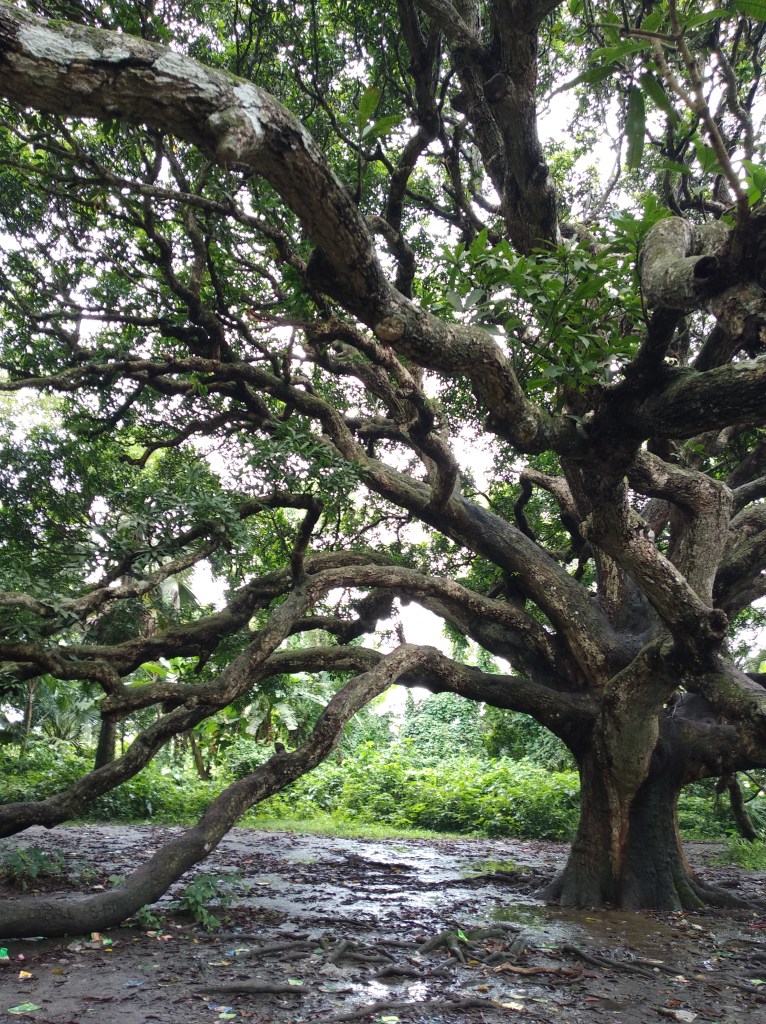
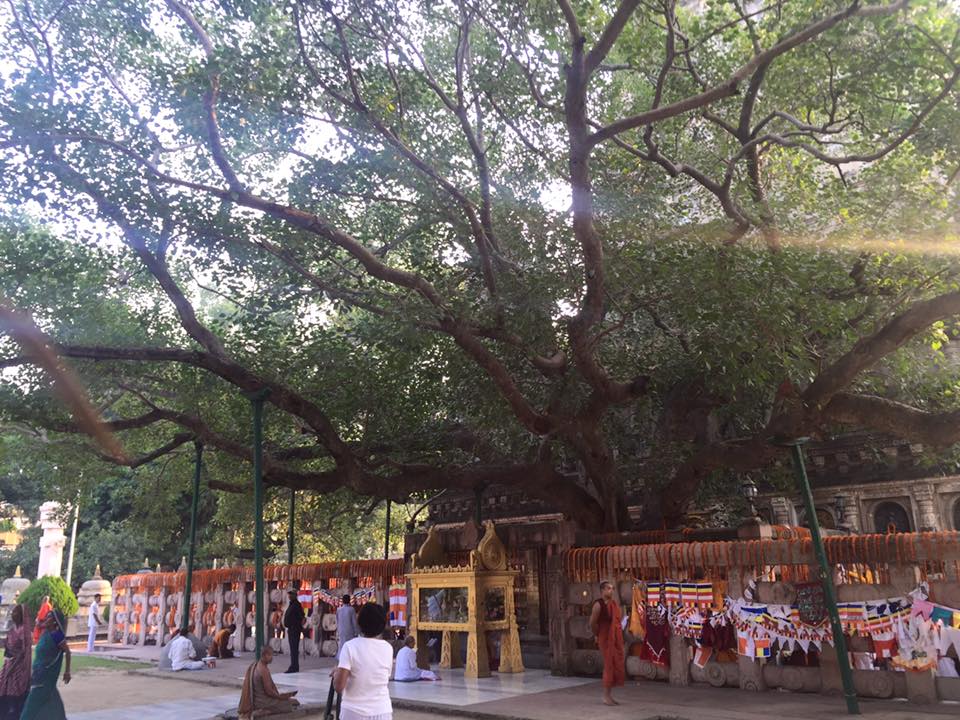
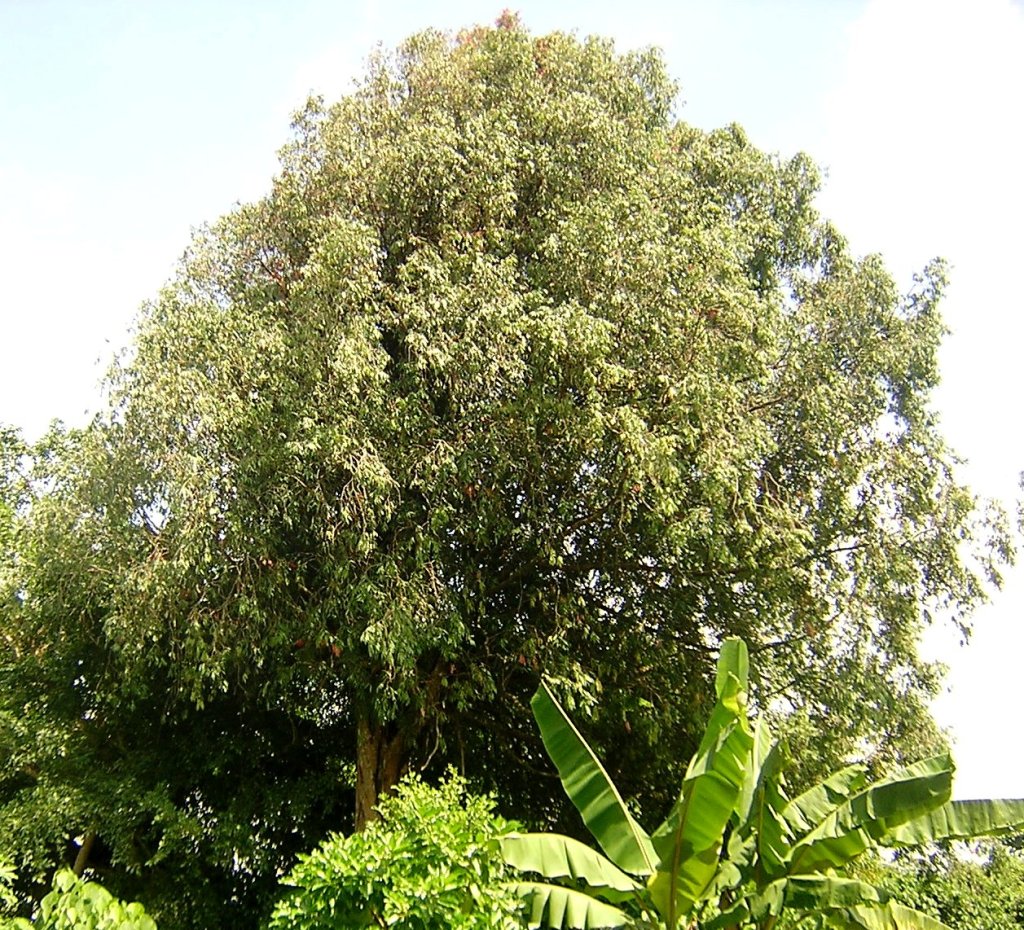
While Christmas trees represent generosity and giving, these days they could also be associated with materialism and consumerism. Perhaps somewhat in contrast, Bodhirukka, or tree of enlightenment, is a certain tree associated with the awakening of each of the 29 Buddhas named in the Buddhavamsa, the Chronicle of Buddhas.
The gallery of trees below shows best guesses at anything I could find about trees listed (but not linked to by Wikipedia) for some of Buddhas 1-21. They are captioned with the number of the Buddha, followed by tree name listed in Buddhavamsa, then by common and/or latin tree name for the guess and link to source(s). Also included are tree images for Buddhas 22-29 (as linked to by Wikipedia.)
What can trees teach and help with right now? Stillness? Resilience? Effortless nourishment? Standing in your power? Giving and receiving? Majesty? Flexibility? Firmness? Want of recognition? Growth? Decay? Renewal? Earth connection? Wisdom? Mystery? Beauty?
Monks, spend time with Sāriputta and Moggallāna. They are wise monks who assist their companions in the Holy Life. Monks, Sāriputta is like a parent, Moggallāna is like a babysitter. Monks, Sāriputta leads one to the attainment of stream-entry, Moggallāna leads one to the highest goal. . .
Maudgalyāyana (Pali: Moggallāna), also known as Mahāmaudgalyāyana or by his birth name Kolita
Linked below are places in the Pali Cannon mentioning supranormal abilities or so-called “psychic powers.”
But first, a few questions (even though it is not worth wasting much energy defending the significance of seemingly fantastical things in comparison to where the masses still reference (their) reality: the TeeVee news media which is currently still being dumbed down to around a 5th grade level, and also whatever is on social media in alignment with it.)
Why would supranormal abilities even be mentioned by, or in association with a historical figure so psychologically developed and adept by today’s scientific standards that neuroscience and psychology is finally catching up with some of the Buddha’s teachings?
How do psychologists into Buddhism who deny psychic phenomena respond to Moggallana, often said to be foremost in psychic powers among the senior disciples of the Buddha? Was Moggallana delusional? If so, was the Buddha delusional for not saying anything about Moggallana’s delusions?
If these abilities are only mere mythology or metaphor how did they originate? Where did the ideas come from? If from the imagination, how does that work?
Why spend so much time detailing and mentioning “psychic powers”?
Why were “psychic powers” so important to Devadatta the Buddha’s cousin and brother to his wife, and whom some say was his arch nemesis?
What is the significance, if any, of the (establishing of the) monastic rule prohibiting public displays of psychic power for anyone except the Buddha?
It’s when a mendicant develops the basis of psychic power that has immersion due to enthusiasm, and active effort. They think: ‘My enthusiasm won’t be too lax or too tense. And it’ll be neither constricted internally nor scattered externally.’ And they meditate perceiving continuity: as before, so after; as after, so before; as below, so above; as above, so below; as by day, so by night; as by night, so by day. And so, with an open and unenveloped heart, they develop a mind that’s full of radiance.
They develop the basis of psychic power that has immersion due to energy … mental development … inquiry, and active effort. They think: ‘My inquiry won’t be too lax or too tense. And it’ll be neither constricted internally nor scattered externally.’ And they meditate perceiving continuity: as before, so after; as after, so before; as below, so above; as above, so below; as by day, so by night; as by night, so by day. And so, with an open and unenveloped heart, they develop a mind that’s full of radiance.
And what is enthusiasm that’s too lax? It’s when enthusiasm is combined with laziness. This is called lax enthusiasm.
And what is enthusiasm that’s too tense? It’s when enthusiasm is combined with restlessness. This is called tense enthusiasm.
And what is enthusiasm that’s constricted internally? It’s when enthusiasm is combined with dullness and drowsiness. This is called enthusiasm constricted internally.
And what is enthusiasm that’s distracted externally? It’s when enthusiasm is frequently distracted and diffused externally on account of the five kinds of sensual stimulation. This is called enthusiasm distracted externally.
And how does a mendicant meditate perceiving continuity: as before, so after; as after, so before? It’s when the perception of continuity is properly grasped, attended, borne in mind, and comprehended with wisdom by a mendicant. That’s how a mendicant meditates perceiving continuity: as before, so after; as after, so before.
And how does a mendicant meditate as below, so above; as above, so below? It’s when a mendicant examines their own body up from the soles of the feet and down from the tips of the hairs, wrapped in skin and full of many kinds of filth. ‘In this body there is head hair, body hair, nails, teeth, skin, flesh, sinews, bones, bone marrow, kidneys, heart, liver, diaphragm, spleen, lungs, intestines, mesentery, undigested food, feces, bile, phlegm, pus, blood, sweat, fat, tears, grease, saliva, snot, synovial fluid, urine.’ That’s how a mendicant meditates as below, so above; as above, so below.
And how does a mendicant meditate as by day, so by night; as by night, so by day? It’s when a mendicant develops the basis of psychic power that has immersion due to enthusiasm, and active effort, with the same features, attributes, and signs by day as by night. And they develop it with the same features, attributes, and signs by night as by day. That’s how a mendicant meditates as by day, so by night; as by night, so by day.
And how, with an open and unenveloped heart, does a mendicant develop a mind that’s full of radiance? It’s when a mendicant has properly grasped the perception of light, and has properly grasped the perception of day. That’s how, with an open and unenveloped heart, a mendicant develops a mind that’s full of radiance.
And what is energy that’s too lax? …
And what is mental development that’s too lax? …
And what is inquiry that’s too lax? It’s when inquiry is combined with laziness. This is called lax inquiry.
And what is inquiry that’s too tense? It’s when inquiry is combined with restlessness. This is called tense inquiry.
And what is inquiry that’s constricted internally? It’s when inquiry is combined with dullness and drowsiness. This is called inquiry constricted internally.
And what is inquiry that’s distracted externally? It’s when inquiry is frequently distracted and diffused externally on account of the five kinds of sensual stimulation. This is called inquiry distracted externally. … That’s how, with an open and unenveloped heart, a mendicant develops a mind that’s full of radiance.
After jotting down intuitive information and collecting odds and ends of teachings on breath for quite some time, I’ve finally compiled the first part into a video (along with an MP3 audio version) and include a (tran)script below:
Breath: Questions for Contemplation; Perceptions and Practice Ideas MP3 audio version [MP3 file download]
Disclaimer: it may be wise to find a balance with this material for whatever it may bring up: intrigue, fear, relief, breakthrough, novelty, overwhelm, overkill, irrelevancy, etc. One can pause the video at anytime for contemplation.
Or instead of viewing as study and practice instructions just sit back and take this in as a display of possibilities — letting the material resonate with whatever strikes as vital.
However you’re called to receive this presentation please take what is skillful, wise and useful/helpful and leave the rest. Also, this presentation could easily become outdated and/or refuted.
For any questions posed in the material it is encouraged to engage each question the following four ways, both internally to yourself, and to me with any counter-questions for both of our benefit:
answer directly
answer with analysis (and elaboration after deconstructing)
answer by counter-question(s)
do not answer, or give no response
In addition to this public presentation the private portion may be given if working with me, or may be released later. Much of what’s public is aggregated from other public sources while the private includes material I’m unsure of what portion is public and what portion is not.
Both the public and private presentations primarily address the breath through approaches, observations, conjecture, perceptions, practice ideas, and inquiries ranging from simple, commonplace, practical, and broad overviews to the bizarre, obscure, esoteric, and minutia while sometimes these categories overlap.
Overall, a basic bare awareness of breath is primarily needed. Again, this presentation is not to overwhelm, for overthinking, for comparison, or judgement. Rather, to enhance the likelihood of maintaining and/or prolonging bare awareness of breath for/during breath practices.
Questions for Contemplation
What if this was the first time noticing breath?
What is more important than breath in this moment?
What effects are the breath having right now (on any and all levels you have access to inside and outside)?
How is your relationship with your breath in this moment?
[Note: prior image here removed due to copyright infringement claim which I claim nothing of as all rights obviously belong to whatever and/or whomever legal mumbo-jumbo applies as as of April 6, 2023 this donation only website makes (below) zero profit]
Then we get into:
scale of consciousness
mindfulness of consciousness and psychology’s recently involvement
Brené Brown’s work on vulnerability
emotional spectrum
inconstancy and impermanence
peak experience
McMindfulness and the Mindfulness Industrial Complex
balancing will and surrender (of control)
control as an illusion
what is skillful, wise and wholesome
judgement vs judgmentalism vs discernment
superior, inferior and equality conceit
sovereignty, group think and unity consciousness
group consciousness and conscious groups
cults and abuse
self-worth
authenticity
not settling
Mindvalley
respect
competition vs. collaboration and cooperation
service to others boosted by inner and shadow work
The following questions address the more metaphysical and parapolitical realms related to CRV. Brent Stuart says clear images are almost always Analytical Overlay (AOL), but what about for higher density/dimensional remote viewing? What if a clear image comes up that could resemble what some refer to as “alien machinery” or (holographically and/or reality controlling) “ai cubes” where there’s not really much of a visual reference point but your intuition says — in the later stages of RV — that maybe whatever was seen as a clear image could be something like this?
And could discarding, or ruling out clear images for higher level RV tasks allow controlling forces and systems to:
Gauge your ability level (if they know you saw something (nearly) exactly as it is and have an accurate label for it that they also know of)?
Help confirm and validate their operations (if (covertly) behind tasking an RV session)?
More so allow controlling forces and systems to monitor the outcome of the observer effect on a RV task?
This also naturally brings up the question of remote influencing on CRV, especially decoys, distractions, deterrents, blocking, alterations, etc.
And the CIA’sPROJECT STARGATE using RV is public knowledge. Would they have an interest in RV beyond the by-the-book method and purpose? And, as a reference point, the CIA seem pretty low level in the cosmic scheme of things.



















 Integrating Presence