
For this month’s regular open-audience, open-discussion “Ask Us Anything” — continuing discussions about meditation and related topics — Denny and I review the 63 consecutive weeks of online practice Denny continues to lead. The original (amended) show notes are as follows:
(From Josh):
(Depending on temperament and experience level, some may find this chat tedious, overwrought, boring, too specific; or fascinating, affirming, inspirational, connective; or even redundant, low level, missing the mark. Please take only what is helpful.)
- General summary and overview of Denny (and Josh’s) practice(s)
- Review of Denny teaching pretty much everyday online since Co-V
- What are any common themes?
- Goals?
- What’s been learned?
- Challenges and rewards?
Practice questions:
- If I’m remembering correctly, on 4/10/21 Denny mentioned Metta as mindfulness of mind. This is a first for me. Maybe mindfulness of heart, or heart-mind? I would like to hear more details of this. And maybe if Denny feels there is a significant difference between more a more Asian definition of “heart” and “mind” and Western definition of “heart” and “mind?”
- Why only 3 breath exercises in chair?
- How does one find energy points on the inside and outside of legs? By noticing what areas are more sore or sensitive than others?
Some of my experiences and views while practicing with Denny (to be taken with a grain of salt):
- It is usually not immediate, but my back adjusts (automatically) sometimes during standing meditation. Tension releases and back aligns.
- During the microcosmic orbit my attention currently seems to go up really quick but seems more of a challenge to go down.
- For Yi Jin Jing . . .:
. . . it seems important to me to also remember to remove “daggers” after “stabbing”.
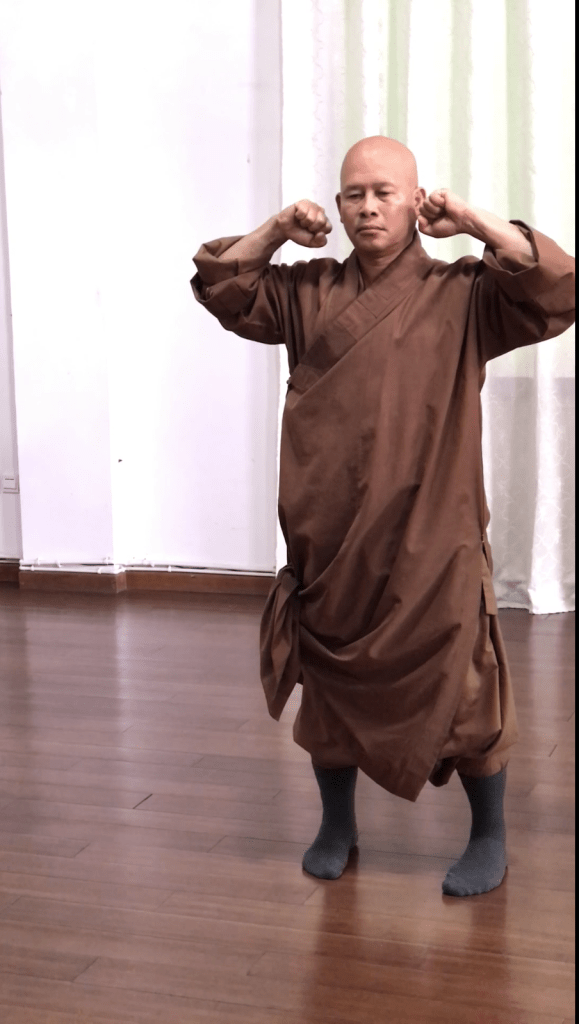
. . . also, the perception of opening the heart came to me during the “tearing the phone book” portion.
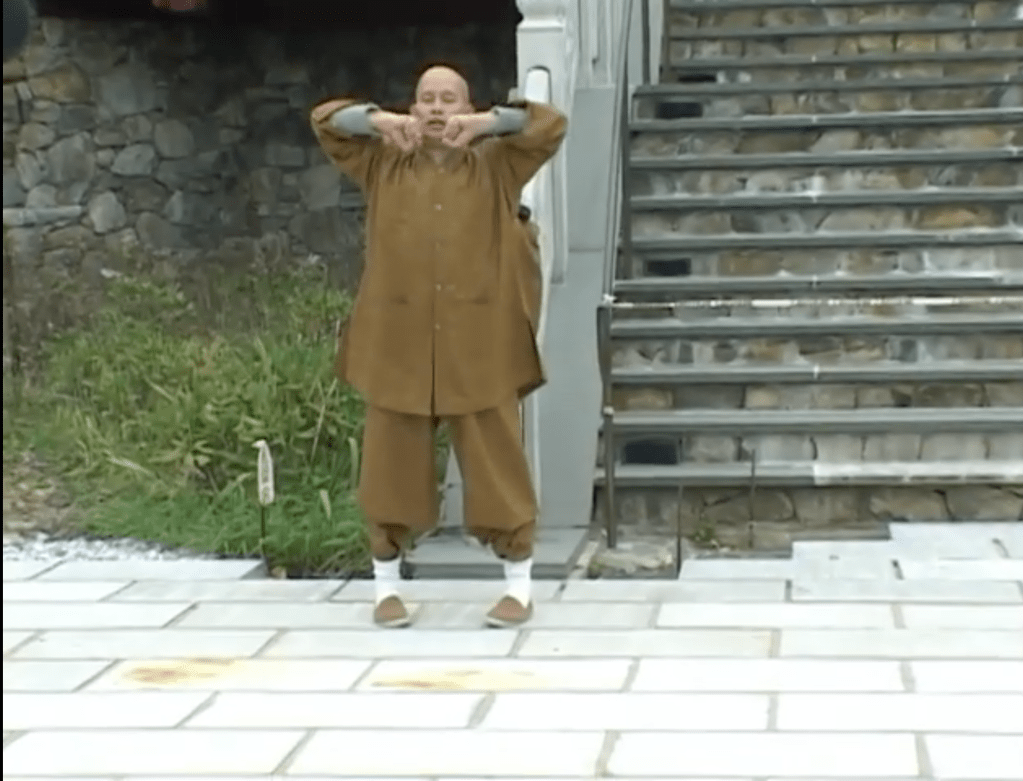
. . . and sometimes instead of “swallowing a universe” I occasionally hold a view of gathering and re-collecting all the energy requiring a redistribution then lawfully doing so — recirculation on a macro scale.
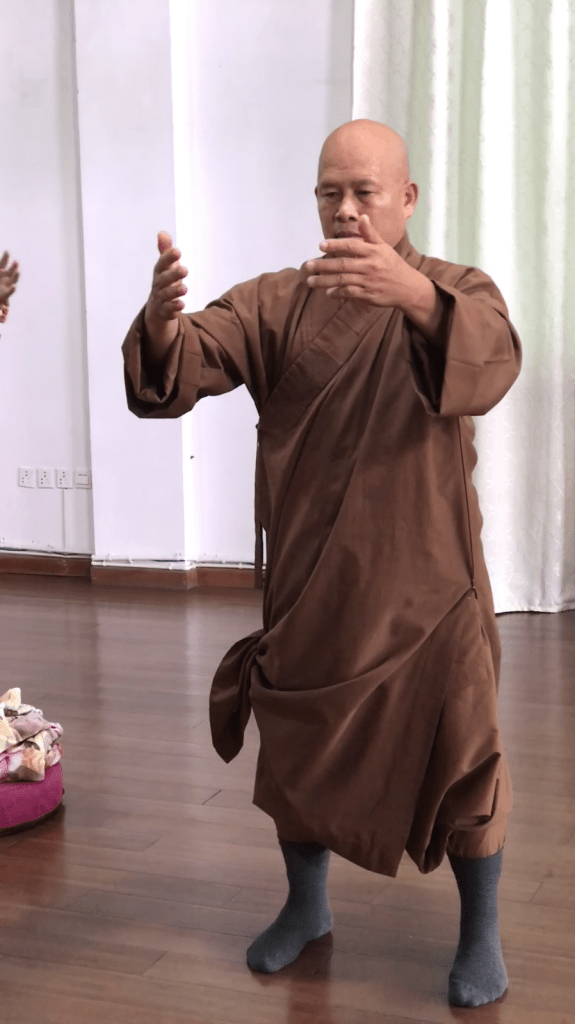
Miscellaneous views/observations:
- It is interesting that a significant gallbladder point is on the shoulders far away from gallbladder. Also interesting that so many energy points converge on the inside of the elbows.
- My 6 year old niece says I look like a chicken for the part sliding up the hands alongside the body right before jumping forward!
- I’ve heard one definition of the word Ānāpānasati broken down as the “pāna” portion is Pāli for the Sanskrit “prāṇa” and “prāṇa” is perhaps the Sanskrit equivalent of Qi or “breath or respiration; the breath of life, vital air, principle of life; energy or vigor; the spirit or soul.”
- If this perception is not totally distorted, maybe today’s version of yoga could be like getting a sort of living experiential connection to the historical Buddha’s general background practice environment during that time period. And maybe the meditation he taught (like Ānāpānasati) could be like a current day, living, direct experience that in a way links us to the Buddha’s awakening process by providing a container, a space, and groundwork for realizing his teachings.
Other mentions:
- Pranayama [the yogic breath practices I was trying to remember]
- The Last Dance: Michael Jordan Documentary 2020
- On Contradiction by Mao Zedong
- Shiva’s 112 Ways to Attain Enlightenment
- The Way of Shiva and Buddha – Sadhguru
- My comment to Denny after watching the above video but before watching What Happens if 114 Chakras are Activated?! | Occult & Mysticism | Sadhguru | Adiyogi:
Ah but with the handful of leaves teaching the buddha likely knew all these [112] ways and all the ways of the the other extreme [eternalism] of brahma and went beyond both and knew that the most pressing important issue here is suffering and what he taught went directly to suffering and the end of suffering
00:00 — mindful exercises including joints, stretching, etc
16:51 — tapping energy points
27:54 — massaging energy points
36:05 — 100 meeting energy point tapping
37:23 — massage and tapping of where 5 energy lines meet, back of knee tapping; holding tippy-toe posture
41:53 — five Qi abdominal breathing exercises
1:02:50 — sitting meditation
1:15:14 — Yi Jin Jing
1:27:44 — sitting meditation
1:31:12 — end of practice facial massage
1:35:20 — removal of bad Qi
Related Ask Us Anythings:
- Qigong and Daoyin | (1/26/2021 — “Ask Us Anything – LIVE” with Denny K Miu)
- Chán, Zen and Yi Jin Jing | (3/30/2021 — “Ask Us Anything – LIVE” with Denny K Miu)
- Corona-19, Hypertension and Qi | (2/23/2021 — “Ask Us Anything – LIVE” with Denny K Miu)
- McMindfulness and The Mindfulness Industrial Complex | (12/29/2020 — “Ask Us Anything” with Denny K Miu) [Where Denny talks more about Sati the Hindu goddess]
Currently, for a chance to experience, practice, and receive Yi Jin Jing instructions from Denny plus more mindful exercise join in free on Saturdays:
- https://dennykmiu.com/Insight-Timer
- https://dennykmiu.com/Facebook
- https://dennykmiu.com/YouTube
- https://dennykmiu.com/LinkedIn
- https://dennykmiu.com/Patreon
The raw unedited YouTube transcription of this podcast:
hang on just one second good morning good afternoon
welcome to another episode of um aua ask us anything and uh welcome josh
hold ms denny what’s going on how are you hey i’m doing good i’m doing good
this one i didn’t really have to prepare you did all the preparation work which is great most of it yeah so the idea here is that
um we if i count my fingers we have done 63 episodes
of of our weekly practice another 63 weeks of weekly practice
in english so we actually started in the very beginning of of 2020
uh in in january timeframe actually before the country kind of shut down and
of course then after that we we did it very consistently and so we thought that maybe maybe this
would be our annual review you know to kind of talk about what we have done
and um uh and and so forth and so this this is going to be a bunch of questions
most of them are asked by josh uh and some of that was asked by some
students that i summarized so so um the the title of today’s talk
is uh mindful practice of body chi and mind so now just keep in mind that
this is already a slight deviation from our our original teaching which is
mindfulness of the body mindfulness of the feeling mindfulness
of the mind and the mindfulness of the body so we’re actually taking a slightly
different approach and i’ll talk about why that is much of that has to do with just my own
practice versus the needs of my students and so we are kind of taking the
mindfulness of body and kind of expanding it into the mindfulness of body chi
and mind and we’ll also uh talk about some of our personal experiences with practice that’s that’s really the point
that’s really important so this this reflects our personal experience yeah if there is a personal experience
right so all there is yes on one level yeah so
um so that’s that’s generous summary and overview um so why why don’t you take this one
yeah i was just this is the question i came up you know where to well even with this too um how many
i guess how many sessions have you missed uh every i mean you’ve only missed a couple right a few every
day since then right and then and then also we’ll just tie it in with this question that’s on the screen now what are the
common themes that you’ve uh noticed in the past 62 weeks that come up during practice and you’ve
touched a little bit of that well um one of the one of the theme uh for the last six to two weeks is that
because of the uh pandemic we were forced to
stay home and so um we don’t really have an uh a venue
anymore uh to get together practice now given that we never did uh with the english one right so this is
actually the english one is is actually a reflection of what we do in with the cantonese version of that
and the cantonese version is essentially non-stop uh at one point seven days a week at one
point it was seven days a week and now we have the saturday devoted to the english
and sunday i kind of take a day off because i want to reserve that for eventually when we go back to
prison work but so so essentially we we have five days of cantonese practice
and then one day of english practice both the morning and afternoon now the
afternoon of course came much later but the morning one we started pretty early
we’re starting early so so the theme um number one is in the beginning in the
beginning it was just a place for people to um relieve their initial shock and
and and stress due to the the shelter in place so so we actually have
very different set of students in the very beginning a lot of people just got stuck at home
and so the english class in the beginning was actually quite popular with that new set of students now i did
i remember at one point um one of the students asked if we could bring in if if she could bring in her
mom [Music] who who actually uh doesn’t speak english and so then we started the
bilingual it was actually kind of weird that we started english first and then became bilingual and then eventually the
cantonese class took over and then and then we went back to english only on saturday so so so the
theme is the progression of theme the initial one was just taking care of people’s
very obvious needs or having to have a place to practice to relieve the stress
and the anxiety and then i think that that’s that lasted a few months and then
you know things start to open up and people start to understand how they can um go back to quote unquote normal life
so a lot of the students were were also professionals you know in terms of healing doing um
all kinds of physical therapies and so forth and so they eventually find a way to go back to to work because they’re now considered
essential workers and so that initial wave for students kind of dissipate and i don’t remember
even having a single one anymore from that initial batch then it kind of as it as it became the
the cantonese then the uh then then we have a group of what i always
call the small army of cantonese speaking grandmothers and and my mom
become sort of the surrogate student for me because around that time my dad was
having a lot of issues with his health and my mom was always been the the caregivers but
now become much more intense and full-time and and so she started to have a lot of physical pains and so forth and so our
practice start to gear towards fixing those uh physical pains as opposed to just
like a spiritual practice and so the idea of chi the idea of the 12 energy lines the yin
and yang start to come together and then over time that sort of became the theme
and then so at the end of last year then we tried to get back into having more english students
because for a while all the english students were just cantonese speaking students who are
capable of speaking english and it was kind of strange because we actually had a class that everybody was
able to speak cantonese but we kind of artificially made it into english class even though the students are the same
and we try different things to kind of open up their forum we had we had some initial experiment
with zoom you know they started having this on zoom platform but it turned out not to be so
successful and then i was then uh josh you were the one to suggest to me that encouraged me probably to hey how
about this thing called the inside timer because we and i both know that that this is a good tool for our own practice
but at around that time they started to have these video
live cast so it took i applied for it i remember you you told me and and i applied right away but then it took
time for them to eventually went through the orientation so by early part of this year
um we we were able to um uh stop using the platform and then
that just opened up the the floodgate and so like i remember josh you and i were talking about now i know
now we’re finally preaching to the choir and so now after
probably close to i was i’ll say almost 20 weeks now of of having our saturday practice done
on the inside timer and then live stream on both youtube and facebook we have
close to 350 students between the two classes
and actually the students are very generous you know they know that we are raising money essentially for
maba mid america buddhist association and they were very generous donating money to us
even you know inside timer takes a pretty big cut but on the other hand you know we got
everything for free and so the idea that the thing has evolved and so right now we kind of uh focus on
this there’s three things you know so um there’s three things that really makes up for
what i would call health as opposed to just being unsick you know unsick is sort of the western
concept of healthy which is you know come you know go to the doctor if you’re sick and he’ll make you unsick
but that’s a very different concept of being healthy and so in our concept the healthy is really
being healthy both in the physical domain you know this this physical body being very healthy
and then the other one is being in the energy domain the energy dimension which is the qi dimension
and then finally it’s it’s get towards the end it’s it’s also the mind you know so i think
we have over the last 62 weeks or so you know
we have to kind of develop a pretty nice uh platform i say yeah
yes indeed so and that goes along with the next slide what you just wrapped up there with our goals and
you know joining with denny i just i my pers i mean maybe this is off but
i just noticed so much fear when we first started so this was so
important and then one thing denny’s also done for part of it uh is the meta practice the loving
kindness practice which is just so lovely it’s such a protective practice as well
and it brings in deliberately attention on good energy and just friendliness
and wishing people well and that helps with the whole fear thing and now i i’ve noticed how
maybe it was a practice that helped transform some of that fear or maybe it’s just people have
gotten uh more accustomed to how things are now or maybe a combination of the two
and you know when i joined uh first i was going like maybe every day there for a little bit i
want to say and uh also i even joined one of the cantonese only classes it was able to
go along as well and yeah and you were you were actually improving your cantonese quite a bit
which is not hard to do when you don’t know zero i know shifu i know yes that’s one right so well uh you’re
improving on your cantonese almost as well as my mom is improving on her english because she comes on
saturday which is amazing yes isn’t it she just comes on saturday too and she’s just following it’s just
it’s great because it’s a visual thing so if you’re a visual learner there’s not much of a language there’s much a language barrier anyway so you
can just follow along visually right and get it and you get a lot of surprisingly surprisingly um
uh it’s it’s the same as like going to a uh i i’ll tell a story so um
one time i i brought my son who didn’t who doesn’t really speak that much chinese definitely doesn’t read i brought my son
to taiwan for like a three-day kind of
buddhist practice where you just like other than the couple hours that you sleep at night it’s
all chanting and you know all that and i look over and he was having a
great time and i couldn’t understand why because he doesn’t understand the language and it’s just like you said josh
sometimes the the the having
full uh utilization of your faculty your ear your eye is actually a
distraction it’s it’s actually a distraction so so come back to to the slide goal so so i will talk
about my personal goal and hopefully much of that
aligns with uh josh’s own other goals and i i think we do my personal goal is is
is um we have we have a pretty robust sanka for the cantonese speaking um in
uh it’s surprising that it hasn’t grown that much it’s just very hard for people to just
come and practice every day like that but we have grown we have grown the good news is that we haven’t lost a single
customer so you know it took a long time to add one and then we don’t lose one you know so that that’s
you know i haven’t been a businessman i know i know that’s that’s that’s important but but this this the cantonese one has a
life zone um that that is serve a community and i think when the neighborhood temple opens up
now we really get to be more exposed to the other cantonese students than than
that that takes on a life its own the thing that i focus more is really on the english speaking the saturday one
and and i want to go back to uh the the evolution so we started in saturday morning and so of course a lot
of the saturday morning is is great for people in north america right because it’s eight o’clock so it’s
it’s only 10 o’clock or 11 o’clock in in the east coast and it’s good for people
in europe so it’s actually late evening for them so it’s great so we actually get a lot of students from
from the european europe europe european countries but it’s very very tough for the people in asia so so of course a lot
of students says all right you know when are you going to do emailing class and i know why i know why even for us
sometimes it’s just hard for us to juggle so having an evening class was good but then i didn’t want to just have another
evening class because then um i you know i
haven’t been in business for a long time i don’t believe in consumer choices
you know it’s like the costco idea you know don’t give them too many choices because then they have a hard time to choose so i didn’t want to make the
morning and afternoon identical and then somehow this idea came because one student actually came and he says
hey you know i i i i i’m actually a a caregiver for my brother
and you know a long story so i said well how about we we create another class in the in the afternoon six o’clock we turn
to be perfect for the people in asia and so the morning and afternoon now has its own characteristics
the morning tend to be much more i would say like dynamic much more energy energetic so we sit for
30 minutes and then we stand for 30 minutes and then you know for those who want to follow we do this
jin jing you know for the lack of the brother word is the mother of qigong very intense very very very
energetic and then we sit again so by the time we finish it’s it’s hour and a half you know by the time we finish it so the
the the evening class uh is it’s it’s all sitting
which time to be grateful for the elderlies uh and it’s great for the people who are
bound to chairs or wheelchairs or bed or whatever and it’s great for people who are
caregivers who are trying to learn something that they can then use for for for their endeavor
um but because we don’t we can’t sit we can’t we can only sit um so we can’t put all the stuff in that
one hour the side benefit of that is that we actually have a little bit more time
and it’s a little bit more leisurey and and what that means is that we can then focus more on the mind by the time in the
morning by the time we’re done with all the little you know movements we really don’t have time to
work on the mind right and so the so so as as things evolved the afternoon class tend to be
more more and more on the mind and i’d like to continue to do that and i think that the the thing that that josh mentioned
about you know leaving some room for the meta and then to you know and which which by
the way is is really really important for both caregivers and caretakers
you know i care care providers as care receivers because i know for for i know for a fact
that for example my dad is suffering both diabetic diabetes and dementia but the hardest part is not
even the body the hardest part is just deal with all that emotional pain and so
this is a common theme because if if the overall theme of a morning afternoon practice is
about healing self-healing and i think one of the things you said josh was very good
in that if you just let your body just let your body be free it will heal
by itself because all animals all species in the kingdom the animal kingdom is capable of
self-healing and so what we’re doing is by working on the qi and the energy line is
really allowing the body to heal itself and then all we’re doing is is taking
a logical extension of that to say hey how about healing of the mind and healing of the mind really starts
with trauma that we all have trauma and now now if
you take that further these are trauma from the past
you know even from your past life so so the buddhist teaching we call that karma but karma is is is essentially
um karmic trauma and so how do you heal that and so this
idea of meta and we did that a few times just that i and and i think we will continue to do
more and more as really like the closing parenthesis on the afternoon practice
is to bring out that that matter so that would be my personal goal and i think that i’m using i’m using
josh you know as as a reflector to you know making sure that i’m on the on the right path and i think that more
or less coincides with your goal as well doesn’t it it does and uh these are all that’s why
i’m you know involved in this and denny will patch me in on the insight timer things uh through audio through zoom so we kind of
get away with that i don’t know if you can’t getting with it but you know i chime in at the end and we take questions
on saturday and yeah the meta you know because everything starts with the mind right the first line of the dhammapada
the translation i like is all phenomenon is preceded by mind
led by mind and made by mind so that it all starts with the mind as well however
you know we have to the mind is rooted in the body too but the great thing about these
brahmavir practices these heart quality practices like meta and compassion too
these are really important just to tie everything together and i think a forgiveness practice is
interesting as well so uh you know we can forgive others who have wronged us
or perceive that of wrongness so we can and then we can ask for forgiveness from them and we can also forgive ourselves too
and and only when it’s time it feels right to the extent that we feel
like we can do it authentically right so there’s a whole other practice for that as well and that just it’s not so much for the
other person it’s almost like taking a burden from us that we carry around like a
grudge i know i’ve had grudges in the past with people but it doesn’t do anything towards them
but when we can forgive and it’s just like setting that burden down because we don’t need to carry that anymore
i think that’s a another healing of you know body spirit and mind and energy as well
so yeah and denny you know in the the physical aspect is very important because i pretty much quit doing
um like a weekly yoga practice that i had and this is taking the place and i i find this
just as helpful if not more helpful than just a regular asana yoga practice not to
actually at the beginning and we still do some some a few exercises that are really
similar to yoga and you know denny and i have talked about um you know how um yoga ties in to this
and also we’ve got that plan for the uh part of the rest of the uh show here too so yeah
yeah so come on just just briefly coming back to to kind of take some of what you said
and kind of emphasize a little bit coming back to this idea of being a
caregiver so um my my mother-in-law passed away as you know
and so now out of the two sets of parents four two have passed away and now
only my parents are left and so um my kids came home for the funeral and
other siblings other cousins came home and more than one of them came up to me
and well the one i can talk about is my daughter and and and her boyfriend came up to me
separately on this on their own and says hey you know i really learned a lot about how you and mom take care of your
parents you know take care of the grandparents the compassion and the loving kindness that you show
and so um at one point i explained that um and this is something again about the goal is is to really
hopefully taking what we learn and eventually find a community or fellowship of uh caregivers in in
in in care receivers um and really um
take what we do and kind of um uh using the business term is vertically
vertically market you know vertically packaged for that you know and and so so i i am of the opinion that
if you think of your responsibility as a caregiver
as a responsibility or service that is going to be
very very tough on you it is going to be very exhausting and eventually you will burn
that candle because you are burning it from all ends and it would it would extinguish and it’s a
very very tough thing so statistically those who are caregivers
uh have a high very high probability of them or themselves being um the reverse
you know because they’re they’re so it’s so emotionally draining so my experience and this is again my
goal is to to try to convince people that they need to
think of this the caregiving as a spiritual practice that this is in fact a practice
it is out the ultimate practice of meta right but not so much meta as in giving
but meta as in receiving which is kind of weird because as you are providing care for someone
you are actually providing care for yourself so when we talk about forgiveness
the prejudices for forgiveness is tolerance and you have to learn to be tolerant of
your own um pain and and your own shortcomings so
so one of the i don’t want to talk too much because i there’s so much that we can talk about but when we talk about goal and for
example i like to think that 62 weeks from today you know we’ll be in a place where we
have a fellowship of caregivers and care receivers who
who can really treat this as a spiritual practice and we’re basically doing all the same
thing you know the the the the the sort of the the physical
practice the physical uh exercise the physical fitness the the is is to strengthen our body strengthen
the our our family’s body then the cheese is you know another aspect of that and then
finally the mind you know so but ultimately one has to really think of this as a spiritual practice
yes and this is a great platform too for something like that because we’re not segregating out the caregivers
and the care receivers right they’re both um both of those demographics are
uh join us on saturday evening as well right and it’s so powerful because um it it
you know it’s not draining there it’s recharging the new the new term the new term is
called care partners ah okay so you cannot really think of it as
giving and receiving you really have to condition and educate yourself both of
you as partners okay because otherwise it’s like it would be like the the the the
it it’s clashing so number one is that it’s clashing okay much of the pain that the caregiver
receive is they care too much and then the care receivers the same way you
know i i can’t do all that right that’s one the other one is in addition to crashing
is that you’re both diving you know so the person who needs care is already
at the bottom of the pit in in terms of the emotional pain and now if you can’t control your own pain
and the best you can do is you dive in and you can’t help someone when you’re both at the bottom of the pit
anyway instead of diving down we want to lift them up right you want to lift them up we want to find
that firm ground that’s right and care for yourself too careful ourselves so we have to start from there yes because
we can’t take care of anybody else we talk about this all the time yeah for those who are listening i just
want to add that josh has has been the caregivers in the past yeah somewhat you know not speaking
you’re not speaking from vacuum entirely that’s right my grandmother you know i visited her i definitely not as
intensively as denny but she was on a very strong painkiller for many many years she was
her bones were deteriorating from osteoporosis my other grandmother did suffer dementia too so the things
that denny have experienced i’ve some similar experiences as well um also i want to say the other two
brahmaviharas which are kind of neglect neglected more is the uh sympathetic or
empathetic joy because it’s it’s good to have joy for other people’s joy that’s you talk about brightening
one’s spirit and lifting up when we get a chance to be happy for other people’s happiness
which is the most challenging one for me but then equanimity too that we realize that okay this is like a
grandfatherly love where i’ve seen this been there done that and i really want to care
however we notice that there is past actions involved from the people and that they’re uh who are caring about
and they’re also responsible for their actions right and we’re not responsible for their actions but we can
still care on a balanced level so yeah so one of the things i talked about in the past is
is um i i i i haven’t worked in the prison for a little bit over a
year and a half of course before 2020 before the epidemic
um one of the things that i was so impressed and so humble is the number of people who are
volunteering you know so the san quentin prison where
i was was uh volunteer um have um somewhere between 4 000 and 4 500
maybe even less prisoners inmates separate into three groups the
about 700 of them are live are people who are who are on death row because it’s only
prison in california and california still has death row so that’s that’s that’s a big part of
populations and then the other part you know the people who wear the orange color they’re the
revolving door you know they come in for six months and then they leave so that’s called the reception that’s very violent and in the middle of
the permanent residence you know they they’re basically there for life or life with possibility parole
so so it changes the dynamic because they have a chance to be paroled so they are going to work
hard and so they’re we are actually very welcome i don’t want to talk about that too much what i want to talk about is i am so
amazed by the number of volunteers there are actually more volunteer registered than there are inmates
there are like close to 5 000 volunteers registered and on sunday we have to wait in line to
get in because there’s so many different groups now so so you have to ask you know what
what what drives people to volunteer in such an adverse environment well of course they
want to do good but because but in addition they feel good
they actually feel good so this is coming back to to um to what josh said is that you know if we
practice the four immeasurables you know it’s it’s the it’s the compassion love it’s the love
and kindness the common kindness is meta the the compassion the empathy empathetic
joy and the equanimity so so these are the things that we want to introduce to at least to our afternoon class you
know step by step okay all right what has been done we kind of covered
that didn’t we yes okay challenges and rewards okay
we talk about that too i think rewards is a little bit yeah think about i think of it as my
spiritual practice so the reward is immeasurable you know we happen to pick up a few
bucks we’re actually getting paid at minimum wage now on a saturday practice
and we’ve talked about the challenges with language barriers and things being shut down and yes yeah yeah
so but there hasn’t been you know some of the we haven’t really been challenged really hard you know which is interesting i don’t i don’t
feel or well well i mean it’s a lot of time involved i know look if if there is no
challenges then there’s no reason for you that’s what i’m saying yeah yeah so so it’s a good kind of challenge it’s
just like you know we always talk about the good kind of pain so that’s that we talk about that that’s where growth comes from yeah okay
so so josh has a bunch of questions so like always right or like usual
go ahead and question oh yeah yeah so this was i i remember denny talking uh one time about
um i got more elaborate notes here but he talked about meta being mindfulness of mine and i was like
this is really interesting i haven’t really heard of this before denny do you know what i’m talking about here oh yeah i do i do so let’s talk about it
yeah so let’s talk about um i hear echo yeah i don’t know why
you turn yourself off i think you turn off your voice yeah i muted the microphone are you still getting echo
yeah a little bit okay so so i want to go back to what we meant by mindfulness of the body right
so i want to talk about mindfulness to begin with so what is mindfulness so so if you go back to the very
original translation um which is like the very end of the 19th
century it was actually an accurate translation in that mindfulness just
means memory just means remember that’s all it means it doesn’t
mean anything else so so the word mindfulness the the the sanskrit word or the pali word is
satay satay means satay is the name of a princess
who who was born as a princess but he’s actually a goddess and when he became the daughter of the
the the king and the queen he she made them took a vow that that
that they would never disrespect her as it turns out when she grew up she
married shifa and which against the the who’s not considered very high cast
you know as a so so so the the the parents the royal friends um
disinvited them to their um the the birthday party and so uh sati came
and told and remind them that they they should they had promised they had vowed not to disrupt her and then she jumped into the
fire and then eventually became a goddess again and then eventually reborn as the
second wife of shiva and we’ll come back to that because if there’s one question that is related to
buddhism versus the north indian religion that that shiva comes back or by that time his
name parvati anyway the word sati
by the time buddha was using the word means it just means um
remember you know you remember something and you commit to your your memory in fact satay is the name of
a ritual where when the husband died the wife would jump into the fire with
him because she is so dedicated to her spouse that’s all satay means it’s just
remember and so how does how how do we use the word uh
mindfulness in the pro in in the practice so when we when we use it in the practice
it’s called sate patanya patanya means foundation
okay so therefore we have what we call the seven the four foundations of mindfulness that’s four ways
that you can use force for four that you can use to remember to to really understand where your mind
is so so we have to understand that it’s for us it’s like i use the example back in the days when
i first came to the country united states people had just started to transition from a manual
transmission to automatic okay and so you see a lot of people especially the older guys we drive with
two feets because they they grew up with driving a manual transmission so you know they have to nowadays our
left foot just sits right so you would see cars driving down the street with the brake lights on
because they’re tapping on the brake light that’s the that’s their habit of driving
i think it was the foot clutch yeah yeah yeah yeah so so uh you’re still getting echo i
don’t know why oh i hope that doesn’t come out on the on the recording so you might have to temporarily
mute yourself okay so so the idea is that a mind and a body is not of one
a body does something and the mind does something else all right so so the classic is when people talk
about oh i can multicast i’m multitask well actually that’s a fancy word saying that
your mind is nowhere to be found you’re not focusing on anything okay so so a mind and a body is like a
left foot in the right foot they’re not coordinated you know it’s like it’s as if you’re driving the car
with you know full acceleration and full break that’s how our body works and
so the beginning the very very very beginning of your practice has to be
mindfulness remembering always remembering you or your mind is now because we can go further and talk
about why that is so so that’s enough to say that that’s a my so for
the original definition of mindfulness is just that it’s just a practice so that you know
where your mind is so there are four places where you could do that and
there is the mindfulness of the body now in this case the body is actually gaia k-a-y-a which are the six
sensors the six sensors okay the six sensors are eye nose tongue
ear body and the mind so most people don’t
understand that and they think that the mindfulness of the body is just the body no the mindfulness of body is in fact the
mindfulness of the form all the physical all your physical faculty now
master has has actually talked about that and he says he actually says that i remember i i
wrote something a lot along that line where he said there is no mind
in other words as a as a human being as a physical living organism
the only thing the only time that we can we know where our mind is is through its effect on the body
and only one only way that we could manipulate our mind is again through the faculty so
so after i heard that and i said you know what this is this is exactly what we how we teach gravity is that there is no
gravity there is only the effect of gravity and that’s why when
when newton discovered quote unquote gravity it’s just that he discovered the effect
of gravity and that’s why by the time it gets to einstein einstein is able to rewrite all that
because no one has ever seen gravity it’s just like no one has ever seen the mind so masters teaching
is very clear that you have to start with the body okay and then even when you go from body
to feeling it’s about the bodily feeling and he actually said some point that the
the mind part of the feeling and the mind is completely outside of realm
it’s outside ramp this is this is when buddha was teaching entities that are outside of what are
called the kama ram and then now when you finally get to the the
the the mindfulness of dharma that’s even more difficult to understand because dharma in this case is really
consciousness it’s really the seven and the eighth consciousness the uh the alaya and and so so that’s even
further out and so a lot of times it’s it’s a mistake and i see that all the time that they
think of this full foundation as as if they you know it’s a checkbox and they just say that okay we got to go
through the body okay we’re done and then we go to the feeling now and that’s a very dangerous practice because
because when when you think of the body as the body as opposed to thinking of the body as
the gaia which includes your your brain and you don’t spend enough time and
training on how you mindful of your brain then you go to the feeling and now you’re this is dangerous
this is actually very dangerous right and so so that’s one and so so master never actually talked
about the mind part except he just very briefly mentioned he just very briefly mentioned that
there are other practice there are other practices for example chanting amitabh buddha
and he just mentioned very briefly that that like the practice of the four immersibles
that would be mindfulness too even though they don’t use the word but it will be closer to the mindfulness
of the mind okay so so the four immersion was against it is meta which is loving kindness which
is the beginning and then and then the compassion and and and sympathetic sympathy
and the economity now when we have a chance we’ll talk about the four immeasurables
the four immeasurables can be think of as a conduit for practice or it can be think
of as the result of a practice so we talk about zen
which comes from the word chan which comes from the word chan na which actually is jhana
and jhana on one level it means sentimentations how do you take your part your negative energy and just let it
settle because the reason you you let it settle as opposed to try to filter
has to do with your comic trauma if you believe that your your your your
your your comic trauma is of limited quantity then you can future but if you believe
that your comic trauma is immeasurable that is so much of it that you can’t
there’s no possibility of filtering then the best you can do is is lettuce
sink lettuce sentiment sentimentation that’s what jhana means on one level and another is that it also means the
four level of practice that are beyond the common realm and so
as you practice your meditation you actually get to a point where you’re outside of your body and later on we talk about
you know where this all these yin and yang come from and that’s that’s related to that then you start to see the
the effect of your practice and the first one is is actually meta then it’s you know
compassion and so forth right so those are in fact pure mental qualities
because by that time you you don’t have you have no use for your body you’re already emancipated your body
right yeah so so it it kind of makes sense for me that this is this is sort of related to the
mindfulness of mine yeah it does now that you say this the other thing that came up is um
you know um the heart mind in this question so you know um i can see where it’s both
the heart and mind and how however now i know that isn’t it am i right that the asian perspective of
of heart and mind is kind of a little bit different than the the heart and mind perceptions that westerners
usually have this this is a this is a this is a really really good question
and and it it and and now i would say this um you know um in the western culture
we have this thing called the uh renaissance right and it’s from the renaissance that
we have all the western science and the western medicine okay and so now there’s there’s a couple
reasons for that the renaissance came after the dark ages okay and so but but in the transition it
was still done under the control of the church and so galileo is an example of someone who
proposed something that violate the teaching of the church and for that he was he was he was uh he he was house arrest
until his death right and so that that history of focusing on just the
physical science and leaving the mental signs to the church that’s the
that’s the tradition okay related to that is the idea that that
the europeans were under this this control this this mind control
for so long more than 2 000 years i mean think about it it started with the roman empire right then then after
christ it took a long time before it became the catholic church and and you know so and so forth and so
on and the church was very very so it it it had two you know
almost 2 000 years of dark ages where we’re not we’re not we don’t have free thoughts
now this never happened in asia we never had that we never had that okay and so what
happened is that is that once they got out of that that dark ages
the intellect becomes important because they never had a chance to exercise the
intellect okay so the idea that that that everything has to come from the mind right
and in this case the mind means the thinking mind is that in their case the mind actually
means the the the brain okay that means the brain so in the western
culture when you translate the hot sutra it really should be called the mind sutra
because that’s what the mind is right that’s what the heart means in the western culture because that’s all they
that’s why the western medicine you know we talked about this before the show is that it has it it has limitation
because it’s only about the body and nothing else right it’s only about the dead body even right
now when you when you look at the other side in the in the asian culture the mind
versus the experience are equally important equally important
so so for example last saturday you i don’t think you were there or maybe you were but i was i was i was doing the the
energizing of the energy point or something like that and immediately one student and i think he was even there for the
first time he immediately asked a very long question he says well what if i do one here and one here
you know would that be better all right and and so in the back of my mind i’m
just laughing but i didn’t want to say anything but but this is very western it’s very
western that you know that they completely discard experience
that this is all about intellect i can think this one better than you can so this i i tried this and it worked for
me what’s wrong with this as opposed to saying well if the person is teaching something from experience let me just see if it works
for me if not i would develop my own experience as opposed to intellect okay so the idea of of a culture that is
based on intellect versus a night and a culture that has the yin and yang the balance between
both intellect and experience and again understanding that the intellect comes from the brain
and the experience comes from the spiral core
every single nerve ending ends in the spiral core not in the brain
okay so so i i talk about the samurai uh and but but let me talk about the
professional basketball player player who has to shoot that last three point
or two point i don’t know the game warming up but you know the game is tied and he has to shoot
that one penalty shot he is not using his brain he is what’s
called in the zone because he’s completely in sensory mode he’s completely not
blocked out from everything else he’s just completely focused on that not using his brain so the idea the
difference between the brain and the experience and the idea of the mind this is probably
i forgot the original question yeah but happens to me a lot no the the
illegal question yeah the the the the western versus the eastern yeah the western versus perception of
heart and mind and yeah yeah okay so so why does that work why does that
single word translate into mind versus translating to heart all right
because that so one reason that they translate into mind in the western culture is because that’s
all we have in the western culture it’s all about our intellect it’s all about the mind the heart just has it’s
just an organ it doesn’t think right now
the easy culture is very different remember we talk about the heart actually is separate into the heart
versus the versus the pericardium right the pericardium is the is the
mechanical function of the heart the heart energy line it has to do with more the the thymus gland
so that actually controls our emotion and our thought process and so that
makes sense that in the eastern culture they translate that single word into
heart because it encompasses both your intellect and your experience
so it’s called um some people just combine those two words with a hyphen or dash is it heart mind
the heart which is okay it it it differentiates from the brain now that’s right it differentiates from
the brain right so in western culture you know mind it can mean you know are
some people must already think that’s synonymous with brain and heart is not only a physical organ
but it can also mean kind of the emotional qualities our emotional experiences it’s actually very very much an emotional
part it’s actually it’s very very much emotional and not only that feeling too so like the actual
visceral sensations of our experience like you know uh without the overlay of
different perceptions on them too just how it feels in the body painful pleasant or unpleasant
as well like vaden yeah so that’s right so so expanding on that again going back to
the western science western medicine is that there’s a causality there’s a cause and
effect so the cause you know so if if i’m upset of someone
it’s because that someone appeared in my in my vision right you know if that person didn’t
appear i wouldn’t be upset okay so the idea the causality is that the external
stimulants causes internal reaction which is what we call our our emotional
reaction right the buddhist teaching is is is is not
that the buddha’s teaching actually it’s that’s why the the the the word um um
uh in a dependent origination see no one ever explained that word well how is that
different from causality because cosologist means that if you have a you have b
right at most it would be because in order to get to b you must have the right condition but
it’s a very strict path i tell you no one explains that better than cha uh machadon
margin has a writing i grew up with it it’s called on contradiction no one
explains that better that you have to have the right condition the right stimulus
to have the right result it’s a it’s it’s a it’s a it’s a uh uh it’s a uh materialistic
right we call it the no one explained that better than than mao so how is that different from buddha’s
teaching buddhist teaching is a little bit different he says well you have the stimulus in
if you want to have a certain result you have to provide the condition but keep in mind that once you have that
result it leaves a memory a cosmic memory a comic memory and that’s what we call
karma the next time this time exceeds actually inference
your thought process as much if not more than the outside stimulant so when a person picks up a gun to kill
someone who’s looking for you know someone of asian origin you know went into a
massage parlor and start shooting that didn’t come because of the chinese
immigrant that came because of the hatred in his mind
and he just happened to pick on some chinese lady who’s working for a living as opposed to
some other arabic americans or whatever you know that hatred comes from within
that hatred is his karma right the three poisons yeah no ill will
yeah so so the whole idea of of what we call um
i like that i don’t mind using the word heartmind because what it does is it opens up the
discussion right so we don’t we i think i think that’s uh we can come back to that okay
okay we can knock these other ones out fairly quick i wanted to mention to denny mentioned about the basketball
thing and there’s this documentary i have bookmarked to watch it’s by michael jordan anybody in the 90s know how
amazing he was it’s called the last dance it’s a documentary kind of about his flow state and whatnot so
okay so here we have so we do these three uh usually it’s five breathing
exercises but in the evening sometimes i do only two now okay so yeah so why is that because i i feel
that there can we there can be a version of it but i’d like to hear well i actually um i haven’t seen master
giroux for more than a year now the last time i saw him was was right around right after new year uh the the the
what’s the new year in 2020 at the beginning of 2020 after he finished um maybe no no sorry
it was actually at the end of 2019 he was rushing back to maba to conduct the new year ceremony
and so that was the last time i saw him and i mentioned to him that i’m starting to have students who
who who can only practice from a sitting position and so he said he’s going to think about
that on how to evolve the fight breathing exercise into something that is suitable for
those who are bounded to chairs and so um having
since that was that was the last conversation i dare not to invent [Laughter]
that’s one the other one is that i try all five on the sitting position and they’re not
they’re not that they they don’t they don’t feel right and so i didn’t want to introduce
something that that is so this is one of the only thing that i try to do is is
and i think you even notice is that every week is a little bit different from the week before
and it’s really because i really focus on the immediate effect you know like
if i do something i want to i want to you know make sure that it has an effect and not just
you know movement for movement sick and the reason is that every week i guarantee every week more than half of
students are first-time students maybe at least a third and so so this is this
is the this is the thing that we need to do is is as much as we you know want to retain the returning
students we got to make it so that it’s accessible to the new student and so i thought this through and i said if i
just blindly run through a five knowing that less than half of them are
effective in the sitting position or immediately affected insisted that’s not going to help a cause
and so that’s why i one reason is is i did that to you know just study and and the other
thing i did is is uh you notice that i i always you know i always use the word baseline so i always you know ask you to
do a deep breathing exercises and now remember that you know we’re gonna do one more and then see how the improvement
you know this is this is the this is the sesame streak of uh of
mindful practice you know you got to make it entertaining and accessible and
and measurable okay this is this is this is my business ahead coming through okay and and accommodating and dealing with
all these this juggling of all these different dynamics going on that dinner yeah yeah yeah so for now actually i i even
do sometimes i even just do two you know just do the the first one and the butterfly that seems to work
really well and then i think as we as we progress where we start to
focus more on the meta i think that’s probably all the time we have anyway yeah so that that answers your
question okay the next one how does one find energy points on the inside and outside
the legs uh there’s something we go along uh tapping on the insides and outside the legs and there’s like
what three different uh at least no is there six on each outs inside and outside but i’ll
just let you okay so so so let me generalize the question is that how does one find
energy points period all right okay so so the easiest one it turns out
to be the governing vessel so if you look at your spiral core this is the only energy lines were
both the physical and the qi coincides they’re directly one to one and all the pressure points are at the
interface between the disk so if you have to find the energy point for
your governing vessel that’s easy okay now everything else is not so
obvious everything else is not so obvious and it’s even um different from person to person
and it can even be different from hour to hour and so when acupuncture is come find
your your your energy points he he or she has to feel it she has to feel
it and and i’m starting to i know a lot of people who who are who are really good at this and i but
even for me i can feel it a little bit because now my mom’s feet are swollen all the
time just from all kinds of reasons and i need to give her massage on the energy points the the one
in the inside that has to do with the splint and i can feel it i can just like touch it i can feel it because
initially you feel a little bit of texture under the skin and you can work on it and the texture
goes away and so you will find that a lot of these energy points they they’re slightly different in
in i would say in when you press it down they feel different coming back okay so
a lot of this energy one has to do with some valley somewhere and and just let’s let’s look at what is
energy point what is energy point what is this chi thing that we talk about
the chi is magnetic field you see our entire body has
has electrical field right the only time you don’t have electrical field is when you’re dead and so that’s why if you study your medicine from a
cadiver you will never find she there’s no more electricity now if
there’s electricity there’s magnetic field and so even if you have a very simple uh electrical
uh pattern like just bloods traveling from your shoulder to your finger your fingertip
it generate very complicated magnetic field and um i
i actually i wrote the book actually i actually wrote the book um and this i finally got my own copy
so this is the first book that i wrote many many years ago it’s i wrote it when my son was born
and he’s now 30. so that’s a long time ago and in there it talks about electromagnetic field talks about the
maxwell equations and all that the one distinction between electrical field
and magnetic field is that there is no source there is no source for magnetic
field so so the source has to be in this the all magnetic field has to be in the circle
has to go out and come back has to come it has to it has to we call the well i don’t want to use the
mathematical term but the point is that if you look at a line for quote unquote magnetic field
it would have eventually find itself back because there’s there’s no source there cannot be a source
okay whereas the electrical field is different you can actually have an electron a free electron and generate electrical field and it
doesn’t have to come back so all magnetic field has to come back so as a result you have what is called dipole
so when you have even the simplest electrical field it already generate very complicated magnetic field
and that magnetic field would have this dipole what we call a dipole where the minifigure comes together and go out
those are the those are the energy points now think about how complicated your electrical field is
and therefore how complicated your magnetic field is so jumping ahead one of the question is
that i always point to this one and says well this is the energy point for the gallbladder and
by the way you know your hip when we do yijing jing you know pointing to the the g1 only the one tail that’s another
energy point for the gallbladder and then now they runs along the end and the answer and the question is
that wait a minute how come it’s so far away from the gallbladder so so
number one the the the energy field the the gallbladder
are named after the energy field not the earlier iran so they discover the energy field
energy line they discover first they discovered the the correlation the the correlation
between the body and the the celestial and how
the tie and because we’re we’re 75 percent it’s 67
water so if it affects the tide it affects us all right so our body is actually affected by both
the solar cycle and the lunar cycle okay and so they discovered these energy lines
that eventually they said well there’s six branches and then there’s eight main ones okay
the six branches six the twelve branches the six originate from the hand and then twelve
originated six originated from the toes three of them are yin and three the yang because
three are affected more by the sun and three are affected more by the moon and all 12 each one that is active for
two they discovered that first then they kind of named them because it
turns out that one has more to do with this particular function and one has to do with
that particular function okay now but again this is this is a two
three thousand years ago and it’s only the last it was i think it was it was it was
less than a hundred less than 150 years when western medicine started to come to china
less than that it was it was actually at the end of 19th century so when they come to china they they
understand these names of you know kidneys and so forth and so they have to they have to
they have the translation and they say oh yeah we have we got something like that over here and so they named kidney with
that word okay but that doesn’t mean that there’s a one-to-one correspondence so so for
example the kidney is a very good example of of how in the chinese tradition the
kidney function is so much broader than just the mechanical function of a western kidney
right but and then the idea that you have to have yin and yang and so for example i just talked about
this morning in my in my cantonese class that you know the the
the splint is is also responsible for the um
the immune function the the lymph node okay and the nymno is responsible for
returning water back to your heart and so so the splint
is is a very important organ for controlling everything that has to do with water like yours your your your your
uh your if you have a runny nose you have mucus in your lung if you have swollen whatever okay but the splint
and the stomach is one pair one is yin and one’s yang so you actually have to work on your splint
energy line as well as the stomach energy line because that’s the yang line
that complements the yin line now that kind of concept doesn’t exist in the western culture it’s a much much
deeper concept and so this idea of this question of why this has to do with the gallbladder need to be asked
the opposite way which is now that you have an energy line what do you name it after
and it turns out that it they they name it after the gallbladder because by working on this energy line that runs
from the top you know 100 metering all the way down to your to your to your shoulder all the ways down to your butt
all the way down to this has to do with that energy line has to do with the function of the gallbladder
it’s fat it’s fascinating you know it is extremely fascinating and it seems like chinese medicine and
this technique is more kind of like the original or one of the original holistic because it’s not one thing can be considered
really in isolation right and then also you have the dualistic thing of the ying and the yang
interacting with all this holistic uh you know uh systems as well yeah the
problem the problem with the word holistic is that most people think of holistic as
non-scientific whereas holistic is really the with the with the w is the whole yes that’s that’s the
proper that’s the proper i such as people think that chinese medicine is the alternative medicine no the western medicine is the
alternative medicine we’ve been here before and it blows my mind how these perceptions have already
been these wrong percep are these um i guess unskillful perceptions and unhelpful perceptions have been built into the
american because we don’t need to go into you know how that happened or who that benefits right so
but yeah yeah i think it’s important for me to to repeat which is i am not against western
medicine i myself is a diabetic i take western medicine but
i understand western medicine and i understand how medicines tend to treat symptoms
and i also understand that western doctors are essentially salesmen they’re part of
the the distribution channel for the pharmaceutical industry
whether they like it or not because the medical doctors is that one traditions
where after they get out from medical school the re-education in their entire career
is controlled by the vendor and denny of i have done a whole show on
this too so if anybody’s interested we can go back on this and we’re pretty danny and i see eye to eye on this uh same way you know i don’t
have anything particularly gets just more honesty transparency around everything yes i i be
[Music] okay i call it i used to call
uh i forgot what it’s called i used to have a very good but the point
is be your own uh prime contractor
be your own contractor be your own prime contractor for your own health and treat everybody else as some contactors
if the doctor wants to subscribe to you i just find out that that that the medicine that my father
was taking as a sleeping aid was actually a medicine that it that that is meant to
treat schizophrenic it just happens to have this side effect
that put you to sleep so i’m saying what the f you know what’s going on here right
they can do off-label stuff yeah yeah you know be your own prime countries listen to
everything study everything and and expand your horizon understand the difference between
western approach and the eastern approach and try to find something that is work for you and your loved ones that’s all we’re
asking that’s right and remember there’s informed consent so they have they’re they’re required to tell you uh
the pros and the cons and then you have a choice about what medicines are prescribed you also have a right to a second
opinion as well yeah and and now i have been a part of a prime contractor before so i know what that
means when you’re prime contractors don’t argue with the subcontractor if they’re not right for you just walk
away you don’t need to win them okay so don’t go to the don’t go to the western doctor and and talk about
supplement very good point danny yes they don’t believe in this so why waste your energy arguing with the subcontractor okay
all right what are some uh okay uh your turn okay yeah what are some of josh’s
practice experiences that’s me uh with denny so i’ll just go through these briefly so yeah this is just some things i’ve
noticed when practicing with denny in the in this practice we’ve been talking about my back adjusting during standing meditation sometimes when we stand there
i’ll notice just um just after a few moments a lot of times how the back will be tension held in parts of it and
then it just kind of naturally releases and the spine kind of aligns more just
uh standing there in this the microcosmic orbit uh denny goes into
details on this uh technique but i noticed for me recently um i’ll back off a little bit from that yeah
recently yes oh you have so yeah for me i noticed that it was just uh we’re going up the spine it goes uh my
attention and awareness goes up really quick but then it’s almost like i have to force
down the awareness down the front which i thought was yeah so so so um i also kind of break in the idea
of being mindful of your body as opposed in addition to being mindful of your mind so so the idea is that when you go
up you pay attention to your body you bring your body with you you adjust your posture maintaining this thing called the one
pillar supporting the sky which means that you’re actually leaning back a little bit tucking your chin
right so this point is straight up and so there’s you know you can draw a straight line between the two energy
point one on the very top of your head not very top but just in the in the back of that and then the other one is is the energy
point between your sexual organ and the opening of your bowel and you draw a straight line
and so that’s how you maintain posture okay it’s very important that so as you breathe in you you you focus
you start to walk up you know that’s that’s why we call the the wandering dragon
chasing the pearl you just walk up your spine you adjust your mind you’re very mindful of your your body you’re
adjusting your body and when you reach the top you know and if you can
don’t come down right away just relax right because we there’s this is something that we talk
about that when we talk about that in a minute on on on anapanya satay
remember that there is thing called satay so as you relax don’t rush into the outbreak right away just let the
outbreath comes naturally and as you come down be mindful of your mind this is now the yin part this is
the parasympathetic nerve and just let it drop and and visualize this glass of water
with debris or this lotus pond with debris and just let it drop let it jump don’t force it down don’t
force it down let it drop relax and until it comes down to your your don
ten then you kind of switch back and and you can either apply forces on your
adrenaline again or just goes back straight up yeah cool that’s really helpful and just sitting
here doing uh why you said that because what i’m trying to do is force it to sync with the out breath
down and until i’m completely more relaxed that this is not going to happen so just until but then when it does happen it
syncs up so yeah okay this is the last thing about so so when i do it i because i i i was taught by message you who
taught it in terms of the wandering dragon tracing the pearl is that you know as you bring you
it’s just you just it’s a natural thing you don’t force it you just like you let the let the breath comes in and that’s the
pearl and so the pearl is rising on your spiral core and you’re just chasing it you know just go up with it
and i even visualize like when it goes up to the top of my head it’s like
the dragon disappear into the cloud and then they wander around and then it comes back and i’m ready to breathe out
again it just follows and then when it goes down to my abdomen i make 180 degree turn
again that’s you know where i’m pausing i’m just waiting for the the in-breath and i even visualize the the dragon you
know pushing his legs against my my uh my adrenal gland you know that’s that’s what the master
says so i often skip that part where your proper sitting position is after you straighten up your
your spine okay you actually should lean forward and then lean back
without moving your hip so you maintain pressure on the adrenal gland
and that’s uh in the yoga yoga sitting posture too i’ve been instructed oh yeah they’re all the same
they all come from the same source anyway right yeah so i mean i i just i just saw a video of a cantonese speaking
grandfather 97 years old who who learned the towers qigong and when he was 57 you know he
started learning when he’s 57 and so he was practicing you couldn’t tell that the difference between the taoist qigong
from the hatha yoga wow yeah well it’s it i mean of course
they’re different but the idea is the same yeah that’s right they a lot of them yeah they all intersect interweave
so going to the jinjing practice and denny of i have done at least one show that addresses this and it’s been it’s
cropped up on other ones there’s one um move when uh uh it’s often said to stab you know in the
shoulder what i just what occurred to me is um it’s also important to remove the dagger on this one too so i just thought i said
oh oh oh i see i see i see so you know i i i don’t know i i need to go back to the
video tape and see how master does it does it does he actually remove no i don’t know well i mean
you you’re you are you have to i mean well since your hands aren’t sticking there so i’m assuming that it might be an okay
perception to when you move the hands this way not not only are you
stabbing with a dabber but you’re also removing it then because your hands so i don’t know i i
so so here’s my intro because i’ve been watching his videotape and and also remembering the times that
i i i was his attendant where he was teaching uh because he teaches a little differently
every time anyway and so i i come to i come to the
the interpretation that the yijing jing is really about generating electricity
it’s really about acting you know so again if you go back to the the the chinese medicine they they talk
about the body consisting of you know the bone the muscle the tendon and and all that you know
the mirror and all that you know lots and lots of parts and every single one of them are
piezoelectric so when you look at him so the one good example of when he do the cross if you watch it
again he would do the cross and then you would hear the crackling sound
you would hear the crackling sound the crackling sound doesn’t come from the part where he’s he’s stretching
it comes from when he’s holding right so he would stretch and then he
will hold and then when he holds he he hears a crackling sound the crackling sound
is the breaking of the stiction between the the connective tissue and the
underlying muscle so when it when we say chi gong what
what is what is about chi chi when you have blockage or qi is is when that layer between the
connective tissue and the underlying muscle or the underlying body parts
are are stuck stuck because of either
information or somehow dehydrated okay and so if you just watch him he
would stretch and then he holds and then all of a sudden like this
right and it’s because that that connected tissue is is what we call it’s both
piezoelectric and viscoelastic viscoelastic means that all you have to do is hold it
and that material will creep see it’s like if you take if you take a
piece of metal and you you bend it if you hold it it will stay there
but if you take a piece of rubber and you bend it and you hold the force you didn’t even increase the force just hold
it it creeps it starts to sag it just takes time that’s why it’s called visco
viscoelastic and so i i i come to the the recognition of my own interpretation
that a big part of the egg has to do with the holding the force because that’s when you generate
electricity and that’s when you break the the distinction between your connective tissue and the underlying structure
and so when you talk about the snapping usually what i teach is is i i ask people to open the shoulder and
stab and hold and then release
so the release part is also very important this is something that master talk about over and over again you got to stay
for the duration of two birth because you have to energize the
parasympathetic nerve you have to go from the yang back to the yin right you got to let your body recover
from the stress hormone that’s what i was going to say too is you know we are generating
piezoelectricity however that’s either going to be stored or stored and then are discharged
or used in a certain way so that’s what you i i have this crazy idea that the jump at the very end is to
uniformly distribute the electricity well that’s the same thing that that’s what i gathered as well and uh you mentioned
the um oh the crackling and i’ve experienced this firsthand the last retreat i guess it was last summer it was small retreat
out in maba and when we were doing e jinjing it’s just like from whatever it just even the first over the hands i
could just hear crackling and i was like yeah well is that his knuckles popping but it seems like it’s more than that no no
no it’s not his knuckle it’s it’s really the shearing between what’s called the myofascia the
the the connective connected tissue of his muscle and the underlying muscle so when the
fist when he uses his fists i can audibly hear it i know i have a pretty good hearing and i can hear really plain as day you know yeah
especially when he turns it turns it up a little bit you know what i mean yeah so yeah yeah yeah so he does it for for effect that’s
right right because it gets people that it gets their attention and gets you know the time we have how much i know that so
let’s let’s blow through this uh how much time do we have yeah we probably ought to wrap it up here at about ten uh
okay so under 15 minutes so the hard opening one i was just gonna say real quick with the tearing the phone book i
thought maybe that was you know it’s more like you’re kind of like or it’s not more but it’s
not another perspective as you’re um opening my heart up here so i thought yeah that just came to me
and actually actually i i i spent a little bit more time on the chinese uh original chinese
description of these two moves so the one where you like the bar and you’re lifting your
head up so that’s made out of two words the first word is up and the second word is
koi which is another way of saying the head so you’re lifting your head yeah that’s
that’s one the other then the second one which is the first word is is lower so it
distinguished from the upper and the lower the second word of that is when you release the arrow
it’s the same word that we use for releasing an arrow so so sometimes i i use the phone book just
just for fun the football analogies were fun but the more accurate one is the one that master uses which is you’re pulling the arrow
i remember that yeah because you’re pulling it back and then pulling it back because that word that that word meant to release
that makes sense and i won’t you go the last one was there was i don’t know if this is advisable or not so please call me out or anybody call me
out if it’s so it was just basically um using this at eugen jing as kind of like an energy
practice so you you put certain intents into what you’re doing especially at the
end um to um whatever you want to accomplish energetically
now i don’t know if that’s advisable or wise but maybe that weekend that’s a topic for another time so we’ll move on here any miscellaneous
views observations and questions so um what why is it why is this okay we already addressed
this the first one about the gallbladder about why it’s uh certain places and not just so we went into that in depth
i just wanted to share some other things uh on the thing where at the end of the jinjing when the the
arms are going up the side like this this is where my six-year-old niece says you look like a chicken when you do that
and i just thought that was so funny not only that because this is also used in um uh like a preliminary to kung fu right
and so here’s my kind of niece you know you know poking and prodding at me
yeah so how about how about we make this the last slide okay because i have more but i think
that could be a standalone show that’s a stuff that i added could be a standalone show because that’s right we need to we need to explain some of that
here okay so so um so the next one here okay so so the one
year about the chicken um actually a lot of the moves in the yijing jing
find its way into different styles of martial art so like the the spread boosting palm
you see that all over the place um the this one you see it all over the
place so so actually you you come up the finger actually master talks a lot about the finger
and how you’re supposed to be like this you’re supposed to like this and you come up like this
okay so so so this is th this is actually if you are translated literally means
hip is the underarm and the next what is more important is that you’re raising the energy so
it’s like you’re raising the energy now of course we don’t do it right i don’t do it right so i don’t i don’t i
don’t get the effect but on the other hand this i this style of this thing you see it in many many martial arts
yeah in many many so so this part is actually quite important that that looking like a chicken one is actually
quite important but but master did elaborate on how your hands has to be like this i don’t
know i don’t know if i could turn it right so it’s a it’s like you’re holding it’s like holding a
chopstick sort of and then you just lift your energy now but of course
i don’t i don’t i’m not to a point where i can feel the energy for the same reason that when you swallow the don i don’t feel it
yet that comes from years and years of training and that’s even you know with people’s practices so
deep just the subtle changes of mudras for some practitioners can have a significant
energetic effect when you’re at that level so i hear right so yeah i’m obviously not there either um so moving
on here to the next one uh and this is interesting you know diddy and i didn’t especially have talked about
anapanasati and just one other thing that i heard recently i thought was interesting is the pana part of anapanasati is
supposedly what i’ve heard is the uh pali word for the sanskrit word uh
piranha and prana you know as the yoga practitioners know this is kind of like similar to the word
uh chi right the the life force energy the um but breath because there’s um
um what’s the lemon yoga that just deals with specific controlling of breath
exercises it’s called um i’ll remember here in a second but so i just thought that was an interesting
thing that i heard that it’s actually uh dealing with the kind of not just the in and out
but also just the kind of energy the breath energy that comes along with it and energy circulation in the body perhaps
yeah i’m not sure they’re the same word but i definitely believe that they’re that they’re related but going back to
the word anapana satay it’s actually made of three words the last one is satay that’s mindfulness
then you have panna then you have anapana so the a is always the opposite so
if the partner is out then the a partner would be in or vice versa right so so so that’s
actually it’s it’s actually in that sense it’s actually two words it’s the breathing
and it’s the mindfulness and whatever you interpret the breathing is either in and out then the a is the opposite of that right
so it would be but a negates the na then or does it negate both panna too or you know um
is it on uh that’s right
how am i supposed to know but but it does it does talk it does talk about three things yes out
breath and then and then and then mindfulness right okay so with the with the remaining time
i want i do want to talk about the last one is that yoga and meditations as connections to buddha his teaching and
practice i talked about this last week it’s important to remind
ourselves that jesus of nazareth was a jew not only that
he was a rabbi because once you understand that then you go back to the history and you
understand that the social political dynamics of his time
only then you would understand his teaching right so by the same token it’s important to
understand that uh the historical buddha right
buddha is actually not his name is his title the historical buddha was a north indian he
was a yogi not only that but he was what we call a um
aaron aryan he’s an aryan meaning that he’s actually european so
his his people came from europe the the sort of the what we call now the
eastern part of europe and because of climate change they have to move down
and so they not only went to india they also went to uh persia and they also went to egypt
and so they became the ruling class that’s why they have lighter skins okay so the indians who are darker skins
actually on a dna level is very similar to the natives from uh from australia
okay so this is before the continent split okay so they’re they’re they’re very different people they have very different belief
their belief that is that there was once upon a time a god
named shiva who is one of the three guards okay and um the dr2 one is called brahma
or brahman shiva is called the adi yogi the original yogi and so shiva
was the one that actually started the practice and all yogis learned from that that
lineage okay now earlier i talked about satay who was the name of princess but before
that she was actually the goddess and so when she jumped after she jumped into the fire she reincarnate
she came she went back to her her her goddess status and then she became the second
wife of shiva she was also the first female student of shiva
and shiva actually taught uh i believe it’s called parvati now but
it’s the chief sati of the different name that there are that that we have
i believe we have um 72 000 energy lines the body consists of 72
000 energy lines half of them on the right have them on the left and that it has as these energy lines
comes together they form what’s called chakra chakra which is translated into a wheel the
wheel of the the energy line because even though when they when they meet they form a triangle but as they as the
energy emanate from that it becomes a circle a wheel and so shiva taught uh parvati or satay
that there are 114 chakras and every one of them
is is a point of entry for your enlightenment okay and our depth 114
shiva says that four of them was actually outside the body and so there’s only 100 and
there’s only i i misspoke um anyway there’s hundred and so so
out of that um there’s there’s 112 uh so maybe maybe two of them off i
forgot the exact things but i do remember that there’s and then i was 112
for them you don’t need to work so if you can discover one of the 108 then the other four
would come naturally so there’s really 104 and so it’s it’s an increment of seven so from
the 104 it becomes 21 and from the 21 becomes seven and so right now when we talk about the
current yogi practice is about the seven chakras but it’s actually part of the 108 and
114. buddha the historical buddha
as a yogi discover one of those
so his entire practice is based on that one chakra and that chakra has to do with
the recognition of how the brain and the spiral core
works together okay so in in buddhist teaching it always comes back to equanimity
and and the lack the opposite of in equanimity would be
any number words would be differentiating uh discernment
you know where you will you separate when you separate you from the rest of the universe and so this this is really as a human
being this is our identity this is the identity is in fact the source of our suffering
and so in buddhist teaching it talks about how the identity is actually part of your brain
okay that’s why we talked about earlier why so many people are drawn into being a volunteer
because through the volunteering process they’re now separating their brain from
the rest of their their central nervous system they no longer judge they don’t judge right
so this is actually the buddhist way is that i i always explain to my parents i said
look look at buddhist look at guanyin her eye never look at you her eye is
always looking on the ground because it doesn’t matter it doesn’t matter who she is so there’s so many different
ways of explaining that you can think of the brain as something that is very exclusive because that’s what we do wake up in the
morning the first thing we say is who is me this is me that’s not me
right whereas the spiral core is very inclusive now denny and i have talked about this
last point and we’ve shared information on it as well and i still if ginny could send me the
the if there’s any kind of detailed teaching on these all these different chakras what list i did find is all these
different ways that shiva has recommended for potential methods of enlightenment and how the buddha only
focused on one of these methods of enlightenment however i think that his method supersedes all those because
i think if i’m if i’m getting this right i actually haven’t studied hinduism as much as that they’re
they don’t oh i guess there is but the buddhists seem to go beyond you know levels of gods you know he went
beyond all of that even you know of uh even though i guess they might have been enlightened
he’s still these um they still have these status of a god but i i think that’s not accurate either
because there’s you know they say the some people say that uh the buddha was a
avatar of or one version of vishnu but that’s besides the point i wouldn’t um
so maybe we’ll include some links i i plan to include the link of the different shiva
things this is this yeah we’re so beyond a depth that’s true yeah
so if guinea finds it but i think i think i think we talk about it because it’s it’s really a great source of curiosity
it is right yeah so i think i think it suffice to to just remind ourselves that that
um the historical buddha was a yogi that’s right and that’s the point i wanted to circle back to here but
equanimity though for me one another way is just not being entangled you know being active uh and and living
in the world but not being of the world so uh we might have identities but we’re not entangled
with these identities right we’re not as identified as this idea is similar to what we said
earlier about being your own prime contractor right because think about it right
because all these years of development of spiritual practice was was done in a in a time where
communications were very expensive i mean to to to to to learn from a different teacher
means that you might have to walk you know thousands of miles and then even you might not find the person
now we take it for granted and then to if you don’t visit that teacher there’s
very difficult ways of of learning it from the book because you know books are very
expensive right and also um
how do you you know it’s learning is very difficult absorbing knowledge is very difficult
you know getting access to information is very difficult that has been the case for thousands of years
and that’s why you you get all these silos you know everybody who comes to a client
says is this qi gong and then i have to explain to them that well let’s not put a self into this silo
go got qigong yeah okay because silo means something very specific to somebody
on the other hand you know qigong with the hyphen just means the practice of cheese and that’s what we do
then the next question is that well is this tai chi or is it no because we’re so used to be put into
these channels and my message to everyone here is that be your prime contract be your own prime
contractors break down these these these walls yeah and with understanding that
everything comes back potentially to a single source now
in this case i’m proposing that shiva might be the single source but maybe not yeah it doesn’t matter it
really doesn’t matter be open-minded be open because yeah because often we’ll put a label on
something then we think we know everything about it there’s nothing because putting a label on something is the parenthesis of intellect that’s
right yeah so they can be held so now you’re permanently you’re permanently
you know into this one path and you completely forgot that the other path which is experience and and if you want to not to
be not experienced means that you have to be very open-minded that’s right so the original point i was
trying to make with this or the the thing that occurred to me even though you know let’s say that the yoga practice of today even just the
asana practice if if that has any semblance to what the buddha the environment that he was in well then
there’s some kind of connection today that we could have with a yoga practice of what his environment was like
even though from what i remember they didn’t he didn’t there’s no mention of asana practice however
the jhana uh the two teachers that taught uh different jhana practices we do know that there’s
a limb of yoga that deals with types of meditation like that so he was in that environment according to
the writings and also you know he did give detailed instructions on anapanasati
so when we practice that it’s just kind of like a living link to that time period and also that
experience and which brings it back into another point that denny mentioned that you know learning is difficult
however we’re just taught certain ways of learning what we’re not usually taught
in school is the meditation practice which is a whole nother level of how to open up the mind
and integrate other knowledge and see different layers
of it and also you know opens up new perspectives
um it gives an experiential uh experience of different types of
information that we’ve learned about before it can bring in new so this is a level of mind
and practice and information that most people don’t get the experience because they don’t have a meditation
practice right and i feel that maybe sometimes a lot of people are drawn to drugs because some of these drugs can
simulate kind of like the reverse versions of some of the states and experiences that meditation give as
well you know okay okay i think we should we should wrap it up what do you think very
good yes we’ve done enough damage haven’t we and enough good for the day
okay with that thank you for joining us we do have quite a few people out there watching if
you like you can send us a chat whether uh on youtube or facebook just
to say hi or if you have a questions for us uh you’re welcome to do that
okay all right thanks again okay thank you see you have a good practice
see you on saturday and we’ll do this again next month that’s the plan oh i don’t know about that uh well yeah
this yeah it’ll be a different topic more than exactly but yeah all right okay
okay thank you bye
 Integrating Presence
5 thoughts on “Mindful Practice Of Body, Qi And Mind – 1st Annual Review | (4/27/2021 — “Ask Us Anything – LIVE” With Denny K Miu)”