Sub-commentary for ‘A Blueprint of Enlightenment: A Contemporary Commentary on Dōgen Zenji’s “Gokudō Yōjinshū” (Guidelines for Studying the Way)’ by Gien Inoue

At Confluence Zen Center’s recent five year anniversary gathering and book signing in Maplewood, Missouri, I picked up a copy of A Blueprint of Enlightenment: A Contemporary Commentary on Dōgen Zenji’s Gokudō Yōjinshū (Guidelines for Studying the Way) by Gien Inoue translated by Daigaku Rummé and Keiko Ohmae. [Also available via Amazon.] Having attending Confluence Zen Center’s Zoom studies on this text I feel honored, grateful and blessed to have contributed to its digesting and now share a bit, mostly referencing chapters 8 and 9.

But first, a favorite line from the text:

‘Distinguishing clearly between the condition in which you deal with yourself through your own ideas, and the condition that these movements take place irrespective of your own thoughts, this state is referred to as “ancient secret”…’

Also, throughout the draft of the text for the Zoom studies, the only thing highlighted is the word “Buddhism” and seems to be swapped out here and there with “Buddhadharma”.

“Buddhism” is a western term. “Buddha” is one of the historical Buddha’s titles often translated as “awake(n)”. And translating “dharma” as “teachings” and/or “the truth of the way things are” and/or “reality” are words that only kind of scratch the surface of what “(D/)dharma” points to.

So here in the west, taking the title “Buddha” — which references enlightenment, awaking, realization — and then making it just another “-ism” seems like kind of a head scratcher. Is this really just something else to be lumped in with other religions? Granted though “Buddhism” is likely way more recognizable and accessible to total newcomers than “Buddhadharma”. Quite an interesting, and quite literal highlight.

Chapter 8: The Conduct of Zen Monks

A profound contemplation and reflection (practice) — and what it is said to lead to — are found in the following questions from Dōgen Zenji in Chapter 8:

‘What are body and mind? What is Zen conduct? What are birth and death? What is Buddhism? What are worldly affairs? And what, ultimately, are mountains, rivers, and earth, or men, animals, and houses? If you continues to ask these questions, the two aspects — movement and nonmovement — will clearly not appear. This nonappearance, however, does not mean inflexibility.’

Dōgen

Our study ended at Chapter 8 leaving two more chapters. As far as I know some major MABA studies ended without completion too such as “Beyond Mindfulness in Plain English” and a “Trust in Mind Inscription” translation, and have heard the same for other MABA studies as well. This could obviously be coincidence and/or for other reasons and factors. Could this also though be a reflection of Zen, the Bodhisattva path, and/or Nirvana/Samsara?

UPDATE: via Confluence Zen Center 9/29/2020: ‘Our next Study Group will start on Wednesday Oct. 14th and run for six weeks. We will meet from 7:00 – 8:30 pm. We will continue reading the Gakudo Yojinshu commentary, which is now available in book form — “A Blueprint of Enlightenment.” It is available for $15. If you’d like it sent to you by mail, send a check payable to: Daigaku Rumme, and he will send you a copy. This is a unique opportunity to read and discuss the book with Daigaku who is one of the translators of this text. Class cost is $20 for members and $40 for nonmembers. Please RSVP by emailing confluencezen@gmail.com’

Chapter 9: The Need to Practice in Accordance with the Way

‘Śākyamuni . . . sat beneath a bo tree doing zazen. Suddenly, upon seeing the morning star, he became enlightened. . .’

Dōgen

Interesting how Theravada teachings say various things about what went on when the historical Buddha sat beneath a Bodhi tree leading up to realizing enlightenment — possibly including: calming the mind, past-life recall, Vipassanā, turning attention to anicca, etc. — and do not mention zazen. Also is “bo tree” synonymous with Bodhi tree?

Is there a canonical reference to seeing the morning star? The current day morning star — which after a certain period becomes the evening star — is Venus. The star Sirius is also known as the morning star. Perhaps worth noting: Venus is a planet, not a star. There’s also morning star references involving the character Lucifer, and strangely enough, Jesus Christ, amongst several others.


‘The enlightenment that the Buddha realized through his own efforts has been transmitted from Buddha to Buddha without interruption to the present day.’

Dōgen

How can a transmission (from elsewhere) happen if realization occurs through one’s own efforts?


‘When you look at a book . . . your whole experience just changes with your facing it. This function is certainly working right now, although you have no idea from where or how this starts to move.’

The value of this fascinating phenomenon never really sunk in until expressed like this. And then these questions naturally arise: why is this so and how does this come to be?


‘Even if all the buddhas of the three times of past, present, and future worked together in order to completely understand the true nature of what one awakened person has realized, they would fail to do this. Even if we understand the way of enlightenment, when it comes to explaining it, only a small part of it can be described. It is such a great thing.’

And, wow, yes, how profound this great expression of vast beyondness is that it surely beckons sharing here.


‘Engendering belief like this, clarifying the Way and practice accordingly.’

Dōgen

Context is not included for this quote. I mentioned it here as a curiosity and perhaps a sign of the times to use “engendering” and because the original study text instead says, “Generating belief like this…”

Also, I won’t go into digressions on the differences of belief and faith here. However, please see the Integrating Presence post with pertinent passages on belief.


‘When Śākyamuni Buddha attained enlightenment, he proclaimed, “All sentient beings are completely endowed with the wisdom and virtue of the Tathāgata. There is absolutely no difference between them and me.”‘

What is the canonical reference for this?


‘Try cutting off the function of discriminating consciousness.’

Dōgen

and

‘It is necessary to once and for all cut off the root of thought.’

How exactly is this done? Even enlightened beings still have thoughts right? If so, then, if after cutting off the root of thought, how can there be thoughts?

Providing zero to minimal instructions seems to be both a strength and weakness of Zen. A strength because too much instruction can muddy the waters leaving a practitioner potentially confused — lost in concepts instead of direct experience. And a weakness because if too vague there may be more possibility of doubt, zoning out, and questions about “am I doing it right.”

Interestingly enough, the ability to both lessen and increase discriminating consciousness develop with regular training as well as the quieting of thoughts.

These instructions can also seem challenging because mind (wants to) say(s), “this very pointing out instruction relies on thoughts; drawing from the/a whole world of thoughts; and uses ideas.” But just because there’s language associated with these instructions — and language is a process involving the thinking mind — such a conveyance differs from the way the untrained mind usually uses and engages in thoughts; the world of thought; and ideas. It is kind of a meta reference referring to something beyond itself while nullifying the very construct of language’s entanglement with the thinking mind.


And a practice tip:

‘When you stop following thoughts . . . you will awaken.’


Don’t know if this is the place for this statement or not; here goes anyway: I’m guessing most with non-dual realizations don’t live the majority of life in a non-dual way as day-to-day interactions involve plenty of polarization. Is this because there aren’t adequate numbers (yet) of those having eradicated dualistic perceptions?

Sarah Edwards: St Louis Missouri Symbology And How To Convey One’s Psychic Abilities/Gifts

This conversation with medium and spiritual counselor Sarah Edwards was recorded August 19th, 2020 at Sugar Beans Coffee House in St Charles, Missouri.

Sarah is an intuitive guide, medium, Usui Tibetan Reiki Master Teacher, and Clairaudient delivering profoundly wise, insightful and skillful messages. Find her on Facebook at Sacred Speak with Sarah

Topics include:

  • energy of old towns vs new towns
  • psychometry
  • akashic records
  • piezoelectricity
  • accessing/reclaiming power
  • sharing stories of spiritual gifts/abilities
  • projections
  • kindness
  • empathy
  • being in balanced attunement with self and world
  • non-verbal communication
  • fleur-de-lis symbology of St Louis
  • trinity
  • brotherhoods
  • occult symbolism in pop culture
  • energy sources

Whether expressing our own views, experiences and opinions, or recalling from sources elsewhere, please only take what’s useful for your journey and investigation. Question all you hear and see here, and then it is up to you to do your own research with this information.

Ultimately — like with just about anything else — what is mentioned here is not to be taken as ultimate truth to be clung to.


Audio: Sarah Edwards: Sharing Your Story about Psychic Abilities/Gifts and St Louis Symbology

Continue reading “Sarah Edwards: St Louis Missouri Symbology And How To Convey One’s Psychic Abilities/Gifts”

Dharma Questions: The Jhanas

This irregular “Dharma Questions” series deals with “dharma” meaning both the truth of the nature of reality and some Buddhist teachings. Please see this post on the intensions for questioning and not questioning. Amongst other things these questions can be, but not necessarily:

  • thought experiments
  • borderline musings not meant to be answered
  • from laziness of not contemplating or researching them yet

There seem to be plenty of variation on the descriptions of the jhanas (especially surrounding “Nimittas”); the history and backgrounds of the jhanas — which were supposedly established well before the historical Buddha; — as well as some emotional charge surrounding what is and isn’t jhana and how to properly practice the jhanas, or meditative absorption states. And due to encouragement to not mention levels of attainment — for some very valid reasons and some not so valid reasons — it is often challenging to get a bead on sorting what is most legitimate, wise and skillful when delving into the jhanas. Plus there are the Jhanic Factors which are not the same thing as the jhanas.

I’ve only read the books Practicing the Jhanas and Beyond Mindfulness in Plain English so please forgive the lack of substantial research and proper practice with the jhanas (– as well as any and all jhana misrepresentations that I now resolve to abstain from mentioning until more vetting from teachers accomplished in the jhanas –) for the following questions:

  • Are there any connections between the jhana of boundless consciousness and the consciousnesses of the six sense spheres [and the other two consciousnesses mentioned in Mahayana: defiled mental consciousness (kliṣṭamanovijñāna) and the fundamental store-house consciousness (ālāyavijñāna)]?
  • Why no right jhana (as in right view, right resolve, right speech, right conduct, right livelihood, right effort, right mindfulness, and right samadhi)? [Update: Beyond Mindfulness in Plain English by Bhante Henepola Gunaratana mentions “right jhana.” Curious if certain suttas mention this exact term and/or if a case is/ can be built from various teachings in the suttas.]
Ṭhānissaro Bhikkhu on if there’s “Right Jhana” and the Buddha’s instructions for Jhana
  • Did the historical Buddha give detailed teachings on how to properly practice the jhanas? If so, what are the suttas? If not, why not?
  • Why are the formless jhanas also known as The Sphere of ______ ? How can there be a “sphere” of boundless/infinite space if it is boundless/infinite?
  • What are the origin(s) of the jhanas? Are the jhanas part of the organic — so to speak — innate human consciousness? If not, why not? If so, can the jhanas still be considered altered states of consciousness? If not, why not?
  • Why are the lower jhanas structured in the way and in the order they are? Why not more peace before rapture and joy?
  • What is the nature of (a) nimitta? Why and how does it exist/appear and not exist/disappear? Perhaps related, what is the nature of (various types of) light(s)?
  • Is jhana possible using discursive thinking/thoughts as the object? If not, why not, and has it been attempted?
Ṭhānissaro Bhikkhu on my question about effort involved with vittaka & the relationship with vicara
  • In the Agganna Sutta — The Origin of the World, or the Buddhist human origin story — I remember someone once mentioning second jhana somehow involved. Do any of the jhanas have anything to do with the “realm of streaming radiance” and “as the cosmos expands, sentient beings mostly pass away from that host of radiant deities and come back to this realm. Here they are mind-made, feeding on rapture, self-luminous, moving through the sky, steadily glorious, and they remain like that for a very long time.”
  • I’ve heard Transcendental Meditation could lead to rebirth in formless realms. If true, what is the basis and explanation for this?
  • Is more than one jhana at a time possible? How quickly can switching between jhanas occur? At what rate(s) can jhana(s) be entered and exited?
  • Minimum and maximum (time and/or intensity) duration of the jhanic factors after emerging from jhana? For example, could one or more jhanic factors cease after emerging from jhana before being aware of this thus giving the wrong assessment of what particular jhana one was in?
  • What enters into and experiences jhana?
  • How do trance states, like those of hypnosis for past life regression, compare to jhana?
  • What all classes of beings can and can’t achieve jhana? Why or why not? How is this known?
  • Can there be more than one nimitta either separately and/or concurrently?
  • What are the effects/results of combining different kasina meditations e.g., perhaps filling limited space with white and light? Can kasinas be combined (to enter jhana)? Why or why not?
  • Could any of the material jhanas be contained/limited/cordoned off/aimed at specific areas of the body (and not other areas of the body)? If so, how would this be possible, and how would this happen/work? If not, why not?
  • Are the jhanas dependent upon and/or only accessible to certain kinds of beings? If so, what kinds of beings; why is this the case and how does this work?
  • In reference to the advanced technique of quickly cycling through the jhanas in non-sequential order(s), (as perhaps a potential, more intermediary stage) would it be advisable to (make a resolve to) (test out) change(ing)/switch(ing) meditation objects to see if the same/current jhana can be maintained?
  • Since the Brahmaviharas are boundless can they go beyond 8th Jhana? If not, why not?
  • Is there a one-size-fits-all nimitta? Why or why not? How?
  • What are (the descriptions of) some common and uncommon nimittas used for/with jhana?
  • Is nimitta required for jhana? Why or why not?
  • Does the mere absence of hindrances and presence of the jhana factors constitute jhana, with or without any nimita? Why or why not?
  • Can there be space-or-transistion-between-jhana absorption? Why or why not? Can can this be investigated and known? If investigating and knowing while not in jhana is there significant difference (compared to while transitioning between jhanas) to invalidate such investigation and knowing?
  • How can there be abiding between various jhanas (and how would it be known)? If not possible, why not?
  • If it is not possible to investigate and analyze jhana while in jhana how close can access concentration get to jhana without actually entering jhana?
  • Could the samatha technique of paying attention to the breath on just the edges of the nostrils and upper lip, or the “Ānāpāna spot” originate from the word mukha [as mentioned briefly in this Leigh Brasington event] translated as mouth; face; entrance; opening; front?
  • Are there perceptional checkpoints/landmarks/etc for jhanas meaning once out of jhana does one’s everyday experience significantly change? Is there some kind of consensus perceptual shift for those who have achieved first jhana, second jhana, etc.? For example, do those who have achieved first jhana now perceive the world in similar ways than they did before attainment?


“.. let go of the sense realm, and just take some time and keep your eyes half open because you just don’t want to go into your mental sense. Normally if you close your eyes you go into your mind sense, but you don’t want to be engaged with that either. Keep your eyes slightly open and downcast. So you’re not in. You’re not out. You’re sort of poised between the inner and outer world. And it’s light.

And the practice is to steady the attention so it’s not running out. Not running in. Not jumping up and down. Not searching for something. Just poised. And in fact, soothe it by widening it. So you might say the entire visual field, auditory, all the senses — you’re opening the whole lot up internally; that is you’re opening up the sensitivity of awareness but not focusing on any particular object.

. . . You could say your body is like a ballon. As your breathing fills it up sense something lightly expanding. Not holding back; letting it lightly expand.

Then you connect your mind to that. Just by the act of placing your mind — your attention — on that experience. The whole experience. The rhythm. The spaciousness. The quality of it. Not just the sensation but the quality of spaciousness, fluidity, relaxing, with this thread of sensation acting as the trace that you can sense. Don’t get too tight on that one.

It’s really about changing the atmosphere. Perhaps getting a feeling for body which is much more to do with how the breathing shapes it internally. Fluid.

— from Dhamma Stream Guided Meditation – Jhāna is Based on Disengagement by Ajahn Sucitto

Jhana and Nimitta from the suttas and commentaries


Somewhat related post: Questions And Points Put To Leigh Brasington On “Psychic Powers” In The Suttas

An Integrating Presence Meditation at Mary’s House of Healing September 2, 2020

On September 2, 2020 at Mary’s House of Healing starting at 7pm, I plan to facilitate a minimally guided meditation starting with brief instructions along with a discussion before and after. The meditation will likely be either loving-kindness; concentration; (open) awareness; mindfulness (of body, feeling and/or mind); or a combination — chosen by consensus — https://www.facebook.com/events/314566303116914


Audio: An Integrating Presence Meditation at Mary’s House of Healing September 2, 2020

Fat Cat Longevity

Mary’s House of Healing
524 South Main Street
Downstairs at Fat Cat Longevity next to Peace Love Coffee…
St. Charles, MO

September 2, 2020 — 7:00pm – 7:45pm

Doors open: 6:50pm — Doors close: 7:05pm

Donations welcome & appreciated

Why We Practice | (8/25/2020 — Introducing: ‘Ask Us Anything’ With Denny K Miu)

This “pilot” of sorts called ‘Ask Us Anything’ marks the start of a monthly, open-audience, open-discussion with co-host Denny K Miu mostly about meditation practices and related topics.

Our format isn’t set in stone, but it may gel more over time. We may invite guests. Audience members may talk more. We may freestyle with zero preparation, or do the opposite and pre-plan for (highly) specific theme or topic. Feedback is welcome and encouraged.

Some topics we discussed:

  • The importance and intent of/for (a) daily (meditation) practice (for ourselves and how to help aspiring meditators)
  • The importance of feedback on/about/in/with/for meditation training/practice — including feedback from self, spiritual friends and teacher(s)
  • The Buddha’s four ways to answer questions:
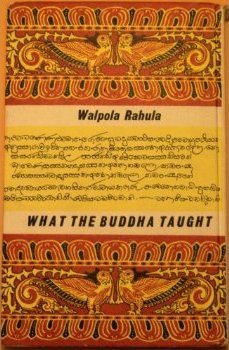
    • In Walpola Rahula’s short introduction to Buddha’s teaching, What the Buddha Taught [PDF], one reads that the Buddha evidently replied to questions in one of four ways:
      • He answered some questions directly.
      • He analyzed some questions to determine what they meant.
      • He answered some questions by replying with counter-questions.
      • He put some questions off to the side.
  • Practice wisdom and lessons during lockdown
  • How to establish a formal meditation practice

Other AUA references:

“Meditation, or Chan, Buddhism is perhaps the most Sinicized (rendered Chinese) of all Buddhist denominations. Because of the initial difficulty and obscurity of Buddhist sutras to the Chinese audience, many of whom were Daoists, the Chinese emphasized an intuitive understanding with or without the reading of the sutras, which is the original meaning of Chan, or meditation.”

  • On what’s skillful, wholesome, important and what to pay attention to:

From the Kalama Sutta:

“….don’t go by reports, by legends, by traditions, by scripture, by logical conjecture, by inference, by analogies, by agreement through pondering views, by probability, or by the thought, ‘This contemplative is our teacher.’ When you know for yourselves that, ‘These qualities are unskillful; these qualities are blameworthy; these qualities are criticized by the wise; these qualities, when adopted & carried out, lead to harm & to suffering’ — then you should abandon them.”

“….overcome by [greed, ill will, and/or delusion] his mind possessed by [greed, ill will, and/or delusion] kills living beings, takes what is not given, goes after another person’s wife, tells lies, and induces others to do likewise, all of which is for long-term harm & suffering.“

From the Kalama Sutta

From the Gotami Sutta:

“As for the qualities of which you may know, ‘These qualities lead to utter disenchantment, to dispassion, to cessation, to calm, to direct knowledge, to self-awakening, to Unbinding’: You may categorically hold, ‘This is the Dhamma, this is the Vinaya, this is the Teacher’s instruction.’”

From the Gotami Sutta

From the Satthusasana Sutta:

“As for the qualities of which you may know, ‘These qualities lead to dispassion, not to passion; to being unfettered, not to being fettered; to shedding, not to accumulating; to modesty, not to self-aggrandizement; to contentment, not to discontent; to seclusion, not to entanglement; to aroused persistence, not to laziness; to being unburdensome, not to being burdensome’: You may categorically hold, ‘This is the Dhamma, this is the Vinaya, this is the Teacher’s instruction.’”

From the Satthusasana Sutta

Audio: Why We Practice | (8/25/2020 — Introducing: ‘Ask Us Anything’ With Denny K Miu)

Or listen via Insight Timer (app or website)


Join Denny live Saturdays online for Yi Jin Jing and mindful joint, stretching, breathing, and qi exercises via:


Full list of links at DennyKMiu.com


Continue reading “Why We Practice | (8/25/2020 — Introducing: ‘Ask Us Anything’ With Denny K Miu)”

Nagas and the Chakras

Nov 20, 2022 UPDATE: These six videos on the chakras, Introduction to the Chakra Teachings; The Complex Layers of the Chakras parts 1; 2; 3; 4 and The Last Pieces of the Chakra Teachings

Introduction to the Chakra Teachings
The Complex Layers of the Chakras part 1
The Complex Layers of the Chakras part 2
The Complex Layers of the Chakras part 3
The Complex Layers of the Chakras part 4
The Last Pieces of the Chakra Teachings

Nagas, usually known as (mythological) serpent-like beings, appear in various religious and spiritual text, including those of Buddhism. The following unique and insightful excerpt on nagas and the chakra system comes from part two of the new 7 part “The Bigger Picture” series by clairvoyant and author Randi Green updating and condensing her experiential work into the higher order sciences behind our reality and related realities:

“. . . or if you get linked up to shamanism, you go that way you’re not seeing you’re getting right into the insectoid network under the Orions and you will activate that ant that are [sic] attached to you through the chakra system. Or the naga, the big snake that’s attached. It’s typically first chakra system which are then linked up to a parasitic entity that’s called the naga, I call it the naga because it used to be what we could call a steering entity, or what was supposed to be the guru within you, but technically it is there to put you into distortion planes of conceptualization of these chakra teaching programs that goes with the Hindu belief system and the guru belief systems that were different than the general religion, because all religions no matter if you go in India, or Japan or Asia major, Asia minor, Mesopotamia, or wherever you go, all religious systems has always had the one for the people and the one for the ones within the secret societies.

And the chakra system is technically the guru teachings that are for the ones within the secret societies that meditated and went inside and to prevent you from accessing your true template they put in that higher self, the naga, which is a parasitic entity that presents itself as a knowledgeable inner guru or your inner master, and it will derail you quite a long way and it actually has a voice which you will hear and you will think you are in contact with some kind of entity.

Sometimes it likes to present itself as a deity. Behind that is an ant and that’s part of what we understand as the fourth dimension. These ants are administering these parasitic entities through nurturing these with different forms of energies and making it happen. They are literally securing that these entities that are connected to your chakra system gets their fuel from a collective entity that is in the older level of our planet, aka the underworld or the racial grids, which then live in a cave system that is nurtured by these ants that which then can find food similar as we find ants out in nature. These ants are controlled by hive mind technologies. Aka the regressed. It a humongous system. . .”

From The Bigger Picture video 2
Page 69 from The HAL Philosophy by Randi Green also mentioning nagas

9/10/20 UPDATE: Additional info via 8/20/20 video The Bigger Picture 7:

In 2016 we had the taking down of the Interactive Simulation Program which were one of an older type of Greys that were part of the hijackers of the regressed races that their reality programs which go along with the chakra system and the entities that were connected to the chakra system. I’m not saying these things are gone because they are now thriving well in humans. They are not linked up to reality programs anymore per se but there’s still smaller types of cubes connected to the nagas which are a parasitic fourth dimensional entity that are tied into the microbilia[sp? maybe microbiome?] of our organic form which still goes with what we understand of the chakra system. Not necessarily as vortices of energy but as part of our glands.

And that is why in the HAL basic energy work I’m literally telling to how to cleanse your organs not using the chakra system — by working directly on your endocrine glans and the chemoelectrical type of energies they are releasing which are part of the response system from where the brains works into the organic form. And if it is parasitically controlled from the fourth dimension then your emotional responses to whatever you will encounter on the mental level will be distorted — will not be under your control — hence it needs to be cleared out so you can give the correct emotional response to whatever is coming your way and not respond as a reaction to parasitic enzymes that are being blasted into your endocrine glads and by that creating ripple effects into your emotional field and by that controlling what energy patterns they want to activate in you and by that controlling your emotional reactions.

That’s how they’re technically still doing it. It’s still part of our reality. They are making us do the merry-go-round, all the ups and down through these different types of parasitic entities that are technically part of what we call the Technologically Enhanced Genetics [TEGs] which the Sirian A’s developed. And from that even though the chakra system might be gone these TEGs are still existent in the fourth dimension. So even though you’ve done the whole chakra removal if you haven’t got rid of the fourth dimensional TEGs well you’re still under the same type of enzymic control. They still have these holographic fields behind your physical organs.

With that said that’s the Interactive Simulation Program. Even though the main cubes are gone there are still a lot of smaller cubes that are individually linked to humans which I talk about in the New Grand Cycle Course 1 to 2. We’re not out of it. Even though the main cubes are gone the individual cubes are still connected to our energy system. So it is still there. It is still running. It’s part of the upper and lower template as I talk about and show in Terralogy and it is linked to the genetic fragments of the regressed races. And until you’ve cleared out these genetics you will still be under the prohibiting technology of the regressed races that took over our reality 15,000 years ago.

The Bigger Picture 7

[ADDITION: 11/21/2020:] https://youtu.be/MBPuU2CeyqE From 35 minutes 30 seconds to 45 minutes (for context at least listen to entire video) Randi Green details the chakra system for those who have/have had it; how present day Western teachings differ; correct and incorrect activations — with the 7 chakra system and the chakras beyond the 7 — along with the physiological challenges and changes involved; the tie-in to magic and Atlantis


More teachings on the chakras and the complexities, context and conditions involved: https://youtu.be/fUYqArv4B6k?t=767 starting at 12:47

Chinese, South and Southeast Asian Art at Minneapolis Institute of Art

I recently visited and pursued the Chinese, South and Southeast Asian Art collection at the Minneapolis Institute of Art. Like most modern day museums, it’s browsable online for higher quality photos and descriptions.

‘Standing Bodhisattva’

Singling out a collection piece for deeper investigation, the ‘Standing Bodhisattva’ by an unknown artist is particularly interesting. The Mia describes this 6th Century work thus:

This standing figure is a bodhisattva, a being who has postponed its own passage to nirvana in order to guide others to salvation. Bodhisattvas are often depicted as paired attendants to a buddha. This sculpture, too, was probably once worshipped as part of a triad of sculptures, positioned to either the left or right of a central icon. This bodhisattva stands on a stone base (the square plinth, two lions, and the lower half of a lotus-shaped pedestal) that was created for a separate sculpture of the historical Buddha, Shakyamuni. Several lengthy inscriptions on the base explain that an original sculpture was created in 570, and then another was installed at the same temple in 581, both utilizing this base. In 574, an emperor of the Northern Zhou dynasty (557–81) prohibited Buddhism in China, and many idols were desecrated. This may be the reason the base has some apparently intentional damage (two of four lions have been removed) and is no longer with its original sculpture. At some later date, the base came to be used for the present bodhisattva. In the early 1900s, it became the first work of Asian art to enter Mia’s collection.

‘Standing Bodhisattva’ by an unknown artist

The fact that this Bodhisattva is of an unnamed title is the first striking thing about it. Then plenty of questions and speculation come to mind. Some of these questions and musings could be helpful while others not so much. Consider what you’d like and dismiss the rest please.

‘Standing Bodhisattva’

Why would the description state ‘this sculpture, too, was probably once worshipped’ when such activity is discouraged in Buddhism?

Mudras

Who removed the hand, when did they remove it, and why? Mudras, or hand gestures, are often symbolic, or represent certain intent. What mudra did the hand display before removal, and what significance, if any, would the hand position play in the larger narrative? Could someone have created a hole where the right hand was after the initial hand removal? Could this hole allow for easier interchanging of different right hands with various mudras (for certain purposes)? Could a similar (unseen) manner or method be true for the left hand now?

Why would two lions be ripped off instead of zero, one, three or four lions? What about something different than lions? How can we know for sure?

What historical background details support, or don’t support, “an emperor of the Northern Zhou” being “the reason the base has some apparently intentional damage”? If the originally attached “idol” still exists, [which, by the way, there are no “idols” per se in Buddhism] where is it (now)? (Why go through the trouble of removing the original from the base? Or was the original statue not removed, just smashed, but the base mostly left undamaged? Leading further to: then where was the base positioned in the temple and how was it affixed? If the original statue was destroyed, why smash two lions but leave two lions?)

Why go through the trouble of reattaching a new statue to this base? Why not a new base? And why affix a Bodhisattva to the base instead of another Buddha?

Could something have been hidden in the base when attached to the original statue prompting removal or destruction? Is something hidden in this one now? And if the artist is unknown, do we know anything about the artists of the previous statue? Could this base have been used for more than two statues?

Could other explanations be possible? Could the monastery, or another party, have removed the original Buddha statue (and put it in hiding for safe keeping, or for other reasons) with the author(s) of the base’s description depicting false information — relating such details either knowingly, or just inscribing what was told to them, not knowing for certain whether the related accounts were or factual or not? Or, could the description have been added by someone who had the base when/if it was outside the temple (to help oust the Northern Zhou dynasty, or for whatever agenda(s)) then later found its way back to the temple? So many possibilities. The big question is what does the full text on the base say and who wrote it?

Some detail images of the base:

Adyashanti – Being Fully Present

An Adyashanti video highlight on spiritual wakefulness 101:

With a deep interest, when we let go of what may happen in the future, and let go of trying to duplicate the past, a calm and quieter mind happens naturally.

There’s often a latent anxiety though that when open, living in the now, not pushing or anticipating that nothing useful will happen. But this is negative ego talking, and the joke is there’s been little “spiritual” significance so far when holding on and not being present.

Sarah Edwards: Past Lives, Translating Intuitive & Empathic Guidance, ‘The Emplacement’ And The Nature of Time


In Conversation with Sarah Edwards — show notes

Part two of my conversation with medium and spiritual counselor Sarah Edwards recorded July 23rd 2020 at Mary’s House of Healing in St Charles, Missouri for IntegratingPresence.com.

Sarah is an intuitive guide, medium, Usui Tibetan Reiki Master Teacher, and Clairaudient delivering profoundly wise, insightful and skillful messages. Find her on Facebook at Sacred Speak with Sarah.

As is often expected when starting media production — even after heavy editing there’s still plenty of “umm”s, “absolutely”s, “mmmmm”s, stuttering, me interrupting and talking over Sarah, environmental distractions, etc, etc.

Nonetheless I feel the depth and breadth of what we get into outweigh the verbal annoyances.

While we tackle COVID Corona in the first recording this one addresses much more far ranging material.

Topics include:

  • CV, Mandela Effect, Timeline and Karma shenanigans
  • Challenges with clairaudient readings for visual clients and translating the multi-layered nature of symbolic messages
  • Time: its unknown speed and nature; anomalous time phenomenon; purposes and purposelessness of time
  • Energy memory and fluidity in relation to (bodily) volition and agency; soul knowing
  • Kowtowing to the status quo; embracing mystery

To make a correction, I relayed information about humans being put in 5 reality zones during 2020-2021 when it is actually after 2020-2021. And in 2135 Density 1 is set to start its extinguishment but not complete until around 2235.

Some of the stuff we mention is our own and plenty of other stuff comes from sources we don’t site so please only take what’s useful for your journey and investigation, question all you hear and see here and then do your own research with this information.

Ultimately — like with just about anything else — the views, information and opinions mentioned are not to be taken as ultimate truth to be clung to.

Our (recorded) conversation starts during some conjecture about Stonehenge


Audio: Sarah Edwards: Past Lives, Translating Intuitive & Empathic Guidance, ‘The Emplacement’ And The Nature of Time

Or listen via Insight Timer (app or website)


Images credits:


Continue reading “Sarah Edwards: Past Lives, Translating Intuitive & Empathic Guidance, ‘The Emplacement’ And The Nature of Time”

Dharma Questions: Awareness / Consciousness

This irregular “Dharma Questions” series deals with “dharma” meaning both the truth of the nature of reality and some Buddhist teachings. Please see this post on the intensions for questioning and not questioning. Amongst other things these questions can be, but not necessarily:

  • thought experiments
  • borderline musings not meant to be answered
  • from laziness of not contemplating or researching them yet

Whatever [one] keeps pursuing with her thinking & pondering, that becomes the inclination of her awareness.

Two Sorts of Thinking
Dvedhāvitakka Sutta  (MN 19)
  1. What is the difference between mind, thoughts, thinking, cognition, consciousness, attention, remembering, knowing, realizing, mind objects, mental formations, mental phenomena, volition, mindfulness, awareness? And what is the relationship between each of these and with multiple combinations of the others?
  2. How does the waxing, maintaining and waning of awareness happen? What is the relationship of this to other processes?
  3. How do we know that knowing (in and of itself) is an existent phenomenon?‬
  4. How does the distraction/remembrance (away from then back to the meditation object) process function? If awareness doesn’t cease [for example, try to stop being aware for 30 seconds; just stop; cut it out], what happens to awareness — where does it go — when we say we realize we haven’t been aware for awhile after awareness has returned? Or is it we are always contacting (into) some object but not always aware of where there’s contact. Or a combination, or something else?
  5. With the exercise of “stop being aware” as a reference point, how can there be (the) non-mindfulness (of being “lost in thought”)?
  6. When lost in thought does awareness of any of the five senses exist?
  7. Without continual mindful awareness, how is it known that awareness isn’t destroyed and renewed over and over (on an individual and/or more collective level)?
  8. How were people such in a trance and spell they forgot about the act of remembering, or mindfulness, which the Buddha is said to have rediscovered? Today it’s a different kind of trance where people know of and remember the phenomenon of remembering but then quickly forget only to remember again later and so on. How and why does this happen? Do folks just fail to see the importance of this? If so how and why?
  9. How does one establish and maintain continuous bare awareness of the 4 main postures? (And what/how is the process (of remembering to do so if involved and challenging?)
  10. How does consciousness and energy sculpt the empty and essencelessness nature of (foam-like) form and matter? Or what does?
  11. What directs attention and how?
  12. Why does consciousness constantly seek an object and how?
  13. Doesn’t it take mindfulness to know that ‘the enlightenment factor of mindfulness is not in me’ mentioned in the 4th Foundation of Mindfulness?
  14. How do certain types of consciousnesses arise, align, and/or associate with various Saṅkhāra (or volitional formations, fabrications, constructions)?