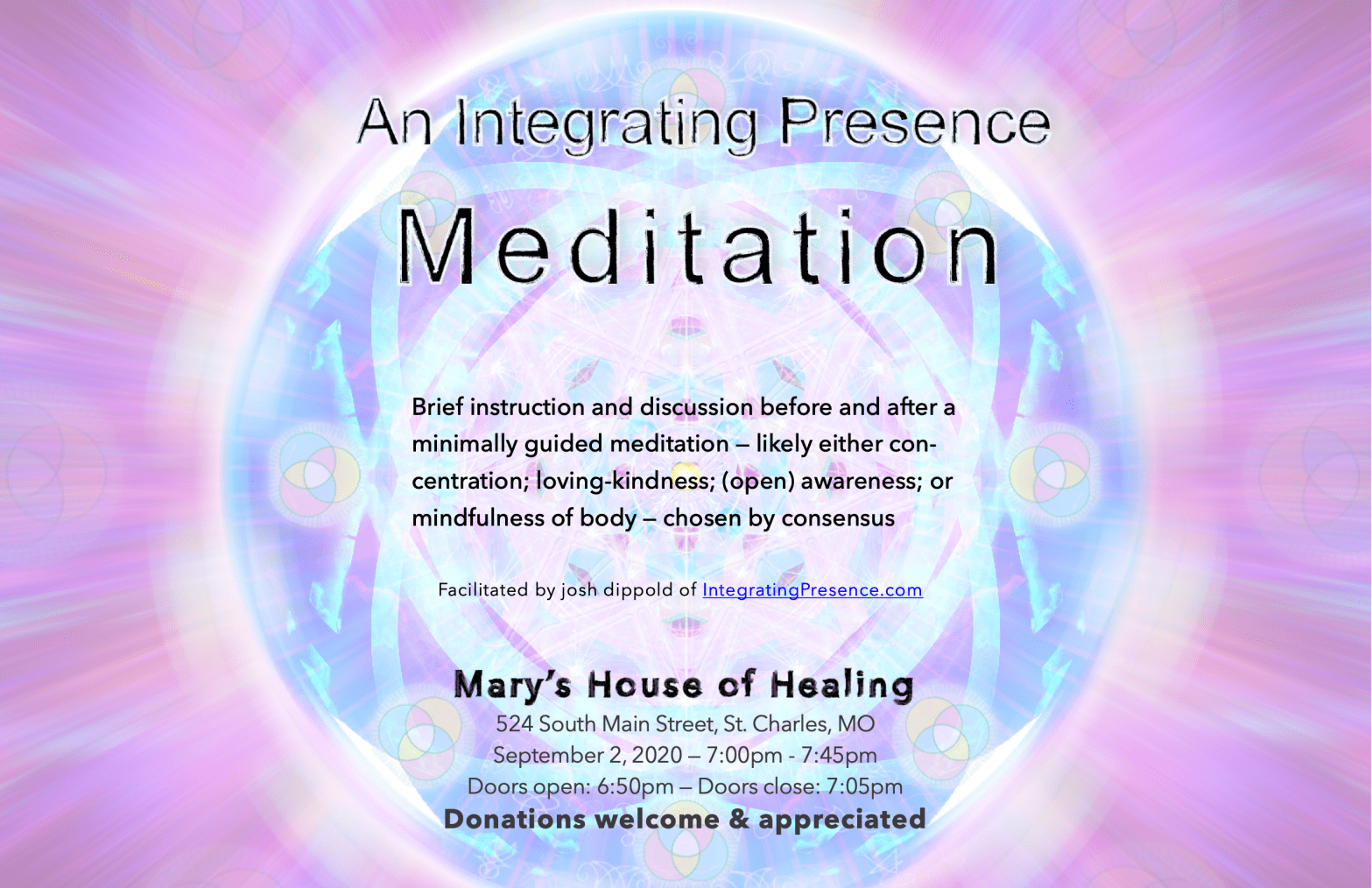
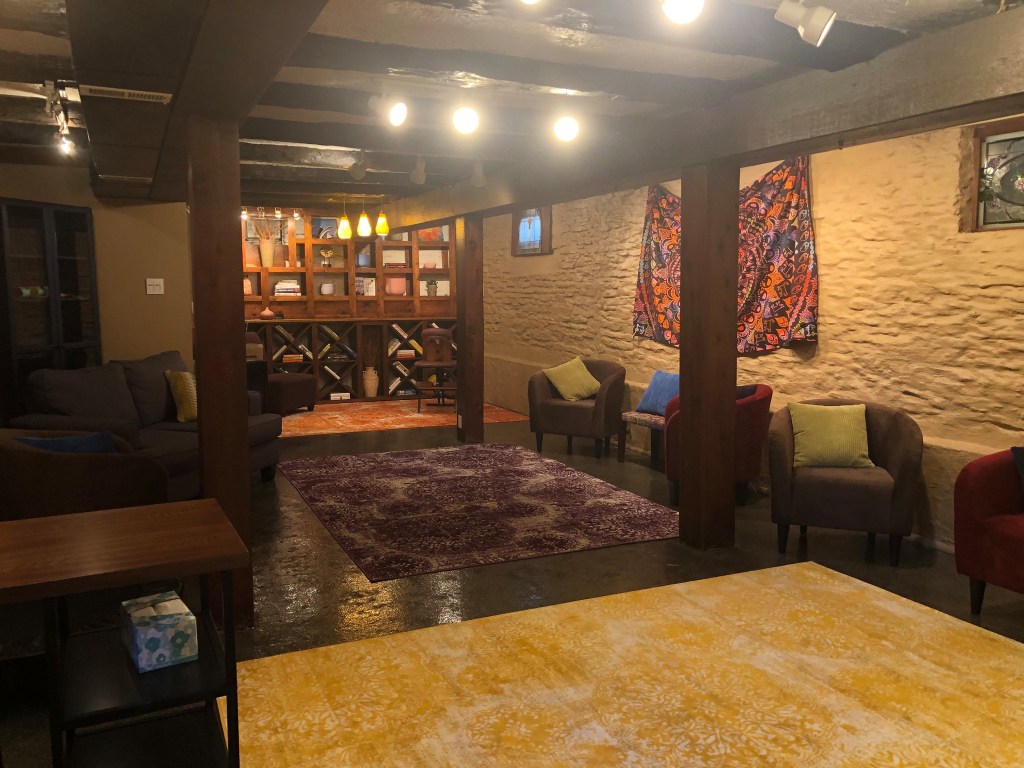
On September 2, 2020 at Mary’s House of Healing starting at 7pm, I plan to facilitate a minimally guided meditation starting with brief instructions along with a discussion before and after. The meditation will likely be either loving-kindness; concentration; (open) awareness; mindfulness (of body, feeling and/or mind); or a combination — chosen by consensus — https://www.facebook.com/events/314566303116914
Audio: An Integrating Presence Meditation at Mary’s House of Healing September 2, 2020
This “pilot” of sorts called ‘Ask Us Anything’ marks the start of a monthly, open-audience, open-discussion with co-host Denny K Miu mostly about meditation practices and related topics.
Our format isn’t set in stone, but it may gel more over time. We may invite guests. Audience members may talk more. We may freestyle with zero preparation, or do the opposite and pre-plan for (highly) specific theme or topic. Feedback is welcome and encouraged.
Some topics we discussed:
The importance and intent of/for (a) daily (meditation) practice (for ourselves and how to help aspiring meditators)
The importance of feedback on/about/in/with/for meditation training/practice — including feedback from self, spiritual friends and teacher(s)
The Buddha’s four ways to answer questions:
In Walpola Rahula’s short introduction to Buddha’s teaching, What the Buddha Taught [PDF], one reads that the Buddha evidently replied to questions in one of four ways:
He answered some questions directly.
He analyzed some questions to determine what they meant.
He answered some questions by replying with counter-questions.
“Meditation, or Chan, Buddhism is perhaps the most Sinicized (rendered Chinese) of all Buddhist denominations. Because of the initial difficulty and obscurity of Buddhist sutras to the Chinese audience, many of whom were Daoists, the Chinese emphasized an intuitive understanding with or without the reading of the sutras, which is the original meaning of Chan, or meditation.”
On what’s skillful, wholesome, important and what to pay attention to:
“….don’t go by reports, by legends, by traditions, by scripture, by logical conjecture, by inference, by analogies, by agreement through pondering views, by probability, or by the thought, ‘This contemplative is our teacher.’ When you know for yourselves that, ‘These qualities are unskillful; these qualities are blameworthy; these qualities are criticized by the wise; these qualities, when adopted & carried out, lead to harm & to suffering’ — then you should abandon them.”
“….overcome by [greed, ill will, and/or delusion] his mind possessed by [greed, ill will, and/or delusion] kills living beings, takes what is not given, goes after another person’s wife, tells lies, and induces others to do likewise, all of which is for long-term harm & suffering.“
“As for the qualities of which you may know, ‘These qualities lead to utter disenchantment, to dispassion, to cessation, to calm, to direct knowledge, to self-awakening, to Unbinding’: You may categorically hold, ‘This is the Dhamma, this is the Vinaya, this is the Teacher’s instruction.’”
“As for the qualities of which you may know, ‘These qualities lead to dispassion, not to passion; to being unfettered, not to being fettered; to shedding, not to accumulating; to modesty, not to self-aggrandizement; to contentment, not to discontent; to seclusion, not to entanglement; to aroused persistence, not to laziness; to being unburdensome, not to being burdensome’: You may categorically hold, ‘This is the Dhamma, this is the Vinaya, this is the Teacher’s instruction.’”
Nov 20, 2022 UPDATE: These six videos on the chakras, Introduction to the Chakra Teachings; The Complex Layers of the Chakras parts 1; 2; 3; 4 and The Last Pieces of the Chakra Teachings
Nagas, usually known as (mythological) serpent-like beings, appear in various religious and spiritual text, including those of Buddhism. The following unique and insightful excerpt on nagas and the chakra system comes from part two of the new 7 part “The Bigger Picture” series by clairvoyant and author Randi Green updating and condensing her experiential work into the higher order sciences behind our reality and related realities:
“. . . or if you get linked up to shamanism, you go that way you’re not seeing you’re getting right into the insectoid network under the Orions and you will activate that ant that are [sic] attached to you through the chakra system. Or the naga, the big snake that’s attached. It’s typically first chakra system which are then linked up to a parasitic entity that’s called the naga, I call it the naga because it used to be what we could call a steering entity, or what was supposed to be the guru within you, but technically it is there to put you into distortion planes of conceptualization of these chakra teaching programs that goes with the Hindu belief system and the guru belief systems that were different than the general religion, because all religions no matter if you go in India, or Japan or Asia major, Asia minor, Mesopotamia, or wherever you go, all religious systems has always had the one for the people and the one for the ones within the secret societies.
And the chakra system is technically the guru teachings that are for the ones within the secret societies that meditated and went inside and to prevent you from accessing your true template they put in that higher self, the naga, which is a parasitic entity that presents itself as a knowledgeable inner guru or your inner master, and it will derail you quite a long way and it actually has a voice which you will hear and you will think you are in contact with some kind of entity.
Sometimes it likes to present itself as a deity. Behind that is an ant and that’s part of what we understand as the fourth dimension. These ants are administering these parasitic entities through nurturing these with different forms of energies and making it happen. They are literally securing that these entities that are connected to your chakra system gets their fuel from a collective entity that is in the older level of our planet, aka the underworld or the racial grids, which then live in a cave system that is nurtured by these ants that which then can find food similar as we find ants out in nature. These ants are controlled by hive mind technologies. Aka the regressed. It a humongous system. . .”
In 2016 we had the taking down of the Interactive Simulation Program which were one of an older type of Greys that were part of the hijackers of the regressed races that their reality programs which go along with the chakra system and the entities that were connected to the chakra system. I’m not saying these things are gone because they are now thriving well in humans. They are not linked up to reality programs anymore per se but there’s still smaller types of cubes connected to the nagas which are a parasitic fourth dimensional entity that are tied into the microbilia[sp? maybe microbiome?] of our organic form which still goes with what we understand of the chakra system. Not necessarily as vortices of energy but as part of our glands.
And that is why in the HAL basic energy work I’m literally telling to how to cleanse your organs not using the chakra system — by working directly on your endocrine glans and the chemoelectrical type of energies they are releasing which are part of the response system from where the brains works into the organic form. And if it is parasitically controlled from the fourth dimension then your emotional responses to whatever you will encounter on the mental level will be distorted — will not be under your control — hence it needs to be cleared out so you can give the correct emotional response to whatever is coming your way and not respond as a reaction to parasitic enzymes that are being blasted into your endocrine glads and by that creating ripple effects into your emotional field and by that controlling what energy patterns they want to activate in you and by that controlling your emotional reactions.
That’s how they’re technically still doing it. It’s still part of our reality. They are making us do the merry-go-round, all the ups and down through these different types of parasitic entities that are technically part of what we call the Technologically Enhanced Genetics [TEGs] which the Sirian A’s developed. And from that even though the chakra system might be gone these TEGs are still existent in the fourth dimension. So even though you’ve done the whole chakra removal if you haven’t got rid of the fourth dimensional TEGs well you’re still under the same type of enzymic control. They still have these holographic fields behind your physical organs.
With that said that’s the Interactive Simulation Program. Even though the main cubes are gone there are still a lot of smaller cubes that are individually linked to humans which I talk about in the New Grand Cycle Course 1 to 2. We’re not out of it. Even though the main cubes are gone the individual cubes are still connected to our energy system. So it is still there. It is still running. It’s part of the upper and lower template as I talk about and show in Terralogy and it is linked to the genetic fragments of the regressed races. And until you’ve cleared out these genetics you will still be under the prohibiting technology of the regressed races that took over our reality 15,000 years ago.
[ADDITION: 11/21/2020:] https://youtu.be/MBPuU2CeyqE From 35 minutes 30 seconds to 45 minutes (for context at least listen to entire video) Randi Green details the chakra system for those who have/have had it; how present day Western teachings differ; correct and incorrect activations — with the 7 chakra system and the chakras beyond the 7 — along with the physiological challenges and changes involved; the tie-in to magic and Atlantis
More teachings on the chakras and the complexities, context and conditions involved: https://youtu.be/fUYqArv4B6k?t=767 starting at 12:47
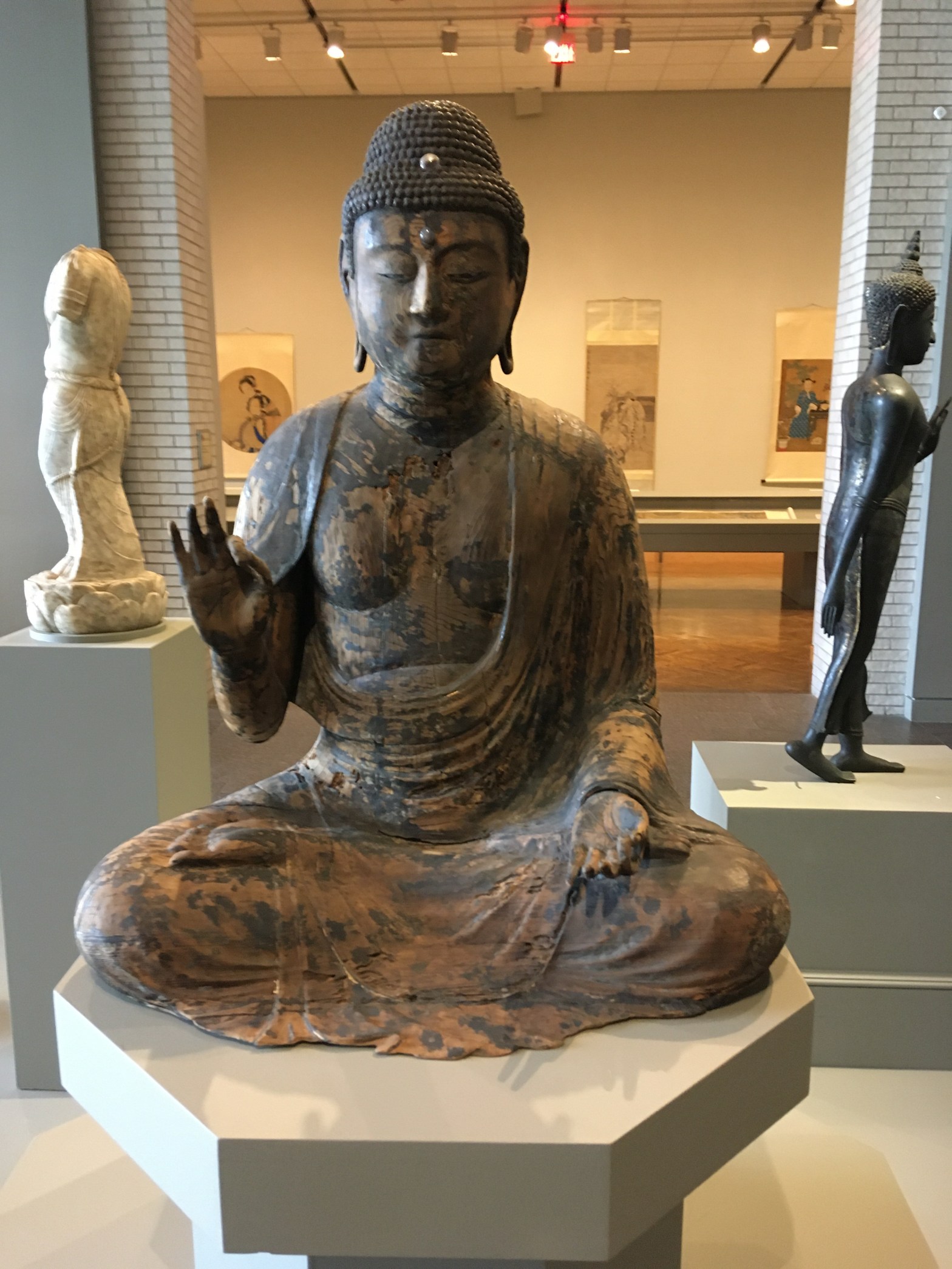
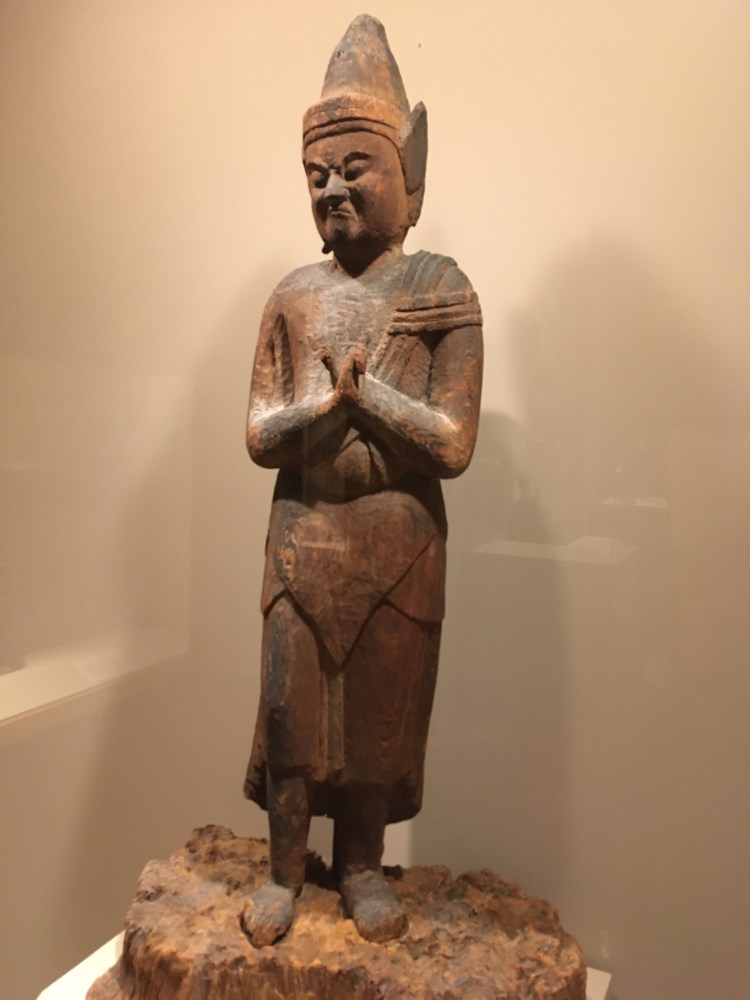
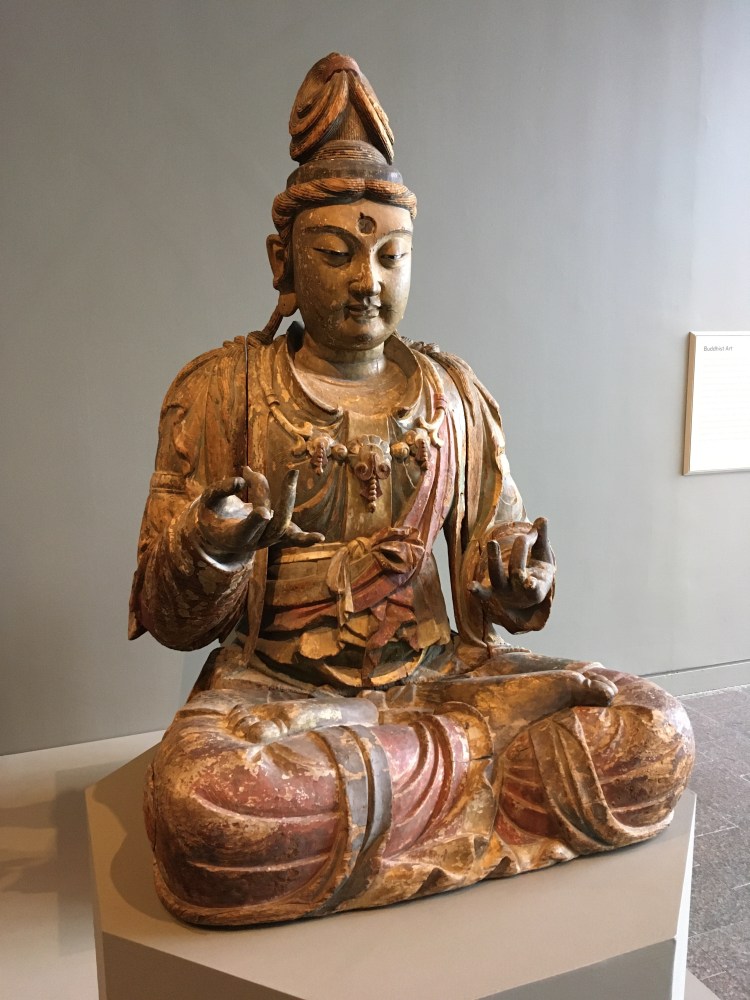
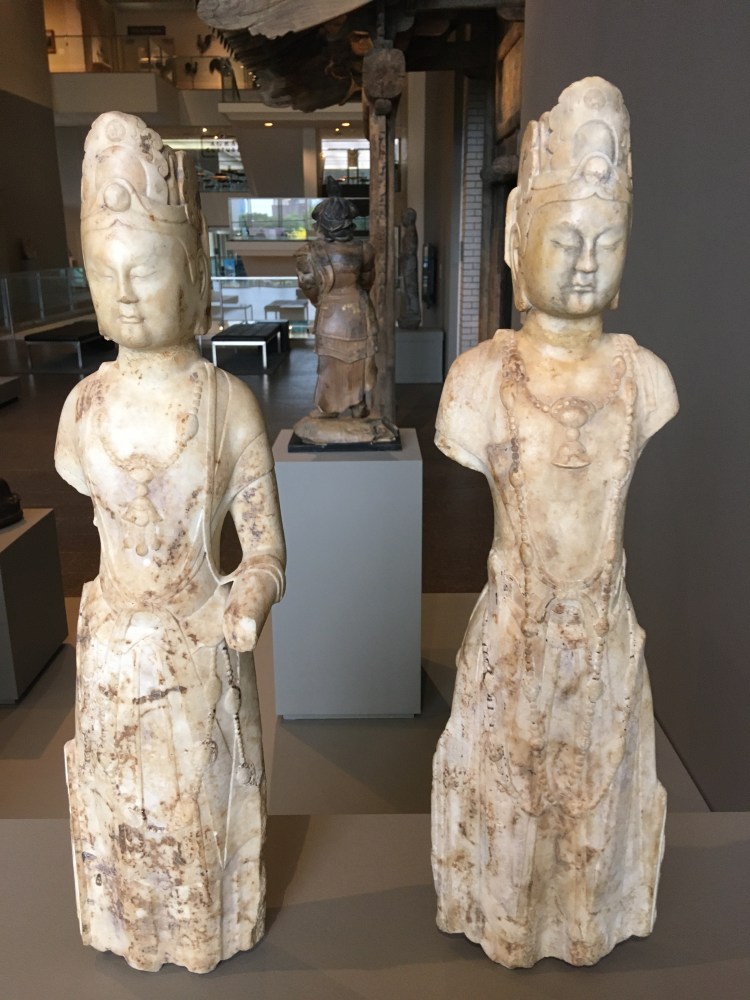
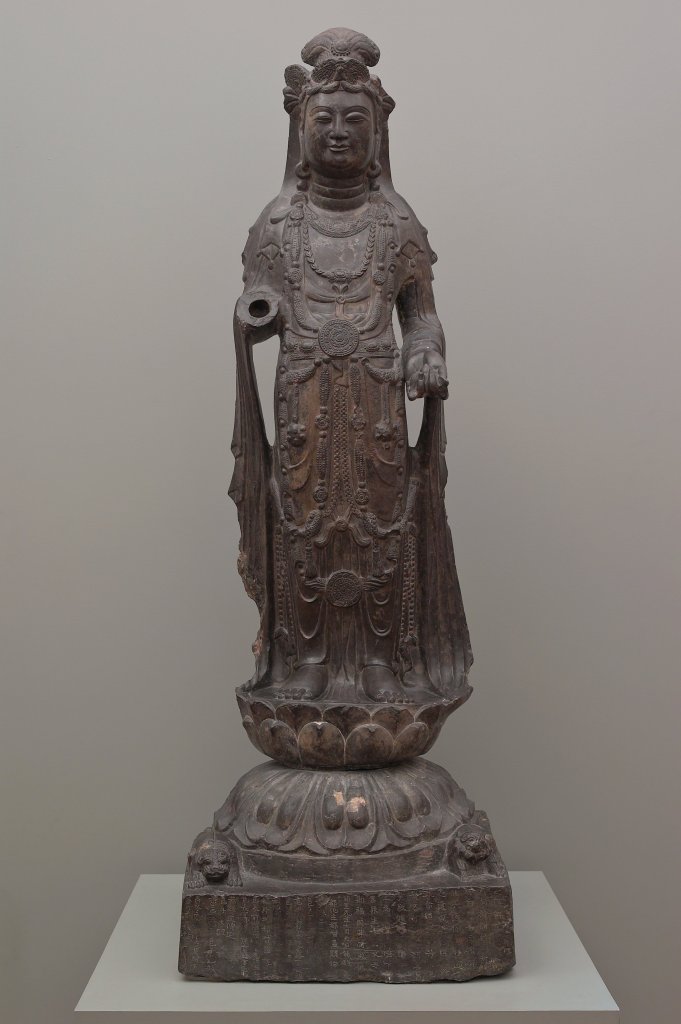
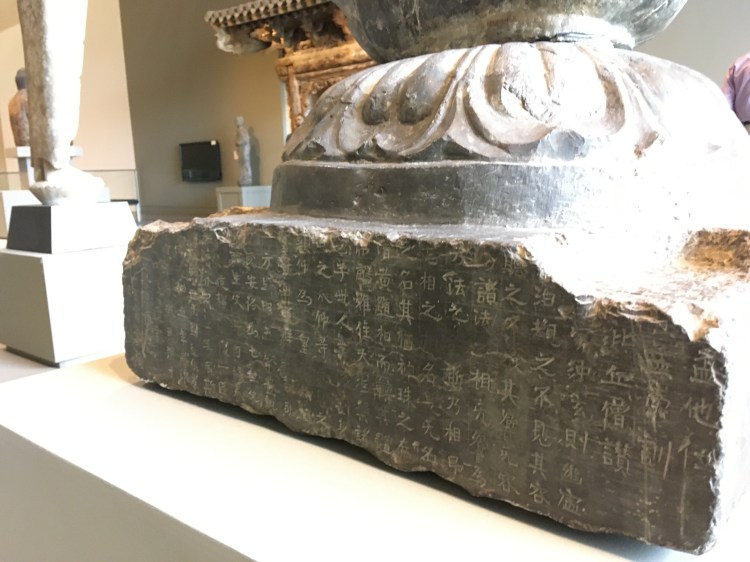
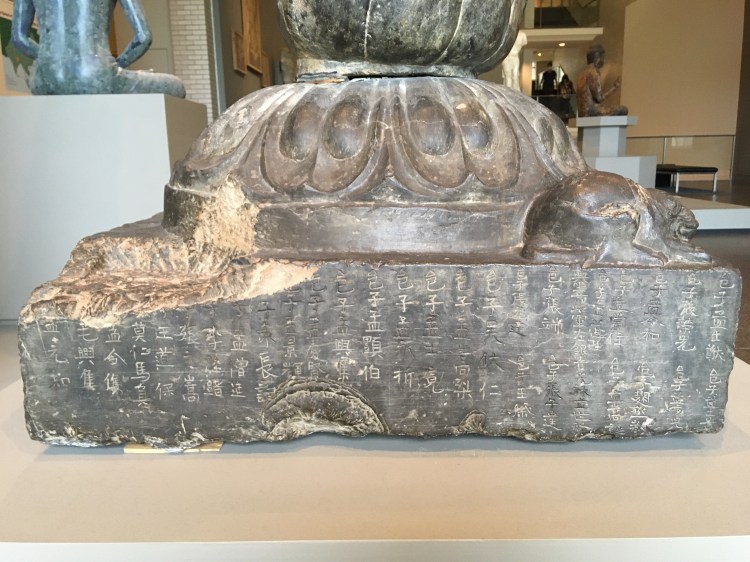
Singling out a collection piece for deeper investigation, the ‘Standing Bodhisattva’ by an unknown artist is particularly interesting. The Mia describes this 6th Century work thus:
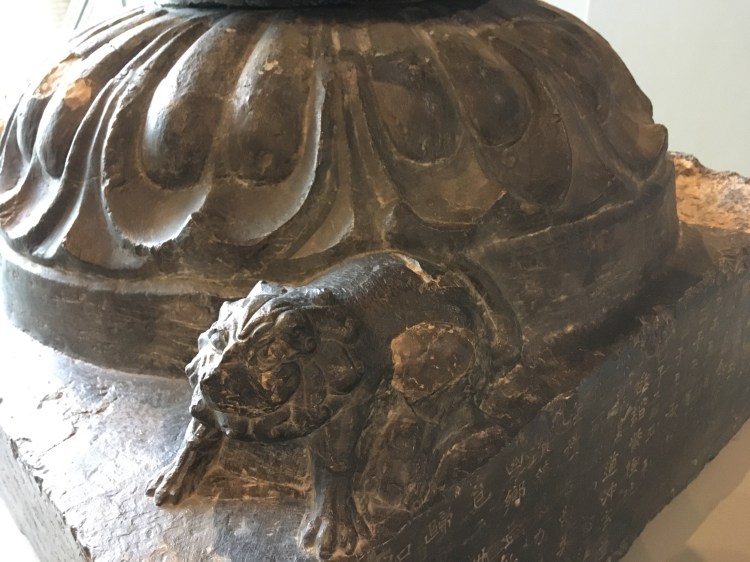
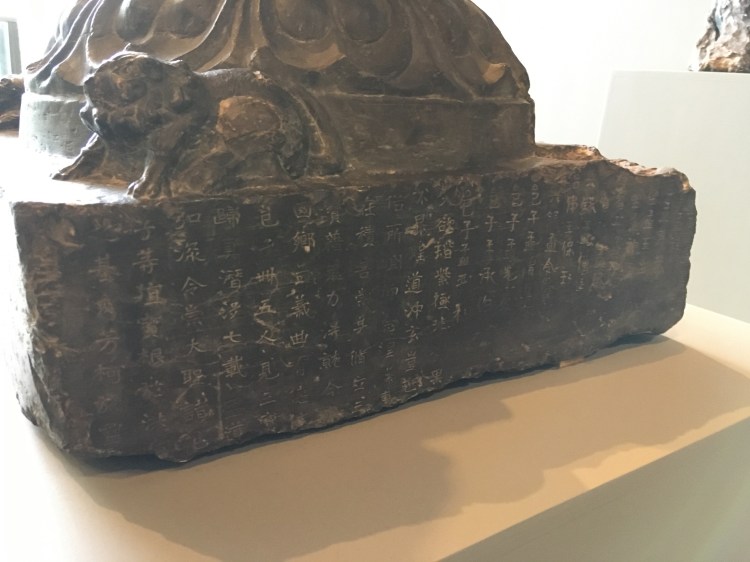
This standing figure is a bodhisattva, a being who has postponed its own passage to nirvana in order to guide others to salvation. Bodhisattvas are often depicted as paired attendants to a buddha. This sculpture, too, was probably once worshipped as part of a triad of sculptures, positioned to either the left or right of a central icon. This bodhisattva stands on a stone base (the square plinth, two lions, and the lower half of a lotus-shaped pedestal) that was created for a separate sculpture of the historical Buddha, Shakyamuni. Several lengthy inscriptions on the base explain that an original sculpture was created in 570, and then another was installed at the same temple in 581, both utilizing this base. In 574, an emperor of the Northern Zhou dynasty (557–81) prohibited Buddhism in China, and many idols were desecrated. This may be the reason the base has some apparently intentional damage (two of four lions have been removed) and is no longer with its original sculpture. At some later date, the base came to be used for the present bodhisattva. In the early 1900s, it became the first work of Asian art to enter Mia’s collection.
The fact that this Bodhisattva is of an unnamed title is the first striking thing about it. Then plenty of questions and speculation come to mind. Some of these questions and musings could be helpful while others not so much. Consider what you’d like and dismiss the rest please.
Why would the description state ‘this sculpture, too, was probably once worshipped’ when such activity is discouraged in Buddhism?
Mudras
Who removed the hand, when did they remove it, and why? Mudras, or hand gestures, are often symbolic, or represent certain intent. What mudra did the hand display before removal, and what significance, if any, would the hand position play in the larger narrative? Could someone have created a hole where the right hand was after the initial hand removal? Could this hole allow for easier interchanging of different right hands with various mudras (for certain purposes)? Could a similar (unseen) manner or method be true for the left hand now?
Why would two lions be ripped off instead of zero, one, three or four lions? What about something different than lions? How can we know for sure?
What historical background details support, or don’t support, “an emperor of the Northern Zhou” being “the reason the base has some apparently intentional damage”? If the originally attached “idol” still exists, [which, by the way, there are no “idols” per se in Buddhism] where is it (now)? (Why go through the trouble of removing the original from the base? Or was the original statue not removed, just smashed, but the base mostly left undamaged? Leading further to: then where was the base positioned in the temple and how was it affixed? If the original statue was destroyed, why smash two lions but leave two lions?)
Why go through the trouble of reattaching a new statue to this base? Why not a new base? And why affix a Bodhisattva to the base instead of another Buddha?
Could something have been hidden in the base when attached to the original statue prompting removal or destruction? Is something hidden in this one now? And if the artist is unknown, do we know anything about the artists of the previous statue? Could this base have been used for more than two statues?
Could other explanations be possible? Could the monastery, or another party, have removed the original Buddha statue (and put it in hiding for safe keeping, or for other reasons) with the author(s) of the base’s description depicting false information — relating such details either knowingly, or just inscribing what was told to them, not knowing for certain whether the related accounts were or factual or not? Or, could the description have been added by someone who had the base when/if it was outside the temple (to help oust the Northern Zhou dynasty, or for whatever agenda(s)) then later found its way back to the temple? So many possibilities. The big question is what does the full text on the base say and who wrote it?
An Adyashanti video highlight on spiritual wakefulness 101:
With a deep interest, when we let go of what may happen in the future, and let go of trying to duplicate the past, a calm and quieter mind happens naturally.
There’s often a latent anxiety though that when open, living in the now, not pushing or anticipating that nothing useful will happen. But this is negative ego talking, and the joke is there’s been little “spiritual” significance so far when holding on and not being present.
Sarah is an intuitive guide, medium, Usui Tibetan Reiki Master Teacher, and Clairaudient delivering profoundly wise, insightful and skillful messages. Find her on Facebook at Sacred Speak with Sarah.
As is often expected when starting media production — even after heavy editing there’s still plenty of “umm”s, “absolutely”s, “mmmmm”s, stuttering, me interrupting and talking over Sarah, environmental distractions, etc, etc.
Nonetheless I feel the depth and breadth of what we get into outweigh the verbal annoyances.
CV, Mandela Effect, Timeline and Karma shenanigans
Challenges with clairaudient readings for visual clients and translating the multi-layered nature of symbolic messages
Time: its unknown speed and nature; anomalous time phenomenon; purposes and purposelessness of time
Energy memory and fluidity in relation to (bodily) volition and agency; soul knowing
Kowtowing to the status quo; embracing mystery
To make a correction, I relayed information about humans being put in 5 reality zones during 2020-2021 when it is actually after 2020-2021. And in 2135 Density 1 is set to start its extinguishment but not complete until around 2235.
Some of the stuff we mention is our own and plenty of other stuff comes from sources we don’t site so please only take what’s useful for your journey and investigation, question all you hear and see here and then do your own research with this information.
Ultimately — like with just about anything else — the views, information and opinions mentioned are not to be taken as ultimate truth to be clung to.
Our (recorded) conversation starts during some conjecture about Stonehenge
Audio: Sarah Edwards: Past Lives, Translating Intuitive & Empathic Guidance, ‘The Emplacement’ And The Nature of Time
This irregular “Dharma Questions” series deals with “dharma” meaning both the truth of the nature of reality and some Buddhist teachings. Please see this post on the intensions for questioning and not questioning. Amongst other things these questions can be, but not necessarily:
thought experiments
borderline musings not meant to be answered
from laziness of not contemplating or researching them yet
Whatever [one] keeps pursuing with her thinking & pondering, that becomes the inclination of her awareness.
What is the difference between mind, thoughts, thinking, cognition, consciousness, attention, remembering, knowing, realizing, mind objects, mental formations, mental phenomena, volition, mindfulness, awareness? And what is the relationship between each of these and with multiple combinations of the others?
How does the waxing, maintaining and waning of awareness happen? What is the relationship of this to other processes?
How do we know that knowing (in and of itself) is an existent phenomenon?
How does the distraction/remembrance (away from then back to the meditation object) process function? If awareness doesn’t cease [for example, try to stop being aware for 30 seconds; just stop; cut it out], what happens to awareness — where does it go — when we say we realize we haven’t been aware for awhile after awareness has returned? Or is it we are always contacting (into) some object but not always aware of where there’s contact. Or a combination, or something else?
With the exercise of “stop being aware” as a reference point, how can there be (the) non-mindfulness (of being “lost in thought”)?
When lost in thought does awareness of any of the five senses exist?
Without continual mindful awareness, how is it known that awareness isn’t destroyed and renewed over and over (on an individual and/or more collective level)?
How were people such in a trance and spell they forgot about the act of remembering, or mindfulness, which the Buddha is said to have rediscovered? Today it’s a different kind of trance where people know of and remember the phenomenon of remembering but then quickly forget only to remember again later and so on. How and why does this happen? Do folks just fail to see the importance of this? If so how and why?
How does one establish and maintain continuous bare awareness of the 4 main postures? (And what/how is the process (of remembering to do so if involved and challenging?)
How does consciousness and energy sculpt the empty and essencelessness nature of (foam-like) form and matter? Or what does?
What directs attention and how?
Why does consciousness constantly seek an object and how?
Doesn’t it take mindfulness to know that ‘the enlightenment factor of mindfulness is not in me’ mentioned in the 4th Foundation of Mindfulness?
How do certain types of consciousnesses arise, align, and/or associate with various Saṅkhāra (or volitional formations, fabrications, constructions)?
It is often wise to address an elephant in a room once discovered, and let’s just call that elephant Corona19 or CV. I sat down with the fearless and intrepid healer and advisor Sarah Edwards on July 23rd 2020 at Mary’s House of Healing in St Charles, Missouri to face the CV beast headlong.
Sarah is an intuitive guide, medium, Usui Tibetan Reiki Master Teacher, and Clairaudient delivering profoundly wise, insightful and skillful messages. Find her on Facebook at Sacred Speak with Sarah.
In this informal conversation, there’s plenty of, let just call them, charming idiosyncrasies, with enough “absolutely”s for a drinking game. But along with my verbal foibles Sarah and I dig directly into CV while touching on other related topics along the way.
Deep dive on masks: multi-layer/level deconstruction and analysis
True health
Authenticity and self-love
Mental abuse
(Tacit) consent
Ushering in technocracy and tyranny
Human Trafficking [ “The Children are Set Free and May It Begin With Me” mantra from Project Resolution Call 1 – Freeing the Children – August 1st, 2019 — (direct mp3 download) ]
Evolving facial recognition algorithm training techniques
Facial expressions
Negative emotions
Societal changes for the better
Schooling vs Education
Negativity bias
Solutions
Free will
Holding space
Not being held back by others
Lifestyle review
Domino effect of discovering and rediscovering joy
Respectfully standing firm
Avoiding certain establishments
Being tested in life
Complexity of energy involved in different ways of communication
MABA‘s Shifu Jiru teaches five breathing exercises. The following commentary on them is merely my own thoughts and observations and by no means objective, definitive, representative or authorized. I welcome any and all corrections and responses. Please take what’s here with a grain of salt so as not to color your own experience of doing these exercises. And also realize when someone says, “OK. I want you to NOT think of a pink elephant!” What happens? Yeah. Especially for a perspective like: could these breathing exercises signal a symbolic and physically displayed intent to overcome, and not consent to any (potential) unseen influences hindering continual bare awareness of breath?
Even in the short amount of time I’ve practiced them I find these Qigong breathing exercises an aide to (increasing) breath awareness. And along with noticing the effects during the brief relaxation and standing meditation between each exercise, I find all five particularly helpful before more extended, formal breath-centric mediation.
I address each exercise on a practical, mundane level as well as the more metaphorical:
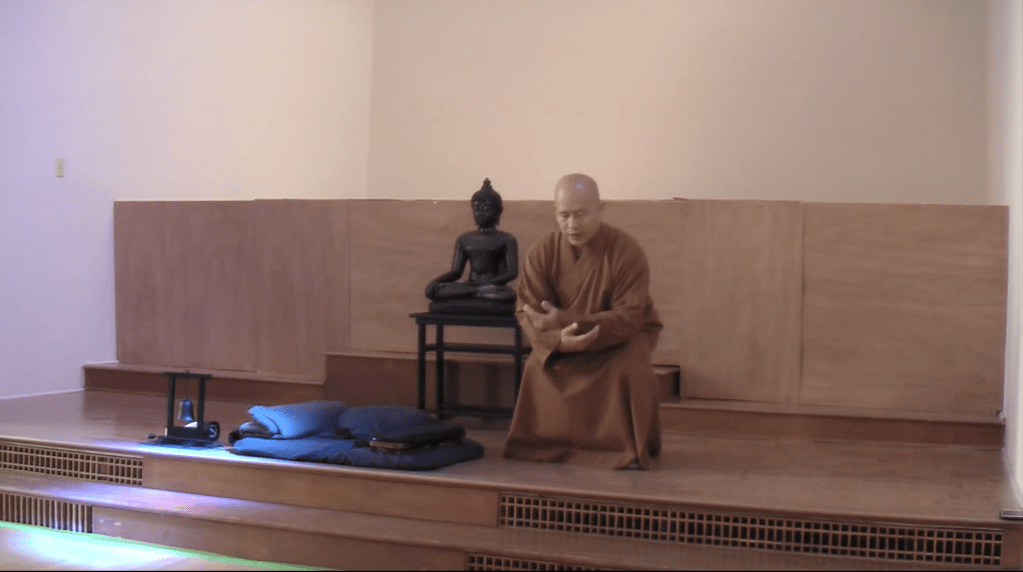
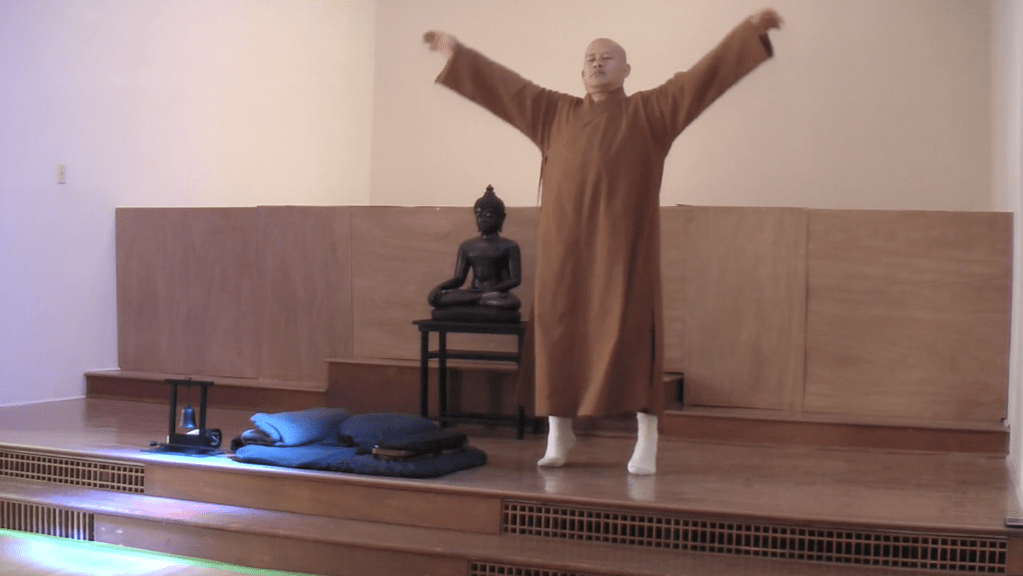
exercise 1exercise 1
1)Gil Fronsdal mentions riding the breath like a surfer rides a wave. Being with the breath. In tune with it. Synchronized with it. Attending skillfully to the breath and attuning to its pleasantness, instead of the futility and frustration of trying to control it. This first exercise starts off like waves in the ocean. It then adds expanding the arms wide, incorporating the vastness and incalculableness of the ocean. The ocean metaphor lines up with primordial consciousness. The source of consciousness. If represented by an animal, the first part may be a bird floating up and down on the ocean waves while taking to flight for the second part.
exercise 2exercise 2
2) I’ve seen and heard slight variations for exercise two:
hugging oneself
holding or hugging a ball (maybe wrapping arms around the globe of the world) then releasing and/or expanding it
inflating and deflating a ballon
In that order, there’s the correspondence of:
self-kindness/self-compassion
knowing the world — and our non-attached contributions in it — without being entangled by the world
the practicality of reinforcing our experientially knowing of the lungs’ ballon-like function
An animal representation of the first part might be a bear hug.
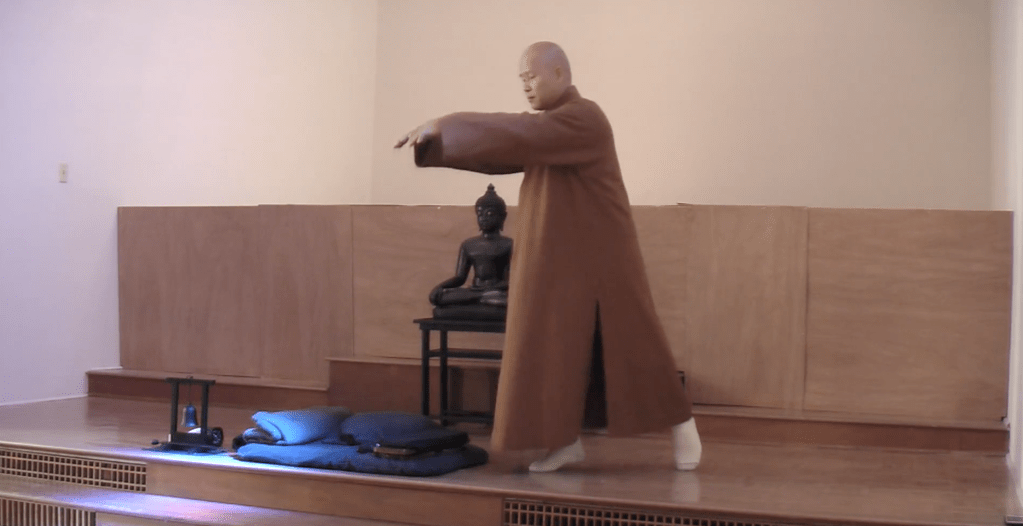
exercise 3exercise 3
3) The unique and perplexing methods of movement for moths and butterflies is one of surrender, grace and beauty, as well as carefree, near effortless nourishment from nature. Throughout the butterfly‘s well-known theme of transmutation we can see a calm awareness brought to its various identities and modes of being. Developing one’s skill of sensing, applying, embedding and realizing these passive yet transformative qualities of breath is quite helpful for (awareness of) breath in meditation.
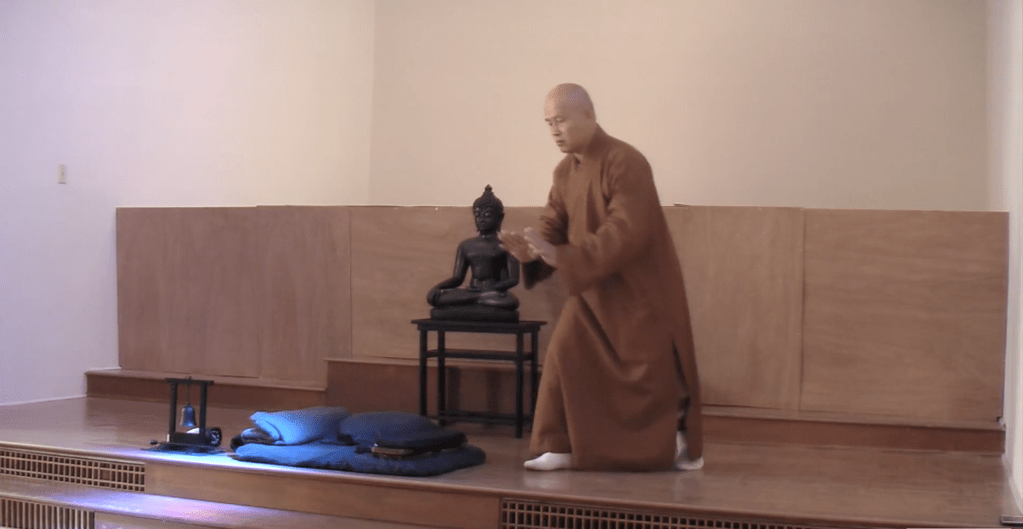
exercise 4
4)“Push(ing) hands” merges and synthesizes the defining physical human characteristic of opposing thumbs with the continuous life force of breath. Our opposing thumbs could represent humanity’s commonalities and unity. As the basis for much creation, work, and change in physical reality, human hands can remind us of our massive potentials and capabilities through willpower. Keeping with the animal similarity theme for each, how about a Praying Mantis?
5) The last exercise investigates the edges and limits of lung capacity — empty and full — while also exploring the amount of skillful will implemented to wisely do so. Since it resembles forming eggs and hatching, perhaps then this symbolizes birth, death and rebirth.
These exercises cover the breath’s pleasant, healing and nourishing qualities as well as clearly revealing its incessant impermanence. They also serve to illuminate the active, passive, practical, profound, transcendent and wisdom aspects of knowing the breath and breathing.
I’m fond of the mention of non-dualism as a state or station to be discarded — and not a completion or attainment.
In reference to ‘looking for what you have not discarded and discarding it’ as spiritual practice, the Buddha said: whatever is not yours abandon it, or ‘…give up whatever is not yours.’
Other observations:
consciousness is one of the skandhas and is not-self
absolute state = second of the two truths and am a little surprised the two truths teaching went unmentioned (by name)
much of the first part seems to deal with analyzing and explaining the formless jhanas without mentioning “jhana”
depending on set, setting and content — e.g. certain relationship workshops — as long there’s upfrontness, transparency, and questioning allowed, I don’t see an unskillfulness for all couples who teach spiritual topics
‘You never want to nest in any state’
(Zen koan)
Questions:
Where is the love, or heart qualities on this path/teaching?
What is (it that is) instructing that “all states and stations need to be discarded?”
How does the knower of the consciousness appear?
Must a state be known (fully) in order to (properly) discard it?
How would Stephen address the energy/consciousness of particles/matter and the emanation of radiation in addition to vibration?
(If all emanates from The Absolute with no Samskaras, or vibrations (there),) how do these “subtle stirrings” known as Spanda happen?
How are linguistics conditioned? How do “words, which are actually abstracted representations of things which do not actually exist” come into being? What are their origins based on?
What about planting those uncooked Samskara seeds in the desert; high atop a barren, all stone mountain; or in perpetually frozen climbs? Or transmuting these “uncooked seeds” into breath?
‘There Is No Nothing, There Is No Something
There is No Not Nothing
There is No Separation, There is No Oneness
There Is No Me Prior To Emptiness
There is No Me Prior To Form’
UPDATE 6/16/20 and Disclaimer: I may continue to update this post as study continues, adding new questions and points and perhaps deleting others. So here goes:
Stephen mentions involvement with Neurolinguistic Programming (NLP). How has and does NLP influence his presentation of Nisargadatta Maharaj’s material and teachings?
In part 2 titled “The Nisargadatta Ultimatum Pointers” he says, “The Absolute does not know itself at all.” Who, or what then knows this, and how is it (not) separate from the absolute?
It may be a far out consideration to ask: how would something like Blank Slate technology (and/or “dazzle” energy that blocks consciousness processing — mentioned on p.113 of Souls of Humanity) play into these teachings, if such things exists? Could “dazzling” and blank slating account for any of this seemingly mass state humanity is in where Nisargadatta Maharaj’s teachings aren’t already readily apparent? Or maybe the opposite, where these teachings further wipe (past-life and planetary history) memories? Or could these teachings act as gatekeeping for such a polarity? If this seem absurd, how can it be ruled out?
If we are to question everything then we are to question the process of questioning itself, right?
There’s much mention of discarding. How is this done?
Could these teachings overall be considered — for lack of a better term — a type of spiritual rationalization?
What are the similarities and differences of Para Brahman and Nirvana?
“Whatever information I have prior to birth that is the only correct information. That knowledge is Para Brahman. You cannot forget your true state that is why you cannot remember it. Whatever you forget is not the truth; always remember that.”
Since “consciousness contains all perceive-ables and conceive-ables. All states of Consciousness and experiences are holographic and contain all other experiences” how is it that some seem to have greater access to states and experiences — and greater access at certain times — than others? How and why do some states and experiences seem (more) easily accessible while others do not?
How and why does the ray of the absolute function or operate? How and why does absolute nothingness come from the absolute?
What is the origin of I am and how does it cease and possibly reappear?
1) There’s only one substance
2) What you know about yourself came from outside you, therefore discard it
3) Question everything; don’t believe anything
4) In order to find out who you are first find out who you’re not
5) In order to let go of something you must first know what it is
6) The experiencer is contained within the experience itself
7) Anything you think you are, you are not
8) Hold on to the ‘I am’ — let go of everything else



























 Integrating Presence