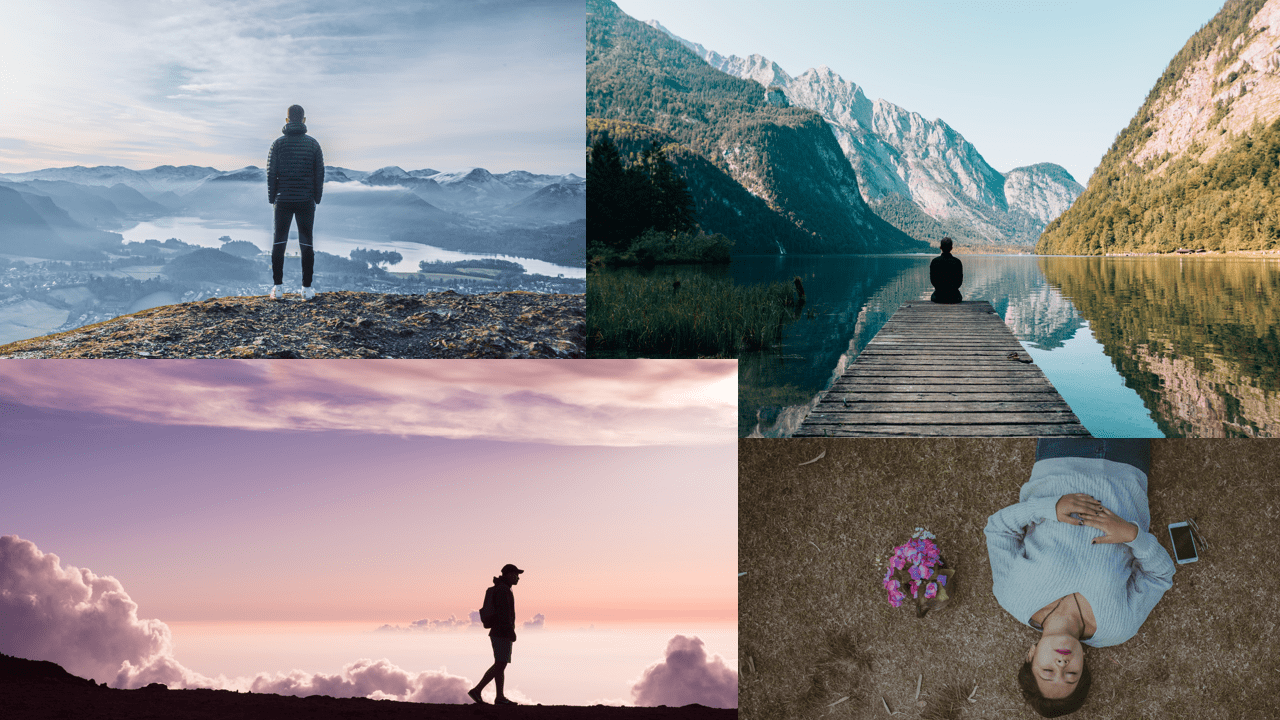
This is an edit of two 15 minute Insight Timer Live events at 11am and 11pm Central on November 10th, 2021 about instruction suggestions for meditating with the four main postures of sitting, standing, lying down and walking. This was inspired by a request for walking meditation instructions during my recent months’ silent Insight Timer Live events with these four postures at Forrest Park in St Louis Missouri. Some of my (edited) original notes and links:
- don’t recommend for many but since “teacher” I invite criticism and questions of all sorts for accountability and quality
- only my study and experience and are mere frames of reference
- encouragement for experiment, practice and to know for yourself
- why silent?
- why so challenging to sit & know you’re sitting?
- sensing not thinking
- upright axis with your spinal column via Ajahn Sucitto
- 32 parts of the body practice at 32parts.com
- details and suggestions for:
- sitting (dennykmiu.com give good details on formal sitting posture)
- standing
- lying down
- walking
- transitioning from one to another
- everyday practice
- https://joinwisdom.audio/integratingpresence
Audio: Review And Instruction For The Four Postures Meditations

Or listen via Insight Timer (app or website)
The raw unedited YouTube transcription of this podcast:
wholeness and welcome
to
this talk
on the meditation of the four postures a
review and instructions
the am session
so obviously as always i invite people
to investigate all this for themselves
it’s just my experience and from my
study and these are just frames of
reference you have to
practice this and experiment for
yourself
and know these for yourself and i
encourage this experiment and practice
with these but more so even is i’m
opening myself for questioning and
criticism of all sorts i mean i
obviously don’t recommend that for
everybody but i’m putting myself out
here as a teacher or whatever it can
only benefit me and everybody else who’s
tuning into this and
who puts any of this into practice it
helps me
be accountable and it it’ll increase the
quality hopefully i mean it obviously
better if there’s constructive criticism
right so we’re not wasting each other’s
time so what i did is on inside timer
did the four main postures
sitting standing walking
and lying down so these are and i guess
unless you’re a yoga teacher you’re
probably in one of these positions most
of the day right
um or in the ballpark of one of these
postures
so why is this so difficult this what i
heard about this practice is basic
practice which is great because it
doesn’t really
draw attention to ourselves so much or
you’re not getting in conflict and it’s
pretty basic
and so i wonder if so many people don’t
see the importance of this
these four main postures
but what really struck me is
why is it so challenging and difficult
to just when you’re sitting know you’re
sitting having that in the forefront of
consciousness
it seems common knowledge but until i
until i pointed that out i really didn’t
have any idea
that i was sitting compared to lying
down standing or walking so i invite you
to check in throughout the day to just
notice what main posture you’re in these
four postures
also if there’s any feedback of why
people think this is so
challenging to just sit and know you’re
sitting there was one of joseph
goldstein’s teachers i think his name
was merninderjee
and he said sit and know you’re sitting
and the whole dharma will be opened up
to you kind of the truth of the way
things are it’s simple but not easy
right and so i chose to do the silence
on on insight timer
and because i i tune in and i see so
many great teachers but i thought it
would be original to just sit there and
not talk right to just practice
you know let people
have part of their own confusion
and
questioning like what’s going on it’s a
kind of novelty of
i’ve never seen anything like this why
isn’t he talking why is he just doing
this and so maybe that was part of the
practice too
dealing with that unknown because
so many things
unknown things can happen while we’re
meditating too
and it’s it becomes part of the practice
either just to set it aside and maybe
come back to it later
or even incorporate that into meditation
and of course you know uh music is
is is a possibility in meditation i
personally don’t meditate with too much
music
when i do listen to music anymore which
used to be all my 20s
it was a big part of my life but now
just listen to instrumental things and
that can be its own meditation just
listening so overall i’ll go into the
kind of the formal practice of these and
then
how they can be practiced in everyday
life or how i
occasionally practice them in everyday
life
overall
it’s switching from the cognitive part
of the mind into the sensing part
of the mind and body
and whatever else is going on and then
there’s our experience directly and then
there’s
our interpretation of our experience so
most of times we’re living in an
interpretation of our experience instead
of a direct knowing and sensing of our
experience
even when when you put words and
vocalize our experience that’s kind of
our interpretation that’s it’s helpful
right we label it with perception
we give labels and language to what
we’ve experienced
and sometimes it’s it’s difficult to
suss out well that’s not actually the
actual experience that’s my uh
explanation my interpretation of it so
that’s all we can it’s like the classic
thing the finger pointing to the moon
will don’t mistake the actual finger
pointing to the moon for the moon itself
right
going through these individually for
sitting probably most people here will
be familiar with a formal sitting
practice i’m not going to spend too much
time on that one
there’s this teacher john succito and i
put his link in the bottom ajan means a
teacher in thai i’m pretty sure
he invites this upright axis with the
spinal column
so tuning in to
kind of where the spinal column is
and a lot of times
the mind will
go off and wander off if there’s no
place for it to be
so this is kind of a gross
gross me
not subtle thing that can be this
awareness of the spinal column can be
with us
and so instead of the mind going all
over the place um which is that’s going
to happen time to time obviously it
gives the mind
an actual physical place also energetic
and
ties in with our sensing as well
recollecting
that spinal column that uprightness and
then recollecting our goodness as well
bringing in
[Music]
a centering quality to
that upright axis also like we can
reflect on what we’ve helped out with
ourselves and others kind of our
practice
gratitude for whatever’s arising
honesty that we don’t have to like
whatever we’re experiencing too that’s a
form of um
goodness being honest with ourselves and
others so just any of these great
qualities the heart qualities um
kindness compassion
uh rejoicing and equanimity
all those can be recollected and then
the mind starts to
unify and concentrate
around those qualities kind of naturally
when we just be mindful of those and
bring those to mind
so in sitting you know denny and then i
do occasionally i’ve taken a little
break from his um
saturday thing just for a little bit for
a while and until i decide how i want to
go forward with that he talks about the
i think he calls it the var via chair
sanskrit it’s horrible
sitting posture so there’s like i forget
how many different points you go through
but i mean just more simply and more
generally
your knees need to be
lower than your hips for more extended
comfort legs knees should be touching
the floor
whatever you need to do for adjustments
for the posture and what whatnot i know
for me
not having any kind of formal
thing with meditation i was getting a
couch cushion off putting it on the
floor and then trying to sit on that and
of course my back hunched and i just it
was wild it
it did help me
correct posture through
kind of forcing having to force my
muscles upright
but anyway that’s kind of standard for
sitting
and then of course choosing a meditation
object is really helpful there’s so many
different types so i won’t go into that
standing now standing i did this the
other day in my weekly meditation that i
volunteer with
and it’s just putting the feet about hip
width
hipaa distance apart
and bending the knees slightly kind of
actually just locking them for a second
so you know where your knees are locked
down might help and then you can um lock
your hands however there’s comfortable
even leave them at the sides as well and
this is one to do when you’re tired
because as far as i know no one has ever
fallen asleep there’s been some times
i’ve really been
sleepy and i started to fall asleep but
as my body starts to fall it obviously i
wake up and i catch myself and i’ve
never felt fallen over so if you find
yourself nodding off in sitting
meditation if you really want to do it
still keep meditating without falling
asleep you can stand up and do standing
meditation
all right now to the lying down this is
probably the most challenging one to do
because we’re just
our bodies just kind of encoded to go to
sleep when we’re lying down right so
there’s different methods i mean in yoga
there’s a constructive rest so you can
actually put your knees in the air hands
down to the side and then when you start
to fall asleep the hands will fall over
the knees won’t fall over the one i did
on inside timer is kind of in the lion’s
pose i don’t know if that’s the same
thing in yoga but it’s the one if you
ever see the buddha lying down kind of
supports your head
the shifu or master that i studied with
he puts a little pillow into his stomach
so it gives kind of like a physical
feedback of focusing on the breath
can help if the eyes are open a little
bit as well
there’s some other things
like denny says you know there’ll be a
point where we there could be a point
where we’re we’re not able to have any
other posture but lying down and so
that’s why it can be so important
now walking meditation formal what i was
doing on there for me it helps
to have bare feet
contact with the earth i know it’s
getting cold here so that’s not always
possible
there’s methods there’s several methods
you can just simply focus on the
sensations in your feet like you’re
getting a foot massage
and just keep bringing the tension back
and back to that you can also
note lifting moving placing so when the
foot
rises up that would be that would be
lifting and then when it moves it’s
moving and then when it sits down that’s
placing so if you like to
kind of neurotically label things
i’ve been there done that still do
sometimes that’s one way to involve the
mind on the process and to keep it from
wandering off as much but eventually you
can remove those labels and you could
just sense lifting moving placing
and you can also notice really details
like the um
the foot will go down maybe towards the
arch and then the heel will go down and
then the toes
are you know are all variations
thereabouts um
okay also okay so the transitioning so
we can be mindful of when we transition
between the four major postures
okay so in everyday life i guess the
most important ones are the walking and
everyday life i’ll just touch on that
you can still blend in to the crowd you
can just pay attention to the sensations
in your feet that’s the easiest way and
just walk normal you can also like your
imagine you’re moving through water so
your your shoulders and hips are swaying
as well well guys that’s it
wholeness
and welcome the first
uh link is a youtube video of the
insight timer live events that i’ve
recorded uh just it’s under a minute
long and i did silent
sitting standing walking and lying down
and during the walking meditation a
participant mentioned that
she really liked it but she would like
more instructions and since it was
silent
i did not give those obviously then so
here we are now and maybe
i’ll spend less time of an intro here
but i did than i did on the the one this
morning you know i was going through
these inside timer live events i was
like well
nobody’s quite done anything like i did
with the that i know of i mean i don’t
watch all of them obviously or
even hardly much of them at all i guess
but i haven’t seen anybody do a silent
thing i’m sure there’s there’s some
though maybe but anyway so is he silent
these four main postures which are we’ll
just jump right into it these are
what we’re gonna spend most of our time
in unless we’re doing something um like
a yoga instructor or
i don’t know like you’re a underwater
diver
but for the most part these four main
postures are where we spend most time in
and there’s formal practices with these
and we can practice with these in
everyday life as well
so just
quick before we actually before we dive
in here
so i know that i’m putting myself on
you know as a teacher here so i invite
criticism actually and i don’t recommend
everybody do that obviously but you know
if i’m putting myself out here in public
i
um
it helps me grow in a in its quality
control as well
and keeps me accountable
so and then these are just my
experiences in my study and my practices
for a frame of reference for you guys
um obviously i encourage you to
experiment and practice and know these
practices for yourself
so the main question i have with these
four you know simple things that we do
every day day in day out continuously
pretty much sitting standing walking
lying down is why is it so difficult
to know
you’re sitting when you’re sitting like
until i mentioned that i really wasn’t
aware that i was just actually sitting
because this is not something that’s in
the forefront of our awareness that
often as far as i know i mean
please share your experience but
you know it and i still don’t have a
good answer for it why is it so
challenging
to when you’re standing know you’re
standing when you’re walking while
you’re walking when you’re lying down
know you’re lying down
if i had to venture a guess maybe i
would say it’s because
people don’t value just this simple bear
awareness but it’s actually a really
powerful practice
i think joseph goldstein’s teacher
i mentioned this this morning um
berninderji said sit and know you’re
sitting and the whole dharma will open
to you and dharma here meaning the not
just the teachings of the buddha but the
just reality itself
kind of provocative statement
basically i’m sure you’re all familiar
with sitting practice formal sitting
practice meditation so for all these
postures
it’s helpful at least in my experience
to
switch from the thinking mind to
sensing
so anything i
will say now is just kind of my attempt
to explain in language what’s actually
going on in the experience so
it’s sensing
our experience
so basically it’s like sensations so if
we’re choosing breath as an object
we might feel pressure
movement
i feel tingling
coolness
warmth
vibration
pressure
lifting
subsiding
so all these these are words and you
know obviously we can label these
um but we don’t have to we can just feel
them and experience them directly
and of course it’s okay to explain your
experience afterwards we have to do that
to relate to each other and of course a
relation
relationship is everything in life even
to
ourselves and our own experiences
now
moving on to
standing
standing meditation
doesn’t get as much airplay i guess as
sitting
or even walking meditation
what it can do though
is
standing meditation
will bring
energy
like a fire type energy to
to your practice so
the instructions are basically sitting
hypo distant or feet hypo distant apart
and then um
briefly locking your knees so you know
where they lock but you don’t want to
keep them locked while meditating
so slightly bent and then rocking back
and forth on the feet side to side to
find a balance point
and then picking an object you can
either focus on the breath
or you can put pressure on the feet
ah not pressure on the feet i’m sorry um
you can put the attention on the feet so
you can notice
sensations in the feet
and then
another
way is to
lock your hands
art that can be down to the side
and so um what tends to happen
especially when you start a formal
meditation practice standing
is um it can be
uncomfortable a little bit and there’s a
tendency to want to move or readjust and
that can be done too
it’s just noticing when the body wants
to move and then
readjust
formal standing meditation there’s this
teacher um ajahn suchito
put his link in here too
and um find him really helpful
he talks about this upright axis this um
in your spinal column so some people
call this the hara line or the central
channel
and so the mind tends to go out
um
if it doesn’t have a like a place to be
so that’s one place especially since
it’s often associated with the nervous
system
so when the mind collects and gathers in
the central channel the upright spinal
column
and then we recollect good wholesome
qualities skillful qualities wise
qualities
maybe things that have benefited us
benefited others
gratitude the heart qualities like
loving kindness compassion rejoicing
equanimity
then the mind is tends to
gather and unify by itself and what
better way to have attention
um place than in the body
on the
central nervous system and all the other
things going on in that area of the body
and the way the winds move through them
okay so that’s standing meditation now
lying down
meditation is um
there’s a formal practice so like i was
talking this morning you can do if
you’re into yoga asana you can do
constructive rest with knees in the air
obviously and
sides of the hands down so when you
start to fall asleep the knees will tip
over
and
that will wake you up
also going back to standing really
briefly as far as i know no one’s ever
fallen asleep and fell over or they’re
standing meditation
i’ve started to fall asleep many times
and
the body will just wake itself up and
re-correct before you get into any kind
of danger zone it’s really quite
interesting if you’ve never experienced
that
it’s it’s something that because the
body has its own intelligence right we
walk over ice and we don’t have to think
about balancing or oh i’m slipping the
body just readjusts and corrects itself
if we’re in the body right
okay so back to lying down the formal
lying down process the other one is
lion’s pose or um lion’s posture i don’t
know if it’s the same as in yoga but
with the head on the arm and the shifu
or master
dharma master i learned from he puts
like a pillow or something in his um
pressed
firmly up against his gut so there’s
like a physical presence for feedback
because lying down meditation can be
very challenging because you know we’re
associated with falling asleep when we
lie down
so in everyday life that can be
practiced as just kind of have an intent
to do some formal lying down meditation
before we go to sleep or you know so
eventually you’ll fall asleep
and but before that we can take a few
breaths conscious breaths or whatnot
there’s even a way to
set the resolve to
i haven’t done this yet
become conscious of the last breath we
take to know if it’s an inhale or an
exhale before drifting off to sleep now
i have been able to
a few times notice if it’s an in-breath
or an out breath upon awakening that
seems a little bit more doable still
very challenging but that’s one way to
also do formal lying down meditation
with sleeping
now walking for me it helps to have bare
feet on real earth or natural material
to kind of get that feedback and
negative ion exchange with the earth
which is the healthy negative ion
exchange if you have a salt lamp that’s
the same
thing you can look that up and look up
earthing earthing is really healthy for
all kinds of different things
so with walking there’s a there’s the
method formal walking meditation you can
lifting
moving placing each foot so if you like
to mental note things lifting one foot
moving and then placing
what i was doing i was doing more of
this
the the dharma master was he calls it
his tai chi walk where the weights in
the back foot
and then the the foot going forward is
placed and then once it’s firm only when
it’s firm is when the next foot goes
forward and the like i said the weight’s
always on the back foot and then when we
notice our our foot touching the ground
uh a lot of times it will go
different ways very subtly so like the
ball
and then maybe the toes and then the
arch and then the heel or it could be
you know the heel um the ball the toes
the arch so and then there can be all
kinds of variations and you know how
much pressure is on each toe
or what order the toes go down and you
know the timing of it so i mean
obviously you’re not gonna think of all
these things and label them and
visualize them or whatever or i guess
you could but
um it’s just feeling and sensing
that and it can can get uh very subtle
but it doesn’t have to be either
so um
i’ll just spend a few moments here about
how to do this in everyday life uh
without drawing attention to yourself to
these things so we talked about lying
down a little bit but so the
transitioning stage though in formal
practice so that’s one of the most
challenging things so if you get up from
a sitting practice a formal sitting
practice
it’s to keep the mindfulness being aware
that it’s being
the posture is being changed from
sitting to standing
and then from standing to walking
or if however you transition to lying
down and then back from lying down up
okay so everyday practice um the sitting
um
this i don’t really have many good
things to add on this i know the it’s a
whole another
can of worms for interacting with
computer which i’ve
really challenging with um
staying mindful when interacting with
computers to the point where sometimes i
will notice that my body’s tensed and
tense and hunched up and i’ll just
ignore it and keep interacting with the
computer um if you guys have tips
chime in here you know there’s a few
things but i’ll bypass them today
standing it’s that’s pretty in everyday
life it’s not too much we stand although
if you’re in the the grocery aisle line
you can stand and just be aware that
you’re standing right and be aware that
seeing is happening of course walking
this is the most common one and then
i’ll wrap up here
you can walk like you’re moving through
water
so the hips and shoulders can sway like
moving through water also just walk
normally and pay attention to the
sensations in your feet at a normal
normal pace that’s another good way to
do it
yes and then this last one it’s one i’m
working with here too is the 32 parts of
the body of course there’s more parts of
the body but
if anybody’s interested in that practice
going through systematically 32 parts of
the body it’s 32parts.com
a little bit over time i’m going to wrap
this up i appreciate everybody
joining and hopefully got something out
of this
 Integrating Presence