
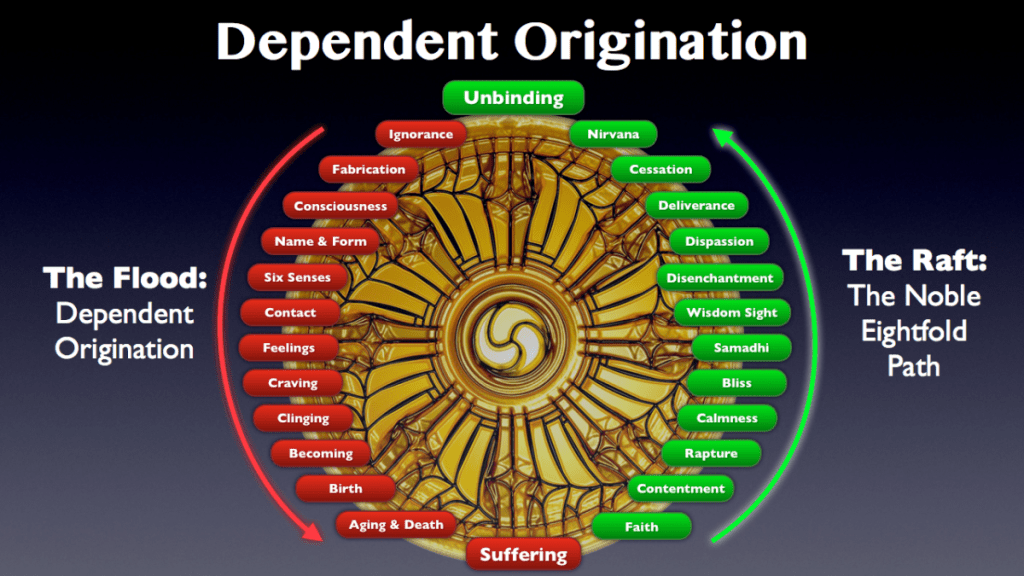
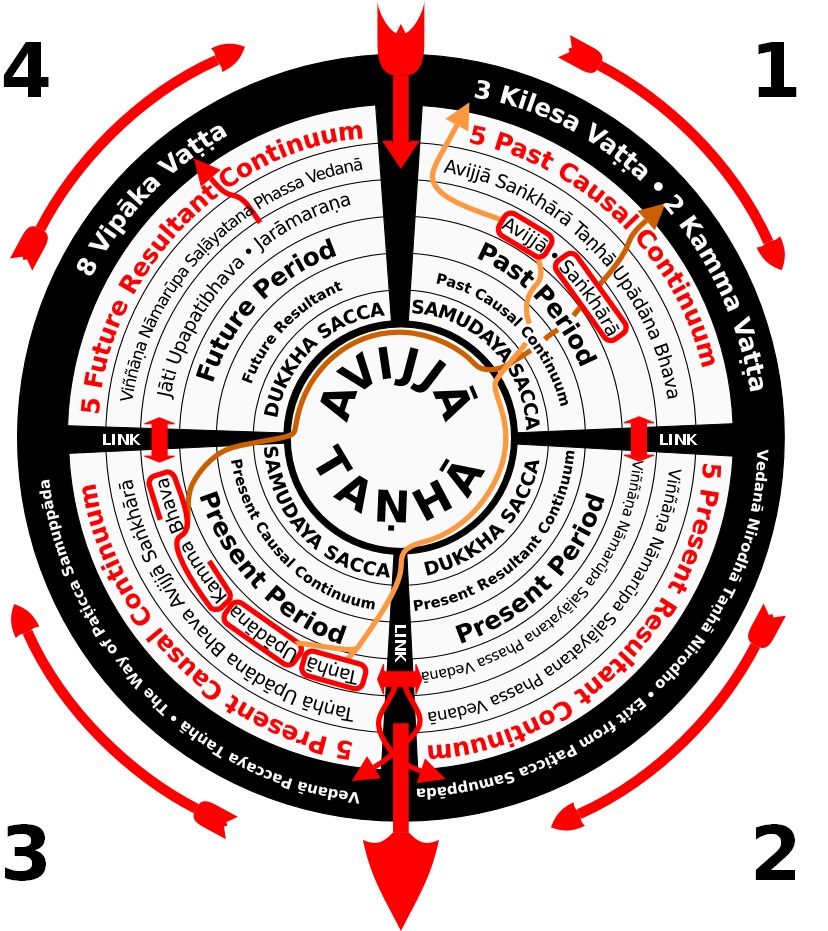
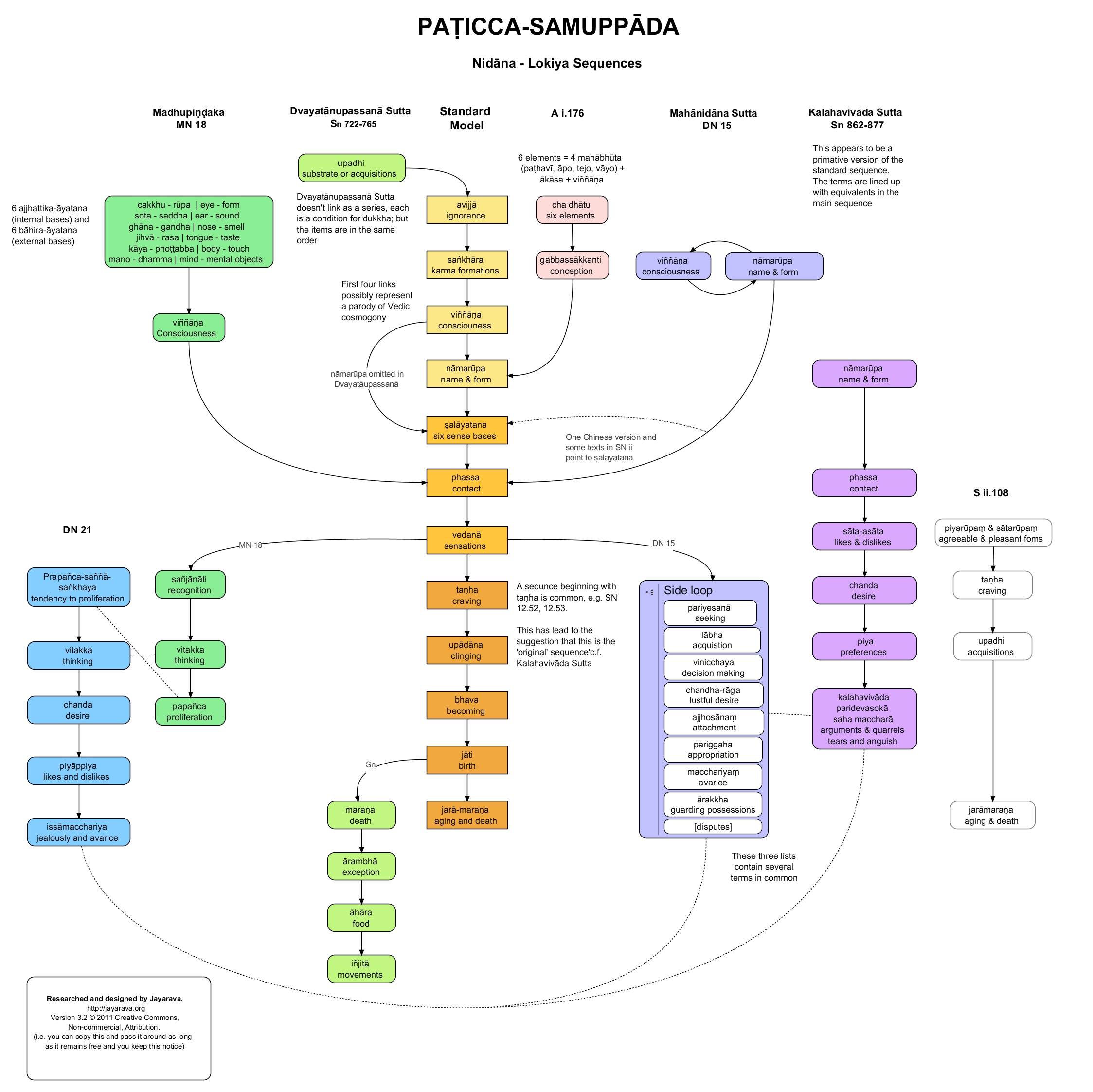
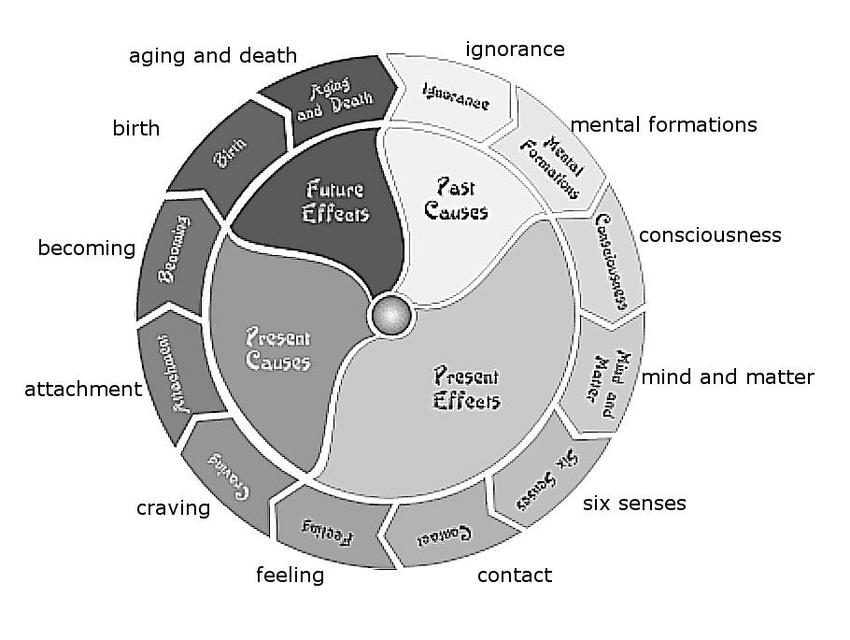
For this month’s regular open-audience, open-discussion “Ask Us Anything LIVE” — continuing discussions about meditation and related topics — Denny and I chat with meditation teacher Beth Upton most significantly about the Dependent Origination link Nāmarūpa, or Materiality and Mentality, which, according to Wikipedia, is “used in Buddhism to refer to the constituents of a living being: nāma is typically considered to refer to the mental component of the person, while rūpa refers to the physical.”
Audio: Materiality and Mentality | (7/27/2021 — “Ask Us Anything – LIVE” With Denny K Miu And Guest Beth Upton

Or listen via Insight Timer (app or website)
We discuss:
- Science and spirituality
- Functions of mind without physical characteristics
- How mind can create physicality
- Causal relationships between Materiality and Mentality, including those continually keeping Materiality and Mentality together
- Mind-born materiality
- Material basis
- Materiality in the six senses (five physical senses and mind)
- Consciousness supporting materiality in the mind
- Type of physicality located in the heart area responsible for mind consciousness to arise
- How the power of Samadhi is a scientific tool to perceive consciousness
- Directly perceiving the momentary arising and passing away particles making up the body
- Mind arising and leaving a physical imprint in the brain and body
- Samatha and Samadhi
- Abhidhamma
- Universal and non-universal mental qualities
- Beth’s offer to teach leading scientists how to cultivate Samadhi in order to further scientific investigation and knowledge
- Perception:
- Conditional nature of perception
- Progression, refinement and freeing of perception
- New perceptions
- Dangers
- Arising and passing nature
- Dumbing down of society
- The importance, differences and confusions of what is, and what isn’t samadhi and Vipassanā
- Mindfulness of body via breathing, impermanence and four elements meditation
- Vast and varying differences of individualized responses to Co-V
- Challenges and rewards of lay life and monastic life
- Details, analysis and commentary on various four element mediation methods including internal and external perceptions
- How depth of meditation correlates of with subtleness of meditation object including examples ranging from course to subtle
- Intersections of Dhamma promotion, ((Non-)American attitudes surrounding) money, and generosity
- Beth’s physical practices
- Real life vs virtual meditation teachers and when to seek one
Other unmentioned relevant notes:
- Namarupa relating to the classical spiritual question of “Who am I” as well as the dictum “Know Thyself”
- Ever asked to “visit” realms other than human and animal to study Namarupa? If so, what can you say about this?
Other stuff afterwards:
- Curious about karma(s) in relation to willfully intending change of/to the heart particles associated with mind consciousness especially in light of anicca (not-self); intended outcomes; and variations with different quantities (for example one particle or many)
Full twitter thread:
Current views on $Money thread: I’m open to many perspectives on #money, which is an idea at its core.
One skillful and wise constant though is the ethical gain and use of money.
Likely one of the most important questions: what amount of control does money have in your life?
CURREN(T)cy can be perceived as a representation of power and there’s also the flip side of the power and freedom of zero fear and concern if happening to be pennyless the rest of ones life
Money can be seen as a absolute joke on nearly all levels, contrasted with money being the main way to effect serious, meaningful mass change, even with small amounts
Being conscious with $ is dealt with on a case-by-case basis – earning, spending, investing, giving, and receiving with discernment. We find balance and middle ground with others’ perspectives and intents with money while retaining option to stick to your ethical guns so to speak
Non-attachment to outcome with money matters, ideally with zero greed involved and bypassing usury if possible.
Money is secondary to life lessons. Experiences happen with or without any certain amount of money.
We can always make more money, we can’t always get time back.
“Evil”, “good”, positive, negative, neutral, etc. associations with money can possibly be transmuted from one to the other depending on intent, action and conditions. If done wisely, this and other creative uses of money can often be beneficial
Money is also an expression of value/energy current — how much you value yourself and work. The more creational influence your work has the more value it has — the more effect it has the more outcome you will get energetically from what you’re producing
And from the Buddha’s Q & A with Āṭavaka: https://en.wikipedia.org/wiki/Āṭavaka
What is a [wo]man’s highest wealth?
Conviction[/confidence] is a [wo]man’s highest wealth.
How does one find wealth?
Doing what’s fitting, enduring burdens, one with initiative finds wealth.
Originally tweeted by j dippold (@JJDippold) on January 11, 2021.
Beth’s brief bio:
Beth was born in 1982 in London. She graduated from Cambridge University with a degree in Economics, then in 2008 ordained as a Buddhist nun at Pa Auk Meditation Centre in Myanmar. She spent five years training diligently in meditation in the Theravada tradition under the guidance of Pa Auk Sayadaw, then a further five years training in other meditation methods and doing long solo retreats. In 2014 Beth founded Sanditthika Meditation Community in the caves of Almeria, Spain. In 2018, after ten years of monastic life, Beth decided to disrobe in order to integrate some of the challenges of western life into her Dhamma practice. Beth has been teaching meditation since 2014 both in Almeria and in meditation retreats around the world.
[(IV) MENTALITY-MATERIALITY]
186. For the clause, “With consciousness as condition, mentality-materiality”:
(1) By analysis of mind and matter,
(2) Occurrence in becoming, etc.,
(3) Inclusion, and (4) manner of condition, The exposition should be known.
187. 1. By analysis of mind and matter: here “mind” (náma—mentality) is the
three aggregates, that is, feeling, perception, and formations, because of their bending (namana) on to the object. “Matter” (rúpa—materiality) is the four great primary elements and the materiality derived [by clinging] from the four great primaries. Their analysis is given in the Description of the Aggregates (XIV.34f., 125f.). This, in the first place, is how the exposition of mentality-materiality should be known “by analysis.”
188. 2. By occurrence in becoming, et cetera: excepting one abode of beings, [that is, the non-percipient,] mentality occurs in all the kinds of becoming, generation, destiny, and station of consciousness, and in the remaining abodes of beings. Materiality occurs in two kinds of becoming, four kinds of generation, five destinies, the first four stations of consciousness, and the first five abodes of beings.
. . .
202. Here it may be asked: “But how is it to be known [562] that the mentality-materiality of rebirth-linking has consciousness as its condition?” From the suttas and from logic. For in the suttas it is established in many places that feeling, etc., have consciousness as condition in the way beginning, “States with parallel occurrence through consciousness” (Dhs §1522). But as to logic:
From matter seen here to be born Of consciousness a man can tell That consciousness is a condition For matter when unseen as well.
Whether consciousness likes it or not, [certain] material instances are seen to arise in conformity with it. And the unseen is inferred from the seen. So it can be known, by means of the consciousness-born materiality that is seen, that consciousness is also a condition for the unseen materiality of rebirth-linking. For it is said in the Paþþhána that, like the consciousness-originated, also the kamma-originated has consciousness as its condition (see Paþþh I 172–73).
This is how the exposition should be known “by manner of condition.”
This is the detailed explanation of the clause “With consciousness as condition, mentality-materiality.”
Selections on mentality-materiality from Chapter 17 of The Visuddhimagga
Other Beth Upton talks and teachings:
(Mostly) Biographical (and relational) Interview:
Currently, for a chance to experience, practice, and receive Yi Jin Jing instructions from Denny plus more mindful exercise join in free on Saturdays:
- https://dennykmiu.com/Insight-Timer
- https://dennykmiu.com/Facebook
- https://dennykmiu.com/YouTube
- https://dennykmiu.com/LinkedIn
- https://dennykmiu.com/Patreon
The raw unedited YouTube transcription of this podcast:
Um the the instigator to all this is of course Josh uh um uh
he’s sitting on my right on my lap. I don’t know which one. Uh uh Josh, why don’t you kind of give some background
information on on Beth and also on how you guys met and how we
managed to invite her? Sure. Um I’ve worked with Beth for a little bit. Um I was actually
um a brief student of hers so I found her but I was reading this book practicing the genres
so it’s like this deep absorption states of uh
meditation and it’s written by two westerners who were the
only or the first Westerns to go through house um training on
the on the Jonas and um I you know II was say I was going
through some of the storming material and I’ve never seen visual pictures representations
of these teachers so II googled oxide and uh that’s channel
came up so and Beth actually had a really brief interview with peroxide and I was really
impressed by her So then, I watched a couple other videos by her and then II sent her an
Email and I just really didn’t think anything of it. Uh didn’t get a response from her right
away but then, I’m trying to remember exactly how but I um I
might have got on the mailing list. I might. Yeah, I probably signed up for a mailing list and then there she is. There she is. and then I um I got an
uh I got an Email and so I decided to do a retreat with her online and uh hi Beth. Good
morning. good morning. Good afternoon. I’m not sure it’s uh it’s got sunlight behind you. So this is gotta be during the
daytime Yeah, it’s 6 PM here. I’m not at all familiar with this platform. Uh well, um
there’s not much to it. Uh first of all, let me introduce myself. My name is Danny. Me, a friend of Josh and also a
brother. We we study under the same master. I uh II very very much. look forward to this. So,
um so we we we had to go live because there are students waiting and we didn’t want them
to just hang. Um so um welcome. So such a pleasure to have you
on Yeah. Thank you for having me. Yeah, you’re coming through
clear. Everything sounds good at the quality. Looks good. So, this is uh we we we we should
have done this uh uh ahead of the show is the question of whether uh audio level between
Josh and I are are are more or less the same because sometimes he comes in. he’s a kind of
loud person anyway, so it sounds okay. I forget that for that. Yeah, it all sounds fine.
Yeah. I just need to let you know that um I have another call in just under 90 minutes.
So, at 7:30 PM my time. Oh, okay. So, we we we have less than 20 minutes. Um so, I’m
going to, I’m going to an hour and an hour. Oh, okay. Well, we we could get our um uh but I’m
going to hold it certificate by then. but but in any case, um
it’s uh hour and a half or or just half an hour. It doesn’t seem like there’s enough time for us to learn from you. Uh I
want to uh Josh had told me about you and
quite a bit about you uh for a while um but only until III knew that you were coming on
the show that I start to um uh listen to some of the audio, the the one that really strikes
me and and and I really want to get to this one is when you were introducing yourself and then when you’re talking about
um the 10 years that you spent as a monastic as a nun uh Buddhist nun and then when you
finally decide to give up the rope so to speak and become a house again and you have some
objectives in mind and one of the one that I find so profound was when you said that you would like to quote. Now, I’m
going to call it, I’m going to quote you revolutionized modern science. Oh yeah. And and and
you look forward to having a conversation with someone and scientists about material
reality versus mentality. Now, I’m not a scientist. I’m not trained as a scientist but I’m an engineer and I do have some
appreciation for modern science. So, so I thought I just give you this this platform and and let you elaborate on what you in mind
and Josh and I would just shut up if he doesn’t know, snap his back. He’s back of his head.
Yeah. So, it’s very broad. I think what science has to learn from the dharma. It’s very um a
lot there. I can’t see you but it’s
alright. Anyway, I’m going to keep talking. There’s going to be a
lot there with um with what science can learn from dharma.
But the thing few things I would want to focus on, I think are the causal relationships between material and mentality.
So, it’s something that science doesn’t really understand. They
tend to try and conceive of the mind as a material thing. So, the mind as the brain is
probably the most common example. There might be some variations on that and they
find it difficult in my conversation with scientists so far to conceive of the mind as
something with no material characteristics
One of the reasons for that is that if the mind has no material characteristics of it has no It’s place no size, no
shape, no color, no hardness. Then what possible cause or
relation could it have with a physical thing like the body
and we observe that the mind if there is one does have a cause or relationship with the body.
For example, when we want to walk forwards, we walk forwards or when we’re feeling sad, our
body is affected and so the question arises. Okay. Well, if
the mind is a non physical thing, what are its cause or relationships to material? And that’s something that the
Dharma explains very well. It’s probably a bit complex for me to go into those different
types of causality. now. um but that’s sort of the point that I
want to discuss with science. how for example, the mind can create material, how material
is in a supporting relationship with my even though mine has no
physical characteristics. So, I answer the question. Yeah. No.
beth II was just wondering because um many many of the audience and especially the
ones that are uh practicing with Josh and I on Saturdays. we we don’t always come from
the spiritual background. Uh we’ve tend to focus on if if I
use the word would be actuality, our body, you know, I want us to get healthy and fitness and all that and so I
wonder if you could um uh speak to that kind of audience and and kind of not not defining
material versus mentality but more like for a normal lay person when we talk about, I
think you are to use the word that even when we talk about mind, we really talking about the material aspect of the
mind, the brain, right? So, how how could we start to the brain isn’t the material aspect of
the mind, The mind is the mind and the brain. So, I wonder if you could you could you could
just speak to that exactly what you mean Uh as a lay person, How do we get to understand
that I’m not really clear on what the question is. Are you asking
me what the mind is? Josh, maybe you can help me out.
What? What did I mean? So, you know, it’s just, it seems like we’re Denny’s coming from, you
know, this academic background and uh a lot of it is um uh it
really is like they have to have um material proof of everything, right? And um so
yeah the mind there is no you can’t, right. You can’t point at it and say, oh this is the mind material but however,
There is like a the Nama and Rua, right? In a human. They
can’t be separated for indefinite periods of time, right? Uh they’re they’re
they’re they’re linked together, right? Um material mentality, you can’t really
have them separated for long extended period of time and the question that came to me this
morning and recently in meditation is how and why I
mean this is maybe this is too deep and complex because we can get back to the, you know, the more understanding but you know
how and why are linked together are inseparable. material.
Yeah. So, it sounds like um the two of you have just asked me very different questions. um
but I’m going to um or at least I experienced Josh’s questions
being completely different from Denny’s question but I’m going to attempt to answer your
question, Josh in very, very brief. So, it’s true that as
human beings, we don’t experience just body without mind for an extended period We
experience mind without body for an extended period unless we’re very advanced in
meditation. and the reason for that is these causal links that I was just speaking about. So,
there are there are cause or laws between material and mentality mentality, having no
physical characteristics but having characteristics of for example, the function of knowing the function of
perceiving the function of something as pleasant or unpleasant. The function of the
function of mindfulness. many functions there in the mind but no physical characteristics and
then the body that does have physical characteristics like a size and a place and hardness,
softness, roughness, smoothness, heaviness, lightness, heat, cold for example. So, as I understood
your question, Josh, it’s what are those courses or relationships between material and mentality that keeps them
all the time together. So, there’s a you and I think it’s
probably beyond the scope of this podcast to go into them in too much detail but I will list
a few of the most important ones. So, one is that almost every moment of mind is
creating material throughout the body. We call this material mind born material. This kind
of material is responsible for our speech. It’s responsible for our movement but it’s also
responsible for our physical, emotional responses. So many mind moments arise are sad.
Then, there will be a physical response throughout the body. We have many mind moments arise
that are joyful. There’ll be a physical response throughout the body. So, this is one really important causal link
between material mentality in this coral link mentality is producing material Another
really important cause or link is what we call the material basis. So, we all know that we
can experience the external world through the eye and nose, tongue body and also through
the mind that’s There are certain types of material in the body that are sensitive to
experience this material in the eye that’s sensitive to light material in the ear that’s
sensitive to sound material in the nose that’s sensitive to the smell material in the
tongue that’s sensitive to taste material in the body that is sensitive to various types
of physical sensation and then there’s material in the mind that actually isn’t sensitive
but it’s supportive of consciousness. so we can a
dependent on the material in the eye eye consciousness arises the material in the eye
that’s sensitive to light acts as a physical foundation for eye consciousness to arise The
same structure applies in the ear so sensitive material in the ears, the physical basis,
the physical foundation for ear consciousness to arise sensitive material in the nose
functions in the same way for no for the consciousness of smell to arise and so on. and a
certain type of material actually located in the heart area is responsible for mind
consciousness to arise. So, if we have a memory or a thought or something that we’re knowing
that’s unconnected from our present physical experience with the five senses. it’s based on mind consciousness.
It’s a type of material in the heart that is the material support for that. There are
other links like coral links that I can go into. I think those are probably the most two important ones that I’ll
explain today. Does it answer the question and Josh. I’m pretty sure it totally failed to answer your question, Danny.
Yes. we’ll go right back to Denny’s question. It’s just and we won’t go into this. I just wanted to point this out. It’s
just mind blowing how how powerful the mind can translate into actually changing the
physical body and I would just love to dive deep and it’s it’s beyond the scope today but dive
deep into how that actually happens and you know, um I guess in the Ada talks more
about if you get down to the minute uh level Uh of matter.
It turns into these small particles. I don’t know if I’m representing that, right? But just how how it step the how of
it and how the mind will step down into actually rearranging
particles within the body to make that happen, You know, and I always uh I always mention this to to folks who um you
know, who are um into neurology uh neurologist and and maybe
it’s too harsher and critical of a judgment but I look and ask if they’re familiar with Ada because a lot of the things
um beyond the uh the the physical things that they’re testing for and studying, you
know, how does it relate to everyday life and the Aveda has laid that out. You know what
It’s a long long time ago and very detailed uh advanced things and they weren’t even
relying on you know, high-end technical equipment, right. It was just all mind and consciousness and I think it
would be helpful maybe before we move into uh I’ll let Beth comment on that. Obviously, if
there’s any comment for that and then maybe we can go into defining some of these terms here. Um maybe that will help
you one question at a time. Josh, is it okay? Is it Josh? Yes. Hold on. Hold on to that
Josh. Josh. hold on. Hold on. Hold on. You guys are so far away from my from me. Um but
but hey, I want to just dial back a bit because when I talk about the the brain I I’m I’m I’m just and III misunderstood
thinking that the brain and the mind is is related but then yet I when I listen to Beth Talks,
uh she uses the heart as as as something that is related to the mind. So, I wonder if Beth,
can you speak to the brain, the heart, and the mind. What what is that all that mean You know,
that’s a great question. Um so Josh spoke really briefly there
about these small small particles. so that a piece of foundational knowledge. I’ll
try to explain first and actually I’ll back step even one more step. So, Joshua’s
also speaking there about how much ancient wisdom could know
just through the without telescopes and all the rest of it and the tool they were using was so and so this is another
sort of loud message I want to give to the scientific community is the power of so as
a scientific tool there’s quite a lot. Science has managed to
know through the five senses and augmenting those senses. So, like improving what we can
see with eye with for example, a telescope. it’s a course example but improving what we
can know with the ear but we’re still basically relying on the five senses and what’s so does
is it’s a massive refinement of what we can know directly with the mind and consciousness is
something because it has no physical characteristics. It’s not perceiving through the five
senses. It’s not perceiving through augmentation of the senses. It’s only perceived
directly through the mind. So, it’s perceived with Soma. Soma is the tool that we need in
order to be able to observe these things directly and so,
what is so and so is in brief. It’s a mind that can focus on
one subtle object for a long time So, often times, I give
this similarly, if you have a hose pipe um with lots of sort of holes in it. A hose pipe for
carrying water. It’s got lots of holes in it. So, all of the water is seeping out of the
holes in the water that gets to the end of the hose pipe is very weak and feeble but if you
were to plug up those holes in the pipe, then you’ve got like a power hose. The mind is the
same. We’ve got a lot of attention going off to the past or the future. The thoughts and
theories and stories and all sorts of things and when we learn to focus our attention,
it’s like plugging up the holes in the pipe. We can get a very very focused attention. that we
would call when it gets to a certain level of refinement. We would call that mind the mind
that’s concentrated in a state of Soma can know things on a very, very subtle level. So, on the physical level, when we pay
attention to the body, we start to see that the body is made up of particles that are momentarily arising and passing
away. They’re coming into and out of existence. I don’t think that claim would surprise
modern scientists too much Um with some we can observe on a
very subtle level. So, for example, within the root of one hair, we might be able to observe many thousands of
particles arising and passing away. maybe more. You can really like zoom in, zoom in,
zoom in, zoom in depending on how long you can sustain your attention there. So, the
particles that I spoke of in the heart um do the function of
supporting consciousness. There are lots of other types of material, lots of other particles in the heart doing
other functions and there are a few particles that are doing the function of supporting
consciousness. It’s not much doesn’t have much to do with the physical function of the
conventional heart that’s pumping blood around the body. So, this is just the location of these particles that
consciousness. As I said, then almost every moment of consciousness that arises
dependent on this material in the heart is producing material throughout the body. It’s
producing particles throughout the body and it’s also producing particles in the brain. So, the mind that arises
the consciousness that arises leaves its physical imprint in the brain and that’s why we see
in the brain. that’s a physical imprint of all of our mental activity but also in other aces
in the body. There’s also a physical imprint of our mental activity. It’s not difficult to
understand if you meet a person who has a habit of anger. You can see the physical imprint in
their body, not only in their brain, if you meet somebody who has a habit of meditation, you
can see the physical imprint in their body. You don’t need to dissect their brain. So,
material is produced throughout the body and also in the brain. Does that go somewhere? to
answering your question, Denny. I’m still in the process of
digesting that but that’s okay. IIIII. don’t want, you know, I feel like I’m a little kid with the with the string to the
balloon. I just didn’t want the balloon to get too far away from me but that’s fine. That’s fine. Yeah. Thank you for that.
Thank you for that. If you ask a big question, then I have to give a big answer. Yes, yes,
yes. I know but um maybe maybe one more question you you did mention so and I think in some
of you thought you mentioned so what’s the difference?
I see. So now, Beth or the particles and the noticing of
those particles themselves, That’s actually perception though, right? Is it it’s still a perception. correct That’s
always perception and there’s also something physical really there but the actual um actual
act of observation can’t really be separated from perception either. Uh correct. That’s
right. That’s that’s correct. Yeah. So, in each moment of mind. so in the same way that
the body is made up of momentarily arising particles. The mind is also made up of
moments. discreet moments that arise and pass away one after the other very quickly. In each
of these moments, we could call them a mind moment. If you like. They’re very, very fast.
like thousands in a second. So, in each moment, there’s consciousness that does the
knowing of the object. There’s also a bunch of other mental factors, a bunch of other mental qualities that do
different functions in that moment of consciousness. Some of those mental qualities arise
in every single moment. They’re universal and then some mental qualities only arise in some
moments. So, we all know from our experience, joy is only there sometimes anger is there
sometimes, unfortunately, mindfulness is only there sometimes um and then there’s
other mental qualities that are always there. So, consciousness is always there in every moment
Perception is also there in every moment Perception we could say is like knowing the
object as so it’s recognition. It’s not just the receiving of
an object that we’re knowing but it’s the act of recognizing it as being read or being We’re
being car tree. Beth, Josh, whatever it might be. and this
goes into, you know, the perception of thing is it’s just so important in our
everyday lives because you turn on news or you hear people’s opinions and how people view
the world and it’s all a lot of it has to do with the perceptual level and it ties
into this other question that I had about you know, um we’ll
just for an example since we’re talking about uh we’re talking about science you know um you know some neurologist and
whatever they consider things, hallucinations or then you get people who are doing psychedelic drug trips or even
maybe you’re visiting these uh interesting realms and inner realms and meditation where there’s this very subtle forms
and there’s really no reference point. So, we’re we’re we’re I guess we’re on the census
coming in and it’s so fantastical but there’s really not much of a reference point. I mean, if you had to start
talking about it and start giving language to what What’s being seen. Then, there’s
there’s it doesn’t seem adequate when compared to like, oh, I’m looking at a computer.
Oh, I’m talking to Beth. You know, it’s so um maybe maybe
you can speak to this if you feel it, if it’s relevant or not, Uh in addition, you’re
going to be great. if you could just I could be see what the question is Yeah, this is um I
still want to get back to the the the the the the the initial question which was the one that
when you’re speaking to the camera and talking about your own journey own spiritual journey and you mentioned how
one of the things that you want to do is you become a household once again is to find
opportunity to interact with modern scientists and if I hear you correctly, when you were
talking in the early part of the show that you’re basically appealing to the modern scientists and says, all the
tools that you have in your toolbox whether it is a scanning electron microscope, or AA, uh uh whatever tools
they should really consider adding some as a tool. Yes.
Your idea of of that is is like the human mind is like this. There’s four holes and your
world opens as you pluck it. Is that kind of a correct summary of of of your imitations Yes.
I’d love to get some because my scientific knowledge is
massively out of date and I’m I know the meditation side. well, but I don’t know the side side. Well, and so I would like to
like, I don’t know what is the cutting edge of like particle physics at the moment? I have no idea or neuroscience or
quantum mechanics or any of these things. So, I would like my dream is to take experts in
these fields and teach them to deep Amadi and then allow them
to investigate these really refined materials and mentalities for themselves. That’s what I’d love to do. And
as for Josh’s question about perception. So, yeah,
perception is highly highly conditioned. It’s perception that does the function of
learning and of memory Again, this quality of recognition. So, if you imagine a baby,
they’ve got very few perceptions at their disposal. Very few things that they recognize and gradually through
conditioning through continued exposure. our perceptions are like, if you like the the shop
of perceptions that we have is better stocked. So, they build build on each other. they
become more and more elaborate until can pull up perceptions that are really abstract like
irony or justice um or I don’t know blue and pink lollipop or
something. We we’ve got all of these perceptions in our mind that are really complex So,
what happens sometimes in deep meditation also in psychedelic experiences is our perception
become free and all of these habits, grooves that we’ve got
in of perceiving things in the same way again and again and again, We’re able to sort of
like break that habit temporarily. It’s like our perceptions got wings and so
sometimes new perceptions can come in when there’s a new
perception, something that we’re unfamiliar with, then, we’re left with this question of like, oh, where to put on it? What are the perceptions?
Is it linked to what was it a bit like? So, if we go into
psychedelic experiences or even meditative experiences without a good teacher, there’s a
danger that when these new perceptions come up, especially
if they’re associated with strong feelings that we can attack meaning to them that is
undue. So, it’s very common. For example, in meditation, maybe in states of bliss where
the mind floods with light or some psychedelic experiences. People might think, oh, that must be enlightenment or II met
god or whatever it might be. This is just the mind’s attempt to link perceptions What the
Buddha told us what the Dharma tells us is the most important message that we need to take at
that is this simple fact that perception can change. or there
were different perceptions happening. Perception can change and we stay with the changing nature of perception.
For long enough, it becomes apparent. That perception is also not me. It’s not mine. It’s non self. It’s renounce
and this is where we start to find liberation. So, did that
answer both of your very different questions? It didn’t matter. I’m still fascinated.
The how of all that how that all happens. each moment by moment, you know, and why? So,
it’s the how and the why that even super more profound uh
processes and questions and we really don’t have time to go into this but you know, I’ve encouraged Beth before. I would
love to um see how she teaches and I’ll be a course because
it’s not just for books, you know, uh it’s from she sees and knows it I’m not sure. And I’m
Beth. I’m sorry. I’m not sure You answered my question but it did raise another one. I’m
sorry. I didn’t answer your question. No, I’m sure you did it. It’s not you. It’s me. Okay? It’s always me. It’s it’s
all uh but sometimes I just need to listen to it again and then it’s you when you click but but but the question I have
now is is it’s it’s also something else that you spoke about when I was listening to your your video and it’s
related to what you just said is that the importance of having the good uh uh uh uh uh
having a good teacher who can guide you. So, otherwise, we’re sticking these pit stops as the
destination. That’s the problem, right? Yeah. But but but actually actually the problem is even deeper than
that and so earlier I talk, I asked about so and so which which help. thank you very
much. You actually helped clarify that for me but but then in the United States, we
talk a lot about it some time with Pasa and I remember one of the one of the one of the video
you did. You you talk about how Americans tend to have a way of
dumping down and I know that because when I come to United States 50 years ago, I see what they call Chinese cuisine is
nothing like what I had, you know, back home, right? So, Americans have a very tradition
of just taking some culture and just somehow making his own and simplified but but that is
happening also with Soma and and I You spoke a little bit
about that and can you, can you elaborate on that? I think that’s very important for audience. You know, imagine the
audience are the one that they they probably start some place and they want to move to some place else and along the way
they would pick up um uh trainings that are popular United States and and I think
it would be important to to speak to your perspective since you learn it from from you know
the tradition, the tradition. Yeah, thanks for the question, Denny. So I think actually what
we have is a vocabulary problem more than anything else. So,
there are methods that teachers are teaching that are actually really good methods and I think
one thing that I’ve learned when I’ve come to teach in the West and I’m sure the
generation of teachers that went before me also learned is we need a lot of methods on the
basic because we don’t come from a Buddhist culture. We’re just about now as a culture
starting to learn mindfulness. There’s a lot to do on the level of morality and so we need methods that are quite
basic. The culture needs that. So, I’ve got nothing bad to say about the very many wonderful
teachers who are teaching basic meditation. It’s really good. It’s helping a lot of people.
The trouble is that they’re using words Maybe they they’re
there wasn’t there weren’t other words available or whatever. they’re using words for those practices that are
actually used to describe something much higher and the
is when they do that that people then don’t make the effort to do the high one because they think they’re
already there. and so, um I’ve heard all sorts of people tell
me really strange things or what Anna is like, you know,
they focus on the joy in their body and that’s the second Jana or something like this. So, it
can be very difficult to teach people who to teach people the real Jana if they have been
told by someone that they’ve already experienced it because why put all of the months of
work for the real one when they could do the not real one in like a 10 day retreat. and the
same thing with the So, if it is really Jana, if it’s really
a state of so here, I’m using the words Jana and Soma interchangeably. So, it’s
really Jana or so then it will will be a of uninterrupted
knowing of of a object. So, it’s not an object that we know through the five senses. It’s
not a bodily sensation. It’s a mental object often times but
not always perceived as a light and we’re able to know that object for for example, 1 hour,
2 hours, 3 hours, uninterrupted, means a thought
doesn’t arise. We don’t hear a sound. We don’t feel the sensations in the body. We’re not disturbed by anything. We
don’t know the time All we know is our meditation object. When
we’re able to do that, there’s a natural bliss and joy to the mind but that bliss and joy
isn’t our object of attention. Our meditation object usually we all that meditation object
to this stage and it’s just a word that means meditation object That’s our objective
focus for long time uninterrupted. That’s a state of so that’s what I was meaning by plugging up the holes in the
hose. All of the mind’s attention is going on just one thing for a long time. When we
speak about the strictly starts at the level when things start
momentarily arising and passing away momentarily coming into and out of existence. So, the
very first level of the is called Nampa and it means
defining material and mentality knowing what is material what
is mentality, the level of material that we’re interested here is as Josh first
mentioned, these tiny little particles that are arising and perishing. So, we need our mind
and our wisdom to be on the level that we can directly observe that a level of mentality. We’re speaking about
these moments of consciousness coming into and out out of existence. So, that’s, you
know, many moments, hundreds of moments in the space of one thought. again, we need a
refined enough level of attention that we can be directly observing that in order to reach the first level
of your **** So, there are other practices that are being taught for example, feeling the
sensations in the body or noting thoughts arising in the mind, those practices really
great. They help us establish a like a rudimentary level of mindfulness. They’re really
great. They’re helpful. They bring skill to our daily lives um but it’s a very different
use If I’m going to be sort of forgiving about it is a very
different use of the word as is used in the polite and their
commentaries and so we need to be really careful there as we move forward in a culture
because the Buddhist said, When the dharma dies out in the world, it won’t be because
anybody comes to attack the dharma or destroy the dharma. it will be because a false
dharma arises That’s like more tempting when we engage in this
culture of dumbing down, I’m not sure you realize quite how risky it is quite how much
damage we’re doing to the profound liberating teachings of the Buddha
I answer your question, Danny. Yes. Thank you so much for that. Thank you so much for
that. Um again, um speaking as a layman uh in many of our
students who come to uh Saturday uh uh practice which focus mainly on material, the
physical body How do we go about taking them towards AA,
Spiritual spiritual goal.
So, it’s great to focus on the physical body because it’s right here and it helps us to get really present. It also
helps us to get out of our thoughts and when we’re lost in thought, there’s almost always
a lot of delusion in that in the beginning stages of meditation. So, the body is a really great objective focus
and the Buddha mindfulness of the body in many ways. The question is, how can we bring
wise attention to the body So, there are a few ways paying
attention to the body Praised by the Buddha. Um you can find them in the Masa. Now, I will
mention maybe just three um but there are more So the first
weigh in really famous way is to pay attention to the breathing, the breathing aspect of our physical experience.
It’s a great object to anchor the attention Also, the breathing has this added bonus
that as our mind calms down, our breath calms down more so it’s our mind to calm down even
more and then our breath will calm down even more So, the breath is carrying us into deeper, deeper, deeper state of
calmness and peace and clarity a second way of paying
attention to the body is with the perception of impermanence. So, we might at first think
that the body is a very stable, solid thing as we sustain our attention more, we’ll notice that it’s very difficult to
find anything that isn’t changing and as we can focus on that changing nature of the
sensations and the different things that we perceive in our body. We’re also guiding ourselves into deeper states of
wisdom as we hold that focus more and more often then changing will become quicker
and more subtle and it’s guiding us into these stages of
then the third practice that I’ll mention today is called four elements meditation. This
is where we start to directly focus on the physical characteristics of material things like the hardness and
the softness in the body, the heat, and the cold, the pushing and the supporting of the
movement in the body the um like the flowing and the cohesion we of the sticking
together of the characteristics in the body as we focus on those characteristics more,
it’s helping to refine our mind to the level where we’ll eventually be able to directly see the this momentarily
arising and passing away particles. So, that’s three of a few ways that you can
practice mindfulness of the body. Does that answer your question? Yes, yes, very much
so. Thank you so much for that. Um in in in some way, we are doing all three just in a sort
of a organized way but yeah, better to just choose one quality over quantity.
it’s hard to choose when you don’t know what they’re doing Anyway, um you you’ve been you’ve been uh uh you know, we
we actually Josh and I um actually been practicing together online uh since the
beginning of the pandemic and I know you have too. Uh I was just going to ask you more of a
philosophical question. Do you as you look out interacting with your students and and
fellow uh petitions? Do you do you think this event, this pandemic event would be a um
What? What? What does it mean to to the sort of sort of the spiritual community? What do you think it would mean in
time? and more people seeking.
No, I can’t say like that. What I’ve what I’ve seen in the is that it’s been everybody’s
reacted to it differently. I don’t think I’ve spoken to two people who have had the same experience this pandemic. So, I
don’t see any general trend at the moment. Maybe that will become apparent in a few years time when we’re sort of like
out of the woods but my experience teaching people one on one has been, it’s been highly individualized. Some
people have loved the pandemic and uh I know. Maybe they got a good deal from their employer
and they didn’t have to work and they have loads of time for education. Other people have been thrown into chaos and
anxiety. Some people have had more time for retreats. Some people have been stuck at home
homeschooling their kids. So, I don’t see any um any general trends at you.
II would have to agree with that II. Don’t think that it’s a it’s event itself doesn’t
drive people to change but if you have a um tendency to be
more spiritual, it would just accelerate that and I think that people who have no desire
to be spiritual and they will drive it in a different way. That’s that’s what I think
that’s why I have. Yeah. Yeah. maybe I think a lot as well as just depending on the specifics of people’s situations, their
financial and the practicality of their life. If like the
pandemic has cut them a lucky break or throwing them into chaos. This is I think it’s
been really highly individualized So, so so Beth,
if I may kind of summarize it, we’ll start out by wanting to focus on this question of
material versus mentality III. think if I, if I hear you correctly, the mentality part
is is really the the the possibilities and most of us don’t really understand that part. don’t have the tools to
experience that part and I think what you’re saying to us is that there is that whole
possibility of uh that we can explore if we just have the right teacher and the right in
the right setting which is. Yeah, I’ll tell it to somebody So that that’s very very
encouraging. Very, very inspiring for us. Uh so IIII like hearing that and yeah,
come explore with me, Danny. Yes. yes, absolutely. Absolutely. Now that we have the a good teacher now II
wanted to go back to that original video that you did that talks about yourself and
material versus mentality is that one thing that really hits me and so II think we we we put
that aside as much as we can without really having the experience. you know, a like Josh, you know who who really
want to dive deeper. You know, we’re I’m I’m I’m not there but there’s another part that you
spoke about in your in your um um you know when when you introduce yourself which is
about why you felt that you need to be among people in
order to practice spiritually as opposed to where you were before which is more or less
insecure. Can you can you speak to that Is this is like the we talk about the A path which is the booty. So, if I’m using the
term correctly, Yeah, I didn’t this road because I’m on a body of a path. I know I’m not. I’m
not that that’s my word but I know you won’t. I know. you know, I’m not I’m not compassionate II know you would
not but that’s that’s that’s how I perceive it But anyway, put that aside. Just just don’t
don’t let me put words in your mouth. let you speak. You speak. Yeah, I know It was it was a selfish move So I would
say that my deepest attachment is probably to like growth and
learning. I sometimes joke that if they to say to me, you don’t have to get reborn again. You
could do and you’re going to like burn in hell for a thousand years but you’ll learn
something. I’d be like, yeah, alright, sign me up. So, um so
yeah, hi. Like addicted, you could say to growth and learning. It’s this that it’s
like the the sticky part of existence for me. and 1 day.
I’ll um I’ll overcome that attachment but not yet and so after 10, years of monastic
life, I was so happy. I love being a nun and maybe after 10
years of doing most things that you can imagine, you’re sort of familiar with it. You know, the
game I was surrounded by really great people but it was very familiar. It was very same. It
was the same types of conversations with the same kinds of people who agreed with me in a very same safe
environment and I was just feeling the need for challenge and for something new and for growth and to maybe test the
strength of my spiritual practice against them like tougher challenges really. So,
I uh I got that and I just wrote, I got got plenty of challenges and um it’s been
great. So now I find myself sort of Yo-yo in a bit sort of
throwing myself into the new challenges of life and then stepping back and taking time for a retreat and taking the wisdom that and integrating it
and then back out into the world and going to find something new and then back
into a retreat. That’s that’s what that’s what
the in in in areas uh new areas. So, you’re in I mean back to uh the the regular
world here. You’re you’re in, you’re humble abode there, right? And it is. I am. yeah.
II went to correct any a few times when he called me a householder II. Wish I was a cop. I don’t wish I was a
householder. I love my van. Yeah. I’m a van holder and I’m I’m in here at the moment. Her
name is Devin and It’s like halfway between the homeless and the householder life. I
would think something like that. Maybe if we had to, you know, it’s not homeless. She’s my home. Oh, yeah. Yeah, yeah.
She’s lovely. II. Don’t even know III. Just again, it’s it’s
the misuse of terminology. So forgive me. I’m not I’m not
alone in that. Uh I’m not I’m not in that. I know I’m in love with her. She’s beautiful. You
can’t see her from the outside at the moment but she’s like 1974, baby blue Volkswagen. and
um you know, like a hippie bus. She’s like right on brand Beth and uh yeah II love her. I’ve
got way more attachments to my van than a meditation teacher should have more more fuel for
practice and it’s uh not going back to um the four elements meditation. I’ve been you know,
um I’ve been collecting stuff on different methods and practices and you gave us a great overview and from what I
understand that the method goes even into more systematic detail and like you know, step
by step methods uh going further into that. Now, I wonder, I don’t know if it’s necessary to go into depth on
that. Now, what II was curious if if you learn any other techniques besides uh uh a
method on the four elements meditation if you can just briefly about the different um
uh uh you know, methods and uh modalities with that particular meditation because you know, I
don’t know if it’s if the Buddha actually gave in depth um meditation and instructions on that particular thing.
Although, you know, the four great elements are mentioned so much throughout so I could be wrong on that one. Yeah, yeah.
we find four elements meditation in the suits and in the commentaries quite often I like the Buddha Talk for
Elements meditation to his son Rola. It’s in the mast Um I
haven’t seen four elements. meditation to systematically in any of the main meditation
traditions that we have today. There’s something sort of similar but much less
systematic being taught in Bueno which is sort of a body scan of the bodily sensations
and but it’s a bit confused. The four elements aren’t mentioned in Gwen is calling it
but very much telling people to discern that like the and the
cold and the rough and smooth and the tingling and these things which is the four elements but he’s calling it So
actually that Gwen is teaching is very close to four elements meditation. um like uh the
beginning stages of four elements, meditation in the body scan but it’s not quite the same. He’s missing the
water element there because you can’t actually know the water element through the sense of touch So, We could call it like
one of my teachers used to joke that the body scan is three elements of meditation which is
actually accurate. It is very close to a three elements meditation
and in sort of mas based practices. I haven’t heard four
elements Meditation described in very much detail Have you
heard it anywhere else, Josh? As far as Buddhist tradition,
not so much. I mean, um there’s a lot of different overlapping between different teachers and I don’t I don’t really feel
comfortable going to um representing each teacher in their uh methods and modalities than outside of Buddhism too.
It does differ a little bit but uh there’s so much overlap and maybe it’s the the practices
that you’ve practiced for four elements maybe is I’m
interested in the internal versus external. Um if if there’s any difference
initially and then if that barrier tends to um dissolve a little bit. So are there Um
there’s not much um I don’t know differentiation between and outer uh of the four
elements or how that work, how that works and then but then if it’s a conscious choice to pick
back up that perception in everyday life to discern inner and outer two Good question.
So, at first with four elements, meditation as with
all meditation subjects, we start by knowing that meditation object usually based on the senses. So, when we do
four elements, meditation at first, we’re very much using the sense of touch to know. for
example, the heat and the cold of the body, the heart, the soft, the rough, the smooth, those characteristics I’ve
already mentioned as our so starts to deepen, we’re
eventually able to know those same characteristics directly with the mind. We’re not relying on the sense of touch
anymore. It’s difficult to imagine, isn’t it? That you’ll be able to know that something was hot but without actually
physically touching it but it is possible So, as the concentration deepens, we can
start to perceive those characteristics of hard, soft, rough, smooth, heavy light,
heat, cold, etcetera, etcetera. Also, outside the body because we’re no longer depending on
the sense of physical touch. So, that’s when we can start to discern with some external
material When we do that though, we don’t lose the sense of the skin boundary. The
reason is the skin boundaries is very sensitive. It’s very distinctive. So, we’re always
able to discern that. So, it’s it’s not too much of an effort to um discern the external
material whilst maintaining the sense of where the physical body is to answer the question.
Yes, it does. Thank you, Beth. beth II. if I may, I’d like to answer. I’d like to ask uh
hopefully related a question which is not so much about the four elements um but the full postures, one of the question
that was raised by one of our students is has to do with um uh the the the issue of between
uh sitting meditation or or or or just um uh meditation wise
you’re it is still state which is meditation why you are in a moving or dynamic state like
walking or like exercise or whatever Um is that even
related to the four elements or that’s a separate question. Now, it can be related to the four elements and it can be
also related to any meditation subject. So, the general sort of rule is the more subtle our
objective focus, the deeper our meditation will go. So, if you imagine back to the assembly of
the hose of the hole in the end of the hose is really small. The water’s going to shoot out even more powerfully. So, in
the way. the more subtle our objective focus, the more powerful the mind becomes, the deeper the meditation goes. So,
in general, when we’re in a moving posture, it keeps the object a bit more coarse. So,
it’s usually not so easy for the meditation to go quite so deep but there are benefits of
having a slightly more course meditation object. So, often times, I describe meditation is
like chasing. So, if This is our meditation object and this is our mind. Then, we want to
start off with a meditation object just a bit more subtle than the mind and then the mind needs to do some work to calm
down to meet it and then it’s easy to focus and then, when we focus for a little while
longer, the meditation object will become even more refined even more subtle. It’s
difficult to focus again, the mind needs to do some work to calm down and refine and then
it’s easy to focus again and then the meditation object will become more subtle the mind or I. this is the basic process of
deepening meditation and what happens is if we start with this gap too big. So, the
meditation object is very subtle but the mind is very rough and distracted. We won’t be able to focus. We won’t be
able to find our meditation object. We’ll either fall asleep or we’ll just be lost in
thought because the object isn’t attention grabbing enough. So, if we’ve had a busy day, if we’re worried about
something, if our mind is really full, really distracted, it can be really helpful to use a more coarse posture like
walking or even go for run and focus on the breathing or focus on your footsteps. It’s a
course object. Your practice won’t be able to go quite so deep but at least it can hold
your attention. So, we need to use an object that works for us where our mind is at at the time. We need to be able to
diversify our meditation object based on the quality of our mind when we start practice So,
to answer the question, Denny. Yes, very, very much. So, thank you so much for that. Thank you, Beth. Maybe you could go
through real briefly and I’ll throw it back to Denny. maybe some um some some meditation
objects that are really common people from course to refined
Oh yeah. So, um at the really cool and we’ve got things like
mantras, chanting, things that actually use the voice when we’ve got to use the voice and
repeat something then there’s only so much thinking we can do because all of our work is
going to say this mantra or repeating this thing. So, that would be a course object guided
meditations are up there with really cool objects. I sometimes describe guided meditations to be like riding a
bike with the stabilizing wheels on like you can’t really wobble before someone said
something and reminded you what you should be doing. So, again, it’s not easy to go deep with
guided because all the time being interrupted by someone talking but it’s a very cool
way to bring your mind a little bit more into stillness Then,
we’re going to remove the words and the guided meditations, Visualizations can be quite
course because the mind is very busy. So, if you’re doing meditations that are like a
story and imagine yourself and you go to this place and this person is here and and this
light happens and there’s a cloud, whatever it might be, this is usually quite coarse
because the mind has to do a lot, a little bit more subtle than would be things like
focusing on really cool sensations in the body like I was and maybe the the footsteps
when you’re walking the rise and the fall of the breath of the abdomen. It could be along
with that, we could use a mental noting which can help overcome some of the heaviest
of the thinking Then, we can move into a little bit more subtle would be like a course
perception of the breath maybe with some counting. So, as we breathe in out, we count one in
out, we count two and then getting more subtle. We’ve got maybe just being silently with
the breath or silently Scanning the body for sensations. more
subtle. still. We start working with mental objects like Ni casino objects. We start
working with these material collapse more subtle still. We start working directly with the
mind Um I’ll leave it there for now.
Beth. Um when I when I think about our 30 Day practice and
when I think about the the students who come to our our uh sessions II haven’t experienced
it as a businessman II tend to think of them as consumers not uh all not to not to
necessarily. It’s not it’s not man as an insult but it’s it’s like I’m I’m thinking of them
as consumer because coming here they’re making a consumer choice. They they you know they They have to vote. They want to
devote time for their spiritual practice and they come to us or come to someone else which is fine but again, no, it’s not.
Okay. you you have the right now. If you have, you now have the mic. Yeah, it’s not fine.
The commodity of the dharma really isn’t fine.
I don’t know. I think I’ll leave it at that. I don’t know. Ask me another question. Okay.
So, let’s rewind it. So, so, so, so the people are making
choices and there’s so much. that’s one of the thing in the United States is we talk about
the misuse of terminology or the overuse of terminology. maybe not necessarily misuse
but overused of terminology but there’s something else. It’s it’s that there are so many choices. there’s there 10 With
that, we talk about there’s a mindfulness meditation of all varieties. There’s a zen meditation. there’s a
meditation. Uh I don’t think that we necessarily have to speak to one of them but there but there is a if I understand
it correctly, there is the two different branches. The one
that is the Tabata which a very systematic approach. Everything
is based on knowledge that has been passed down either verbally or written form um and
then and then there’s the whole new way of doing meditation much closer to the zen
meditations where it’s it’s you know like it’s it’s just very mystique very um uh uh mystery
seems like uh uh uh Josh help me out. maybe I’m not asking mysterious. Yes, it’s
mysterious. It’s kind of. yeah it’s it’s unclear whether it was directly passed down from the Buddha or not where there’s
really no question to here about a tradition. It’s it’s said to be the direct words from the Buddha eventually If
if so, this is this is this is uh um I’m in this with all
sincerity is that if you could speak to that, if you could just speak to that there is that there’s systematic way
approach to meditative practice primarily from the Tabata uh
tradition and then there’s this other one that is much more mysterious approach It’s hand
down by Buddha Dama. You know, things like, you know, one hand clapping if the tree falls down
in the forest and no one is there. You know, there’s just so much mystery The people propagate.
Yeah. So, I don’t know much about like the canonical history of the Maaan or the Zen
II know very little about it. So, I’m probably not the best place to comment on that. Um
Josh is right about the the texts that there seems to be like a kind of a general
consensus among scholars that at least the main texts are sort of reliably passed down
through oral tradition then written down um since the time of the Buddha. So probably things that the Buddha was
actually saying as The mystery of um like zen cones and stuff
according to my understanding, they are usually aimed at
cutting through our belief and conceptual reality in one way
or another like taking us out of conceptual thought and into an experience of the of the
moment we’re into the absurdity of concepts
Does that make sense? II? think it does? I think it does. Uh
and then Denny, I think you’re asking to about uh with with all the different choices, you
know, um maybe you’re looking or asking for guidance or or advice on how one chooses to go
about choosing a practice, a teacher, a modality, is that right? uh III just this is my
personal comment that that that that when when Beth talk about uh The opposed to the the which
is an approach we often focus on the you you know, that is very mysterious questions that
really has no answer and then I think Beth said something that really uh that uh resonate with
me which is it’s actually meant to confuse you to kind of take you away from this belief
system that now this is again from a businessman. The last thing you want is the customer who’s who knows exactly what
they want. You know, you’re actually the one who confuse customer because then you have some room I’m kidding. So,
maybe that’s that’s the difference uh to to tell me you think that Zen Masters were just being like good salesman,
Danny. I think we are all in the business and now just to say I mean uh I think we are
all in sales. We are all in sales. It’s just you know, sometimes we think that selling is just selling merchandise but
we’re selling ideas In my experience, the dharma sells
itself. So, the Buddha was really clear with his monks like, don’t be evangelical.
Don’t go out trying to convert people. Um this is not the function of of Buddhist monks.
It is to um II. Absolutely agree with that but since I’m
most likely is the only person among the three of us who has done and say, oh I could tell you with all 100% certainty
that product to sell itself
Alright, we’re over. emphasize the sales aspect. You know, we’re just there but anyway,
anyway, I don’t know. That’s not what I wanted. Yeah, I worked in online marketing too which is not exactly sales but
it’s it’s similar and when we hit on something, I think really important here because this perception in the West, you know, it’s just not going
to change overnight. Uh at least III wish it would but you know, because this whole thing
of of the marketplace buying and selling, you know, it’s just this everyday thing that’s
so deeply entrenched in our daily lives, in our in our in our aspects. So, and how we
view and interact with the world, how we think about the world and how we relate to each other even So, no matter how we
feel about it or what our perceptions are on it it it it’s it’s going to be there when we talk to people about
Dharma, right? It’s I think it’s been the forefront. it’ll be in the background so it’ll be I think it’s not I would say like in my experience that’s
that’s been true of my experience with Americans and
not so true of my experience teaching Dharma in other places which gives me the really
strong message that it’s not inevitable that it is
changeable that it’s not conducive to happiness. Actually sort of seeing everything as a commodity and a
product that needs to be solved that it’s actually really destructive to sense of community and human
relationships and you can do something about it. I totally agree, Beth. It’s just how do
we get our foot in the door there? You know, start doing things by Donna. Yes, exactly.
You know, and this is where I want to tie this back in because we, Beth and I the last recorded conversation I had
with her, my on our site, you know, I kind of teased a cliffhanger about our hot chip which We don’t really don’t
have time. So maybe we’ll kick that can down the road to to maybe pick it up or not pick it up later and the other thing is
Beth has an economic background and we talked about uh generosity and the culture of giving too and I know that you
know here in in in the west uh you money is such a such a really complex issue. I think I
have one advantage of it but II entertained so many different perceptions on it and
perspectives without really getting emotionally involved in one perception over another Uh
however, I do tend to lean towards the spirit of generosity, you know, because if you really look at it,
everything in our lives have been given to us anyway, you know, uh and so uh I think I’ll
let you guys talk a little bit about it. Yeah, Josh, I thank you for that II. Think this is an important topic. Um again,
it is something that I believe be uh I felt very strongly
about when she was introducing herself which is about the generosity and the gift economy
and I think let me give me a to redeem myself here which is that I absolutely agree with
and that is not a commodity and a spiritual practice cannot be
a transaction. Uh it is absolutely wrong for us to think that you know, we have to
pay tuitions and and and with the expectations that we get something back because the the
minute that you expect something that you’re not going to get it that that’s not that’s not the core of dharma.
So so um uh uh no correct me if
I’m wrong. just you know what I speak so far. I will. I’m just correct me please. and and now,
just just continue with that and and talk about the gift economy that that and the
generosity that you speak of Yeah. So I’m I’m sort of mindful of the time I’ve only
got maybe about 5 minutes left before we need to close. So, gift economy is a massive
topic. Um I’m not sure I’ll be able to cover it really well with it.
If if if then maybe let me suggest then that we find is that you speak to our student
about it’s economy. You mean no anything? Oh well, Denny
actually to make it easier for Beth, there’s actually two brief questions from a student here. So, are there any moving
exercises? Uh best practices in addition to our formal sitting meditation and then the second
one is who slash win one benefits from an in-person teacher compared to an online
practices we do here. So, basically that means, you know, what are the difference between, you know, the benefits of actually being in person
with a teacher versus online Okay. So, as for physical
practices, um I wouldn’t say like I’ve mastered any kind of physical practice like yoga or
a martial art or anything like that but just for my own sort of enjoyment and well being, I
like to swim and go for a run and I also like to do conscious dance practices like, you know,
ecstatic dance, five rhythms, things like that.
Yeah, but not on sort of the level of being able to teach any of those things just for my
own enjoyment and then the second question was when to get
a teacher, is that right? Um like the the benefits I guess
and drawbacks of both in person and then online too. I guess like what are some of the
differences? Uh yeah. Yeah. Oh well, if you could be with a teacher in person, it’s always better than online. The benefit
of online As you can speak to a teacher who you’ll know near them in the world. That’s the
only benefit but if you’re around the corner from a teacher, don’t zoom with them. Go and sit with them in the
same room because it’s better. You can make eye contact and you can see their body language and the connection is with them
is better when you’re there in person and then as for when it is the right time to see a
teacher think if you’re confused, if you’re stuck, if you’re stuck with motivation or
stuck because you don’t know what’s happening or same thing repeating that you don’t
understand or you’re bored or you’re experiencing new things, you want to know what to do
next. Any of these things, then um they seek out a teacher, do
some trial and error. um until you find someone that you feel can help you Beth, before you
leave, do you have some advice for uh Josh and I
I want to say before Beth answers that that Beth has such interactions with her. She has
such a kind and loving way to um maybe stir up things from
the depth that uh we’ve been overlooking and uh and and and put them in such uh uh uh uh uh
uh a useful kind of way for for me to see an approach that I
may have not been able to you know, who knows how long II just want to give compliments
there So, you kind of put me on the spot there. I’ve got advice for either and you say, I
actually, Danny, I know very little about your meditation practice. So, on the spot, I
wouldn’t want to give you any kind of meditation instruction but I’d be happy to speak to you about your meditation more
on the gift economy stuff. I’d love to talk to you about that more as well and I’d also
really recommend that you read the work of Charles Esten. He’s written very eloquently on gift
economy. Um better than anything I’ve written. So, read
that. and um yeah, Josh, I’d
know we can speak more another time. You might do that, Beth.
thanks so much for joining us today and being generous with your time and II felt, you know, it’s a little bit awkward
here and there but I think overall, it’s this this obviously speaks for itself. It’s been very beneficial at
least for me. I know I can say that. Yeah. so yeah. you know, same here IIII wanted to thank
you for coming to our little uh platform here and and I hope I
hope maybe in the future you would join us again uh Yeah.
Happy to see you. Yeah. So, I think I think speaking for both, speaking for myself and I
and I and I hopefully, Josh will will agree as well is that there’s one thing that you need
to talk about which is about knowledge, about really putting the information out there and so, you know, there’s just so
many choices, so much information and and we’re not here to change the world. We
can’t, you know, we can’t even change ourselves half the time but at least We are. we’re willing to stick a neck out and
say the wrong thing all the time and for the purpose of learning and I and I absolutely
um uh adore you for saying that. it is it is the learning part that is more important and
Yeah, absolutely. Yeah. and III would II actually would make
the same commitment if I were, we’re born in hell. so be it. It’s not as you can be. That’s
right. The the Bodhi’s so they can’t be afraid of uh you know wherever they go hell or heaven or whatever. So, Beth, thanks
again so much for joining us everybody. It’s Beth up dot com for everything you need to know and you’ll you’ll see the uh
you’ll see the um the links in the show notes for this too and and you are a Buddhist Beth
Beth and I know, I know you’re you’re too humble to to even acknowledge that but you are in
my mind in everyone’s mind. You are a beauty and we thank you for that. Thank you. Thank you
very much for having me. It was lovely speaking to you guys. Bye for now. So, okay. So, the
rest of you uh listen out there. If you could just give us any more questions, We’re just collecting enough that we
just we invite be back again Thank you.
did a good job, Josh. Thank you for that. Yeah, it was good, Danny. Uh I’m glad you got a
chance to meet her virtually, right? So, yeah. Yeah. yeah. Well, I I’m sorry. I keep jumping in front of you. Uh I
know you had a lot of stuff that you wanted to. Yeah, well, I think anyway, I got everything. everything. So,
what a great job. Thank you so much. What a great job you did from the beginning to the end. Yeah, likewise so. okay. Yeah,
it’s a good balance. good mix.
 Integrating Presence
3 thoughts on “Materiality And Mentality | (7/27/2021 — “Ask Us Anything – LIVE” With Denny K Miu And Guest Beth Upton)”