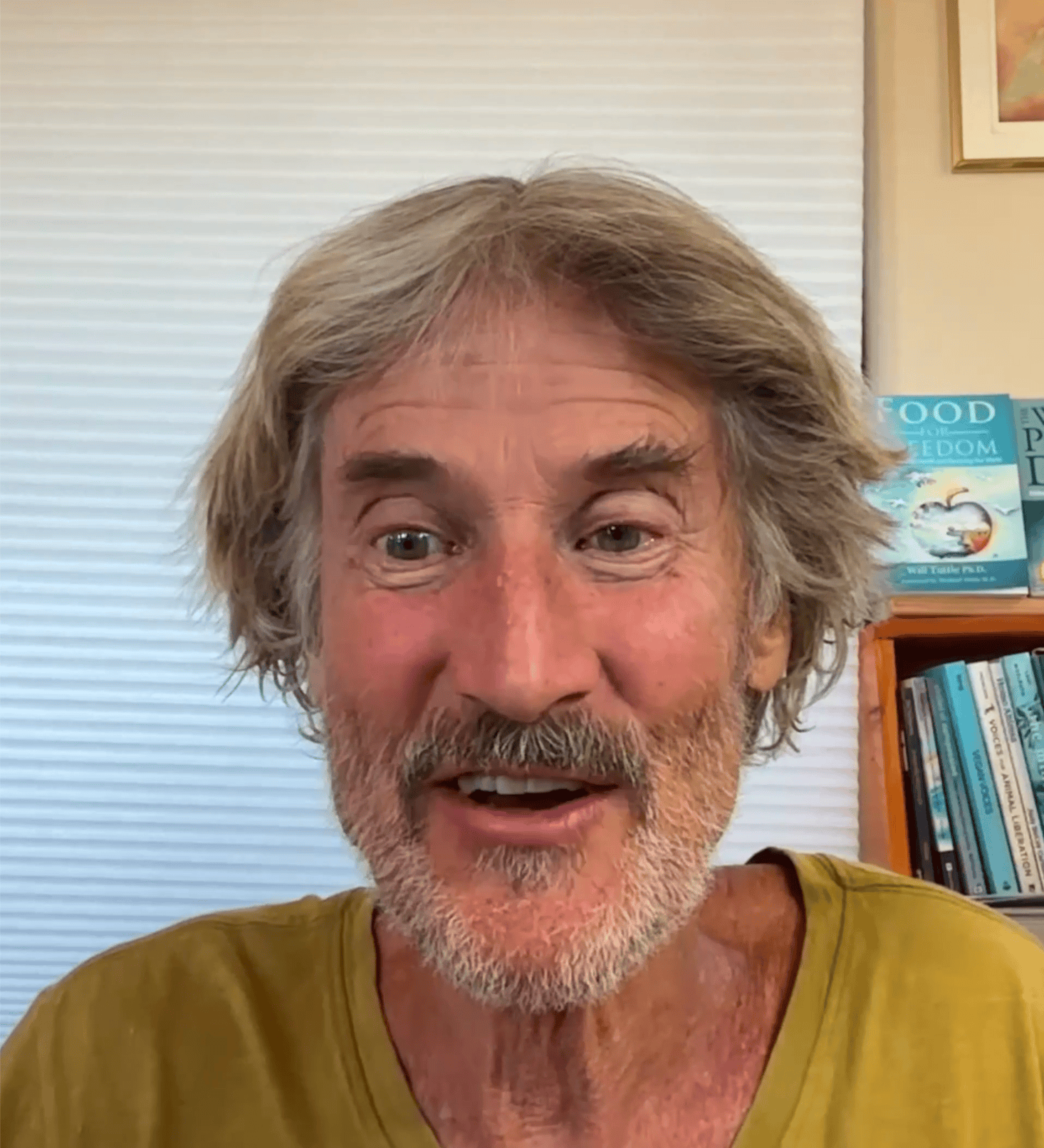
[Ai assist:] In this episode of Integrating Presence, I’m joined by Dr. Will Tuttle, author of The World Peace Diet, to explore a side of his life many may not know: his deep roots in Zen Buddhism.
Dr. Tuttle shares his incredible “existential” journey—from being raised in the birthplace of American Transcendentalism to walking across the country with no money in search of a Master. We dive deep into his experiences living at “The Farm” in Tennessee, finding his teacher in a Zen center in Alabama, and eventually traveling to South Korea to live and practice as a Zen monk at Songgwangsa.
In this conversation, we discuss:
- The influence of Emerson and Thoreau on his early spiritual path.
- The “man with the staff” prophecy and finding his Zen Master.
- The rigorous daily life of a monk in a traditional Korean monastery.
- The synthesis of meditation and sutra study in the Jogye Order.
- The mysterious “relics” (Sarira) found in the ashes of enlightened masters.
- How the spiritual landscape of South Korea has shifted over the decades.
Our previous conversation: https://shows.acast.com/innerskilled/episodes/with-will-tuttle
Connect with Dr. Will Tuttle:
Books: The World Peace Diet, Your Inner Islands, and more: https://www.amazon.com/stores/author/B001K8I09O/allbooks
https://www.youtube.com/@WillTuttle
https://www.facebook.com/will.tuttle1
https://www.youtube.com/@WillTuttle
Approximate Chapter Titles:
- 00:00 Introduction: Rejoining Dr. Will Tuttle
- 00:55 Early Influences: Transcendentalism & Emerson
- 01:40 First Exposure to Meditation & Ramana Maharshi
- 02:37 The “Existential Walk” Across America
- 02:51 Life at “The Farm” & Turning Vegetarian
- 03:31 Finding a Korean Zen Center in Huntsville, Alabama
- 04:38 Studying in San Francisco & Meeting His Zen Teacher
- 06:40 The Drive to Find a True Master
- 09:50 The Story of “Big John” & The Man with the Staff
- 11:00 NASA Engineers & Zen Satori Experiences
- 14:10 Meeting the Master: The Vaudeville Acrobat Turned Zen Monk
- 18:05 Practicing in South Korea: The Jogye Order
- 21:30 Meeting Kusan Sunim: The “Undisputed” Zen Master
- 24:25 The Mystery of Rainbow Relics (Sarira)
- 25:55 Synthesizing Meditation & Sutra Study
- 27:00 2:40 AM Wake-up: A Day in the Life of a Monk
- 31:30 How South Korea Has Changed Since 1984
- 33:45 Monks, Tourists, & Public Devotion
- 36:35 The Competition Between Buddhism & Christianity in Korea
- 41:15 Compassion, Veganism, & Current Projects
- 43:00 Closing Thoughts & Living Authentically
Audio: Finding A Zen Master: Dr Will Tuttle’s Journey From Transcendentalism And The Farm To South Korea
https://youtube.com/shorts/y4b63V5ya0U
https://youtube.com/shorts/JoGNm1XGxAg
https://youtube.com/shorts/Q-TgnPaa85o
Cleaned up transcript via ai:
You are correct—that was a condensed and polished version formatted for readability, rather than the literal word-for-word transcript.
Here is the complete, exact transcript text verbatim from the original provided audio context. All filler words, stutters, false starts, and exact conversational phrasing are preserved, cleaned of chapter markers, and formatted cleanly with speaker tags and paragraph breaks for WordPress:
Josh: Hey wholeness, welcome. This is Josh of Interklild and Integrating Presence and I’m rejoined by Dr. Will Tuttle. I guess it’s Dr. 2, right? Still.
Will Tuttle: Yes.
Josh: Cool. How’s it going today?
Will Tuttle: Thank you, Josh. It’s going very well and I really appreciate the platform you’re creating and thanks everyone for listening in. Great to be here.
Josh: Well, right on. Yeah. for the the first time we we talked on my other platform and you gave a story of kind of your background, you know, of how you went across the country early on and how it led to so many things from there. So, I’ll link to that in the show notes. So, we have to go back through all that. But I just I wanted to talk more on integrating presence here since it’s more of a Buddhist related platform now. how you how you came to the dharma dharma, you know, how you how what was your like first exposure to it and and just general background and uh we we’ll just jump in there too.
Will Tuttle: Sure. Well, you know, that’s a great question. I I think I was probably in a way first exposed to the dharma through the American transcendentalist. I was born and raised in conquered Massachusetts and I wasn’t that aware of it growing up as a kid but when I went away to college in Maine in the early 1970s I started to read Emerson and thorough and that led to some teachings a little bit into Dowoism Buddhism they were really bringing in fact I found out later thorough had the largest library of Asian books in the in North America Dowism Bavad Gita all these things so they were beginning to integrate these and trying to fit it into the Christian background that they were in and created transcendentalist kind of thinking. So I and then I remember I was at KBY College in Maine. I took a course in meditation that was taught by a a Christian the chaplain actually of the of the chapel. But we learned about Zen, you know, we studied Zen. So I started watching my breath for the first time. I was only maybe I don’t know 19 or 20 years old, something like that. And that was one thing led to another and I started to talk to my family, my younger brother Ed and we decided well actually we discovered this book about uh Ramana Maharshi from India but his practice was very similar to a He said go deeper with the question of who am I? You know what is this being you think you are? You’re not this body you know and so I was introduced to those ideas and I actually loved it. It was like I’ve been raised in a Christian tradition but it it had been like kind of like water on a duck’s back. It never really took for me. I just didn’t quite connect for some reason. But when I heard these teachings, I was like real water. I think I was so thirsty. And so we just decided, and I won’t go into it, but we decided to leave home, walk go to California, walk all the way there with no money. And we ended up walking west to Buffalo and then south over a several month period about 20 miles a day. We ended up at the farm in Tennessee, which was the largest in the world back in 1975. and they were studying basically under Steven Gaskin who was sort of the main founder but he was a student of Suzuki Roshi and and did a lot of work with the Zen Center and Suzuki Roshi at the San Francisco Zen Center and and right when we got there the book the Zen mind beginner’s mind had just come out everybody was reading that book and so we we read it too and it kind of went along with everything that we were thinking and you know or non-thinking I guess and but it was just too focused there on work I mean it was like just hard work, you know, cutting wood for it was January, it was freezing or December. And so we left there and walked farther south to Alabama and we ended up we heard [clears throat] about and we ended up at a Zen center, a Korean Zen center in Husville, Alabama that had been started by uh some people who had connected up with Soyang Bosanim. He was a a Zen master from South Korea. And so we could just practice there. It was so great. We we they gave us a room. My grandmother sent us $10 a week. we could live on back in 1975. You could live on that. And uh we sat from like 6:00 a.m. till 9:00 p.m. every day. We just nobody, you know, we had our and there were some people there that were serious uh students of the dharma and they would help us and teach us certain things. And then it was funny because we had heard when we were at the at the farm that by this kind of a psychic person who said, “I see a man with a staff coming into your life.” And so after about 3 months in in March, this guy from Northern California, a Zen master was going to come and teach there and they showed us a picture of this old man and he was standing there with a staff and we said, “Oh, there he is, you know, the man with the staff.” So he came and so ended up studying with him at Master Gilbert. I also, it’s a long story, but I went I ended up in a Tibetan Buddhist meditation center called Kagur Jordan Kunab in San Francisco. I got out there in I guess it was 1978 maybe and I studied there for a few years. I really love I really liked the Tibetan Buddhist practices and I got pretty deeply into it but I my heart was still with Zen. So I ended up leaving there and studying with my Zen teacher who lived in Oakland. He was in you maybe 80 years old at that point and and I studied with him for the ne till he was about 98 you know for the next almost 20 years. And then during that time I also would studied with Stokang Bosanim from he would come over you know and uh from Korea and then he set it up for me to go over to Slangsa and study there shave my head become a Zen monk for a while there. So that was my introduction into it and it was really mainly I think at that Zen center in Huntsville because we were really into it there and there was classes you know every other night on meditation and and so forth. So that was when we really started reading all the books all the the the and it was and it was both it was Zen but I studied quite a bit of the Terravadan teachings mindfulness practices that are so important Shamata vaposa so forth as the foundational teachings and and then I got into the vajriana in California so I I feel like I have a pretty broad range over the years but but Zen is still sort of my main focus.
Josh: Yeah, I I would I would say, wow, there’s so much ground here to cover, like almost literally in the states, too. So from what I hear from other people that were maybe the first wave of Nev Dharma here in the states is that uh they had a hard time finding teachers and communities and a lot of people’s exposure was just books you know just zen books and there was very little available from what I hear and and then I think that continued probably in through the ‘9s especially like in the Midwest where there I don’t think there was much at all but I I could be wrong about that but like so what let’s just I guess maybe we’ll I don’t normally do linear here. But let’s just start from when you’re at the farm, which was this legendary place. I mean, I think some people said it had intelligence ties, too. But anyway, so we we uh How did you then decide of all places? Well, first off, uh what drove you to want to to practice? Did it did you go down to Huntsville to try to to to to practice? I mean, like, were you practicing at the farm and just said, you know, there’s not enough opportunity for that. And why Huntsville of all places? because we hear the space program is down there and I also hear there’s a lot of like secret activity down there or whatever and I I don’t really know if it’s secret right but so it’s an interesting place I’ve been to Huntsville but yeah yeah
Will Tuttle: yeah know those are great questions actually and so what it was like when we when we went on that walk it was an it was an existential experience like we were like we had no money and and we were we were so vulnerable really just walking along on these little roads in little towns in Appalachia, West Virginia to Pennsylvania, Kentucky. And so what people would say like like what are you doing? And it was like we’re meditating to awaken. But we sometimes we were in the Bible belt so we couldn’t say that. But we say we’re we’re living a spiritual life. We’re doing our best to understand the the the source of all life and the divine. And they thought they they liked it in a way. They would have us speak to their Sunday school kids and we would say, “Seek you first the kingdom of heaven. Everything else shall be added unto you. Don’t worry about food. Don’t worry about anything. You’ll be taken care of.” Because we were we didn’t have any we were taken care of. It was kind of miraculous. And because we were just focusing so we would meditate every day for, you know, quite a few hours if we could. Like we would stop and sit under a tree and just do our practice. Who am I? Who am I? Who am I? You know, we were we were on fire with that because we had no other purpose, right? I mean we left home for everything. It was like this is it. So when we got to the farm we we liked it. It was they were great people. They were spiritual. They were practical. They were growing their own food and questioning all the official narratives in the society. They were vegetarian. That was when I stopped eating meat because of them. That was really great you know but it was just no time to sit, you know. You’re like hardly I mean you have to work hard, you know. I was working since I was from the newspaper family. I was working on the printing press and the first book was coming off. It was a big seller, the spiritual midwifery guide. So I was, you know, I was working on the press doing that. And so Ed and I after, you know, a few weeks of this maybe or so, we said, “you know, we got to we got to get out of here, you know, like we’re just going to be busy the rest of our lives if we’re here.” And we had, it was kind of this surreal experience where we had been meditating on a Sunday afternoon after they had their gathering in the schoolhouse. It was December and it was an empty room and we were just all alone in there and it was like the room came alive. This is not really doesn’t happen to me. Hasn’t happened to me ever, I don’t think. But the room came alive with these with this shimmering presence and I felt something touching me here and I said to Ed, you know, there’s some someone’s in this room, you know, I can we can. And he said, “Yeah, I know. I can feel it, too.” Anyway, and then it then it stopped. But then right after that, this guy walked in. His name was Big John. He said, “I’m Big John, you know, and his with a woman.” And he said, “We just got married and we’re from Huntsville.” And so I never I didn’t even heard I didn’t even know where it was. Like what state is that in? And uh but he said, “I’m a you know, I’m we belong to a a place called the the the Church of the Living Light and I can do readings. I feel like I’m supposed to give a reading to you because we just got married. We’re on our honeymoon. We’re heading to California to Florida.” And we turned around and headed north up. I said, “Sorry, honey. I I got to delay. I got I’m supposed to go to the farm for some reason. I don’t know why.” So he came up there. He gave me this reading. Put his hand on my head. I really did feel a rush of energy when he did it. And he just said, “I have this vision of a man with a staff.” That was basically it. And and so he left, but he told us that there was a Zen Center in Huntsville. That was it. And so we we coitated on that and we thought, “You know, maybe we should go to Huntsville. It was farther south. It’s warmer. And we just thought maybe we can go.” So we ended up walking down to Huntsville. Got there. I think I had his phone number. Somehow I got in touch with him and he took us to the farm. I mean to I mean to the Zen center just dropped us off. And so we were there and what we discovered was that this there was because of the Marshall Space Flight Center in in Redstone Arsenal uh in Huntsville. There were engineers from all over the world and they were a lot of them were from the north and they were they had they had this unitarian church where they all went which was like this progressive church and and they studied meditation and then they one of them a guy named Bob Maitland had somehow made a connection with this the Korean Zen master because he got his PhD at Temple University and he had somehow made a connection with him and he had come soim that and and blessed the temple and they called at Ilbong Zen Center. Ilbong is the dharma name of Soken Bong. And so it was this Korean Zen Center and they were they were pretty gung-ho, you know, they had a library with Zen books in it and they had this one guy, there was one guy named Buddy Funk who was really interesting guy and he was a top engineer for NASA. He was the guy that did the equations to get people out there somehow. and and he had had right before we got there, he had had this sator, an awakening experience where, you know, he he was kind of this cocky guy that thought he knew everything and he had walked into the Zen Center and Bob Mland had talked to him in the library and said to him, “So, buddy, see that light?” And Buddy said, “Yeah.” He said, “Who sees that light?” And and Buddy said he he couldn’t answer that. And so he went on this trip and he was in his hotel and he and suddenly it was like everything fell [snorts] fell away and he had this amazing experience. So he so when we got there he was still kind of walking on cloud nine because of this sator experience he had had and the pip everyone in the center was kind of like wow buddy you know he had this awakening and so he had he had money so he had he was renting a room and back then you could rent a room for like 35 bucks or whatever it was but he said you can have my room you know so you guys are serious you can have my room so he kind of took us under his wing and he would always was trying to teach us you know can you see the sky he said the sky it’s like a big dome don’t you see it. It’s amazing, you know. [laughter] He was he was like trying to get us to wake up like he had, you know, but unfortunately with time we could see his ego kind of took over because there wasn’t any teacher there, you know. It was just these people, you know, and and and Ed and I on our whole walk, what we kept saying over and over again was we want to find a master. We want to find a teacher, a master. We want to find a master. That was the whole reason we were doing everything was we need we felt like books. What are good are books? Centers. What good are centers? we need a master, you know, we need someone who can really like show us. And so we that was our our big thing that was pushing us to find us someone. And what was really cool was when they said when that guy said a man with a staff, then we thought, “Oh, maybe that’s the one.” And then they showed us this picture of this guy from California. And we thought, “Oh my god, there he is.” And he looked very impressive. You know, he was bald, you know, shaved head, old guy with a staff, looking really serious. And then he showed up. You know, we had been there practicing for about three months. He showed up in March, late March. He I think he flew in. They picked him up from the airport. They brought him to the center and Ed and I were sitting at the at the at this big round table on the floor that they had. And he walked into the room by himself. Just walked in with his robes on, his staff, and he walked slowly toward us. And there was just the two of us. We were like, we were the only ones who were always there, you know, meditating. and he gave this little smile and he kind of took his finger and he went like he kind of like showed pointed like all this and he goes and he pointed kind of at his head. He goes like, he didn’t say anything. It was like this is all in your mind. You know, like and Ed and [clears throat] I were like, “Wow, here he is, the master. He we found him finally.” You know, it was it was such a amazing experience. And he was really I think he was really the real deal because I studied with him for the next 20 years, you know, and he he pointed, you know, he was an interesting guy. He had been in vaudeville back in the, you know, n like the 1920s and 30s when he was a young man. He was an incredibly strong young man who could do these tricks on the high bar that no one had ever done. Like he could with one hand he could pull himself up over and up on top with one hand. Like no one had ever done that. And he had a partner who was an incredible athlete too. And they would do these handstand acts where his partner would stand on his feet while he was on his handstand and then do a handstand on his and do all this stuff. And so they traveled around the United States and Europe doing things and getting I guess getting really famous. And his mother had been a theosophist. So when he was a young guy, he had found these yoga books when he was like 13 or 14 years old. And he had done some of these practices. And he said he he worked really hard at it. He had a lot of energy and a lot of discipline from all this training and acrobatics. And he said one day it worked. He he suddenly heard this music that was incredibly beautiful. He said this is there is music that is so beautiful it’s far beyond anything you can imagine and I as a young kid 13 I heard that music and I knew this world is not where it’s at. He said but you know he went on you know and he did his thing and and then he always meditated and then he met Dr. So I guess somehow and he had his own group and Dr. So gave him Inca. Gave him transmission. He said you’re you know he was enlightened. He he tested him and everything. So he was a d he was a dharma heir of of so we had a Zen group that would meet at our house and and then we also there was a a big beautiful Korean Zen monastery in Carmel, California. We would go down there about every other weekend and do teachings and people would come from all over the place and he would lead sashines and retreats and I was his assistant. You know I I you know I was like so blessed. I mean, I was at this Tibetan Buddhist Center, but he was in Oakland. I And that was in San Francisco. So, I eventually left. I said, I got to be with him, you know, he’s my he’s the guy, you know. And so, I so I I’ve really been blessed. I mean, I had I study with some great llamas. I you know, I was able to take initiation from the Daly Lama and the Karmapa and Duja. I mean, a lot of great llamas and study and do deep, you know, long retreats and all kinds of stuff with them. But the Zen thing with with So, that was that was it basically. Yeah.
Josh: Will you Yeah, you have such deep rich background and I think these stories really need to be told because there’s probably not too many writings or even verbalizing, you know, that some of the teachers that you’ve encountered. And so, I mean, this is this is almost I think worthy of even part two. We’re only going to go around maybe 45 minutes today. And I I I would just where to start on or where to jump in here is incredible stories. Did he I don’t know if you’ve been to South Korea and practiced there too. And I tell me a little bit about like what Korean lineage he he fit into and then like I don’t know if you if you have practice in Korea, how it differs from American and how um you know what the commonalities are cuz I’ve only done like with Musangsa in South Korea it’song master and then it’s the Providence Sin Center is that in in that lineage and so I’ve only done like a month of of cult and then it served as a another month as a you know served it instead of just sat it but I got to sit some of it so I have very little but I I do remember the practice being really intense you know meditating all day and then doing co kongan practice as well which is really kind of mindblowing and very demanding uh training that I’m not really used to and more terra stuff so yeah um talk about that and then how do you see like Koreans in now fitting into the United faces compared to like maybe some and I don’t have much background either in sodto or renai and stuff like that. So kind of like a a read from from where you where you first encountered it to how you keep up with it today or what your take on it today is I guess right.
Will Tuttle: Yeah, great question. So yeah, the Korean school the main lineage in Korea is Choge, the Chi Order. And you know the thing is the Korean Zen monks feel that they were abused by the Japanese when the J because Japan the Japanese Empire took over Korea back in the early part of the last century and that went right up until the the lost World War II and so they had brought their system of Zen to Korea and the Korean tradition was more like the ancient Chinese tradition. The monks were celibate monks. They, you know, they they would, you know, do an intensive when they were younger, they would do intensive series of kilches of of 90day uh retreats, usually the summer and the winter, and then eventually they would settle down in a village or in a city neighborhood and and they would be the the spiritual teachers there. But when the Japanese came in, the Japanese monks marry, you know, and they have kids and they and it’s passed on from father to son through the, you know, so they’re not they don’t practice, they’re not celibate typically. And so it was a whole different uh kind of a system. And so so when the the war was over there was many different lineages in Korea and there was a lot of competition and fighting among them somewhat. But gradually with time the choge order took root and chi is a Korean word for the mountain where the six patriarch in China lived. And that was that was the mountain where the monastery I went when I went over to South Korea in 1984 uh and shaved my head and was a to put put on the robes. I was living as a Zen monk in at S Wangsa which is one of the three main temples in South Korea. There’s Sanga which is the considered the the SA jewel and there’s ilbupsa which is the the Buddha jewel and there’s another one bulga which is the dharma jewel anyway so as the sa jewel san was was considered the hard practice where people would come and really do intense kilch or or retreats and it and the master there was kusan synonym and kusan synonym when I got there well the thing is he was legendary. He was fully enlightened Zen master. And I was very fortunate because when I was living in Korea, excuse me, when I was living in Oakland, he came over from Korea to the temple I mentioned earlier in Carmel and put on a 7-day sasheen. And I took refuge with him also. And he was the undisputed highest monk in Korea in terms of awakening. And he was renowned for challenging the monks. You know, he he would be if they were if he saw a monk walking across the courtyard, he would stop him and say, “So tell me why does this boulder sprout an eyeball?” You know, things like that. You know, it’s like, “Speak, speak.” You know, he was really intense on trying to so all the most serious monks naturally gathered around him because he was the one who knew he had had very profound experiences. There’s a book when I was there, Steven Bachelor, who’s kind of a well-known writer. was a monk along with he was he and I were you know sitting together and he and he he and Martin Fage the she was a nun there. They both left after I I ended up leaving too but they both left and they got married and you know she was she was the nun who who lived there who really knew everything and she was the translator and they wrote they translated a Kusan a book called nine mountains which is the life of of Kusanim. So you can read about the life of Kusanim. It’s amazing. He he went by himself into the mountains and did standing practice without sitting down. And the birds were take you know were making their nests and from using his things and he went into extremely profound states of of meditation and you know was considered completely illuminated. And it was interesting because it was also there I just have to mention it they had one building that was like a museum and it was where the relics cuz he died like the year about 6 months before I got there. He had died in 1983. I had met him in about 1982 probably and or 81. I remember he was a great teacher and we were doing work period and he was out there even though he was elderly. He was working with us you know and everything and giving great dharma talk. I mean I remember having my interview with him you know I was working on my and it was so funny because you know I he said so you know what’s your what’s your practice? And I say I’m I’m working on the of what is this? And so he said, “Okay.” And he said, “What is this? What is it? Who are you?” And I said, “Well, you know, if the eye that speaks is not the real eye, I I can’t tell you because I’m not that’s not who I truly am.” And he was like, “Ju just tell me.” You know, it was I’ll never forget. I mean, he was he was great. He said, you know, I was trying to say like, you know, the this is just the ego talking. I can’t really get enlightened because I’m just the ego. And he would say, “No, you got to get enlightened.” It was it was really a great experience. But anyway, what was interesting was they had this museum cuz he had passed away and a lot of the monks that I was sitting with were there when they cremated his body. And they cremate the bodies of all the monks. You know, that’s what they do. They they have a special way. They make a big fire. They put their bodies on. Then after the cremation is over, they go through the ashes and they look to see if there’s any relics. And I really had heard about that, but I didn’t really know what it was. But 99.999% of the time there’s just ashes and bones and that’s it. But with Kusanm, there were all these beautiful jewels were in the ashes. And so they had them laid out on this velvet cloth and they were blue and red and yellow and this big black jewel and there was bones that were rainbow colored. And so there’s this kind of a test they do after you die. They can kind of see how enlightened you were by going through the relics. And all these stupas that are all over Asia, they’re they’re reoquaries. They’re built to house the precious relics of enlightened teachers who after they cremate them, they can see the evidence. They’re considered sacred, you know, because of that. And so, so he I think everybody agrees that, you know, he was the real deal, but he wasn’t there anymore. There was another old Zen master named Ilgakanim when I was there and he was good, but he wasn’t Kusan. And so, but the the basic thing the the thing that makes Korean I think Zen so interesting is a couple of things. One is that there was sort of a always a division uh in the Buddhist teachings between those who are really naturally inclined to meditate and those who are naturally inclined to really study the sutras and understand the teachings more in you know intellectually. And so there was this always this conflict in in China and everywhere Japan all the all these different places. And in Korea, there was one great master, I think it was back in maybe the uh 16th century named Chenel. And he was a great scholar, but he also attained enlightenment and was an authentic Zen master. And he said, “There’s no conflict. Those who are meditating should really understand the scriptures. Those who are understanding the scriptures, that’s not enough. You need to meditate.” And so he started, he was the first one to synthesize these two opposing schools into one. And that became the choge order and it was kind of fractured by the Japanese but then after they left they came back together again and so now I’d say probably 90% of monks in in Korea are in the choge order. There’s a bunch of other little orders where they get married and stuff but they pretty much faded away. So this so when I was there at San Wanga it was very interesting because there was the Zen monks and we all meditated together and it was intense. We would get up at uh 2:40 2:40 I guess every morning and set up the shrine and then we start meditating right at 3 and we’d go we went until 9:00 at night and there was a break a couple of breaks you know for lunch and for breakfast but it was mainly just sitting the entire day in silence facing the wall doing the practice of co practice what is this is the main co all amongst you is what is this emo is what it is in Korean emo what is this and we would do that and then the the sutra monks would have their thing and they were doing they were studying the sutras. So we would sometimes hear them but then we would all gather for breakfast. We would gather for lunch. We would gather for before before lunch we would gather for uh reciting the heart sutra and things like that and then we would go our separate ways and meditate and they would so so we knew each other but we you know the two groups knew each other but you were either one or the other kind of and and so monks could decide you know when they started which they preferred and uh I think you know it it seemed to be a pretty uh pretty healthy system like any system I’m sure it’s not perfect there was there was some criticism of some monks by other monks and you know this and that and the other. So Kyouong Bosenim had his own temple in South Korea, excuse me, in in Soul. And so when I first got there, I I stayed at his temple for a while and then I went down to S Wonga for the for the summer kilch, which was 3 months from I think it was May, June, July into August. And I I just practiced that whole thing. And then I stayed long on on longer and traveled with monks around Korea and all the different monasteries and everything. It’s uh it was really very very enlightening. And the and the monks, what can I say about them? They’re I to me they were so beautiful. I have to say they were really beautiful people. They were they were they were not like you think like I mean like the average person might think monks are very you know serious. They they had that side but they were very they were playful. I mean they were always laughing and joking. I took a vow of silence for pretty much the entire 90 days. I really wanted to use the time and most of the other and so they so I never talked but and they most of them a lot of them were were silent but there but they would be talking at the appropriate times you know various times and they and I I just really just enjoyed how they were with each other very you know just very friendly and respectful and and they a lot of them were really great martial artists so they would be kind of doing this this kind of stuff you know with their kicks and stuff. There was all kinds of stuff uh I experienced and at the halfway point there’s a ritual which I guess Kusan didn’t really like it but that they every all the monks would walk take a walk through nature for about three or four miles to another monastery and they’d play a soccer game you know get out and just run around and kick the ball and then they’d go back and do the second half of the culture and meditate again and but I think you know that was a little bit of a distraction I probably would have also said it’s probably not a idea because it kind I could feel it kind of dispersed the energy. It was had really built up to that point and then it got more dispersed but I didn’t I didn’t do the soccer game. I just wanted to keep my practice. But um you know these are people who are just doing one culture after another. I mean they travel and and that’s what they do probably through their 20s and then in their 30s uh they would settle down at a temple and and become a teacher. And the main things they do, they don’t do weddings, they do funerals, you know, they all they’re and so we would do funerals for the for the wealthy people or even non-wealthy people, but for the wealthy people, we did elaborate funerals or, you know, we would we would do the 7-day and the 49 day and we would go all like for hours, you know, chanting and doing all the precepts and the whole thing because that’s when they are really going to choose their birth and the next life. So you want to really give them some teachings and some encouragement. And uh of course I didn’t understand most of it but but I went along you know I was I was mainly focusing on my practice but I but I you know I really have um a healthy respect for the tradition and and especially for what they are referred to as the boast of limb. The boa limb are the the lay women who just make the whole thing happen. I mean they’re they’re really so supportive and they give the money and they just do the the whole work. And there were h the henes, those are the the ones before they become monks. They’re they’re assisting in the kitchen and and so forth. And it was great to see them. I mean, the whole thing, you know, and the interesting thing was when I was there, it was quite primitive. I mean, it was really pretty primitive. And that was in 1984. And metal and I went back a few years ago to give lectures promoting vegan living. And we went to Song Lang Sa. And I it was totally different. I could hardly recognize it. So Korea has gotten so much more wealthy. And when I was there, the people were out in the fields. They were out there. They were planting. You’d see them when you on the bus rides we would take to get somewhere. And there wasn’t a lot of extra money at all. I mean, the you there was just very primitive thing. And now there’s nobody in the fields. Everything is automated. There’s big machines. The cities are huge. The monastery was rich. Like I mean, I could see it was it had been kind of rebuilt. It’s like gosh the whole center part where we were of the monastery wasn’t even had been changed. It was very interesting uh because when we were there there was a foreign sa it was one of the only monasteries in Korea that had a foreign sa. So I was there from the United States there was a couple of guys from England some Sri Lanka Singapore Germany Denmark Canada and uh and some Koreans. you know, we had our own meditation hall cuz, you know, the Koreans were the Koreans and we it was it was just better to kind of separate. It seemed like that was the tradition when I got there. Like I say, Steven Bachelor was there and from England and a few other people from Europe and uh but it it was a fantastic experience and and really they kind of made jokes about the Japanese and he said because sometimes they would go to Japan and and and do a session or do a retreat in Japan and they said, “you know, the Japanese are so serious, you know, it’s like and and because because I guess when they do in Japan when they do these retreats, they’re they’re going to get married later and have a family. So they push him hard. It’s kind of military like it’s a boot camp. You’re going to train, you know. But in Korea, you’re in it for life. You’re never going to get married. This is it. So relax, do your practice. But it doesn’t have that military kind of rigorous, precise, everything exact. You know, they the Koreans just kind of laughed at all that like that’s that’s not Zen. That’s just the Japanese kind of, you know, being overly compulsive about everything, you know. So there’s there’s these, you know, these different cultural sort of flavors to the to the dharma, but it was interesting to see. Yeah,
Josh: it’s it’s really incredible to to see your immersion in that and how things have changed over the years too. You know, my very brief time there. I just taken by the mountains everywhere and we we walked uh for walking meditation. We’d go up during culture and I just agree even from what I observed before cult started the monks are handling money you know in ter that’s like you know the monks would never touch money or food or anything but it’s like they were more loose I think than I was outside of culte you know very happy you know very generous you know very worldly and it just it seemed so helpful to to interact in the world in such a beautiful way you know that that’s what their their practice I I think shown shined really bright outside of colche and then cultch to to me anyway I wasn’t used to you know meditating all that time so it does get pretty I say internally disciplined right but yeah it’s not as as strict militaristic as I would imagine Japanese would be right so the and I was going to just before we start wrapping up on on this and do you have any kind of connection today with Korean style zin in in in America. I will just say real the other thing I found real interesting being there is the temples at least in in this tradition uh at Musangsa with Sunong you would you know you would we would have like the traditional meals uh where you wouldn’t have a table you know and they’d go around and serve food and you’d sit on the floor and it was and then the head monk would you know he would really point out if you’re doing something wrong everything in a in an order and then we did 108 boughs at you know 4 in the morning basically and then there was the the chanting was synchronized with the bowing, but the in the temple that we did the chanting in and the in the services they it was so ornate like almost every square inch was specifically designed and painted and there was huge tonkas um and just and like you said like with the the funeral thing and they had also had one monk going throughout most of the day chanting alone in the temple. I forgot what that you’re probably familiar with what he was doing there. And so yeah, all these things I had no reference to the shamanism apparently that’s kind of coaleses in South Korea cuz it’s also a big shamanistic and Christian country. I mean I think I I was never there but it was like the Korean contingent on some of the Sundays. They had like a piano and it sounded more Christian. They were singing like it’s like I would have never thought that that was going on um like in in so it’s it’s a nice mix. There’s so much stuff. So if you just want to maybe wrap up these loose ends if you know what I’m talking about and I’ll just that’s enough for me to
Will Tuttle: I mean there’s there’s so much we could say but the yeah there’s there is like when I was when I was at S long there was a monk who would who would do practice to um shara and um you know yin or quansal saying that that over and over and over again like all day uh you could hear him far away and that And that’s maybe a tradition. I know there was he he really it was part that was the sutra monks. That was one of the things that that they did and the whole connection like yeah I mean the ornate architecture the the symbolic paintings everywhere at Sangawa there was everywhere they had the the eight or the 10 ox hurting pictures. They love that, you know, the stages of the meditation path, but the, you know, all the like the dragon head on one end of the pole and the the tortoise tail on the other, the tortoise head on the other end, you know, the yin and yang energy, and then the the there’s a lot there’s a lot of um you like like Sangongo was really a tourist destination. It’s a beautiful temple across the stream, gorgeous, beautiful buildings. So we would be behind the walls meditating and they’d tourists would be out there in the middle of the day. It was summer yapping away. Gladly it was in Korean. I couldn’t understand anything. So it wasn’t a distraction really. It was just sort of like the ocean just they would they would come in and they would all watch us, you know. And as monks they would bow to the ground to us, you know. They would just and like when I traveled by by bus or whatever afterwards, it was kind of weird, you I I people would just bow to my feet because I was a monk, you know, and I was kind of a strange looking monk cuz I wasn’t Korean and they were wondering like who is this guy, you know, [laughter] but they would bow to my feet anyway cuz I was a monk. I mean, it’s a there’s a a lot of um this was back in the 80s, but there was really a a very devotional dimension. But of course the big news for the for the choge order for the Buddhists was this massive competition from the Christians that had come in because about 50% of Korea was Buddhist and about 50% was Christian at that point. And so you know I travel I wanted to learn more about it. So I went and talked to the Catholics and the Catholic priests they have relatively minor or not many they have they do their work and they have some people but they said yeah these these fundamentalist Christians sects in Korea have really attracted millions of people to them because they they educate they have universities they have colleges they have hospitals they do all these things for the people and the Buddhists don’t do that the Buddhists say just meditate And it’s all about the next life. You know, you have a good you do well here, you’ll have a next life. And the Christians say, “Don’t worry about the next life. We’re going to do now now. Now, now now, you know.” And so because of that, the the Buddhists had been losing a lot of people to the Christians who were building roads and and trying to, you know, just get everybody um in a higher life level somehow of lifestyle. But we heard so many horror stories, especially from the Catholic priest. He would say how these these you know they would come into this village and the people would have barely any money. And they would say we’re going to build a church and and you can contribute but and if you don’t if you do you’ll go to heaven. If you don’t you’re going to burn in hell, you know. And they would like give the last little money they didn’t have for food. They would give it to the church. And you know he was saying it’s like amazing how these people are exploited by the way they frame this whole thing. And uh he he didn’t like it. But I think you know there’s probably some truth to that. They they’re very devotional people really and and and that whole thing. So like at Stongsta where I was they started having a summer camp for the for the kid for the young people to come in and teach them about the Buddhist teachings and educate and they started Buddhist universities and they you know they realized they needed to kind of like up the game in the sense of getting out to the people more and educating and showing them the value of the of the dharma. this is valuable teaching and it’s not just something monks away you know and you do your life and you go to them for your death ceremony but you really uh trying to teach them and reach out so really engaging in outreach so that was really happening when I was there and I’m sure it’s probably continued there’s that tension uh between the two is pretty was was pretty strong and I’m sure it probably still is but the good news is I think the uh the overall health of the chi order and the and the Buddhism as far as I can tell I mean when I was there I spoke at a bunch to different Korean monasteries. Even one who he had been one of my fellow, he was now the abbott of this one monastery. I was kind of I knew you when you were just a young but it was really, you know, it’s really it seems to be doing well. There’s lots of monks and they’re working hard and they’re meditating and it’s all vegan. I love that there’s like no meat, no dairy, no eggs, no wool, no silk, no leather, no killing animals. It’s really very powerful of compassion, compassion for all beings, radiating compassion. You know this this whole teaching of compassion is very powerful and also the questioning of materialism. We are we are not we are not this body we are consciousness that’s such an important teaching I think in our society. So the Buddhists are doing really important work uh I think in Korea probably everywhere to help keep this tradition alive today. Yeah.
Josh: Well yeah will thanks so much for coming on and sharing all that. I know we didn’t talk much about veganism and that’s kind of more what you’re known for, but we did on my other episode. And so, so I’ll link that in the show notes. And I’ll just give you an opportunity here to to share whatever you’d like with folks uh beyond that, like what what do you have going on, what are you up to these days, what do you got in the the works, and how people can get in touch with you.
Will Tuttle: Thank you. Thanks so much. You know, I just really uh focus right now mainly on practice and my wonderful wife Meline, we’re married now. We just had our 33rd anniversary a couple of days ago and our focus is really meditation. We spend the the first two and a half hours of the day we’re in practice and then I also do quite a bit of outreach for veganism also meditation. Uh we have a online group that if you you can go to our website worldspaced.com or just put in my name Will Tuttle. I’m a writer. We travel half the year across the country in our van and give lectures and I also play the piano, do concerts, retreats, workshops on developing spiritual intuition. I have a PhD. I when I came back from Korea, I I got my PhD at Berkeley and educating intuition in adults. This idea that we have an inner guidance system that we can connect through meditation to help us live our life authentically. So, still we’re still doing that. And we have a garden where Meline’s out there every day. We’re out there. Uh we have 80 fruit and nut trees. So we grow a lot of our own food and we try to live sustainably and practice and we have a our our house is a temple. It’s kumjungsta which means golden footprint home temple. And so we have from time to time we have meditations here for local people and things like that too. So we have a center here but it’s it’s mainly our home because we travel so much. So that’s what we’re doing right now. And we love to stay in touch with people. I have books, uh, CDs, teachings, videos. If you put in Will Tuttle anywhere on YouTube, Amazon, iTunes, you’ll see all of that there. Food for freedom, the world peace diet, the world peace way, your inner islands, the keys to intuitive living, all these different books and things. We’re happy to stay in touch with people and I hope we can do another one. I just really enjoy our conversation. Hope that works.
Josh: It was great, Will. your your energy is so needed the what you bring and being of an older generation like you know even though I was just going to fall into cliche and say you know you’re not going to be around forever when that’s true but like you just you seem like you have like you said last time like the energy and like the physical aging of like a 20-year-old and it’s just quite incredible. So, so maybe we will have quite a bit of time left here to to to you know to really share um these experiences that probably not so many of of your generation around or there won’t be you know uh but so this this this stuff these these stories not only do they document but it’s it’s a real living history that’s a real living practice and history that’s continuing. So I appreciate your your time and expertise and your your love and and uh and what you’re doing out there. So keep it up. And with that, may all beings everywhere realize awakening and be free. Bye everybody.
Will Tuttle: Thank you.

