
“[The three emancipations of] emptiness, signlessness, and wishlessness constitute dualities. The empty is the signless, and the signless is the wishless. If [one achieves] the empty, the signless, and the wishless, then there is no mind, thought, or consciousness. In this single gate of emancipation are the three gates of emancipation. This is to enter the Dharma gate of nonduality.”
From Chapter IX – The Dharma Gate of Nonduality of the Vimalakīrti Sutra
For this month’s regular open-audience, open-discussion “Ask Us Anything LIVE” — continuing discussions about meditation and related topics — Denny draws from, and summarizes the teaching of Master Ji Ru (Shifu) to link together the Four Great Elements, Four “Mighty” Postures, Four Right Knowings, Four Foundations of Mindfulness, Three (or Four) Dharma Seals, and Three Gates of Liberation.
- Four Great Elements
- Fire
- Earth
- Water
- Wind
- Four “Mighty” Postures
- Standing
- Sitting
- Lying Down
- Walking
- Four Right Knowings
- Body (身) ← Standing
- Feeling (受) ← Sitting
- Mind (心) ← Lying Down
- Dharma (法) ← Walking
- Four Foundations of Mindfulness
- Body → “Not Firm” (觀身不實)
- Feeling → Dukkha (觀受皆苦)
- Mind → “Rising & Fading” (觀心生滅)
- Dharma → “No Drama” (觀法無法)
- Three (or Four) Dharma Seals
- All are Impermanent (諸行無常)
- Nirvana is Bliss (涅槃寂靜)
- [Dukkha as the Fourth]
- All are Empty & Non-Self (諸法無我)
- Three Gates of Liberation
- Desireless Gate (無願門)
- “Signless” Gate (無相門)
- Emptiness Gate (空門)
Miscellaneous mentions include:
- The movie Interstellar
- Double-slit experiment
- What is the speed of time?
- Gaia
- Seven Heavens
- Mara
- Comparative study of Religious Cosmologies
- Dependent Origination aka Dependent Arising aka Interdependent Co-arising aka Conditioned Arising aka Conditioned Genesis aka Pratītyasamutpāda (Sanskrit) aka Paṭiccasamuppāda (Pāli)
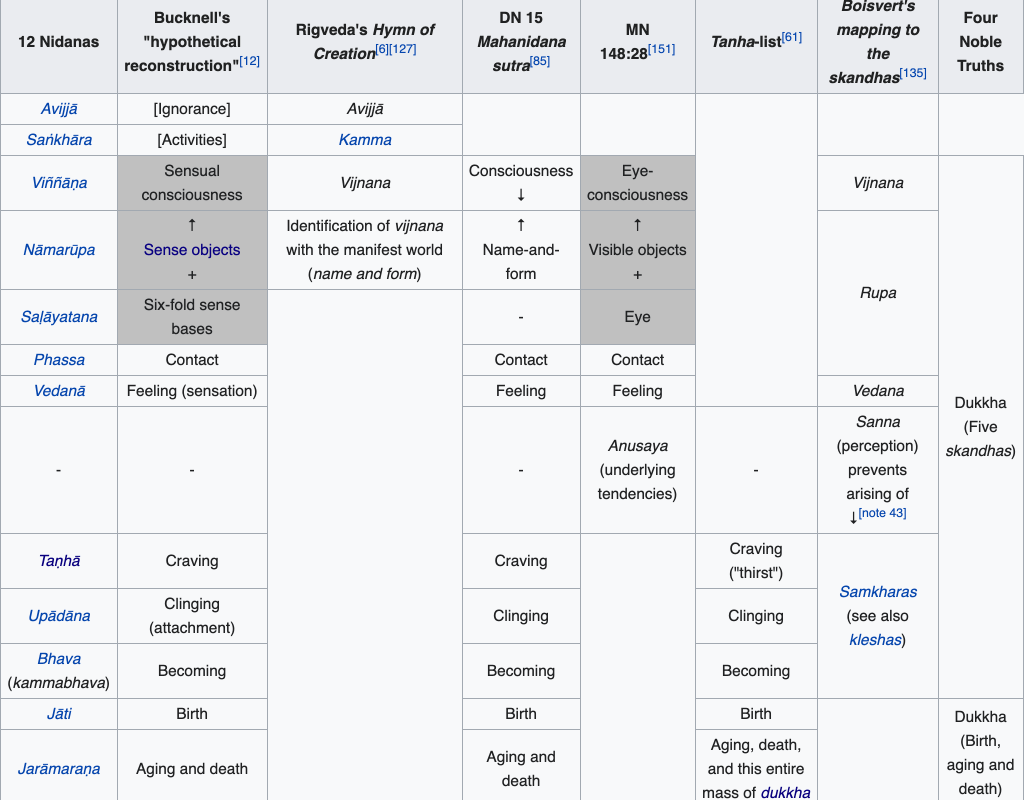
- Transcendental/reverse dependent origination (the opposite which I mentioned but couldn’t remember the name of)
- Skandha vs Khandha
- ‘..the correct word is kandha and NOT skandha for the five “aggregates”. The Pāli (and Sinhala) word kandha means a “pile” (as in a pile of sand) and is still used to denote a hill in Sinhala. I just look up the meaning of “skandha” in Sanskrit and it says “Hindu god of war”. This is how the true meanings of the original words have been lost due to incorporation of “sophisticated sounding” Sanskrit words with no relevance.’
- Dharma with a Big D meaning reality and dharma with a little d meaning phenomena, methodology, and the teachings of the historical Buddha
- 33 Synonyms for Nibbana
- Standalone Four Elements meditation practices
- Non-separation of the four elements
- The entire universe being within the body:
Yet it is just within this fathom-long body, with its perception & intellect, that I declare that there is the cosmos, the origination of the cosmos, the cessation of the cosmos, and the path of practice leading to the cessation of the cosmos.
from the Rohitassa Sutta
- After the Buddha’s parinibbana the precepts being the teacher and the Four Applications/Foundations of Mindfulness as dwelling place:
My second question is, when the Buddha is in the world, we Bhikshus take the Buddha as our teacher. Whom should we take as our teacher after the Buddha enters Nirvana?”The Buddha said, ” After I enter Nirvana, you Bhikshus should take the precepts as your teacher. The Pratimoksa is your great teacher. If you uphold the precepts, it will be the same as when I am in the world. You should avoid all evil and practice all good deeds.”In the beginning of the Buddha’s teaching career, there were no precepts, but as the Sangha continued to grow, complications inevitably arose. Not everyone was well-behaved. The Buddha established the precepts one by one in response to the needs of the situation. In the final compilation of the precepts, there were 250 precepts for Bhikshus, 348 precepts for Bhikshunis, ten major and forty-eight minor precepts for Bodhisattvas, ten precepts for Shramaneras (novices), and eight precepts and five precepts for laypeople. All these various categories of precepts are aimed at helping people to behave well. People who are well-behaved will be good citizens who can help others and benefit the society. Thus, the moral precepts are the basis for world peace. Therefore, Bhikshus should take the precepts as their teacher.”Now I’ll ask the third question,” continued Ananda. “When the Buddha is in the world, we dwell with the Buddha. We always live and study with the Buddha. After the Buddha enters Nirvana, with whom should the Bhikshus dwell?”
The Buddha answered, “After I enter Nirvana, all the Bhikshus should dwell in the Four Applications of Mindfulness.”
via Sutra of the Merit and Virtue of the Past Vows of Medicine Master Vaidurya Light Tathagata Commentary Part 1 Explained by the Venerable Master Hua
in 1983 at Gold Wheel Monastery in Los Angeles
- Paccekabuddha (“solitary buddha” or “a buddha on their own”)
- Various translations of dhammas (5 Hindrances, 5 Aggregates of Clinging, 6 Internal and External Sense Bases, 7 Factors of Enlightenment, 4 Noble Truths) the Fourth Foundations of Mindfulness, as:
- phenomena
- contents of mind
- objects of mind
- mental objects, etc.
- The significance of the Satipatthana Sutta now often being translated as The Discourse on the Establishing of Mindfulness instead of The Four Foundations of Mindfulness
- Turning towards knowledge of the passing away and reappearance of beings in the second watch of the night of the Buddha’s enlightenment
Behold now, bhikkhus, I exhort you: All compounded things are subject to vanish. Strive with earnestness!
The last words of the Buddha: Handa dani bhikkhave amantayami vo: Vayadhamma sankhara appamadena sampadetha.
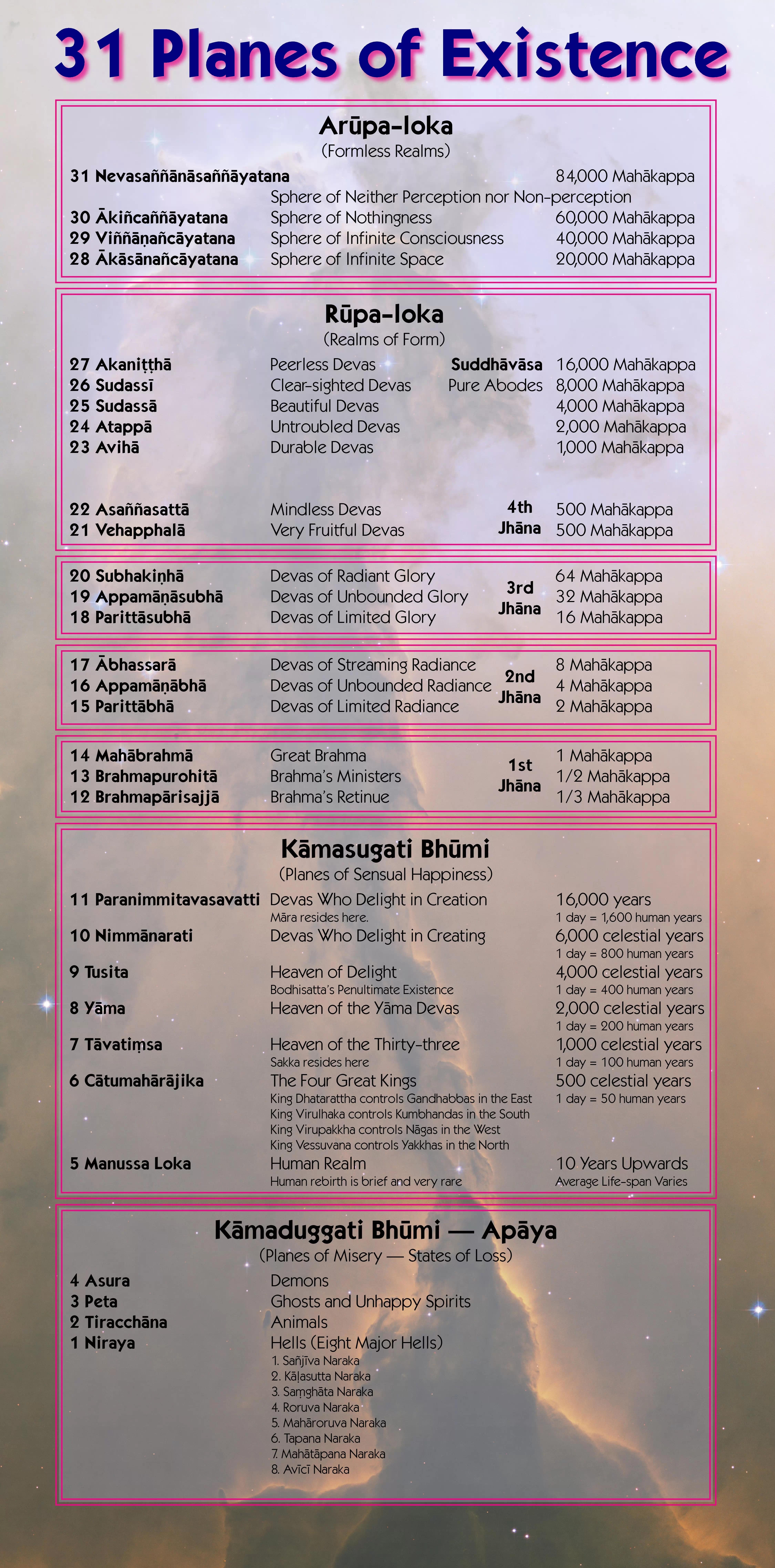
An Ajahn Punnadhammo talk on Buddhist Cosmology and a YouTube series with Ajahn Sona:
Audio: Form And Formless | (6/29/2021 — “Ask Us Anything – LIVE” With Denny K Miu)

Or listen via Insight Timer (app or website)
Currently, for a chance to experience, practice, and receive Yi Jin Jing instructions from Denny plus more mindful exercise join in free on Saturdays:
- https://dennykmiu.com/Insight-Timer
- https://dennykmiu.com/Facebook
- https://dennykmiu.com/YouTube
- https://dennykmiu.com/LinkedIn
- https://dennykmiu.com/Patreon
The raw unedited YouTube transcription of this podcast:
So, let me try it again. Good morning. Good afternoon. Good evening. Thank you for coming
to another episode of uh ask us anything AAU A and again, it’s
Josh and Denny. Hey, Danny. What’s going on? Good morning. I guess. Well, yeah, it just
turned uh noon around here. So, I guess it is technically afternoon. How’s it going?
Good. Good. Good. So, um so today, um we keep switching
formats like it doesn’t matter but we are switching locations. So, I’m not at my usual
location. I’m actually down in Los Angeles. I have to do it from the Los Angeles. I go down here. Um the uh with my parents
uh for them to use Chinese medical doctors so it might just work out Very cool. Yes.
So, you want to introduce a show and just get on with it because I know you have a deadline that you have to do.
Yeah. Yeah. So, you know, um last show, uh Denny and I, we um you know, I kind of uh we
did something a little bit different. I said, well, Denny, you pick well, first it was three topics but then we
narrowed it to one each. I said, Denny, pick a topic that we’ve never talked about on the show before and I’ll pick something that we’ve either
never talked to or rarely talked about and it’ll be something fresh because Danny and I sometimes we rehash the
same things and it was it was good. So you know um but this time I wanted to push it a little further and I said,
well, let’s talk. Let’s choose a well-known dharma topic but let’s give our own unique spin
on it or mention something that most people don’t really look at it in that way, you know,
and with the catch of, well, we’re not going to tell each other what we’re going to talk about. So that way, I was was
thinking maybe we can get a more spontaneous nature to the conversation but you know, the the old uh die hard professor
and Denny um you know uh he told me right away what it was He got pretty enthusiastic about it. I was like, Danny,
you’re not supposed to tell me but I’m like, well, this is so good. What Denny’s topic is today because it it does
warrant the presentation he put together and he he puts so much work and time and effort into this. Um so again, I’m probably
going to most likely just back out of the way here and we’ll just kind of feel out the times
when the transitions and the slides or whatever he feels it’s good for me to chime in
because I don’t really want to interrupt the flow of You know, and I might, you might see me
taking a little notes or something so I don’t interrupt the flow. So, when I have time to comment, I can. So, yeah.
So, so sometimes it’s hard to translate um languages and only
because the culture is so different. So, if you try to translate the spontaneous, it
would end up being chaotic. So, the Chinese culture doesn’t allow itself to be so
spontaneous. That’s pretty accurate too. Yeah.
Yeah, it does become chaotic, right? A lot of times. Oh yeah. so III, do like to pre plan and
and then, you know, and then try to make it spontaneous. Uh you know, as part of my planning uh today’s topic is is
something that I’ve been wanting to do for a long time actually and because and and I
think the timing is just right and the reason why I’ve been holding back um has a lot to do
with uh a students on our practice. So, you know, we
launched well, we we always had Saturday practice but we launched it on the uh uh
insight timer uh platform and it was really overwhelming in
terms of the response. Uh I mean uh Josh and I were saying that you know now finally we’re
we’re preaching to the choir. We’re actually in the community. Uh people who are uh
who have kind of uh um dedicate themselves to uh spiritual practice of yoga, meditation,
you know, chanting all that and so we’re very happy but still um it took us a couple of
months I think for us to finally have a group of students who are repeating students and this is uh uh a
very important thing for us because now that we have students at that we can practice together, we can kind
of slowly bring them along and always kind of put the carrot in front of them and say, hey, you know, this is where we’re
going. this is where we’re going. So so so it’s time I think it’s important now to for us to really talk about the
actors as something that’s beyond just uh you know, physical fitness and and talk
about it really in terms of what Josh and I uh think of a practice which is that of a
spiritual practice So that that’s on one side and the other side is that um this is
after all a UA ask us anything. So, it is um based on some uh
uh questions that come from the the students. So, one of the question that came from the
student and then it was echoed by other students which is um no we could, we could we stop
mitten and then continue because um depending on the time. So, for example, in the morning, it’s evening in in uh
in Asia and then the evening is you know, uh uh uh morning in uh in somewhere else and so on
and so on and so I didn’t say well, you know II can only commit to the first hour but I don’t want to miss the second
hour. Can I pick it up on the recording and then the other
students as well. You know what if I um I don’t have time for the whole thing and then I just
you know pick the one that really resonates with me and I’ll practice that and so the quick answer to that is yes.
yes, yes and yes. you know, definitely uh definitely um you can you can you can practice in
any sequence. You can practice it uh you know, any time so forth but having said that um
II still would like to kind of talk about the the rhymes and reasons for uh what we do. You
know, what are we trying to achieve from the beginning to the end and so um and so the topic that I picked today and
uh and I think uh Josh for uh uh indulging on. This is uh is
the idea of with there’s some some understanding of form and formless because we use that
all the time. Um is is that is it’s form and then eventually form. that’s a to a rupert and
I think it might uh if if I want to pick um I don’t want to modify that topic. It would be
formed to forms and beyond. so but for now I think I think just stick with that topic and
so um I want to, I want to just use that as a as a launch point
for you for a ride in depth discussions of the entirety of
our spiritual practice. Where are we? How do we start and where we’re trying to achieve but if we ever get there and so
uh so to do that, I want to I want to kind of review a little bit of what we have talked
about in some previous presentation and I always like to go back I always like to go
back to good old Einstein and I like this picture. I like this picture a lot. and rather than
kind of talk about what Einstein has done uh which is tremendous. um II just like to
kind of take what he have contribute and try to put that
in the context of a spiritual uh study. So, one of the things that you notice in this picture
is that Einstein hold up hold hold up a uh apparatus That’s
for the measurement of time. It’s a it’s a it’s a it’s a timer. What what is what is
interesting about this um is that You actually don’t start
with time. You actually start with space and it’s only because you have space and so
at the beginning of the universe is all about space. It’s all about um uh the the
creation of space and it’s only when you have space that they’re so useful. There’s a
there’s a useful time, right? I mean, I can talk about how long it would take for me to travel
all the way to Saint Louis to meet up with Joshua Coffey. but
if you and and I were in the same room, then we won’t be talking about that. We won’t be talking about how long it would
take for me to get to where he is. So, if if space does not exist in the universe, then
there’s no reason for time to exist in the universe. You have to go somewhere, right? And we
always said that, you know, if you’re stuck in the traffic, why worry about you know, how to be on time? you’re stuck in
the traffic. So, so the idea of of something that the universe starting with space, the
creation of space and then space appear than the necessity for time becomes. Time is a
measurement that you have a metric. then, you can measure and one of the most important
thing to measure is something called rising and fading away or fading. We need that. now.
you can actually monitor something and says, oh, it came into existence and then and
then it just kind of slowly rises in in in in some natural
phenomenon and then eventually, it would just start off if you didn’t have time then then there’s no way to to do that.
Now, once you know how how something rises and fading, then you can say, well, is there anything that won’t rise
and won’t fail. that they will always be there and then the idea of particle versus wave
become uh uh meaningful. That particle is material material has a way of rising and failing
that it comes in the existence like you take a bunch of atoms and these are carbon atoms.
They’re no different. Um they’re the same carbon atom where they eventually form a diamond or that they just form
coal Right. But in the time of the universe, they have to come together this this carbon atom
has to come together and that’s called the rising and eventually they will dissipate and that’s what they’re failing but that that phenomenon is
true for a particular class of existence that we call particle. Whereas the wave is
something that won’t do that. It’s something that we’re not dissipate. That’s that’s the difference. Now, when you say
wave, well, obviously, we talk about electromagnetic propagation. That’s what it means and now a question that
would come up and says, well, that’s not true because if if the electromagnetic radiation
comes from a star as I move away from the star we start to fade. and the answer to that is
no, you didn’t. No, it doesn’t fade. It fade in intensity because the total surface area
have increased but in terms of the amount of energy it hasn’t
now, The reason that that um
Einstein was interested in this is that he actually started out with a very different um uh
purpose in life. He was trying to argue that there was no such thing as the Aether. Now, back
in the days we when we talk about propagation, um every
propagation, every every energy uh sound wave and whatever it needs a medium, right? So, song
has to travel in air has to travel to a railroad rail but
if you have back then, some won’t propagate. So so this kind of requires a medium and
Einstein says, well, it’s different for the electromagnetic radiation.
propagation and so, this idea that our planet is we return. The plan is there are these
medium called Aether. He says, no, that couldn’t be the case. So, he actually start off by proving that there cannot be
any either and if there’s no, there’s no propagation media, it’s in the speed of light
would have to be constant and it’s because it It’s constant then that is the characteristic
of wave and everything that would be particle. That’s how how how his logic works. Now,
what’s interesting about that is that you can’t have everything in the universe being constant. So, if you make
the assumption and this assumption could very well be wrong. This is the thing about
science is that everything that we ever assume is wrong. It’s just right at the time, Right? That’s why, you know, when
Galileo came along, Newton has to correct him and when you know Einstein and then he has the correct and when Stephen
Hawkins came along, he has the correct Einstein. That’s progress. Okay, Don’t. So,
don’t assume that physics is something that is true and and forever true. Uh it’s it’s an
assumption. It’s a that I actually call it a superstition. superstition. You
know, it’s it’s something that you believe in because you can’t believe in anything else but the point is that the end
result of all that is that time cannot be absolute. you know, Um the the time uh we’re we’re
where Josh is sitting in the time that I’m sitting might actually be the same call. It may actually be the same but
there’s no reason for them. There’s no reason there’s no law governing law that says that time has to be absolute in
all corners of the universe and that is the conclusion that Einstein come to that I think
is most relevant in what we do now. So, if time is not uh uh
absolute then every corner of the universe can have different time and one of the argument
that that Einstein made is that well, that he says, that makes absolute sense because if you are uh with a beautiful girl,
then your time must be different than if you’re sitting on a hot cinder. I’ll come to that in a minute. But
if if I were to look at the universe in terms of what’s called the time dilation, it’s
relativity of time, then I can classify in terms of regions
where time is gradually comes to zero comes to stand still
and and that actually is what’s called black hole and so so the black hole has the what is
called the singularity where time comes to a standstill and material no longer exists.
There’s no there’s no possibility of material that there’s only way and then there’s another region called
the the the event horizons where you’re getting close to the black hole and and and now
the time was slowed down, right So, it’s so it turns out that
the Buddhist have been doing that for for for ages and the
Buddhist have you’re going to say, Josh, I wanted a sense of confidence. It’s okay. I might,
I might as well jump in now. you know. Yeah, please. Yeah, I should I should do that man every time. Oh, it’s okay. We’re feeling it out. Yeah,
that’s the thing though. you know, because sometimes we’ll get into a transition where it messes up the transition too.
So that’s okay. That’s okay. We’ll figure it out. So the double slit experiment and a few things the double slit
experiment you know about that right where the you probably know more how to explain it then about the particle. Going
to a wave and wave to to a particle depending on the observer effect and I thought, well, that’s interesting to
maybe factor in here and like you’re saying, yes, these are all theories that the it’s the theory of relativity, right? It
can’t really be mathematically proven or maybe I don’t, you know, I don’t this is way beyond my pay grade and also
I’ve mentioned this question before too and I was looking at Quora, you know, this uh site
on the internet that answers questions and whatnot and there is a post on it but I can’t really um pretend to understand
a lot of it but what is the speed of time? So, if we have this um you know, that this
time have a speed too and I think the reason why that might be relevant is because yeah, if
somebody’s traveling faster than another person, well then that affects uh different times
to write the classic thing if you’re traveling so fast uh you know, you can cover all this ground and come back. Well it’s
like only a small amount of time pass for the person going really fast. With the person that that wasn’t going as fast
and then they might have aged a long time. We hear this theory too. Then you get into stuff like sci-fi stuff like the
grandfather paradox but I don’t think that’s really relevant here. So, so again, so Danny about the double slit
experiment and then II don’t really know if the speed of time if that’s even relevant
either but Yeah. So, so so yeah, those those are interesting topic to explore
but let me let me try to keep it simple by just drawing the the the the parallel between
what Einstein says which is that it’s just that time is not necessary that there’s no reason for time to be absolute
that each corner of the universe can have its own time and if you rank the universe in
terms of his time, then you get to a point where um time will come to a standstill and that’s
the at the singularity of the of the black hole and that’s the that’s the place It’s just
pure wave now. There’s no particle and what what Josh said is correct in that in that
um we talk about particle wave duality as well that that go in the way of interchangeable.
Anyway, Um so in the Buddhist teaching um actually this
didn’t come from Buddha. He didn’t invent it. This is actually uh what the this is actually the yoga, the yoga
tradition. This is actually something that um that the Buddha himself had learned as you know when was a yogi that
they separate the universe in this way and so uh in this case, I used um Einstein’s
language and it says that well, if you’re uh you know, sitting on top of a hot hot center center then, you know, as far
as you’re concerned, then, you know, time, you know, just just it’s it’s it’s it’s a very very
long time and then whereas if you go to you know and you’re actually um you know be with
his hot girls and you know time will go very very fast and so so idea. is that? Is that in
this universe? has this extremes has these extremes where you know, it takes a long
long time and then it, you know, it seems like very fast and so if if we were to put
that um Now, you know, this is a solar system and obviously,
we only humans only rely on the third planet um but in that, in
that scale of time, there is a region called the human realm. This is where uh the human we
reside and then now, if I were to take the um the black hole and it just turned upside down
then at the very tip of the singularity where there’s no particle whatsoever. it’s just
pure energy then that’s probably What? Um you know what what Buddha would would would
would uh uh uh refer to as as uh as uh as uh as a liberation
or as uh enlightenment uh where you’re completely uh outside of your uh uh attachment to
material. now somewhere in here and again II will mention this because it just happens to be uh uh a big part of our uh
popular culture. I talk about this film called uh uh Interstellar and that was done
I um uh uh professors um uh who’s the professor? Professor
who’s in the middle? Who’s one of the three people that received the noble Prize. um
about 5 years ago, they actually received it for uh gravitational wave and so II
suspect after his retirement is and he was reading professor who was waiting for for his uh
Nobel Prize. You know, you can’t get a Nobel Prize until someone prove your theory so he
had to be the one that uh he and a group Scientists have to go out there to prove the existence of the gravitational
away. So, he was waiting for the result. So, he he got into filmmaking and he he made this movie called The Interstellar
where part of the part of the um uh the story was that the astronaut got stuck in this uh
um this uh uh a planet called the Planet Miller which is outside uh outside even outside
of the event horizon of the black hole but the story line was that they were supposed to
be there just very quickly and come back just explore to see if one of their you know, if they have any any any any
people there and and they were supposed to leave and and uh but because of some uh
mechanical accidents, they were stuck there for um 3 hours and so when they returned to the
spaceship, the friend who were the same age as they were when they left uh had age and in
fact had age 21 years because every hour on planet uh uh
Mueller is equivalent to 7 years in in in our uh uh now if
you work out math that that translate to be about about 150 years and so that’s corresponds
to this region. Any case, this is this is just for uh putting
the two things in in in uh in perspective here now of course um when we talk about when we
study this this this child in death, we separate into three region and last time uh when
Josh and I talk about practicing in the the desire realm that’s the lower part Uh
that’s the lower part where human is is right below what’s called the heavenly realm and
then above that have the different um different uh uh realm of heaven. Uh I’m sure
it’s not the same as the heavens uh among the the the the parts or the Catholics.
It’s just a word you use differently. Um probably one of the most famous um heavenly
realm is the one that is right on top and this is the story where Buddha had became uh a
wicked uh sitting under the Bodhi tree and his spirit had rise above you know, the human
realm reaching this this this top rim and then was
encountered by uh Mara uh who is the guardian guardian uh guardian uh for this, his job
is to prevent any um any any beings from escaping uh the the
desire. Um now of course just for completeness uh below the human. then we have the hell
the hungry ghost, the animals and something called so so this is we we mentioned this before. This is what we call it the Im
now. We talk a lot about genre too right before the show, uh Josh and I talk about
potentially inviting someone who’s experimenting with around and so um this is actually uh
about that is when we start to talk about the form ramp and about that is when we talk
about the formless ram and so one of the thing I want to do is explain what is formed and
what is formless and is you’re beyond right. So, the idea from is that this is actually called
the seven. the eight levels of Soma. So, there’s the there’s the four levels here that
coincide with the fourth and then there’s another four levels that go up in the in the
foam of a. Now, there’s another way to look at and and of course um when we say Samsara
Samsara is the constant rebirth. So when you die, uh your energy doesn’t anticipate and it becomes the the the the
the uh uh starting point of another Ent So, when we talk about that, we don’t just talk
about Samsara within the that someone could actually be practicing an elevated himself
into the upper realm. So, uh Josh, you want to say something? Yeah, it’s um a few
things you know, um well, Denny said, we have a guess maybe
that’s been experimenting with and I think maybe that might be confused with I might have we
might have talked previously either on the show or off show about how I found it was interesting to have people that
have actually uh experience realms and and you know and and
visited them and consciousness and explored because I remember if I remembering, right, Joseph Goldstein which is a pretty
popular laid teacher, his teacher, is a He said he would
that he would have people that he was training with are practicing with. They would give them assignments to go
into these realms and report back what they’ve seen. So, that’s where I kind of heard of
that. Now, the potential guests were talking about maybe having on now know if she’s done
something similar to that but I know she’s practiced the genres under a pretty famous teacher. So, um yeah. so I guess it’s
just dependent on what Denny and I ask her. Um she might have done some experience
experimenting too. We’ll we we can find that out. Uh the other thing, a few things I wanted to say was um you know, you hear
sometimes in I guess it’s Christian the seven heavens. Um so I wonder and that’s another
question I talked to Denny about to or as we chatted about is I wonder if anybody’s ever
done a comparative study with cosmology kind of inter linking them are showing parallels. I
know throughout all kinds of different ancient traditions. Um there are a lot of parallels but under different names and
whatnot. So, you know, I think it would be fascinating to be to do a or as close to as
possible. uh study uh cross comparing uh cosmology between
things and then the last thing is uh isn’t it realms. So, this
can be subdivided into ‘cuz I know there’s different hell realms to in the Buddhist
cosmology, right? Now, one of the thing I want to
add and this is this is because when we when we talk to um uh
students and teachers and so forth, people talk a lot about their experience that they thought that they are actually
experiencing something beyond and and so the question is that, you know, so where was I? know, and so so II thought this
is interesting. This is interesting. So, when we talk about the six senses um the the
the translations are interesting. So, for example, the Chinese, they use the word so when they talk about the six
senses, the six senses being the eye, the nose, the tongue, and the ear, the skin of mind.
The mind being the thinking mind because this is all the bothering uh sensors then the change is actually introduced
the word. So, it’s a sin and and with the idea that we’re now supposed to be the dormant
guarding a census but if you go back to the original language and you see how the the way it
was written in it’s it’s uh it’s actually it’s it’s set in
So first of all, set is is six. So at that. Now, what exactly is Indira is actually the name
of a diva, The Diva King who’s in this region? The divas.
Well, now because the the the the now of course among the
Chinese that that uh Diva King is known by a more common name which is called the J Emperor.
the emperor, you know, in the Chinese law is is someone who oversees you know, all of the
beings of the human beings, the animals, and and perhaps, you know, the the the the angels and whatever. So now, if you
look at the word in, then they’re basically indra is the name is the is the emperor and
indra means that all of those who are consistent with in meaning that meaning that what
we call six senses is by design limited to only to what Jay
Amor can can can can see. So, there is no possibility of us experiencing anything beyond
that. using our presence. So, anytime you have anyone who
tell you about how what they’re experiencing um just have an open mind, have an open mind
and and keep reminding yourself that as it’s written in it says that you can only go up to this
point with your your senses. Okay, interesting. and so now,
go ahead. Go ahead, Josh. Oh, and then, you know, I think the
word there’s a word to in Poly Ana and you know, not only and
I don’t know how that comes in here exactly but the injury. uh yeah, it’s like the five faculties, right? That’s
another uh that’s another um term in practice that they use injury in and that’s for a
different time but you know, I just want to point out that yes that there are five senses and it’s also known as the five
doors like Denny said 5¢ or Six Sense doors, I’m sorry. Uh some
people always you know, guarding the gates so sometimes they’re known as the gates
Sometimes they’re called is probably more accurate. Yeah, Gate is probably more accurate. Some people uh this uh six
sense spheres, some people call them and some people call him the sixth sense basis. So,
there’s all kinds of different terminology and sometimes in certain context, different words are more helpful than
others and I think it’s interesting to say Danny talks about people describing their
experiences. Of course, we know that what we try to to put language to and depict in images is not the exact Same
thing as the actual experience. We’re we’re trying to describe that experience, right? And
when you get I mean II. Yeah. Yeah. Yeah. That real quick
that Sorry. One last thing when we get into really, you know, the ultimate goal here, there
is no, there is no way to you can’t, there’s no, you can’t accurately describe it with
words. So, a lot of times you get things that just point at it, right? So, the finger pointing at the moon because
there’s no way impossibly language is totally inadequate. Images are totally inadequate
but okay. Yeah. So, thank you, Josh. So, so the thing that I want to qualify, what I said, I
might have overstated is that I don’t mean that you couldn’t experience beyond that. I just
meant that you couldn’t experience it with your body and your brain is part of your
body Now, that doesn’t mean that you can’t experience it with your mind, your mind,
Right? So, and and and just so that it’s beyond my capability
to even imagine that and so anyway, um so again, using the same chart and just kind of um
it’s just compare and uh we did it. We’re doing the review uh right now with something like that we talked about in the
past is that when you talk about that because a lot of our practice comes from the towers
and and so um one of the thing that I always want to remind people is that until Buddha
Buddha came along Buddha was a yogi who visited
This actually is much more consistent with the original intent of uh the the Taoist
teaching other than the the alchemist part because remember we talked uh we had to talk about the difference between
qigong and which is a very modern term where it’s just the original term which is called
right. So, the word in decades, it is not the same as the Tao. It’s actually just uh the the
word for the towers Interestingly, it’s written in two parts. One part is the head
and then the other one is the boat and together, it represents a path and so it’s
it’s someone who’s who’s who’s on a on a boat and so that would mean a path, a waterway.
where’s the is the same word but with the with the another word added to it called So, in
that case, the is the guiding there’s a guidance and then and then when you go to the yen is
is uh is actually the the way for enticing for for for something if you want to. Uh
one of the very famous that we use, the way that came up is that you want to you want to entice the snake to come out of
the cave and so it’s interesting to to think about those two words to to really understand that the original
Chinese other than the alchemist but they were really focused on bringing something from within. it wasn’t about.
So, when we talk about developing a chi qigong, it wasn’t Qigong is not something that is external and now you
want to practice and get more of. it’s a complete where it is already in you and now, we just
want to find a way to to guide it and to entice it to come out, right? And so so um they
their practice is about um elevating from the human realm
Okay? So, it’s always about this this is this has been the focus. It’s the focus. Uh it’s
all the meditation is So in that case, you can think of the Taoist practice as a very subset of the practice but it’s
very easy. Uh I’m a much more accessible. I mean, especially for us when we talk about and all that, it’s much more
accessible and forget for a minute that you know, it’s only focused on the the desire
realm. Now, where’s the the the yogic practice uh is is
actually beyond the uh Im and
is now into uh what’s called the form and formless ramp and
and this entire space is called Brahman and which is the name of the one of the one of the
one of the uh one of the uh Diva King and so the word yoga
yoga means um mind and body to
be one right now but it’s interesting that when you study that when what they call mine
is actually Brahman and so a purifying mind for them is the
mind of a brahman and so they actually believe that the North Indians, the the the people who
considered themselves the upper cast and they actually believe that they are descendants of Brahman the brah Brah King,
Okay And then all they’re trying to do is return to that. Yeah, go ahead And this is why
the cast is called the Brahms, right? Yeah, the ramen is the Cassie’s called the Brass. That
is is one of in Buddhism. There’s the Brahma era so it’s kind of reframed instead of some outside. We’re trying to
get to. Yes, we have these natural innate qualities that we can radiate, right? Yes.
Yes. So, so the so the primer we have is the is the house of the Brahman is the is is the
house of ramen. So, those are the four corners. So, when you, you know, when you when you go to some some rich people’s
house back in the old days, they would have different rooms where they would meet their guests separately and each one
has its own theme. you you know, if you have a scholar, they would It’s like the White
House. You know where you have the Lincoln room and all that and so, so the four rooms, the full of the problem and each
one has its own characteristics and in the middle of a lot of these houses are with vedic
architecture is the Brahmas, the Brahma. So, it’s a thing from the very center of that ties the whole room together,
right? Yeah. Yeah. So, that’s just the meeting place. So when when when Josh talk about the
uh the the Brahma of Yahara that’s that’s the that’s compassion. loving kindness,
empathy, and that represents the full corner of the the house of Brahman. Um now, so
it’s it’s important to keep in mind that the historical Buddha was a yogi and has always been
and in fact, you know, in his in his 7 years as a wandering um uh uh Yogi, he was able to
we talk about this in the past that he was able to find two very good teacher and taught him so that he actually reached
the the uppermost of the the the the eight levels of so and
yet he was not satisfied. He was not satisfied that even when you read the uh Aruba uh
uh realm the the formless realm that you’re still completely.
liberated and so eventually, he came up with his teaching which is a Buddhist teaching that
allow him to escape not only the desire and not only the
form ramp but also the formless ramp and with that, he has completely removed it himself
from what is called Samsara, right? So, that’s the difference between the Buddhist, the yogic teaching,
and the downward Now, of course, we’re sitting way down here and we’re looking up and
so anything I can get my hands on to to elevate me to get me uh uh uh uh a better status as
I would do it and so that’s why you would see that uh uh going back to our practice now, you know, whether or not we can do
this in piecemeal or or whether or not we can do that you know, in disjointed matter and the
answer is yes because we’re so far away from like my master would tell me it’s okay. you’re still very far from Havana So,
at this moment, it’s okay. You know, just just do whatever you do. Whatever helps you. Yeah.
Yeah. And Danny, you can’t buy this at Costco either, Right? And you can’t find this at Costco. You can’t get this
discount on it. You can’t get this discount on volume. Okay. Okay. So, so just that’s why that’s why our practice have so
many different elements to it because it’s just it’s a very pragmatic way of of elevating
ourselves. So, part of it is the Taoist, you know, the twelve, the twelve energy line
is very dos. uh the the energy point is do but yet we do a
little bit of yoga, a little bit of yoga in the traditional sense, right? And there’s a big
part of us are uh that are rooted in the Buddhist teaching, okay? And you know,
when I came across this um this saying, you know, well, it’s I
think it’s a reading in the suits where somebody ask, you know, like, well, what happens after uh enlightenment realized
will I exist won’t I exist? Will I both exist and not
exist? Or will I neither exist nor not exist? and the answer
was given was none of that even applies. no. It’s it’s it’s
beyond our comprehension, you know, because some people will get, you know, scared that they, you know, life will go on
forever and ever and ever. So, they are the opposite. You know, the other extreme of annihilation like there’ll be
nothing. So, those things don’t we can’t really fathom or comprehend Those things don’t even apply to the ultimate
goal, right? Thank you for that, Josh. because back to my first line about Einstein and
his idea, you know, how he came to this idea of relatively time. I said that the the the
starting point is space existence is space Existence is
separation. So again, if there’s no separation between Josh and I that we are one of
the same, then no There’s no distinction between our existence, right. So, if
there’s no separation between Josh and I There’s no separation between and the rest of the universe, then we don’t
exist in that sense. That’s right. But it’s not non existence either because that
doesn’t really apply either. You know, when we can’t really fathom anything without space and and time. Uh you know, most
of us can’t, there’s no way to really fathom or comprehend when when that’s taken out of the equation, the entire maybe
the maybe the next slide would have a bit just a little bit. So, so the question now is what is for what is right? because
the title of the talk is form and formless. So, so so like the rum and the Aruba. So,
every time you see AA is the opposite, right? So, so the so the definition of is form, it’s
material form. Okay. Now, I just want to list some examples of how that word is used and
this hopefully will come back to to what uh Josh is talks about. So, one of the one of
the most common way of the Us of Aruba is to get with the
word called Gaia and Gaia means body and so when we talk about
the four foundations of mindfulness, the first foundation is the mindfulness
of the body but actually body is gaia. It’s not just the body but everything that is
physical. ball. So, so when we use the the word, the phrase it has a it has a uh a very
important original meaning and it has to do with uh Buddha and
so when Buddha So, so you follow up the train of thought
here. So, when Buddha became a wicked, he no longer exists. no
longer exists in the sense that that that he no longer has a boundary to his assistance that
he’s one of all uh together, right? But in order for him to
actually give benefits to the beings he has to attain some
kind of form Okay. It’s not different from now. I’ll I’ll I’ll I’m sure I’ll step on some
toes. We’re saying that but what you know, think about the word incarnate, You know, Jesus was incarnate. I mean, this was
in the Bible. So, you know, Jesus was the son of god and in order for him to help us he
that he has to incarnate into his body. That’s why he, you know, he had it had to be a
virgin birth, right? So, so the idea of the word, the word uh
originally used it is when Buddha had a different body,
what he had was called Amaya which is a which
the scanners. then rubber represents the first one which is which is everything. So, so
so for example, um earlier, I talked about you know, how you’re six senses, you know, is
is in is called in and you cannot experience um anything
beyond uh the emperor and I’m talking about Uber. I’m talking about just the physical form
that you cannot experience and so beyond the beyond the physical form then the rest of
the mind. Mindful of the are come after the the after the
form, you have the sensation. Uh we talk a a little bit about that sensation perception, uh
volition and then consciousness The other four has to do with mind. pure mind not thinking
mind where’s the first part? The in this case, it’s called Rudra or is the the the
totality of everything was physical. So it’s not just about a body that I don’t the
ear and the skin and our thinking brain but which is the
physiology but also the physics, the sound that comes
through the sight that comes to your eye, the smell, the taste, and all that. So, all of that
together is is called Rua. So, in that case, form represents everything that’s physical
around us. Now, there’s another way. Go ahead, Josh. Oh, sure.
The um you know, one other translation I’ve heard of Rua is material so and then Nampa
which we’ll get to uh mentality material but we’ll get back to that or we’ll get to that.
that’s the other That’s very good. That’s very good. Yeah. Yeah. Um because it’s yeah it’s
a it’s a subtle distinction but now Denny’s just pronunciation here um with uh uh I thought it
was interesting. It sounds more like to me like Gaia which some people will actually call the name of the earth which I
thought was really interesting. Now, I’ve heard this pronounced with more with AK Uma like Dharma It’s very similar with
the K but so and then the other one That’s correct. Yeah. Is it
might be and then uh and uh the the the the cons so II don’t
know for sure that there might be some um distinctions but just for the um for the audio
only people the US KA YA with the um with the mark above the
A um and then uh the cons are scans are
KH. ANDHA. Um Denny’s and then the thing, the thing with Nirvana though, you know, about
taking a human form. So, I guess if I’m getting this right and the Tabata tradition, there’s a nirvana but then
there’s Nana. So, when the actual physical form passes away, right? then, it’s
considered para. So, I think that’s how a Tabata deals with it. Yeah and so I guess in the
maha, it’s considered a Dharma so it’s a it’s a it’s a different type of body So, I’m not too familiar with with um
with the maha way to do it either but yeah. so it’s it’s
there’s there’s subtle distinctions but they’re they’re both um I’ve I’ve I find them both helpful. So, the
more information I have on this is the better for me so. Yeah. Yeah. So in that way in one
last point um in a way that the word uh here is as as Josh had
mentioned already that it’s another terminology called Nampa and in this case, um some
people would just translate that into name and form nomas name and form but actually II
like uh Josh um uh bringing up the idea between material
versus what’s the mentality, you know, mentality. Yeah. So this is very important. So, so
so this this phrase Nampa appear in the twelve of interdependent origination
starting with ignorance going to uh Sankara which is which is
uh mental going to consciousness and then finally uh the Nampa and so actually
Nampa uh in that case, um is really the the most
encompassing term for mine with the idea that within mind there is the pure mind and then
there’s the thinking mind and so if you say well isn’t a
brain part of our mind and my argument to that is yes but it’s a thinking part of the
mind it materialistic part material, part of the mind whereas when we about the mind
as in the remaining of the four scandals, the perception the
the the the sensation perception, um volition and consciousness that would be the
um the spirituality or what what Josh said is the is the is
the mentality part of the mind. Okay. And just a quick point, this is actually very important
that when you try to understand the twelve links in uh uh uh uh interdependence that things
starts with ignorance. Ignorance is actually our karma. That’s a seed from a coma. So, so when you when
someone goes out and murder someone, you know, doing mass murder or whatever. Um it’s not
because he started with external factors like I happen to look Chinese and he hated me. No, because the hate comes
from within that he had his karma is full of hate and there was a seed and the question is
when does that become real? Not real as in uh uh reimagining but where he’s become
actionable but the important thing is that is that it all starts with it. ignorance seed
and from that, the next step is called the the um uh uh volition where that seed
becomes consciousness becomes something that he he wants to exercise now, then it goes to the next one, the next one of
the chain which is Nampa. That’s our mind. That is a mind that that that it it goes from
the the the mentality mind and actually realize itself in the
mind your brain that’s when he out and they try to locate the people and the gun and so forth
and so so III like the word Nampa because it represents the combination of a mind, both the
physical mind and uh uh spirituality mind or what’s called the material
materialistic part and the spiritual part. Yeah. Go ahead Josh. Yeah it’s um you know,
this is reminded me I want to say at the beginning that this the understandings we’re talking about here realized
that you know um any kind of kind of understanding we think you can from these talks and whatnot. That’s pretty much
kind of a hearsay um because what we ultimately want to do, we want to see and know this
for ourselves, right? And this can be what we’re doing here at Great Aid but just you know, keep that in the back of the
mind that this is all just things for you to check out for your own experience. It’s not to be believed. It’s to be put
in the practice and try it and see if it you know, to to know and see for yourself um and
then you know the the Buddha is one of the unique things he is set to offer was uh the uh the
um codependent arising or interdependent dependent origination. There’s there’s a
few other terms uh translations for it as well. One of the unique things about this is um
yeah, why it’s what what we often think of it starting in ignorance and going in one direction all the time. realize
that we can wake up on uh kind of any well not any but uh
various parts of the twelve links and so when we when we actually have our experience
where we we realize that oh this link is now in play well then that’s of our starting
point temporarily, right? We use ignorance because that’s when we teach it or when it’s being taught, That’s the best
starting point but it is a wheel, right? So, it’s not like a linear thing either. It just keeps going around and around
and around and then, there’s also the opposite of the the what is it? What maybe Danny
can help me out. The um the I don’t even know what it’s called but they they like the the wholesome part like not the
the the cycle but you know I’m blanking on this um but it’s not talked about as much as
kind of more like the liberating wheel instead of like the um but I don’t know.
Maybe I’ll make a note to see if I can find what I’m talking about. Okay, I can’t even
remember it. Yeah. So back to the chart that I showed earlier uh about the three rounds. So,
so the practice is really about moving from the the desire to
ramp and then ultimately to the formless ramp but what’s interesting is that Buddha wants to go beyond that. So,
the question then is that what is he trying to go beyond to right Now, I’m going to bring
up this other concept and uh it’s not talk about as
much in the western culture as it is in the the Chinese Chinese culture is all about
this word. and so so I just want to say that Rua is a little bit uh form is very
different from the and so I see translation of the meta as a
sign uh a sign uh let me jump in a quick Yeti with the
pronunciation. I’ve heard it pronounced Nita. Some people pronounce it. So, either way,
just so we know what we’re talking about. So, Nita Nita is a sign but rather than trying
to figure out whether that is is the correct translation or not because the word is most
commonly talk about in the in the time in the time and now
that’s one of the translation for the Diamond Sutra
earlier which is about existence. So, think about this. So, you wake up you’re
lying in bed, you slept, you slept all night and you wake up. What’s the first thing you
do? You know, you just figure it out. If you exist or not, you figured out what, you know,
where, where, where am I? Where do I, I, where do I sleep? Sometimes you wake up, you don’t know where where you were, you know, so so so that
is the notion of self. you’re trying to find your own existence. So, that’s a notion
of self. Now, if you’re a Buddha, we cannot, he doesn’t even care what he would so, right. now, the idea of humans
is that is that, you know, like Josh and I are both humans as opposed to, you know, our pets
which is not humans, right? And so, the idea that humans belong a class to yourself. That’s
that’s a very interesting notion. The idea is that besides humans, there are different beings. Some of them
are things that we can embrace like the pets, the animals, and some of them we might not want
to embrace like the hungry ghosts or whatever. Right. And if I the idea that that there is a limit or unlimited time
span for existence. Now, what’s interesting is that they all belong to this idea of time and
space and so so when when Buddha talk about being
enlightened, he’s really talking about the the the opposite which is called or a
sinus. Okay. Now, it is it gets very complicated but the point is that when you’re finally
freeing yourself not only of your desire, not only form. not
only of your focus because even then you haven’t achieved indictment, you’re still stuck
in the three real, you know, forever uh uh reaper and what Buddha basically says is that
in order to once you escape that you are beyond space and
time you are now at the singularity of the black hole
That’s enlightenment. Now, is this important? I want to, I
want to, I want to hang on. Hang on, Josh. I want to. The reason I mentioned that is not to cause any more confusion but
to say that that that is a purpose of our of our spiritual
practice. Sorry, Josh, go ahead, please. No. yeah. it’s it’s really it’s really important and and I’m glad
brought this out because I’m not familiar with this. The the the context I know Nita and is
the practicing the genres. Um so it’s completely different from I’m pretty sure it’s the
same way. Maybe I’m mistaking something here but there’s no, I think you’re correct. I think
you’re correct. They are. They are. They are. It’s just, it’s a question of you know, if the question is that are they the
same train? The answer is yes, they’re the same train. They just have different stops Uh that might be it because in and
um you know, John of practice, some people talk about seeing this the sign or this this
light and it’s supposed to be incorporated into uh some to practice when you’re doing this
practices to go through the Jana’s but you know, I’m not experienced or qualified enough
to talk about this other than to say no. I know when we uh some people who practice Jana
as an absorption practices and somewhat to practice, they have a very kind of like um You
know, there there’s particular around Ennis or not or how to
use the Nita and practice how not, you know, so there’s all these different variations and
whatnot and you know, a side note here, I recently found it fascinating. That’s one of the teachers that I know in real
life. She’s said she’s been working for a while on all these different types of
practices to do to get into John Estates and how many different versions there are. Again, if I’m remembering that
correctly. Um maybe more information to come when that’s available to release publicly
but yeah, as far as this goes, Denny, this is the breaking down these notions, you know,
of existence. It’s a very helpful uh self, you know, you know, more specifically into
delineated between humans and different types of beings and then course our lifespan because you know, some of these
higher realms they said to have so long of lifespan, right? I mean, compared to ours Yeah. Or
vice versa. You know, our life is so much longer than you know, some of the lower lower
species, you know, Right. That’s right. It’s relative and it depends on your your perspective and viewpoint or what being you are and what
you’re looking at, right? Yeah. Yeah. Yeah. Okay. So, so now, um I uh you know, it took an
hour to kind of lay lay down to the background and to review. So now I want to get into the
practice itself and and the The practice starts with
understanding of understanding of a material form and so
there, I remember I talk about the Rupert scanner is something that combines both the
physiology with the physics and so the question is, you know, how how are the two related and
I like this chart. Uh hang on just one second. This is a good one but um so like this one
first, sorry I did it uh sequence so so we talk. so this is another way classify the
physics classified the the external. So, so that we we call this the four elements.
the four elements and then and then and then there’s another way to classify it which is the
the the the sight, the sound, the smell, the the taste, and the touch and it’s corresponding. uh store. So,
sight would be the eye. The sound would be the the ear and the smell with the nose and the
taste of its tongue and it touches the skin is the body. So, this particular way of
explaining. I like a lot and it came from a uh a monk in Hong Kong. Actually, it’s actually one of my grand master Uh uh so
so it basically says that what is earth, you know, rather than trying to argue or earth means
you know, dirt. No, no, no. Earth is something very simple. Earth is something you can see you can smell, you can taste,
and you can touch If you could do all four, that’s Earth
Element. Now, if it’s something that you can see, you can
taste, you can touch but you can smell that is called the water element. if it’s
something that you can see and you can touch but you can smell or taste. that is called the
fire element. but if it’s something that you cannot see, you cannot smell, you cannot
taste but you can touch. That’s called a wooden element. So, when element is not just
airflow, it’s actually uh all your all your nerves. Ness. if
you feel anything. So, if you feel pain for example, then it’s a combination of the wind and the earth element okay?
Now, the reason I want to do that and and and uh let me come
back to this slide. This is actually a very important slide
there over the years that I’ve been attending for you, he has said things that it just, it
just, it’s just profound to me and and it’s something that I would just record in my brain
and then it just resurface itself every once in a while and I will keep going back to try to gain more appreciation
than more understanding. the first thing he said which is only uh which he has only said in English for some reason and
time. she said it in Chinese and he translated in English. So, this is something that he said only in English and he
says, there is no mind and I’m being a mechanical engineering
professor. I said, well, that’s what I used to say that there’s no gravity and message you and
says, there’s only the effect of mine because there’s only the effect of gravity. In other
words, you’re being AAA uh a being in the desire realm You
should not think that you can actually experience my You can
only experience the effect of mine That’s one. The other one
he said in English and he said that they actually come from us to the and many times when
Jewish said that they’re coming from the uh I can never find them. I can never find them. I
don’t know if you heard it directly from himself. maybe but I can’t find him. So, this
is one thing that he said that I can’t find and he says no, I’m I’m I’m very limited in
what I what I know but I’m just kidding. So he says if I translated and II. never seen this translate in English and
it basically says that if there’s one
Okay. Now, I did. I spell. Now, notice I used lowercase D as
opposed to capital case. So, there’s three definitions for Dharma. One, one is mental.
activity, you know, so because when you talk about the eye, the nose, the ear, the tongue,
the skin, and the mind and then the corresponding physics is
the site the smell, the taste, the sound, to the touch and the
time. Okay. So, so in that case, little A just means all
the mental phenomenon, all the stuff that goes on, all the electricity that goes on into your brain. There’s a
definition of the uh which is methodology, Okay And then
finally, the most important definition for Dama with a capital D is to the truth of
the universe. So, here II just want to make sure that because it it comes from the Chinese
word right here. So, I’m going to translate it directly into Dharma. So, basically, it says,
if there’s one method which can direct allow you to reach
nirvana. It would be the mindfulness of body Now,
because the word for mindfulness of body is gaia. is
mindfulness. Gaia is the body, the remember? So, so this is so basically what master says is
that if there’s one method that will allow you to reach nirvana
that would be the mindfulness of body and now keep in mind that that when he used the word uh nirvana in the context of
the tower of a study which is that when you reach a hardship,
you already escaped. Uh Samara then that’s the first stage of Havana. something that just
mentioned earlier but whereas the Ma uh the Chinese not
stating that you have to reach Buddha, you know, to be called Havana. Okay, so there’s a
slight difference there. Now, this is this is a good good piece of information here. It’s the point is that what we’re
doing is all about the mindfulness of body and so what I’m about to explain is my
understanding of master’s teaching on how we can go from A to Z. How we can start with
breathing exercises and joint exercise and eventually become enlightened, okay? Because
here, what it says is that if there’s one method that will allow you to go from A to Z all
the way to Nirvana, it would be the mindfulness of body. right? So, I heard that and I I’m
saying I gotta figure this figure this one out. So, this is actually pretext for this
presentation is I’m trying to report to you that I think I have figured out but I know
it’s 100% True. Okay. So, so I’ll start with this chart now. Okay, go ahead. Well, Debbie, I
can give you some verification on that too by the way. Go ahead, please. It’s like, well,
real quickly, what was the first, the thing for uh Dharma? I have methodology in reality
reality but was the first interpretation you have of it? Uh mental phenomenon. A Okay.
Um do you want to back up Just one quick? Yeah. Um so yeah,
you know, um the the thing about there is no mind. I’ll just start at the top, you
know. That’s right. Because how can you actually prove it? We can’t sense it using our other
five senses. There’s really no way to sense the mind. so we can’t really prove that a mind
really exists right directly with our senses. So. yes. What we can see the effects of it.
Um you know, the other with dharma. Uh I think in a different tradition, it’s it’s
called they usually say, well, there’s a dharma. That means the teachings of the Buddha and then there’s the Dharma. That
means, you know, reality truth of the way things actually are um and as far as reaching
Nirvana directly from what I remember in the Sus that’s uh the the the Buddha said that um
the whole universe is within this Fathom long body and the fathom this course in ancient
you’re an older of measurement, right? And um I don’t want to say I heard somebody say once
that you know that um maybe um that after the Buddha died, somebody asked Ananda, who
would be our teacher now and I thought one person said the interpretation was that well,
mindfulness of the body will be our teacher now but now don’t hold me to that. I don’t know if that’s 100%. Correct. It’s
it’s actually uh yeah that’s that’s that’s a very famous saying. He said Selah is a
teacher Uh discipline is a teacher and mindfulness is a foundation. So, there was there
was uh yeah. So, he actually asked it was uh it was uh who is his intent? What’s his name?
Um
um uh uh a nightmare and um so he’s 40 years old and he was crying that baby and so one of
the elders says, why are you crying? Why don’t you, you know, make use of time and as the Buddha, some important
questions. So, he asked him four questions and the first one was that teacher when you passed away who is a teacher?
and the answer is that is that discipline. You know, the the precepts the the that would be
your teacher. The second question is that um when you passed away, you know, who is
our anchor
It’s distinguished between the as in Buddhist teachings. is
which is a record of uh the Buddhist teaching because is
just a is a is a is a documentation, Okay, where’s the, you know, so if you didn’t
hear it from Buddha himself, then you couldn’t say for sure that the is Dharma. Okay. And
even if you heard it directly from uh Buddha himself, you have to accept the possibility
that because you’re limited understanding that what you heard is not but the important
thing is that what Buddha said is okay. and it’s important to
understand that that uh methodology is is so what
Buddha said is is the and the mental phenomenon is Dama and the truth of the universe is
also Dama and the reason that the three Dharma is because for Buddha is one of the same Very
cool. I see like I’ve I haven’t heard of it out this mental phenomena is the truth. His truth is what he said and what
he said is, you know, and go on and on and on. So, that’s all three Ama right? They are at
that point. they all inter weave. Yes. So, yeah. Very cool. Okay. So, so continue
Josh, you know something else I was just going to go. You got it right now? No, I’m just going to put this on to the
next slide too and uh wanted to point out when we do experience you know um that the census
obviously there’s the sense organ so there has to be an organ for us to So, there has
to be an object and then there’s the consciousness between there’s the uh just the
the eye, the physical eye, the object that’s being looked at in the eye consciousness. So, there’s there’s those six
consciousness as we’ve talked about the other ones but now, Diddy is going to relate them again to the elements which I
find fascinating and I’m glad he’s so because because you
know what to understand uh Master’s Jewish teaching is you must understand the four elements because his his his
mindfulness of the body technique is all about contemplation. It always starts
with contemplating the four elements. okay? So, it’s easy
to say that the four element is the earth, the water, the wind, and the fire but you know, you
must have a definition of what they are. You know, you can’t just say earth means dirt. That’s not, that’s not going to
work, right? So, so I like this. I like this interpretation and I’m going to stick to it which is this is
is. Yeah. Earth is what you can see what you can smell, what you can taste, and what you can touch. This is in touch. Yeah.
Yeah. This is like a great verification, you know, and I was going to ask you too if you know of any specific four
elements practice because I’m working on some uh I’ve been collecting information for a long time to do a presentation
just on the four elements itself and the way I’ve usually heard it taught through um tabata type things is they just
they focus on like for earth element. it’s solid. Well, actually there’s there’s various ones for earth but it’s
solid like the bones. Um there’s other ones too but I’ll skip Water is like fluidity.
Cohesiveness. and fire is just temperature. and wind is
movement and now there’s people that give slight variations on that but that’s experienced in
the body and the same type of element that’s within the body is pretty much more or less the
same thing as the the elements without outside the body too. So, um there’s you know, do you
do you know so many like specific for ailment There’s many different interpretation.
There’s so many. There’s so many. Well, I mean for it’s so I usually, I usually, you know,
I just say, here’s my definition. and you know, and I like it and so, I’ve used it
and if you haven’t gotten to rotation, that’s I’m okay with that too and but I think 111
thing we’re mentioning is that you don’t actually experience. it’s very rare that you would
experience one of those by itself. It’s always a combination. Okay, that’s it.
that in mind. Yeah. Yeah. Keep your eyes now. Let’s go on. Well, hang on. Just real quick.
The you know, practicing and I don’t know if Denny’s ever done specific for a practices but.
that’s right. You know, they can’t be held in isolation. I think some people do for
practice sake, try to, you know, break them down individually but that’s only for an experience, you know, to
to try to experience but yeah they can’t really be separated from themselves, Right. They can’t exist in isolation.
without the others, correct? Correct. Alright. Okay. So, so, so now, I want to talk about my
understanding of of what you have taught us and and how it
is the foundation of our Saturday practice and that is start with the four elements
okay? With understanding that there’s fire, there’s earth, there’s water, and there’s wind
and then the next thing is to talk about the full Os. and
this is one of the things that is very unique about me. I was teaching is that we don’t just
sit okay? In fact, as far as we’re concerned, there’s a five
uh postures. There’s also the exercise. Now, of course, you can mark that exercise is so light standing and walking
combined. Okay, A little bit above now, II added the word
for mighty and I never seen that word in it like that and the reason is that um the
Chinese for the four pastures doesn’t get translated. So,
there’s a there’s there’s four and then there’s sort of the uh uh uh posture maybe that’s uh
symbolism maybe and then there’s a word here that can never get translated. There’s a
word here that never gets translated and so I just go ahead and transcend is mighty and and and so so but whatever
it is, it’s important to say that it’s not just posture, it’s some kind of noble form
and the reason I believe why we we say that is because human is
the only species in the animal kingdom is capable of for So,
that’s that to me says that it would be a shame you don’t make use of it. okay? Now, what’s
interesting is that master’s teaching basically associate these four postures with the four elements. So, for example,
he’s standing is one is a posture to accentuate the fire
because fire in this case say the muscle is is that if you stand especially so so he’s
always talk about you stand like a pine tree. You know, the the the the foot are firmly on
the ground growing roots and then the rest of the body has to be flexible. So, you know,
you have to unlock your knee, let the muscle take over. So, as a result, the fire element
grows in you and then sitting is the part is the is the earth
element where you’re supported. uh in the upper body by your by
your by your um uh by yourself and then the the lower body is is so we talk about sitting as
in sitting like a bell. so your waist down is the pedestal for the bell, your spine, your body
is actually like the the on on the belt That is hang from the ceiling and so the proper way
of sitting is where you use uh essentially no uh muscle. You
just basically stack, you know, stacking on top of each other using only your structure. Now, the lying down and master talks
about that being a water element because there’s no form, there’s no shape. You
just lie there and you’re not supporting with with anyone but yet we say we lie like the like
the bow bow and arrow. So a bow looks very static but it’s full of energy and so idea that that
just because you’re lying down doesn’t mean you’re dead. You know, you doesn’t mean you’re you’re actually full and it’s
just that you don’t support your body anymore and in that case, the water is like it’s
like um um uh a nutrient. It’s like uh replenishing your body and then finally walking. Now,
remember we said that uh when is something that you can feel but you cannot touch no,
something that you can touch but you cannot you cannot. Um it only know the presence but
you cannot. You cannot see it. You cannot smell it. You cannot taste it. So, when in this case
is is much more to do with your nerve, your nerve sensing, and the way Master Teach walking is
all about the touch. It’s all about really making it, making yourself very sensitive to to
the body. Uh uh uh contact with your environment. Now, what’s interesting is that master not
only associate the posture the element but he also used them
interchangeably. by explaining how each of the element has both a positive and negative.
So, for example, he talks about the earth, You know, earth is third. It’s so so you use that
to build your house but you have too much of it, You’ll be burying it. Okay. Now, water is
what you use to irrigate your dirt. So, you add your vitality to your your dirt but you could
be drawing in it similarly. you know, um earth needs to warm because nothing else grow. Uh
you know, and there’s a little bit of warmth but you could, you know, could be incinerated
with fire and similarly with wind, you know, when its ventilation to your dirt but
you could be, you know, blown down by the wind. So, so the idea then is that you have to
understand the interoperability between the posture. So, one thing that the master says is
that don’t just wake up in the morning and sit. Alright, this is one that he’s really against
is that you come to the you come to the Yamaha, you stand
you stand because you’re not even going to wake up yet. So, you stand and you let the the fire element rise in you and he
talks about how but when you start to feel sweat, when you when you then you sit, you don’t want to overdo it and
then he talks about how for example, when you’re tired, when you’re tired, you know, at
night um and you still want to meditate, you know, when you’re tired at night, you should go to sleep but if you still want to meditate and you lie down
first and then you let your body, you know, recover yourself before you sit again, sitting is always the central
posture and you just like he talks about these these uh these things to help each
other. Similarly walking sometimes, you know, you you might have too much energy. you
might have too much energy and you get too nervous and so walking becomes a very good practice. So, so so so I like
the way he mix and match these different postures and the idea and it’s very rare. I mean,
I’ve been with him for 3 years uh before the pandemic. It’s very rare that he would ask the
students to sit more than 20 minutes He would even go as far as saying that 30 minutes is
the limit. 40 minutes. That’s crazy. An hour today, you know, that’s that is ridiculous. So,
2 days. Yes, but keep keep changing. Packing up because he talks about how if you don’t have enough fire, that that
means you don’t even have circulation in the body and blood flow and all that. Then, the best you can do would be
lazy Zen, you know, sleeping through the whole thing and if you don’t have the
concentration in your mind is wondering, then you have what is called the monkeys in, you know, none of that is good for
you, right? You need quality, not quantity Now, the next time is when he brings the concept
of the elements in the in the past into this one. Thing that he talks about which is that if
there’s one method that will lead you to it would be the mindfulness of body and so
let’s talk about mindfulness. So, in this case, there’s the four foundations of
mindfulness. So, so the the the the word for actually never
appear into okay. the is is Satan is is mindfulness and
petunia and you mentioned in one of the Emails that you know, sometimes people will call a foundation and some
people call it something else and that’s because could be also and it’s a slightly
different uh uh interpretation. One is a foundation and what the other one is more like the
the the uh the attention or something else but anyway, um
in the they never really separate into four as if you have to go from one to two to
three to four. It’s more about the four aspects of of the mindfulness and that’s the
body, the feeling, the mind and the and the
would have to be something to do with walking. Okay? And he even has stories about he
actually entered into So, while walking. Alright, so now, let’s
move on to the next slide. Josh. Well, it’s a it might be
a good time to comment now if you want to go back to the other slide. So, you know, when I first heard these teachings,
you know, it just made complete sense to me. although, I’d never heard of anywhere else, you know, the the the four main
postures are four major postures and how how they correlate, you know, fire standing. It’s just like that
energy will flow up and I know late at night sometimes if I wait too long to meditate uh
then you know um I’ll stand up because as far as I know
Nobody’s ever fallen asleep standing up before, right? You can’t uh II. Obviously, if you
want to continue practice like Denny said, you lay down and rest first but it’s it’s almost impossible to fall asleep when
you’re standing up because of the the the kind of the fire energy and then you know the the sitting on that it’s it’s
uh you need in your mind you need your thinking mind to stand your body has to you know
the body has to adjust. It’s it’s uh it’s it’s uh it’s uh it’s what we call the unstable
posture That’s right. because I have actually kind of fell asleep but I only tilt just a
little bit. Wake right back up, you know. Yeah. yeah, yeah. yeah. So, it’s it’s it’s a very good way to actually practice
mindfulness because it’s it’s half of it is already done for you. That’s right. Yes. And in
the city, you know, you just look like a mountain or a huge stone or something. you know, talk about the earth elements.
you know, it’s just stable and you know, you know, set like the bell. A bell is really
stable when it’s sitting down. right Or the side of it in water. There’s no resistance,
right? So, it’s waterfalls, the least resistance, right? So, you’re not fighting. It’s just going to, it’s just going to
completely relax and just go wherever, whenever you’re laying on conform to whatever you’re laying on for a little
while and then, when you know, the movement walking, I mean, it’s so so obvious, right? So, wind is blowing and movement
and then but this is when Denny just did this thing with the four rights. That’s uh those
are those are new to me and they make total sense as well and I’m I’m glad for that. Yeah. Yeah. Well, sometime
picked him up as he goes. Well, I mean, that’s that’s right. You know what I mean?
Absolutely. No, no. I mean, seriously, you know, like there are two kinds of teachers. Okay. There are two kinds of
teachers. I was a professor for 9 years. I can tell you for a fact that that that when we teach undergraduates, we teach
from the book Okay. And when we teach graduate student, we teach from my experience. So,
there are people who teach based on what they read and how they interpret and then there
are people who teach based on the experience and then they would go and find words
interpreted their own way. That’s right. You know, I love I love modalities. Yeah, It’s
not to be a teacher for me. Exactly. Can do both. What Denny mentioned though the the
the four foundations of mindfulness. actually, my original point was just a very minor one for the original
topic was that you know, it’s for years it was it was translated as the four foundations of mindfulness. I
know people in Tabata now are often translating as the four establishments of mindfulness.
Now, it’s a subtle distinction um because used to be for
foundations, you would, you would get a foundation and then, you would use your mindfulness from there but now,
if you frame it and if if it’s framed in terms of the establishments of mindfulness, well, then, it’s kind of like
you’re you’re only mindful of just what you’re establishing
it, right? So, there’s no, you know, that’s it. Um but I’ve also heard it as it’s like the
full corner versus the full wall You know, the four corners is the foundation but You have
to build a wall and then now you know the establishment is kind of like that. you know, how do I know if I’m doing it
right? Yeah. Yeah. I also like attending to the word attending. So, you’re, this is
how you attend with mindfulness. So, you establish or have this as a foundation then you attend in this way
with all these with this way that we’re talking about, then you attend to whatever. as well, correct? Correct.
Correct. Correct. Very good. Okay. Now III make a joke about how often uh message you’ll
say, you know, from the, you know, this is this and then I said, I can never find it. You know, I don’t know what he’s
talking about. He must have heard it directly from Buddha himself but there was one time that he did quote something
from the Nirvana. This is the last documentation of what’s what um uh Buddhist said before
he passed into Nirvana and again, I don’t have the English translation so I have to kind
of make it up myself and it basically says again using the dam all my methodology. Oh, no,
no, actually, no. This this time, the word dharma is not is
not methodology This time, Dama is a phenomenon, Okay?
Specifically in this case, it’s all mental phenomenon. Now,
it’s all of not just the physical phenomenon but the or maybe it’s uh it’s a it’s
encompasses everything all phenomenon, all phenomenon and basically it says that all
phenomenon are impermanent meaning that This phenomenon comes together when the when
the conditions is correct and then they would disappear when the condition is correct again,
alright, Condition has to come together before something happens whether it’s it’s uh
it’s it’s uh it’s it’s um so it’s basically it’s all phenomenon are impermanent All
phenomenon are phenomenon arising and fading fading away and when the rising and fading
ceases then you have reached nirvana. So this is Well,
supposedly from Buddha’s and it’s it’s it’s a very important part of the It documents what
he said, you know, in in in in in his in his final days and it’s basically that that
explains what Nirvana is Nirvana is a sensation of rising and failing now going
back to the side that we had for Einstein and if you work your way back, okay Because it
was from space to time from time to to to arising and fading. So, again, it means that when you when when time
and space, when the notion of time and space cease to exist, then you are in Nirvana Okay.
And the way to the further explain it is that you have when you have time and space,
then there’s rising and fading. Now, this is very interesting because now, we’re going to go back to master’s teaching once
again. Now, Danny would just, I was just uh weigh in real real
quick. Yeah, Thirty-two synonyms for Nirvana. So, I’ve got a post on my site If you’re
interested on that, you can maybe check that out. Um one of them is I think it’s cessation, right? Or relinquishment,
right? And the fourth foundation Mindfulness in poly is uh Dama plural and like
Denny was saying, sometimes that’s interpreted as phenomenon. Some. yeah. and some people interpret as
contents of mind. Uh the the the technical way is it’s uh it’s a list of other lists. So,
there’s a list of other lists, another one and then, you know, maybe I’ll include also in the
Poly and Terrebonne the last words of the Buddha. I think Diddy’s quote there was really helpful too. So that’s really
cool. I’m not familiar with the Nirvana soda Alright. Now, there’s a phrase. there’s a
there’s a phrase of four verses that I mean, there’s a four verses that are very very popular among them. I have
never seen it in the in the Tabata and it talks about the uh the contemplation of the
four foundations, the body, the the feeling, the mind, and the
dharma and and what each one of them uh represents and this is very very common. Uh everybody
says it. Everybody says it as if they understand it. What’s thing is that uh masters said
it completely different. Some of them are the same but very different and and so rather
than comparing the the more common versions where’s master because that will take some time and and it’s probably not
really what we want want to do. I just I just interpret what he said. Okay, translate what he
said. So basically he says the the the this is the this is the the beginning. you know, as you
begin to contemplate your body, you that the body is not solid
or not firm. As you begin to contemplate your feeling, you
realize that now that it’s important that we understand in this case is the feeling
because we in the past, we talk about sensation and perception. So, this way II for a while, I
was going to use it because it’s the Chinese word can mean both and so this I used the
word feeling because that’s a literal translation but in reality, it’s really more about
the combination of sensation and perception. In other words, if you if you are able to sense
without assigning a value to what you sent, this is what we said, Attention without
intention, then there’s there’s no, there’s no suffering. There’s no okay. So, it’s when
you feel meaning that you use both your your senses and your brain then you will end up with
suffering. Okay. Is very important. This is actually very important because when
when master and I was there when II pick up from the airport, and we started talking
and he has this revelation and the revelation was that he is not going to teach beginners
anymore. Okay. He’s going to let his student teach beginner because he doesn’t have enough time and he’s going to
concentrate on teaching, you know, advanced students and so from now on, he’s going to
focus on the contemplation of and and and and he’s going to
teach Eu because E Jing Jing is like the the five breathing
exercise to the contemplation of the body whereas you know, that when you practice the the
the contemplation of body, you have to practice the breathing exercise and when you practice the um the the the
contemplation of feeling you have to practice eating and he said he he actually said explain it and he says the
reason is that can be pleasant, unpleasant, or neither
pleasant, not pleasant. Those are the three feelings they have to do with your thinking brain and we don’t want that.
We want to go beyond that and we want to go to the kind of feeling that is really uh he
used the Chinese word that meant um uh uh I don’t want to use the word but but essentially no thinking kind of
feeling just just without perception and so so he elaborate on that but but the
point is that um that if you if you if it’s so in fact he he explained it was a which is
right You know what makes something right? What makes mindfulness, right? What makes
uh knowing right? right? Is when you’re not hindered by your, when you’re not hindered by the hindrances, no thinking,
no no, no attachment. no no no aversions, so forth, okay? So, that’s that’s what he said
about the foundation of uh feeding. Now, what’s interesting is that he changed
the mind, the mind in the in the traditional way is about no self and he changes that He
says, when you contemplate your mind, it’s about contemplating the rising and fading. So, his
his technique is really actually starting with the contemplation of the four elements to the contemplation
of the rising and and fading. In fact, he talks about not participating in your breath.
Let your body breathe on its own and observe your breath as it is just rising and fading
and and so he talks Now, the funny thing is he talks about is he says, he says, but
contemplation that doesn’t make sense. He says, I’ve never been able to contemplate Dama
because Dama is not stand alone Contemplate is embedded in the first three so II. That’s why
we talk about, you know, the no drama What’s interesting? Go
ahead, Josh. Go ahead. Oh, you know, just a few things and that’s the feeling thing. It
might if I don’t know if you can hear this in the background, My refrigerator is making strange sounds. So the feeling. that’s right because
it’s only when when we start assigning perceptions to the
sensations or the way we’re sensing with our sense organs then that’s when the possibility of Dua at least
increases, right. So, if it’s just pure sensing then there and there’s no perceptions, no
labeling of anything then it’s just like it’s Yeah and then the rising and fading We all know that on the night of the
Buddhist Enlightenment, right? Uh uh he was said to start reviewing his past lives and
then seeing the trans migration of other lives coming and going into other lives but then he
turned his mind to this rising and fading this impermanent nature and from what I’m
gathering from a terabyte, that’s actually how he started to entertain enlightenment. It’s turning his mind to the
the impermanent nature of the thing and then the dams you know that it’s it’s it’s that
too. There’s a whole list. You know, there’s a four foundation of mindfulness. 500, uh 5¢
basis. uh the you know, I’m the 6¢ basis. You know, I won’t go
through them all here. The seven factors of enlightenment. So, technically in the suit that there’s there’s like these
five different lists that that are technically and you know, to try to contemplate. Well, I
don’t know. I’ll just stop there. Yeah, yeah, yeah, yeah. We we talk about that the ways
of contemplating. Yeah, all that Now, now, this is very interesting. I actually uh I
remember uh he talks. he he said that in one of the lecture and then right after uh I uh II
got on the plane and I made a mistake of actually getting a sign seat next to his that’s never been pleasant and so
after that after that one experience, I just IIIII escaped to the back of the
cabin and I stay away from him for as long as I can until we have we have to get off the plane again so I sat next to
him and you know, he he is, you know, like when he flies, you
know, his students would buy him uh not a first-class ticket but sometimes the business class and sometimes AAAA
premier, you know, coach and like that and so if I follow him, I would be seeing this to him but he he he he completely
waste those things because he doesn’t drink, he doesn’t eat meat. He doesn’t even use the living room because he he just
he just meditate. He puts his legs up and meditate so I I’m sitting next to him and and I
said uh master you mentioned these four things and and then
I just like the next few slides is what I said. I said, isn’t that lead to this and lead to that and lead to that and he
looks at me and he turned back and he went back to his meditation and I said to that whole journey like a fool, you
know, thinking like, what did I say? What did I do? You know, what did I do? I thought I was
being so smart. So, so like half an hour later, he turns to
me and says, so, do I need to add anything more
Yeah. What you said is right. That’s exactly what I meant. Okay, so what did you say? What did I say? So, I said um Here’s
the three times or four times or the four existence. They’re
very similar. First of all, um if you want to call this the
fourth time, then it’s impermanence nirvana or three per um uh nirvana and non self.
okay? So those are the they call them the the meaning that
that if you reach Nirvana, those are the four things that you would experience those that are Dharma, those are the truth
of the our existence that you would experience. Now, it turns out that
is not self. That’s what he says. Okay. Now, what does that
mean? Oh, that back off. It means that that what the way
that master teaches the fall foundation of mindfulness the body contemplation of the body
which allows you to experience impermanence and okay and by
the contemplation of the mind experience, in the rising of fading ultimately will lead you
to nirvana and finally, the idea that when you get to the
end, Dama is no drama that their Dama is not standing alone than that means that you
experience that emptiness and non self okay? Now, what’s interesting is that correspond
to the seal is what’s called the gate of liberation. Now, the gate of Li is not three
consecutive days and the master actually explains that it’s not three consecutive days. It’s actually three gates that you
can choose. one and when you pass the gate, you liberate. you don’t need to come back and do it a second time. That would
be crazy. Okay, so, the three things that you can choose. one is called the desire one is
called the sinus and one is called the emptiness gate. So,
essentially by focusing by having everything else, culminates to this idea of
having your practice reduced to one of contemplating, rising and fading. would open up this
thing called the sinus gate. The one that has no where the notion of time and space. No
one going to exist. That’s it. That’s what I asked him if that is true on the plane and he
ain’t known me for half an hour before he returns. He says, do I need to add anything anymore?
So, what did I learn? What did I learn from all over the 3 years in the five 6 years that
I’ve I’ve been practicing on my own and with master, I think these these are the things that
I want to summarize in what I have learned and what I what I had yet to learn. Denny’s a
possible. Oh, sorry. Before you jump into the slide to comment very briefly on this um these
these uh these liberation gates are really profound. you know, um the way I understand them
are uh with it and it’s also known as the three characteristics of existence, right? Um that the seals um
It’s a flip side of it. That’s right. They’re not exactly the same. They’re not. That’s
right. Because the is when you reach liberation, the characteristics before you
reach liberation, I see, okay, It’s similar but not the same. Yeah. Gotcha. Now, the the the death or or the desire of So,
impermanence, one of the best ways I’ve heard of in it’s kind of in constancy too. So, no
matter how we try to we try to arrange external conditions in our lives to get things the way
we want but we realize that we can’t maintain those external conditions the way we want in
the long run. So, it’s not a success for happiness in the long run. That’s so what’s
this? yeah. So, this this is almost like desir. This is almost like non attachment.
That’s right. So, what I’m getting at here is when you realize that no matter what we
do on the external to try to maintain things to our liking, eventually, we can’t keep that up. It’s not. So then we when
we see that there’s less and less desire for things. Oh, I want to go do this and I what
we call the errand. That’s right. That’s what we call that. There’s no way to keep going like that. Then we we
just start desiring less and less because what’s the point of spending so much time and energy doing all that, right?
And then the the sinless, the sinless gate, you know, I’m going to pass on that too because that’s the one that I
have it that word sinless. I don’t completely fully understand that but it is yeah.
well, no that’s it’s off. Yeah But but that’s used a lot Sin that’s used a lot and then the
emptiness is just you know, there is no uh if you look at everything there especially
since everything’s impermanent, always changing, not maintainable in the long run. There’s no essence. So, because
of that, you can’t boil anything down to its essence. So, everything is basically
empty of an essence. So that’s why I always ask what’s it empty of and that’s one of the uh the translations. So,
alright. Yeah. yeah. if I may I know you’re you’re you’re running up a running up to your
your your or maybe and beyond. So, so the three. so, so think
of this, this way. This is how I understand it that um if you’re talking about nirvana, it’s just necessary Buddha but
at least you know, outside of the three Rams and you have escapes and so what are the
three ways to do that most common way and the most common way One is the Terra practice
where you try to achieve a hardship Okay, that’s crossing
the emptiness gate Okay. now II. forgot the word but you know that there’s there’s
another way of becoming Buddha. What is that call when you just like basically observing the
twelve links? That depends understanding the how the nature behave yourself. You
know what I’m talking about? I’m not sure. No. well, you know the the one where he says
that that is someone that he doesn’t even know the existence of Buddha and Buddhist teaching but somehow he figured out on his own. Oh yeah And become
enlightened. Well, yeah there’s uh well the private Buddhist too. It’s not that one though. Yeah that’s that’s it. Is that
one? Yeah Yeah they can’t they they understand but they can’t teach other people, right. all that they they experience on
their own without the people’s teaching. So, they’re just basically observe the the the
nature and he’s he’s essentially observing the impermanence of nature and become uh liberated become
emancipated. That’s a it starts with the Buddha. I think it means private Buddha, you know,
but I’m not sure. So so that’s that’s the design and the state that’s that person crosses that gate now. So the is what is a
sinus gate? Well, you know, a lot of people, they they chant a Buddha Okay. So, but most of
the people who chant a Buddha don’t know what a Buddha stands for. Anita is both Ami. I Ami.
Those are the two that actually have two names. Uh means none zero opposite, right? Is is uh
is is basically um uh uh uh beyond time and it is beyond
space So, the Buddha is actually a Buddha who’s beyond
both time and space. So, that’s that’s that is that that. So,
if you chant Buddha then and you’re successful, then you enter the non signed gate Okay.
that’s beautiful. I’m going to have to, I’m going to have to leave and I’m going to let Denny wrap this up. I apologize
for um okay. thank you, Josh it. Okay, I’ll see you soon. Yeah, we’ll be in touch soon.
So, so so make sure you watch this because there’s um there’s more to come. You know, there’s
that’s right. right. Alright. Thank you so much. Thank you so much. Yeah. Thank you. Alright.
So, he left me on my own, man. That’s dangerous. So, this is the last slices anyway, so so these are the things that I
have learned that I think is worthy of of of of summarizing and it also what I try to do
during our practice is that um um we we don’t we don’t there’s
there’s no mind. We just all we’re doing is the effect of a mind. Okay? so that’s one. The
second one is that the reason why we practice chi and again, this is this is this is unique.
The chi to the understanding of cheese is unique to the towers and the towers represents
thousands of years of Chinese culture and when that thou is
uh really experience the experiences through meditation. So that that makes that tas is
sort of a subset of the yogic practice and yoga yoga means
the union is actually the harness between the action. It’s the word for the yolk.
It’s the it’s the word for the the harness between before the actions as they put the the car
so that you synchronize them. So, the idea of the word are you? Is that you want to
achieve synchronicity or unity between your mind and your body
and the harness in this case are interpretation of the harness is the key. So, we talk
about the physical body, the body, and the mind body. So, we practice she not only for
physical health but also as a way of bringing our mind and our body together and then the
next thing is that is that uh people talk about emotional intelligence as as in saying
that we want to be a little bit more intelligent about our emotion which obviously is is
is is important but people often forget uh the other definition for the intelligence
as in Central Intelligence Agency, you need some way in your practice. It’s not theory.
It’s very practical. You need some way of understanding your emotional state and in in my
practice, in our practice, as we as we develop our breath and
uh uh to develop uh mindfulness of our breath and mind and body they become very sensitive they actually becomes very
sensitive. They are like the the canary in the mine. that as soon as your your mind wants to
wants to degenerate into the hindrances, the first thing that your body would react and
your breath will react so they become the intelligence into your emotions. So, that’s important to me. That’s what I
learned. in the Buddhist teaching, they talk about the 84 thousand which translate
into Chinese as the gates to Dharma. So, the idea is that Buddha himself have Eighty-four
in possession is in possession of Eighty-four 84 thousand methodology in achieving uh
liberation. now, now why is it 84 thousand? Actually, it’s 84 thousand because he he was a
teacher for about 45 years, right. He uh we now when he was
um thirty-nine. It took him 6 years to uh become uh uh
enlightened and then uh uh I’m sorry, twenty-nine and then it took him 6 years to become so
he’s he was in nineteen when he was 35 and then he uh uh
achieved when he was 80s. So he spent 45 years as a teacher and so if you take 45 years 365
days uh uh a year and multiply that and then multiply five which is which is um the number
of times that he he was able to teach because in the old tradition It’s not 24 hours.
It’s not even twelve. It’s it’s six different time period within a day. One of which is
used for sleeping and so he was able to at best teach five times. So, if you take 45
syringes five and five, that’s 84 thousand. So, the fact that he had 84 thousand methods just
meant that he had 84 different opportunity to teach his his uh
his his his technique to an audience and each time he it a little bit differently
depending on the audience. So, how are the 84 thousand rising and fading is my key. Okay? So,
that’s why I focus on rising and fading and fading initially as rising and fading uh in
terms of a body function like a breath and then ultimately rising and fading in terms of
our mental phenomenon one at a time. Okay, so of course I’m long long way from that and but
that’s that’s in summary in a nutshell meaning behind the
Saturday practice. Okay? So with that uh thanks. Thanks.
Thanks. A big thanks to Josh for um tolerating me for so
long and a big thanks for all of you who are watching live and and all those who will be watching uh recorded with that
I get you goodbye and I wish you joy peace, and health
 Integrating Presence