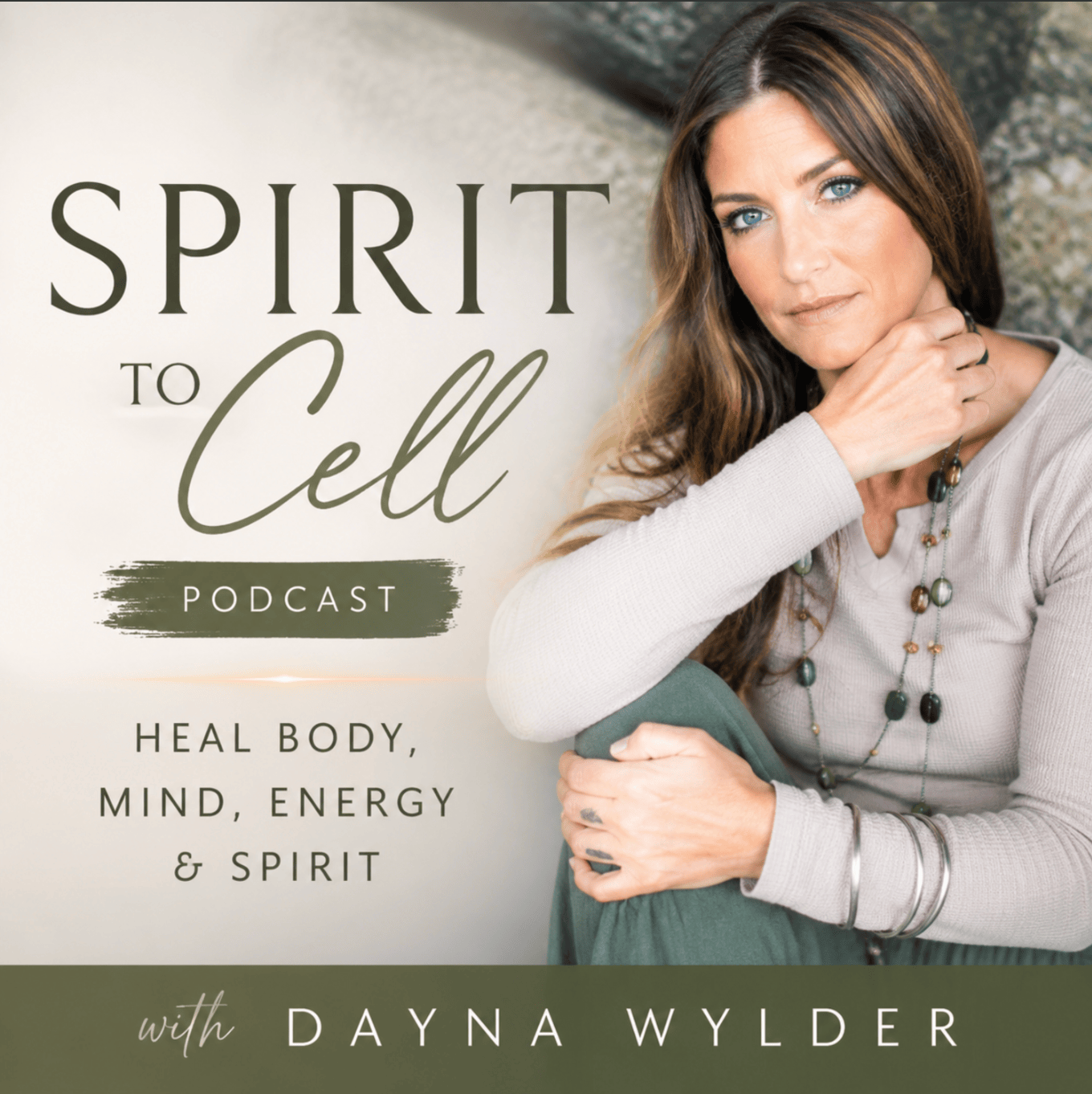
I had the great pleasure and honor to guest on Dayna Gerrard’s Spirit To Cell podcast
Be sure to check out Dayna’s full blog post for this episode for even more resources as well as Dayna’s site energyovermatter.com in general for all kinds of healing and developmental goodness
Here’s most of the description for the episode:
A conversation about meditation, inner work, nervous-system awareness, ethical living, solitude, and learning what to carry—and what to put down.
What if meditation is not really about sitting still, clearing your mind, or becoming “good” at meditation at all? What if the deeper practice is learning how to live—with more awareness, more discernment, and less reactivity?
In this episode of Spirit to Cell, Dayna Wylder sits down with Josh Dippold for a wide-ranging conversation about what can happen when meditation becomes a sustained practice rather than another item on the self-improvement checklist. Josh shares how a difficult period in his twenties led him toward meditation and eventually into a daily two-hour practice that has continued since May 2012.
Together, Dayna and Josh explore how inner work can change the way we relate to our habits, relationships, time, external stress, solitude, and even our own identities. The conversation keeps returning to a deceptively simple question: What are we carrying that we do not actually need to carry?
Episode Highlights
· Why suffering can become the doorway into a deeper practice—and why meditation often unfolds gradually rather than producing immediate results.
· How Josh’s long-term meditation practice brought greater awareness to behavior, ethical conduct, relationships, and lifestyle choices.
· The uncomfortable side of changing habits: what happens when your internal priorities change but your social environment has not.
· Why learning to be alone can become restorative rather than lonely, and how carving out even brief moments of solitude can create space to respond instead of react.
· Dayna’s insight that meditation does not have to mean sitting on a cushion: a breath between calls, a phone-free walk, or a few minutes of genuine presence can become part of everyday practice.
· The difference between productivity and presence—and the subtle trap of turning even self-care into another list of things to accomplish.
· A family dinner practice built around gratitude, hope, and asking what would be helpful before moving into complaints or problem-solving.
· The role of boundaries, discernment, and knowing when to engage with external events versus when to step back and regain perspective.
· Pratyahara, or sense restraint, and the value of intentionally reducing unnecessary stimulation so that subtler forms of awareness can become easier to notice.
· Letting go, and also noticing what we may be unnecessarily “picking up” from other people, situations, and expectations.
· Josh’s experience with extended silent retreats and “noble silence,” including what happens when ordinary social communication is removed.
· The power of language and identity: how changing the way we describe an experience can create more space between ourselves and the label we have placed on it.
The Bigger Conversation:
Meditation as a way of living
Josh describes meditation as something that began during a difficult period and gradually became the centre of his life. What started as a response to suffering evolved into years of self-examination, study, ethical reflection, and increasingly subtle attention to consciousness, emotions, and energy. One of the strongest themes in the conversation is that the practice changes as the practitioner changes.
Dayna brings a complementary perspective from yoga, hypnotherapy, and her own experience with meditation. She reflects on initially approaching meditation with the same achievement-oriented mindset she brought to everything else. Over time, she came to see yoga as much more than physical postures and to recognize the deeper role of philosophy, discipline, awareness, and meditation.
When the practice changes the practitioner
Josh talks openly about how meditation made him more aware of his own behavior and the consequences of his choices. Rather than presenting ethical practice as a set of rigid commandments, he describes it as something to experiment with and live into—while maintaining compassion for ourselves when we fall short.
That idea connects with Dayna’s observation that many changes in her own life did not arrive as forceful decisions. Some habits simply stopped feeling aligned. As greater internal space developed, she found herself listening differently to what felt supportive and what created more noise.
From productivity to presence
One of the most relatable parts of the episode is the discussion about accomplishment. Josh describes recognizing a subtle drive to constantly do, improve, complete, and achieve. Dayna shares a similar realization: even after gaining more time for healing, she initially turned self-care into a four-hour morning checklist.
Their conversation suggests a different question: What if the goal is not to fill every available moment with something productive? Sometimes the practice is creating unstructured space and allowing ourselves to simply be.
The nervous system and the everyday practice
The episode also brings meditation into ordinary life. Dayna describes using short breathing resets between work calls and creating a family dinner ritual that begins with gratitude and hope before moving into what would be helpful. Josh emphasizes the value of remembering the breath and returning to awareness, even when circumstances are busy.
The point is not perfection. It is repetition: creating enough moments of awareness that responsiveness becomes more accessible than automatic reaction.
What do we need to put down?
Later in the conversation, Josh describes letting go as one of the teachings that has become increasingly central for him. He also turns the question around: What are we picking up that we do not actually need to carry?
That distinction is especially powerful when we think about responsibility. Caring about something does not necessarily require carrying it continuously, reacting to every development, or proving that we care through constant engagement. Discernment becomes part of the practice: knowing what is ours to address, what is ours to learn from, and what we can allow to remain outside our sphere of responsibility.
Making room for intuition
The conversation eventually arrives at one of Dayna’s favourite yoga concepts: pratyahara, or sense withdrawal. For Dayna, reducing the constant stream of news and social-media stimulation became a way of creating more internal space. Josh connects this with the Buddhist idea of sense restraint and with consciously reducing unnecessary stimulation.
The deeper theme is not isolation. It is discernment. When the external noise becomes quieter, both speakers describe having more room to notice what is happening internally—and, over time, to distinguish intuition from habit, impulse, or mental noise.
The power of words and identity
Near the end of the episode, Dayna and Josh explore how language can shape identification. Josh describes the distinction between saying “I am” a particular state and recognizing that a particular experience is happening. Dayna connects this with her own awareness of the language she uses around her health experience.
The invitation is not to deny an experience. It is to notice the difference between experiencing something and making it the definition of who we are.
Frequently Asked Questions
Do I need to meditate for two hours a day to benefit from meditation?
No. Josh describes a highly committed personal practice, but both Dayna and Josh discuss accessible forms of everyday mindfulness. A single conscious breath, a short pause between activities, a phone-free walk, or a few minutes of intentional stillness can be a starting point.
What if I cannot stop my mind from thinking?
The conversation does not frame meditation as simply forcing the mind to become blank. Instead, it emphasizes noticing, returning, and developing familiarity with the internal landscape over time.
How can meditation affect everyday life?
In the episode, meditation is connected with awareness of behavior, relationships, habits, ethical choices, boundaries, productivity, and the ability to respond rather than react.
What is pratyahara?
Pratyahara is a yoga term commonly translated as sense withdrawal. In this conversation, Dayna relates it to intentionally reducing external stimulation, while Josh connects it with Buddhist ideas of sense restraint and healthy renunciation.
What does “letting go” mean in this context?
Josh describes it as examining craving, clinging, and unnecessary burdens. He also emphasizes the importance of not using “letting go” to bypass issues that genuinely need attention.
What is noble silence?
Josh describes noble silence as a retreat practice in which participants refrain from ordinary conversation except for designated interactions such as teacher interviews or group Q&As. He explains that removing ordinary social communication can reveal subtler habits of the mind.
Where can I learn more from Josh?
Josh shares two primary websites: IntegratingPresence.com for his more Buddhist-related work and Innerskilled.com for broader personal-development material. His social and video links are listed below.
Episode Description / Summary
Meditation can begin as a way to cope with suffering, but over time it can become something much bigger: a practice for how we think, choose, relate, respond, and live. In this episode of Spirit to Cell, Dayna Wylder speaks with Josh Dippold about his long-term meditation journey, ethical living, social conditioning, solitude, productivity, nervous-system awareness, pratyahara, silent retreats, letting go, and the power of language.
Josh shares why he has maintained a two-hour-a-day meditation practice since May 2012 and what changed as his practice moved from intense inner work into increasingly subtle awareness. Dayna shares her own experiences with meditation, including using it during periods of intense life pressure and recovery, and the ways she has learned to create space rather than turn every healing practice into another achievement.
This conversation is an invitation to become curious about what you are carrying, what you are feeding with your attention, and where you may be able to create more space for responsiveness, discernment, and inner wisdom.
Episode Chapters
00:00 — Introduction & Welcome
01:10 — Josh’s Origin Story with Daily Meditation
04:08 — Moving from Suffering to a Sustained Practice
07:18 — Ethical Precepts & Lifestyle Shifts
14:10 — Breaking Social Conditioning Around Habits
18:35 — Releasing Judgment & Finding Solitude
21:50 — Dayna’s Recovery, MS Journey & Shifting Meditation Styles
26:30 — Mindfulness in Chaos & Daily Life Practices
31:10 — Overcoming the Need to Always Accomplish
34:55 — Nervous System Resets & Family Dinner Rituals
38:40 — Navigating External Stress, Boundaries & Sovereignty
49:30 — The Practice of Pratyahara (Sense Restraint)
54:20 — Letting Go vs. Picking Up Burdens
59:40 — Experiences with Silent Retreats & Noble Silence
1:07:50 — The Power of Language & Detaching from Labels
1:12:40 — Where to Find Josh & Final Insights
1:17:15 — Closing Thoughts & Takeaways
About Dayna Wylder
Dayna Wylder is the founder of Energy Over Matter, host of the Spirit to Cell podcast, and author of Unlearn Dis-Ease, Relearn Well-Being: Frequency. She is an educator, speaker, podcast host, and energy-healing practitioner whose work explores the relationship between the body, energy, nervous system, awareness, and deeper patterns behind persistent symptoms.
Dayna’s work includes the Healing Continuum, a signature approach inspired by the yoga kosha model and focused on creating greater awareness across the layers of our experience.
Website: energyovermatter.com
Book: Unlearn Dis-Ease, Relearn Well-Being: Frequency — Amazon Canada
Energy Audit: Free Energy Audit
Healing Continuum Mini Course: Foundations of Practice

