
On August 23, 2023, I spoke mainly with Ajahn Punnadhammo about Buddhist cosmology and related topics. Part of the Ajahn’s comments towards the end dropped from the high quality recording, but have been patched in from a backup recording. There’s also short portions of distortion due to wind to bear with.
My pre-recording notes many of which were addressed are as follows:
Introduction
Ajhan’s knack for taking extensive, complex, profound teachings and putting them into clear, powerful, understandable and relatable ways without dumbing down
Disclaimer: I haven’t read the book but watched 10 part series and other talks
Discuss Buddhist cosmology, ideally including helpful ways not mentioned publicly before and maybe comparing and contrasting to other cosmologies especially the more esoteric and occult understandings (if appropriate and allowed)
Credit to Venerables Cittadhammo and Karunnyo (previously Anagārika Martin)
My questions grouped into two categories of 1) Structure and Background and 2) Access
Ground rules of what can and can’t be discussed with laity
Structure And Background
One can see and interpret the Buddhist cosmos on many levels but for those who dismiss as imagination then can they explain fully how imagination works and if not a request to be openminded until they know everything about imagination
Definitions for: world, world system, realm, cycle
What influences are there from Zoroastrian, Judaism and others especially the more esoteric and occult understandings (if appropriate and allowed) which are older than Buddhism?
Other than the formless realms are there measurements for the size of realms?
How do and don’t the realms overlap and/or what separates them?
The boarder or area or transition between the form and formless and the Buddha going through jhanas 1-9 then down to 1 (and out) then back up to 4 then paranibbana
Four phases of universe and how cycles end and start — what determines end by air, water or fire?
Which realms include spontaneous rebirths, also egg-born, moisture born and womb?
How does Namarupa apply to the formless realms?
How can we know about structural changes in realms like what is more likely to be similar during the time of the Buddha compared to now?
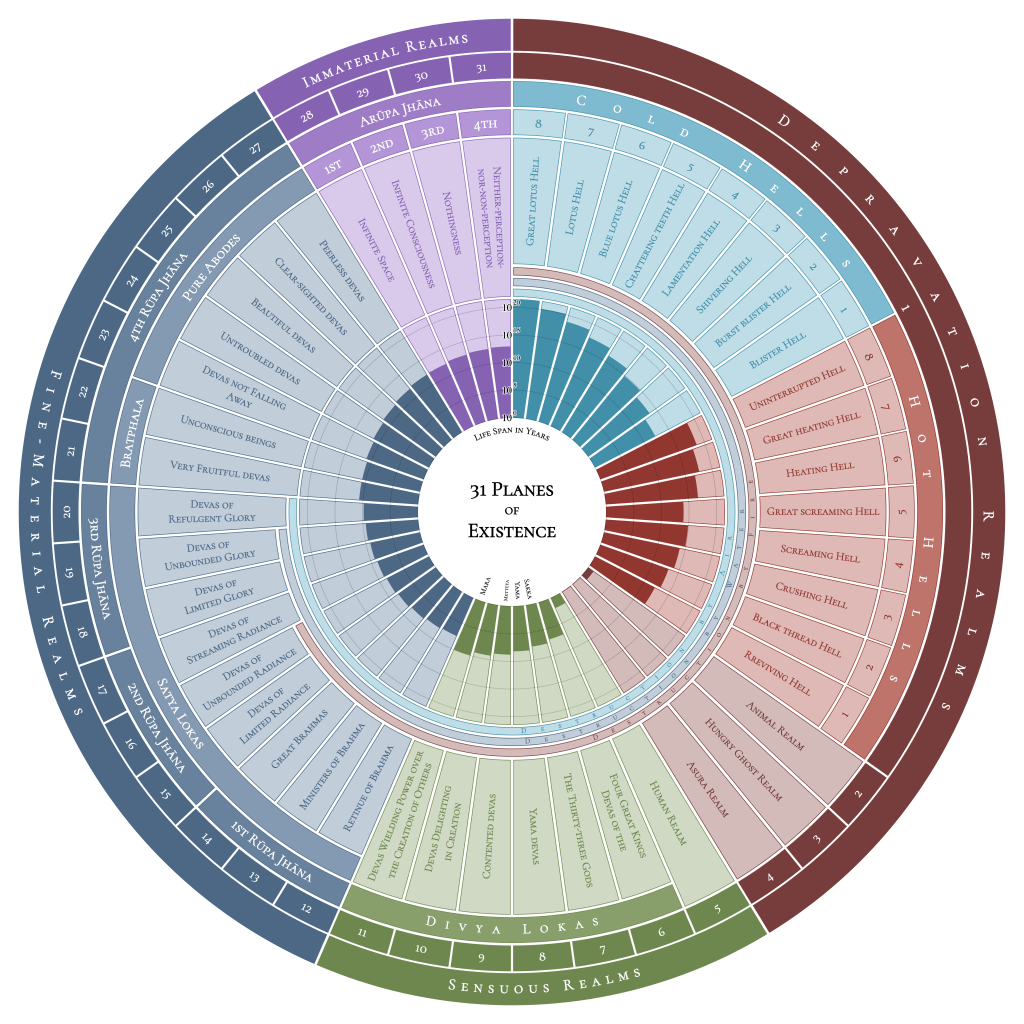
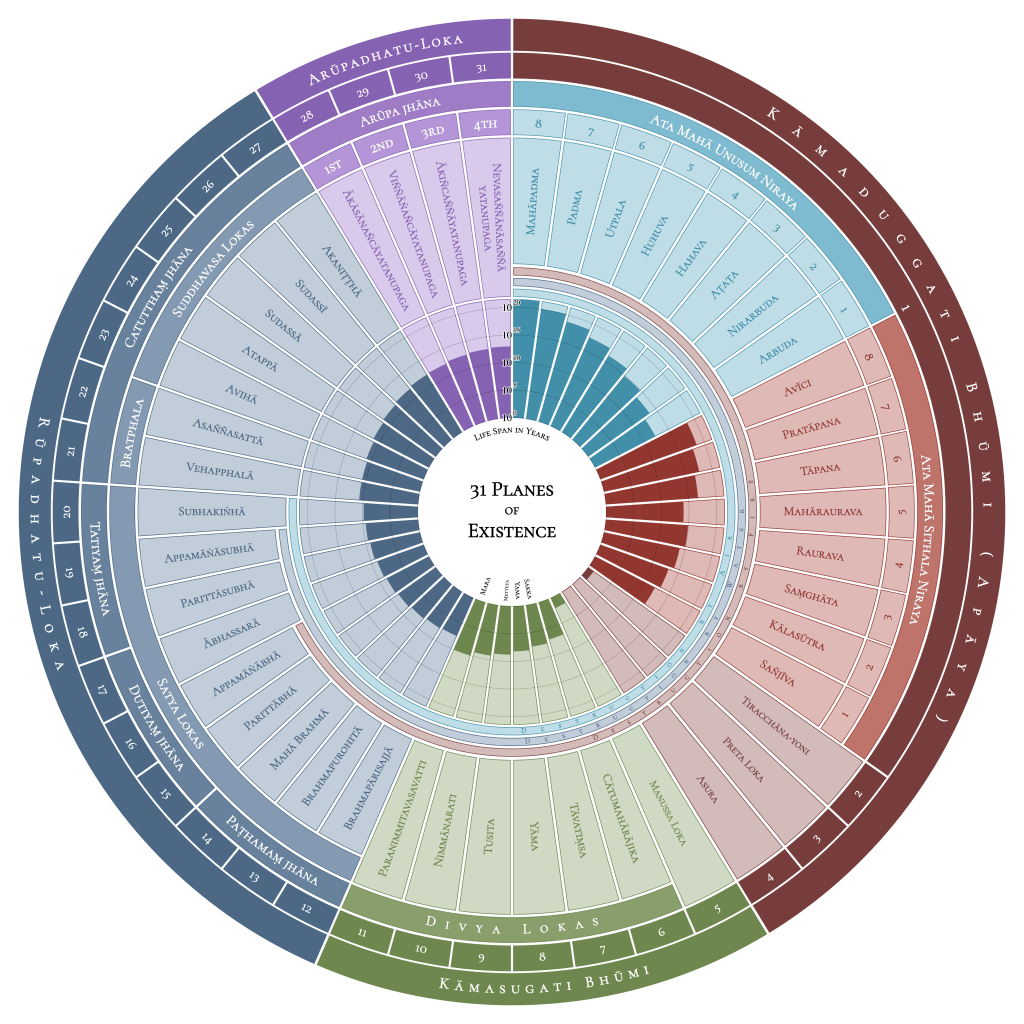
Access
Anagarika Shri Munindra reportedly gave instruction to Dipa Ma on how to access various realms. Could these instruction be given more publicly today and how might they differ between for lay and monastic?
Is a reason most can’t access some of these realms due to one lacking a body with senses in a particular realm as well as contact with sense objects there and so a human only has their mind and perception(s) to work with?
Can the being now forecasted to be the next Buddha and maybe even the being to be the Buddha after the next be visited/investigated wherever they are now?
Could such skills in perceiving realms be used to investigate timelines, controversies, gaps, inaccuracies, fallacies, and questions people have from suttas?
Consequences and advice for accessing these realms, if possible, via jhana and/or other means like drugs, dreams, trance, ritual, tech, contemplation, hallucination, imagination etc?
Questions from Buddhist Cosmology Series (we mainly did not address)
via https://integratingpresence.com/2022/10/20/dharma-questions-miscellany-part-7/
- Could Asuras under the ocean, yet not water beings, be due to being below the water table, or could they be in the astral realm (as astral is often related to “water” and/or SEE/SEAing?
- Could the Northern Continent be Venus?
- Could polarity — or again, maybe referencing the astral aka distortion planes — help explain the stark contrast of the two versions of the Northern Continent: one being a paradise, the other about yakshas taking humans from the southern continent with wrong view and making them slaves?
https://www.youtube.com/@AjahnPunnadhammo
Audio: Buddhist Cosmology Structure And Access With Ajahn Punnadhammo

Or listen via Insight Timer (app or website)
The raw unedited YouTube transcription of this podcast:
bolus welcome this is Josh defold of integrating presence and today I’ve got ajan put an ammo with me uh John how’s
it going today oh it’s going good cool so usually I I toss it back to the guest uh to do an
introduction but if the listeners will bear with me here a little bit I’d like to pay some respects
giving tribute to ajampurodama we haven’t met in in real life but the the dhama talks I’ve listened to him he he
seems at least for me has a knack for taking these extensive complex profound teachings and putting them into really
clear and Powerful understandable and relatable ways and all without dumbing anything down but today I want to speak
with him about a book he’s known for Buddhist Cosmos a comprehensive survey
of the early Buddhist world view according to teravada sources the
disclaimer here is I haven’t read the entire book uh I have listened to the 10 part series he did with Sona about this
I’ve met the the book cover designer tanabasaro I appreciate him I also
wanted to just thank uh venerables chitadamo and previously anagarka Martin
now venerable Carino spending extensive hours with me at
emravati talking about things like this and coming up with some questions too I have questions grouped mainly in the
structure and background and then access into these 31 Realms but before we get
started in this let’s lay some ground rules here because there are certain
things that can be said with the laity and certain things that can’t I know that the main one is monastics aren’t
allowed to publicly talk about attainments but what other ground rules should we lay before jumping in here
I think that’s really [Music] their teachings in terravada everything
is on the table there is a linear rule against monks
speaking about their own higher experiences so that’s not allowed we
can’t talk about this in generalities though right and yes
at all and maybe how lay practitioners might be involved with some of this so
let’s start off here without rehashing too much of the places you’ve spoke
about this before but we’re gonna have to do some so the definitions you know in Buddhist cosmology
if I’m getting this right there’s something called a world a world system and then there’s Realms and then there’s
Cycles too what needs to be kind of laid in the groundwork for people to understand this and kind of our
conversation to get in here yeah it can get very complex and there’s it’s quite
a number of layers to it I I arranged my book in in sections
space time and beings to try and separate uh out these different
different levels in terms of space the fundamental unit in the ancient
Indian cosmology which was adopted by the Buddhists
is the unit called the chakavala which is is uh generally translated World system
and I’ve used that translation myself I’ve called it the
functional but not the structural equivalent of a solar system
the it’s not a it’s not a tall like our modern understanding of the solar system
because the sun is not at the center what’s at the centers this enormous
Mountain mount sinaroo in Pali many people will be more familiar with the
Sanskrit named sumaru and this by far dominates the whole
system it’s 84 000 yojinas High which if you
convert that to Modern measurements it’s a it’s a distance greater than the
distance as we understand it of the Earth to the Moon so this is a very massive body and
the land that humans live on is it is a relatively small island
called jampoo Depot way way off in the edge of the system so we’re we’re not
anywhere near the center of of existence and these chocolates
are infinite in number no this is not the only World System their infinite number and they’re
conceived of as being spread out on a plane
a two-dimensional grid of an infinite number of Chaco
wallets it’s it’s quite different from solar system also in that I there is no
sense anywhere that uh the stars were identified as
being other real systems so it’s it’s an entirely different
physical universe in terms of time time is measured in uh
kappas Sanskrit kalpa a Kappa is a very long
period of time immensely long unbelievably long that
is the lifespan of a chakavela a world system persists for one Kappa and then is
destroyed because there’s no there’s no permanence in this universe
but the um the World Systems persists for this very very long time
then in terms of different Realms the Realms of memes there are different classes of beams
their lower Realms how Realms ghost realm and animal Realm
then there’s the human realm and then there’s the which we could say is figuratively in the middle and then
there are the higher Realms that are divided into dewas and brahmas and then there are some other
special categories like the formless Realms and the pure abodes and so on
uh the the Realms of the day was are conceived as being in Space the the first two there’s six
Realms of they was the first two are on Mount sinaroo the
first round the realm of the four Great Kings is halfway up the slope then the realm of the 33 the tawatinks around was
at the summit and then the the remaining four Realms are in space
not connected to the Earth and then the the Brahma worlds are
infinitely far away you mentioned a 2d representation is
that just for understanding of this and then before I jump in here and ask about
how this might relate how the Buddhist Cosmos might relate maybe to modern day
physics understanding of the cosmos and other different Traditions especially
maybe esoteric and occult Traditions if that seems appropriate to talk about the
boots cosmology can be kind of interpreted in many ways I know some people take it on a purely psychological
level all the way through to the literal level but I just wanted to kind of give
it another thing here for those people who dismiss it immediately as imagination I just want to mention that
our invite people to keep an open mind about this until they can completely understand imagination themselves you
know until they know exactly how the imagination was works all the nuts and bolts the ins and outs of it and can
tell precisely all these little mechanisms of imagination What can be spoke to about how to take this how to
interpret this on all the different levels and then also comparisons to other cosmologies
okay that’s a broad question um yeah I’ll start with you know how to
interpret it uh on the one hand it’s impossible to
uh really take it absolutely literally I mean you won’t well I like to say
you’ll never find mount suniru on Google Maps you know it’s not uh it’s it’s not
possible for us any longer to to take this literally um but also I’m I don’t like the
psychological interpretation I think it’s that that’s dismissive and you know if there is a correlation
between the cosmology and and the psychology I think the um it really should be
understood the other way around that our uh microcosmic human
uh psyche is a reflection of the greater Cosmos uh rather than the other way around
I like to interpret it uh in um I call it a mythological manner
you know it represents a kind of truth that isn’t
nuts and bolts literal but there’s there are deep truths hidden
in there and there there may be ways and I mentioned this in the afterward of my
book that there may be ways of someone’s creative to try and incorporate it into a modern
understanding of physics because there are so many open holes and our understanding of the universe things
like dark matter um things like other dimensions which
string theory says there’s 18 if there’s any ability to string theory
um so I mean there is room for it but I I’m not I don’t really like going in that direction I’m
I prefer to take it on its own uh
its own standing I think when we’re studying or reading about
um ancient cosmology whether it’s Buddhist the Buddhist cosmology I’ve studied and
written about or whether it’s some other ancient system I think we to
really understand it we need to try and put ourselves in the imaginative space
of the people who lived at that time and took it seriously
now instead of being you know sitting on our high perches moderns and being judgmental about about the past
and this is a very very deep and um detailed and well thought out system
and it it’s well worth the intellectual effort of trying to understand it in its own
terms uh and it begs the question too well where all this come from the origins of
things like this you know some people will might say well they needed to
invent this to I don’t know fulfill certain gaps in their understanding but
then there’s things that line up amongst other different religions and
traditions also there was it reminds me of I think it’s called Square land uh a
book or like an um intellectual exercise where these 2D beings uh even though
yeah they’re they’re viewing like a 3D Universe they could only see it as 2D right so so then if we project this into
higher Dimensions if we’re in a like a 3D body and able to partly perceive
higher Dimensions than maybe what we’re in seeing we’re filling in the gaps in a
3D version since we don’t maybe have a 4D body or I don’t know how to explain this the metaphor I’m I’m stumbling
around in the metaphor but I think maybe you know what I mean and maybe how to apply this
yeah I do the book you’re referring to is flatland I recall that reading it many years ago
and you know that that is one of the possibilities if that Mount cinero might
exist in the fourth dimension and we would we would not know it or see it but
with no way of knowing that and I don’t think we you know we need to to put too much too much emphasis on that
but the the more General point that comes from that is that uh we should
have some humility in our our perception and our understanding is incomplete
we only have a you know we’re for example our perception of
of vision we we see a narrow band of the
electromagnetic spectrum that we call visible light but all around us there’s
you know many other frequencies that that are physically the same except
the frequency is different and we just don’t perceive that and where where does it come from uh it
wasn’t invented all at once like somebody didn’t just sit down and invent it this is something
that’s the roots of It Go Way Way Back in Time the
before the Buddhists there were the the The Vedic religion that had a
not identical but very similar map of the universe we see
parallels spread around Eurasia
there’s very strong parallels in Greek mythology Norse mythology these these uh these things all come
from a very I I believe from one very ancient root and then they were
elaborated in different directions you want to we want to discuss that ancient root a little bit as far as An
Origin or is there anything is it just another kind of mythological
story or is there anything to speak to that well there’s a there’s a couple of I
would say two different kind of aspects to this one is the very general which
could even say you know Global there are certain features like um uh nagas the Great Serpent
beings they’re they’re found all over the world and also uh
um little spirits that live in the forest and we the Native Americans here have
one of the little people and the uh in Europe they have the elves and pixies and so on you know in in the
um Indian version it was and birth day was Earthly day was
so that there’s probably some realities of of some kind that are being picked up
around the world but there’s also some very close parallels in the stories in a more
limited geographical range that I think goes back to the
a very early uh peoples that are
called the Aryans that spread into India and Persia and Europe
and the particular level that represents their mythology is the um the tower
thinks I have it Heaven of the 33 they’re constantly at war with the
Assurance the the demonic uh beings that live at the bottom of Mount
sinaural very much like the the um Greek gods were war with the Titans and the Norse
gods were at war with the frost Giants and you can find a lot of parallels in
that level I think there was an old mythology about some war between the Gods
that got spread around from these these people that
uh ranged over a huge swath of Europe and Asia in both the second millennium
BC yes these commonalities are definitely very interesting and there’s been so
many different reports of let’s just for lack of simplification fairy beings
uh type of beings and then also the the nagas yes the the serpent-like beings
they’re time and time again throughout a lot of different cultures the other
thing here as far as the Realms and the overlaps and separations between these
when we talk about Realms how do they say what separates one from the other is
it is it a physical structure or how do we view this and then and then the genre
correlations too and art some say that certain genres are are needed or required to access certain Realms and
then where is kind of the division between these in the crossover are there there barriers the last thing I’ll tack
on here with this is if I’m getting this right towards the the Buddhist panabana
uh he went all the way up through the form the highest formless all the way
back down is that right came out of Jonna and then went back to Fourth Janna again and then there was paranabana in
in if this relates to or in what’s your take on on that
okay well there there is some an equivalency that’s
established in in elaborated in the abidhama texts between
States Of Consciousness and states of being that the the Brahma worlds can be this
system of the Brahma worlds can be simplified into the four levels of the brahmar worlds that are
equivalent to the four Janus the consciousness of the Brahma beings
is equivalent to that of a meditator in genre so one of the um
one of the ways this is seen is that the first genre still has thought
formation are still present so there’s still thought formation and that ceases after
first genre so the first Brahma world
is the only one where we have uh in the texts we have stories about
the brahmas interacting and um we have some named individuals
we have a more full picture of that Realm that’s because in the higher Brahma
worlds they have no thought formation so they don’t really have speech and they don’t they really don’t do
anything they’re just blissed out all the time so uh
there’s equivalence there between the first genre and the first Brahma world
was seen as playing out um on the level of their consciousness
this also applies to the destruction of the world at the end of a Kappa
because there are four levels of Destruction there’s the the most common one is
destruction by fire and that reaches as high as the first Brahma world
and the second level of Destruction that occurs more
rarely is destruction by water which reaches as high as the second Brahma
world then there’s a destruction by wind that is only occurs once every 64 times
and that reaches as high as the third Brahma world and these are related in some ancient
texts to the brown to the genre factors that fire is like thought formation
because it’s consuming and burning and so on you can see a parallelism and
water is related to Rapture or PT
and wind is the breath and the breath is supposed to cease at Fourth genre
so that they they made a you know parallelism on several from several
different angles between the genres and the Brahma worlds
and yes you do need to uh to be reborn into a Brahma world you need to have
uh some level of Mastery of that genre
we’ll pick back up on the Buddhist paranaban if you’d like it leads me into these destruction of Cycles what
determines whether it will be ended in fire you know water or air as well and
then just as uh maybe an example question if the cycle is ended by air
all the way to the third Brahma realm I guess the next verse of the beings what
happens to what is said to happen to them during the during that time period let’s just say for an example destruct a
rare destruction by by wind yeah uh well what um
determines it is is a fixed cycle there’s a a
cycle that um encompasses 64 kappas
there are seven destructions by fire then one by water and this repeats
uh eight times except the very last time in uh wind is replaced by water so it’s
just a fixed mathematical cycle and each one also uh we’ve been speaking about
like would say the vertical destruction but the there’s also uh
a broader um horizontal destruction with the each
each subsequent um kind of Destruction it takes out more World Systems horizontally
and what happens to the beans they’re they’re Reborn
in what’s in in whatever is left which in the case of the destruction by wind the only place left is the fourth
grammar world so that becomes you know overpopulated with all these beings and then the force
of their karma because they they um they they need to
to be reborn out of that realm they they end up
the force their karma creates the the the lower levels
subsequently you know on the and they fall down because they don’t really have the
karmic conditions to remain in that high state so they they kind of tumble down
into the lower Realms populated Realms and the new world was created so this cycle is said to be prophesized
to end in fire right and then where are we on that chain in that math mathematical chain is it said
we don’t know that it’s only said that this this is a a
fire cycle but it we don’t know if that you know it’s the last one in the series or what in any case where uh if we were
to take a uh direct understanding of the um of the texts then we’re a long long
way from the end of the world it’s not it’s nothing to be to be immediately concerned about
these phases of a universe if if I’m getting this right there’s a different phase of a universe’s is it like you’re
saying the the beings the force of their karma will actually create that and is it a parallel to phenomena the the
arising the sustaining the passing away and then maybe a period where there is
no existence and so do you know what I’m talking about here yeah there’s more like the a world
system goes through this four-stage kind of four beats of existence beginning
with an empty space there’s nothing there’s nothingness you know and then
um from the the force of the karma of previous beings there’s What’s called the error of unfolding
when the the new world system comes into being it’s formed
then there’s the the phase of existence where it’s kind
of more or less stable in existence and then there’s a phase of Destruction it
doesn’t happen all at once it’s a gradual process the destruction of the world system
there’s also Cycles within Cycles within the um within one world system in the
phase of of existence there are periods of rise and fall of of
humanity and that Humanity you know beings in the
human level they go from a kind of animal-like state
to a god-like state and then back again up and down 18 times
before the end of the world and it’s one of the ways this is measured is by
lifespan at the peak uh human beings of lifespan
that’s um can’t remember exactly the number but it’s more than ten thousand years like very very long lifespan then at the
bottom the lifespan declines to 10 years
and they revert to a kind of animal existence is there any kind of consensus
um maybe publicly about where we might be along those lines
yeah we were on the you’re on the downslope and there’s a tradition I think it comes
out of Burma there’s a tradition that the lifespan declines in in this period
that life span is declining by one year a century we see in in numerous
references in the in in poly texts about when they talk about human lifespan they
always talk about it in terms of being a hundred years long and nowadays we consider you know 80
years to be a kind of normal lifespan so there’s been a if that’s to be taken
literally then that you know this this is maybe where they get those numbers I would also mention that we see in a
lot of ancient sources the idea of human beings live in very very long life spans
see that in the in the in the Bible we have the early Patriarchs living
hundreds and hundreds of years we see that in the Babylonian King lists and the Egyptian the first dynasties of the
Egyptians that the modern modern interpretation generally is that they were legendary but they’re given
life spans in the hundreds of years as well let’s toss in some other signs of the
times I guess isn’t there something where when the dhamma dies out signs when the dumb is supposed to die out
some of these isn’t it a lack of maybe concentration practices or summative
practices I’m sure you know a few of these oh I’m not sure but I imagine you
know a few of these and then I also heard reports now though that there’s a few monastics in Burma who can recite
the entire poly Canon by from memory and so I guess we can speak to this
what I’m most familiar with from the text in terms of decline of dhamma is in
terms of the the Sangha the the monastic order will gradually
gradually decline and the the monks will cease keeping the
rules and they’ll live like Layman and there’s one Texas says you know at the very end of the very end of that um
that process the only thing that distinguishes from us monks is that they’ll wear a piece of
orange cloth uh uh like a sash and they’ll but they’ll be carrying on
with farming and hunting and marrying and just and so on and then one day
they’ll say what are we wearing this orange cloth for they’ll totally forgotten what it means and they’ll just throw it away and that’s the final
absolute end of the the Buddhist cycle because that’s that’s another kind of
cycle is that a Buddha comes into the world and gives this teaching and establishes a dhamma and a Sangha and
that persists for some period of time and then it declines and disappears
and then there’s a period with there’s no Buddha teaching remembered and then a
new Buddha can arise so that open some chicken or egg
questions right you know I I imagine there are some people that want to get on with the next Buddha so we can
benefit from that I don’t I don’t know but then then it’s just like Wade with well you know what do you what do we do
in the meantime you know we we want the benefit from the previous Buddhist teaching in the meantime but I think the
the obvious thing here is the balance that things are just gonna kind of run their course and we do what’s what we
can wherever we’re at along our birth to benefit from wherever we’re at I don’t
know it’s my statement’s kind of vague there but maybe you know what I’m I’m getting at here I don’t I don’t know
yes that was while we’re living under the dispensation of uh of a Buddha which
we are we still have the memory of sadata gautama’s existence in the world you know we should we should cherish
that and try and preserve that and keep it going as long as possible because when that’s gone it’s not like the next
Buddha comes right away there’s a Long Dark Age before the next Buddha appears
so I told Anna garca Martin at the time I would ask about uh which Realms
include formless I’m sorry spontaneous birth all the different ones I guess we
could just list them here and then I guess we can mention maybe the other as a technical note the other types of
birth what are uh moisture born and eggborn right and then wombourne there’s
four kinds of birth that are recognized moisture born eggborn womb born and
spontaneous worth spontaneous birth applies to all the day was in brahmas
and and some of the lower Realms how the hell realms
what it means and this can be confusing because some people who might be familiar with
pre-modern European biology that term was used to refer to how they
thought flies arose in rotten meat that they were spontaneously kind of developed out of their meat
but that’s not what’s meant here it’s it’s General mostly the higher Realms
that of the being just appears so when a day was born into that Realm
they don’t go through a childhood and uh and there’s no sexual reproduction although the in the day where Realms
there’s sex their sexual uh relations there’s it’s just for pleasure only there’s no
birth that way they just appear fully formed as as adults
and because that it’s so so um non-traumatic and immediate they
generally retain a memory of their past life they’re La they’re one immediately
perceiving lifetime whereas as humans we go through we’re in in the category called womb birth that
applies to most of the like the mammals and and some of the other being some of
the um lowest very lowest level of day was and uh other animals that they’re
also womb were it’s a very traumatic process you know gong being
slow gestation for for nine months and then born as a infant helpless infant so
we lose our memory of our past life eggborn is very similar that applies to
you know all the creatures that are born out of eggs that’s most of the rest of the animal world other than mammals
as well as nagas and and some other beings
and then the last category is moisture born which is the same as what the pre-modern
Europeans called spontaneous birth um they didn’t
understand about creatures like maggots arising from eggs that were laid
in rotten meat and other things that they thought that they just were generated somehow by the decay of the
substance no science doesn’t really understand the moisture born right either or I mean
anymore that was like pre-modern Europe that was the accepted category we no
longer because we know now there’s a microscopic eggs positive
I see and so these they would be those type of microscopic egg beings that
would be considered uh waterborne and are moisture born and there’s really no other
kind of class of beings or yeah it only applies to these kind of very very low
level animal beings like maggots and things I see yes I get because I when I’m picturing now is like a dried up
creek bed and how with a heavy rain if maybe a little microscopic yeah yeah
well then take birth but just for technicality here what are the hell Realms then of the uh do you do you
remember from memory which which categories of the other lower Realms uh
include spontaneous birth well they’re all pretty much spontaneous birth of the hell realms because
nobody’s really born in there you’re you’re reborn there from being a human
or other other level that that lives very unskillfully and you be born in a state
of great suffering hello I wonder if there was ever any time too that um there was spontaneous birth in
the human realm if there’s any recorded history of that being a possibility
um uh the only exceptions are kind of legendary ones and I’m
actually not I don’t think there’s any in the terravada tradition but
I know in Tibetan Buddhism the you know Padme symbol was supposed to be spontaneously born just appearing on
unless his name means the Lotus born one he just appeared floating on a lotus in
the middle of a lake you know um I’m not nothing comes to
mind inter in the terravada of any kind of similar a similar thing okay so the other thing
I wanted to ask is about namarupa and the formless realm so if
namarupa right some people translate it as name and form or materiality
mentality and so what kind of materiality I guess part of it could be
in a formless realm and still doesn’t the 12 lengths of dependent origination
apply to the formless Realms too I was wondering about this there is no Rupa in
the in the form that’s real they’re they’re also called um for aggregate memes the rest of the the universe or
five aggregate beings because we have body and formental Aggregates they don’t have body at all there’s no materiality
there at all dependent origination at 12 nadan is a dependent origination are mental to be
specifically applied to The Human Experience although they can be generalized to other
other levels so it wouldn’t apply directly to um
formless Realms that would have to be considerably re-interpreted namarupa doesn’t
apply there at all there’s no root but that’s that’s a very clear and easy
explanation for that yes okay so now overall the structural changes in the
Realms is there any mention I guess in the commentaries or anywhere else about
how you know how locked in stone these Realms are because with you know the
changeable nature of reality I would imagine that over the eons and cycles
that some of the realm Dynamics might change or I don’t know separation or
maybe even I don’t know if a new realm or would be added or you know removed
what do the the texts say any other sources say about the veritability of
the the change as far as the cosmology goes well other than at the beginning and end
of a universe you know these cycles that we talked about that the Realms as taken as a poll are pretty
stable they don’t really change much uh we uh we do have for the tawatinks
around we do have a bit of of history for it you know that there was some
movement there and that’s the the realm at the top of Mount sinaru so it’s still fairly it’s
the peak of the Earthly existence but it’s still pretty low in the the whole
scheme um because there was a change of management you know there were first of
the asuras lived there and then uh Saka or Inda
and his 33 companions appeared in that realm and overthrew the
assurism and tossed them down the bottom of the mountain and the the assurers have been trying to
get back ever since so there is a you know we do have a bit
of sort of dynamic history apply to that realm but otherwise know
that there there can see those being pretty I mean the Personnel changes they
was are not Immortal they they die and then they read another one arises but
the realm as a whole doesn’t really change during the cycle of existence
we’ll switch now to the access and a lot of the questions I have were kind
of more based on I don’t know maybe literal interpretations of some of this so I don’t know how much is going to
apply but we do have accounts from like deepam and you know anagarka meninder
menendry I can’t maybe you can help me with the pronunciation how he specifically taught
deepam on others how to access these Realms and vision we have a lay teacher like Joseph Goldstein being there and
hearing accounts of when he would task them I guess with uh visiting these
Realms in Vision I guess and then reporting back on what they see so given
this what’s your stance on this I guess we can only speak to teaching the laity maybe more advanced practitioners about
doing this and then how this might differ from if this is involved in the
monastic Community uh and good instructions be given on this today you
know why or why not how do we view all this I mean what’s what’s the way to
approach this things like this well generally in uh as a kind of General
principle in um the mainline teravada there’s a discouragement of seeking out psychic
powers because it’s kind of a side trip it’s not leading directly to
enlightenment um there is one of the psychic powers
that there’s a list in the Maga of that or psychic powers
one of them is that can be developed you know through Mastery of genre is always
the root into these things is um called the dibichaku the Divine eye
which allows one to perceive the other realms
there’s there seems to be a general rule in the in the cosmology that
beings who exist on a higher level are invisible to beings on a lower level
normally because they’re it said that their bodies are more subtle
so one one way some people understand this is in terms of like a
frequency and they’re existing on that kind of they might be in the same space as us
there might be a day why immediately present that Earthbound but
we wouldn’t know it if we don’t have the temperature open there’s also some discussion of you know
if it’s part if you if someone is has a partially developed in the chapel they don’t have
a Mastery of it but it begins the first beginnings they won’t see that they were as a form
but as a glowing ball of light which is kind of interesting because we
get a lot of accounts and stories around the world of people seeing blowing orbs
and then with greater Mastery that the form is solidified in one can interact
this is a really important point I feel that this can be a side track I mean we look at David dattata right trying to
um steal followers and just develop psychic powers for gain and so it’s
pretty clear right that this is meant in service to the final goal not to be a a
distraction if it’s developed to be a compliment right and so the what I’m
thinking of the idipata of avanga suta and how the Buddha there encourages to
develop these however I would say that’s might be more in a monastic context so I
could imagine that yes these can be misused but I could also imagine that they could be of benefit to in various
ways and in this context there’s also another another thing I’d like to add is from
the Zen tradition dogen very famous medieval zen master
in his uh rivers and mountains Sutra which is a very fascinating text he uh
he puts the whole difference between the different Realms down to perception
that is just the way we perceive things determines whether we’re a dewa or a
human or a hell being it gives the example of of a river in
the human level we see a flowing river of water uh hell being seized as molten lava
and the Naga sees it as a kingdom of Crystal palaces
whatever the underlying actual reality is is kind of a moot point
which is is fascinating that opens up to perception itself how should it be I
guess talked about investigated and developed are seen through because it seems like perception interweaves itself
into through almost everything you know our in through practice and things and
it’s a very subtle and profound phenomena you’ve given talks on
perception before but what makes sense and in relevance to this conversation
yeah I think it’s it’s very important to for practice
to gain some intuitive understanding of of perception
you know if so if but probably for most people in the world haven’t really thought about it or investigated it
they suffer from naive realism they think that what they perceive is
what actually is whereas our our perception is actually a
very sophisticated filtering system and what we actually experience
we don’t experience the outer world at all
only indirectly we get signals and limited
bandwidth The Limited range of signals from uh the eye the ear the nose the tongue
the body and the quality of Sanya or perception takes these signals and
constructs the simulation of the world
a mentally constructed simulation that we actually live in uh we never we we can never experience
the outer World directly so what the outer World actually is is kind of a moot point this is where the Buddha says
for example when I talk about Loca which is a
word means either world or universe is kind of a broad terms is when I speak
about loka I mean this fathom long body or in another parallel text he says when
I say Loca I mean these six senses
because that’s all we really have and our perception is uh it’s
sophisticated and it’s you know it’s powerful but it’s not completely accurate we can
misperceive things because it’s trying his best to make Construction like the mistaking
um rope or a stick for a snake of course and even even though within our own body you know perceiving
um things within the our own body I I’d imagine is is subject to various
different levels and interpretations and understandings are there accounts of people using the
Divine eye to go back and investigate some of the occurrences and the sutas that might there might be gaps or
questions or things left undone also it makes me wonder how you know the the
next Buddha is prophesized to be maitreya and if anyone has if there’s
accounts of you know how that was determined or if if anyone has reported
on his whereabouts now or or um and I’m thinking also of Anna Ruda
the foremost of the Divine eye as well well we’re in the Thai Forest tradition
we have stories of some of the um the great I just like igen mon who
reports encounters with various beings in different realms in the uh in in the old literature in
the in the in the jadaka stories there are counts of some human beings actually traveling to
the day war Realms in in the body very interesting account of King nimi
who is um decided that God’s decided that this king is so virtuous we’re going to
reward him with a stay in in heaven with us they sent mately the Chariot here to get
him he got in the Chariot with Natalie and they headed out and
on the way Natalie gave him a tour before the going up to heaven to give him a tour of the hull Realms which ends
up being the bulk of the Jadakiss this is where we get most of our gruesome descriptions of the hell tortures
this and another similar jabative and then uh Saka
is concerned because he’s taking so long to get there he says where is Natalie
does he not know that lives of humans are short and he sends a message somehow to
Natalie to hurry up and get up to heaven and he goes there and he he spends a few months in heaven then he goes back to
Earth and in from his perception he’s been gone for less than a year but on Earth
five generations have gone by you know make that make of that what you
will but there’s certainly you know there are kind of fluidity of time
so there are some uh some accounts in the in the old literature of
people visiting these other Realms and we do have some more modern accounts of various
Masters and not Johns having visions or some way of encountering beings from
these realms also I think sometimes people can experience these Realms and
dreams which may be either uh actual psychic connection to that
realm or it could be a memory of having once been there this is all very fascinating and I
remember a talk you gave on dreams too and I I like the the saying when some of
them are wind in the belly too I hadn’t heard that well ajon thanks so much for
doing this there’s been a list of people that I wanted to talk to if I could talk
to anyone I’m very grateful to have spent this time and appreciate the the vast amount of knowledge and and work
you’ve done on this subject and just all the benefit you bring through all your other dhamma talks and hopefully one day
I’ll make it and visit Arrow River let you get back to your day thanks again
 Integrating Presence
One thought on “Buddhist Cosmology Structure And Access With Ajahn Punnadhammo”