
For this month’s regular open-audience, open-discussion “Ask Us Anything” — continuing discussions about meditation and related topics — Denny and I reprise Zen, dig into Chán and primarily present Yi Jin Jing in light of its importance for linking body and mind. Show notes are as follows:
(From Denny with the bulk of his notes from the slides):
- For me, the most important question is why Bodhidharma bothered with Yi Jin Jing? It’s the same question I asked, why Master Jiru bothered with the Five Contemplation of Breath exercise.
- The answer must have something to do with the historical fact that both the historical Buddha and Bodhidharma were yogi’s.
Text from the slides:
1. Chán, Zen and Yi Jin Jing
2. ● Siddhattha Gotama (563 ~ 483 BCE) ● King Ashoka (268 ~ 232 BCE) ● Theravada (3rd Century BCE) ● Pre-Mahayana (1st to 4th Century CE) ● Mahayana (4th to 5th Century CE)
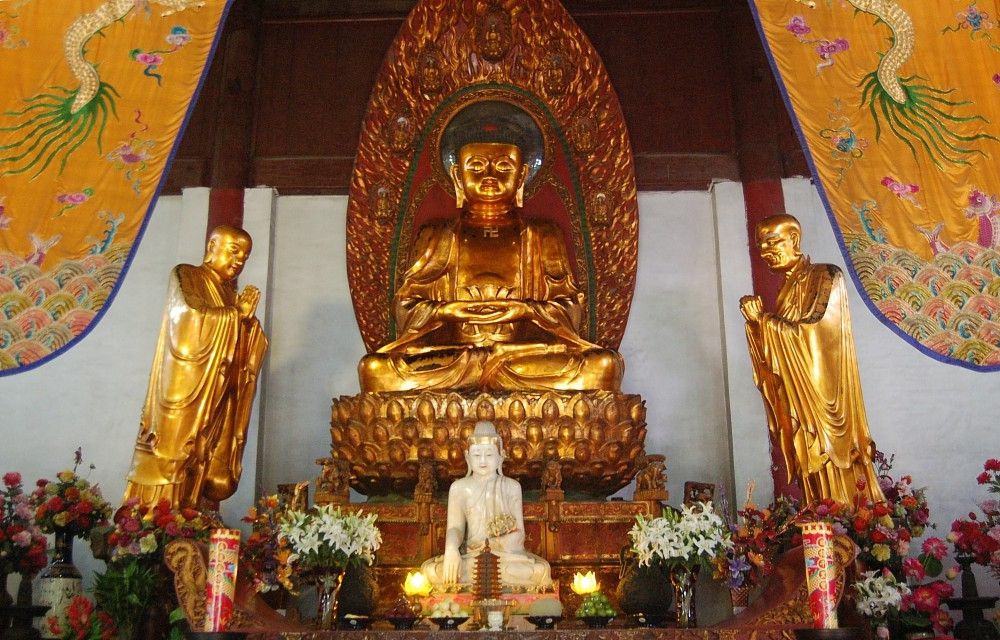
3. Some Important Milestones ● White Horse Temple (白馬寺 – Luoyang, Henan) ○ Emperor Ming of Han Dynasty 漢明帝 (58 ~ 75 CE) ○ Sutra of Forty-two Chapters (Kāśyapa Mātaṇga & Dharmaratna) ● Faxian 法顯 (337 ~ 422 CE) ○ In search of Vinaya-pitaka 律藏 ○ Returned through Celon (Sri Lanka) & brought back Dīrgha Āgama 《長阿含經》 and Saṃyukta Āgama 《雜阿含經》 ● Xuanzang 玄奘 (602 – 664 CE) ○ Founder of 法相宗 or 唯識宗 (Yogācāra, Practice of Yoga) ● Bodhidharma 菩提達磨 – 1st patriarch of Chán ○ Emperor Wu of Liang 梁武帝 (464–549 CE) ● Huineng 六祖惠能 (638 ~ 713 CE) – 6th patriarch of Chán
4. 身是菩提樹,心如明鏡台。 時時勤拂拭,莫使染塵埃。 The body is like the bodhi tree, The mind reflects like a mirror. Must constantly wipe and polish, Not allowing dust to settle. 菩提本無樹,明鏡亦非台。 本來無一物,何處惹塵埃。 Bodhi is not a tree, The mirror is not a platform. We have not a thing, How we collect dust?
5. History of Japanese Buddhism ● Buddhism was brought to Japan through Korea in 500 CE ● Kukai 空海 (774-835 CE) founded Shingon 真言宗 (Mantra School) ● Saicho 最澄 (767-822 CE) founded Tendai 天台宗 (or 法華宗 Lotus Sutra) ● Eisai Zenji (栄西禅師, 1141 ~ 1215) brought Linji (Rinzai) 臨濟宗 to Japan ● Dōgen Zenji (道元禅師, 1200 ~ 1253) brought Caodong (Sōtō) 曹洞宗 ● 臨濟将軍、曹洞土民 (“Rinzai for the Shōgun, Sōtō for the peasants”) ● Shikantaza (只管打坐) – Only Sitting ● Silent Illumination (默照)
6. Gautama Buddha 释迦牟尼佛 Mahākāśyapa 摩訶迦葉 Ven Daoxin 道信禪師 4th Patriarch of Chán Ven Huineng 六祖惠能 6th Patriarch of Chán Master Jiru Bodhidhamma 菩提達摩 1st Patriarch of Chán Ven Ming Chi 敏智法師 48th Abbot of Tin Ling Temple (天寧寺 ) Ven Fǎróng 法融禪師 Founder of Tin Ling Temple (天寧寺) 594 ~ 657 CE 1909 ~ 1996 CE 580 ~ 651 CE 638 ~ 713 CE Dōgen Zenji 道元禅師 Founder of Sōtō Zen Suzuki Roshi 鈴木老師 Founder of SF Zen Center 1200 ~ 1253 CE 1904 ~ 1971 CE ??? ~ 535 CE 600 BCE
7. After arriving China, why did Bodhidharma secluded himself in a cave for nine years and emerged with no teaching except Yi Jin Jing?
8. 磨磚成鏡 Polish Brick to make Mirror 懷讓禪師 Huáiràng (677 ~ 744 CE) 馬祖禪師 Mazu (709 ~ 788 CE)
9. Kama-Loka (The Sense- Desire Realm) Rupa-Loka (The Form Realm) Arupa-Loka (Formless Realm) Saṃsāra
10. “Lazy Zen” (走火 – Lost Fire) “Monkey Zen” (入魔 – Enter Māra)
11. ● Renounced at the age of 29 and spend six years as a wandering yogi ● 1st teacher: Ārāda Kālāma (reached Ākiṃcanyāyatana, 7th stage of Samādhi, state of nothingness, 無所有處定) ● 2nd teacher: Rudraka Rāmaputra (reached Naivasaṃjñānāsaṃjñāyatana, 8th stage, state of neither perception nor non-perception, 非想非非想處定) ● Buddha rediscovered saññā-vedayita-nirodha (滅受想定), one of 112 Chakras ● Achieved 9th stage of Samādhi using Sensation (受) but not Perception (想) ● All of Buddha’s initial followers were yogi (Yuj = Union of Body and Mind) ● Buddha did not reject yoga practice, it was the prerequisite for his teaching Siddhattha Gotama was a Yogi
12. ● Bodhidharma was the 28th patriarch of Indian Chán Meditation school ● Mahākāśyapa was the 1st patriarch, receiving dharma transmission from Buddha thru the Flower Sermon (拈花微笑, “holding flower, knowing smile”) ● The Chán/Zen practice is all about 不立文字 以心傳心 (Do not establish words, use mind to transmit mind) ● In other words, Chán/Zen is not about intellect, it is all about direct experience ● True experience is experience without hiderances ● Practice Yi Jin Jing to maintain a healthy and robust body ● Can’t polish brick for mirror (avoid mental constipation or mental diarrhea) Bodhidharma was also a Yogi
13. Gautama Buddha 释迦牟尼佛 Mahākāśyapa 摩訶迦葉 Ven Daoxin 道信禪師 4th Patriarch of Chán Ven Huineng 六祖惠能 6th Patriarch of Chán Master Jiru 繼如大和尚 Bodhidhamma 菩提達摩 1st Patriarch of Chán Ven Ming Chi 敏智法師 48th Abbot of Tin Ling Temple (天寧寺 ) Ven Fǎróng 法融禪師 Founder of Tin Ling Temple (天寧寺) 594 ~ 657 CE 1909 ~ 1996 CE 580 ~ 651 CE 638 ~ 713 CE Dōgen Zenji 道元禅師 Founder of Sōtō Zen Suzuki Roshi 鈴木老師 Founder of SF Zen Center 1200 ~ 1253 CE 1904 ~ 1971 CE ??? ~ 535 CE 600 BCE


(From Josh)
- Link list:
- Shifu Jiru demonstrating Yi Jin Jing https://dennykmiu.com/YJJ
- Articles by Denny:
- Origin of Chán https://www.patreon.com/posts/origin-of-chan-k-26049825
- Origin of Zen https://www.patreon.com/posts/origin-of-zen-by-25635163
- Origin of Yi Jin Jing https://www.patreon.com/posts/origin-of-yi-jin-26437027
- Yi Jin Jing | Tendon or Fascia https://www.patreon.com/posts/yi-jin-jing-or-k-48391090
- Five Houses of Chán
- Immigrant Buddhism | (11/24/2020 — “Ask Us Anything” with Denny K Miu)
- American Buddhism | (10/27/2020 — “Ask Us Anything” with Denny K Miu)
- Flower Sermon a Chán invention with first written appearance in “The Gateless Gate”
‘The body is the bodhi tree.
The heart-mind is like a mirror.
Moment by moment wipe and polish it,
Not allowing dust to collect.’
When someone read the verse to the illiterate Huineng, the future Sixth Patriarch knew Shenxiu had missed it. Huineng dictated this verse for another to write for him:
‘Bodhi originally has no tree,
The mirror has no stand.
Buddha-nature is always clean and pure;
Where might dust collect?’
https://www.learnreligions.com/huineng-sixth-patriarch-of-zen-450206 . . . Another translation/retelling I like better comes from at least one Arrow River Dharma Talk but unfortunately can’t remember which
- If kept secret and only practiced by Abbotts in private it could be interesting to know how this started, how Yi Jin Jing was passed down, how and why it was kept secret, and how and why this version of Yi Jin Jing finally opened up to the wider public.
- My experiences with YJJ: Picking up Grandmaster Sam Chin for attending the meditation (and unbeknownst Yi Jin Jing) portion of an advanced martial arts retreat; Achilles tendon loosening and strengthening quickly after a few times; removing dagger (during the stabbing with dagger step)
- How exactly did Bodhidharma get or come up with the teaching for Yi Jin Jing? (Plenty of interesting things must happen when meditating in a cave for 9 years)
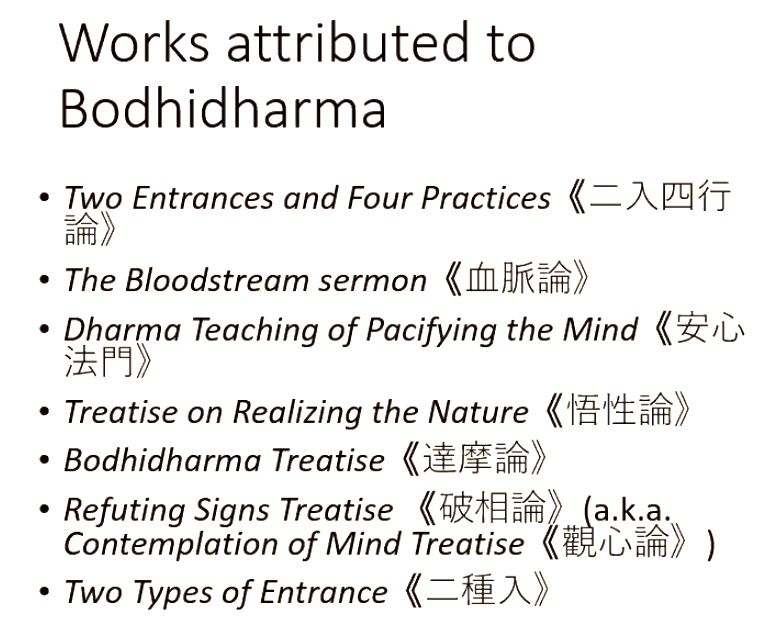

Bodhidharma stories and teachings:
- Was Bodhidarma’s teacher Prajnatara female?
- Tea:
‘As with all things concerning Bodhidharma, the genesis of tea was neither simple nor easy but rather a singularly peculiar but characteristically gory event that was in keeping with the high physical price of his ruthless meditation – a cost that the master seemed always to pay with an arm and a leg. On this occasion, the birth of tea took a more delicate part of his anatomy. As he sat in deep concentration, Bodhidharma abruptly realized that in an agonizing instant of fatigue, he had closed his eyes and dozed off to sleep. In anger at his weakness, he savagely tore at his eyes in self disgust, ripping out his eyelids and flinging them to the ground. As the leaf like lids of flesh lay bloody in the dirt, they sprouted miraculously into tea plants. Instinctively, Bodhidharma reached over and plucked a few leaves from the bushes to chew and suddenly felt as “one who awakens.” His mind clear and focused, he resumed his meditation.’
https://www.tsiosophy.com/2012/09/tea-and-bodhidharma
and:
‘Daruma made the pledge of 7 years of meditation. dHe vowed not to sleep in these 7 years. Despite this vow, he fell asleep one night. When he woke up the next morning, he was so angered by his failure, that he cut off his eyelids and threw them to the ground. As soon as the eyelids touched the soil, immediately there grew roots which soon developed into a large bush. When Daruma saw this wonder, he prepared himself a drink out of the leaves. People came from all around to see him and many followed the monk and prepared a drink from the leaves. The knowledge of the drink’s refreshing and invigorating effect was spread everywhere. The delicious taste and scent were reason enough to see this drink as “divine”. Until today the Japanese language uses the same character for eyelid and tea 茶’
https://www.earthstoriez.com/japan-tea
- Cutting off arm:

Gateless Gate, Case 41
Bodhidharma sat facing the wall.
The Second Patriarch stood in the snow.
He cut off his arm and presented it to Bodhidharma, crying, “My mind has no peace as yet! I beg you, master, please pacify my mind!”
“Bring your mind here and I will pacify it for you,” replied Bodhidharma.
“I have searched for my mind, and I cannot take hold of it,” said the Second Patriarch.
“Now your mind is pacified,” said Bodhidharma.
https://www.treetopzencenter.org/bodhidharmas-mind-pacifying
- Polishing stone:
‘What intrigues me the most about Yi Jin Jing and the main reason that I am writing this three-part series is the fictional story about Bodhidharma first visiting the Shaolin temple and joining the monks for their meditation retreat.
Inside the chamber, he noticed the monks were all sitting quietly and after a few hours, he asked them what they were doing. They said they were there to practice towards enlightenment. Then Bodhidharma quietly picked up a rock and started to rub it back and forth across the top of the table.
The monks were intrigued and asked him what he was doing. He said he was polishing a mirror out of the rock. The monks laughed and said how anyone could make a mirror out of rubbing a rock.
Bodhidharma replied how anyone could gain enlightenment but just sitting. Then he left and secluded himself in the cave for nine years.’
From Denny’s article on the “Origin of Yi Jin Jing”
- Meditating facing cave wall for 9 years translated as “facing reality for 9 years” in a Tibetan text. (Listen directly to this part of the episode cued up at 53 minutes)
- Unique interpretation of the Six Paramitas (perfections) by associating each with the purification of one of the six senses, which he refers to as the “six thieves”:
- Charity (Dāna Pāramitā): Purifying the sense of sight.
- Teaching: “Casting out the thief of the eye by abandoning the visual world is charity.”
- Explanation: This suggests that true generosity involves letting go of attachments to visual stimuli and material possessions, thereby overcoming desires arising from what we see.
- Morality (Śīla Pāramitā): Purifying the sense of hearing.
- Teaching: “Keeping out the thief of the ear by not listening to sounds is morality.”
- Explanation: Maintaining ethical conduct entails not being swayed by alluring or distracting sounds, thus preventing the mind from being led astray.
- Patience (Kṣānti Pāramitā): Purifying the sense of smell.
- Teaching: “Humbling the thief of the nose by equating smells as neutral is patience.”
- Explanation: Developing patience involves perceiving all odors without preference, viewing them impartially to prevent attraction or aversion.
- Devotion (Vīrya Pāramitā): Purifying the sense of taste.
- Teaching: “Controlling the thief of the mouth by conquering desires to taste, praise, and explain is devotion.”
- Explanation: True diligence requires overcoming cravings related to taste and the urge for verbal expression, focusing instead on spiritual practice.
- Meditation (Dhyāna Pāramitā): Purifying the sense of touch.
- Teaching: “Quelling the thief of the body by remaining unmoved by sensations of touch is meditation.”
- Explanation: Deep meditation is achieved by not reacting to tactile sensations, maintaining equanimity regardless of physical feelings.
- Wisdom (Prajñā Pāramitā): Purifying the mind.
- Teaching: “Taming the thief of the mind by not yielding to delusions but practicing wakefulness is wisdom.”
- Explanation: Cultivating wisdom involves overcoming mental delusions and maintaining constant awareness, leading to true understanding.
Bodhidharma concludes that these six paramitas serve as transports or “ferries,” carrying practitioners across the sea of ignorance to the “other shore” of enlightenment. By purifying the six senses and overcoming their corresponding “thieves,” one can progress on the path to liberation.
This interpretation is detailed in Bodhidharma’s “Breakthrough Sermon,” where he emphasizes the importance of internal cultivation and mastery over one’s sensory experiences as essential steps toward enlightenment.
- Disciples attaining his skin, flesh, bones and marrow:
The first ancestor [Bodhidharma] requested to his disciples, “The time [of my passing] is finally coming. Why don’t you each speak of what you have attained?” Then his disciple Daofu replied,“My understanding is, without attaching to words and without separating from words, to perform the function of the way.” The ancestor said, “You have my skin.”
The nun Zongchi said, “My present understanding is that it is like Ananda seeing the land of Aksobhya Buddha once, and never seeing it again.” The ancestor said, “You have my flesh.”
Daoyu said, “The four great elements are fundamentally empty. The five skandhas do not exist; and my view is that there is not even one Dharma to attain.” The ancestor said, “You have my bones.”
Lastly, [Dazu] Huike made a prostration, and then stood at his position. The ancestor said, “You have my marrow.”
The teacher Dogen said: Later people believe that these are shallow or deep [levels], but this is not the ancestor’s meaning. “You have my skin” is like speaking of lanterns and standing pillars. “You have my flesh”is like saying, “This very mind is Buddha.” “You have my bones” is like speaking of the mountains, rivers, and great earth. “You have my marrow” is like twirling a flower and blinking the eyes. There is no shallow or deep, superior or inferior. If you can see like this, then you see the ancestral teacher [Bodhidharma], you see the second ancestor, and you can receive transmission of the robe and bowl.
- Korean Sŏn/Zen story about why Bodhidharma is often portrayed with an old Chinese looking body https://overcast.fm/+Qj6edpUfI/57:28 [from Guru Viking Podcast Ep42: Glenn Mullin – Death, Divination, And Sacred Relics]
- Death, empty grave and one sandal:

‘As far as Bodhidharma’s death, there are accounts that he died in 528 or 534 A.D. near the Lo river or in an area in North China. These accounts, however, all suggest that three years after Bodhidharma’s death, a traveler, or an official, in Central Asia, spotted someone resembling him, carrying a staff and one sandal, headed toward India. After the incident was reported, the supposed burial place of Bodhidharma was checked; the tomb was empty except for a single sandal.
The Japanese, however, have a different ending for Bodhidharma. According to this version, Bodhidharma journeyed to Japan on, once more, a reed or rush leaf across the sea in 613 A.D. Along a road, the story goes, the prince Shotoku Taishi encountered Bodhidharma who was reincarnated as a beggar. After giving him food, drink and clothing, the prince returned the next day only to find that he had died. Today, in Oji, Japan, there are stones marking the spots where the prince and Bodhidharma are said to have met.’
https://www.mrslinskitchen.com/nljul02.html
- Loss of arms and legs:
Another important aspect of Bodhidharma’s meditation explains the form he is presented in today. Because Bodhidharma remained motionless for such an extensive period, he eventually lost his arms and legs as they withered away. Nevertheless, Bodhidharma was still able to remain upright. Especially for Zen followers who believe that one’s personal energy resides right below the navel, Bodhidharma’s achievement has been attributed to his discovery of inner strength.
https://www.mrslinskitchen.com/nljul02.html
- Famous anecdote of exchange with Emperor Wu:
[Bodhidharma] stayed at the Hualin Temple where he preached for three years and during this period also offered teachings at the Guangxie Temple, which is located a few miles from the Hualin Temple.
The Anthology of the Patriarchal Hall narrates a conversation that took place between Bodhidharma and Emperor Wu of Liang dynasty who was a fervent patron of Buddhism. Excerpts of the conversation are placed below:
Emperor Wu: “How much karmic merit have I earned for ordaining Buddhist monks, building monasteries, having sutras copied, and commissioning Buddha images?
Bodhidharma: “None. Good deeds done with worldly intent bring good karma, but no merit.”
Emperor Wu: “So what is the highest meaning of noble truth?”
Bodhidharma: “There is no noble truth, there is only emptiness.”
Emperor Wu: “Then, who is standing before me?”
Bodhidharma: “I know not, Your Majesty.”
By asking whether his actions were good, Emperor Wu was searching for compliments and affirmation from Bodhidharma. With Bodhidharma’s response enraging Emperor Wu, the former was asked to leave his palace and never to return. Bodhidharma simply smiled and left.
https://www.cgiguangzhou.gov.in/eoi.php?id=India_and

Or listen via Insight Timer (app or website)
Currently, for a chance to experience, practice, and receive Yi Jin Jing instructions from Denny, join in free on Saturdays:
- https://dennykmiu.com/Insight-Timer
- https://dennykmiu.com/Facebook
- https://dennykmiu.com/YouTube
- https://dennykmiu.com/LinkedIn
- https://dennykmiu.com/Patreon
The raw unedited YouTube transcription of this podcast:
good morning everyone good morning good afternoon good evening wherever you are welcome to another episode of aua
ask us anything my special co-conspirator here is josh
and he and i are the yin and yang of uh buddhi dhamma good good morning josh how are you hey
what’s going on it’s a lovely day here in st louis missouri how’s it in california it’s it’s great here too it’s a it’s
it’s the weather’s been amazing um so um you have a lot of nooks
that i wasn’t able to incorporate all of which into the presentation i incorporate um
many of them uh so so there will be a pen opportunities i would that that you can kind of
interject as we go through the presentation um so should we just get started sure
i’ll just give a quick intro here we’re calling this one chan zin and yi jin jing and um
you know we’ve we’ve gone over i’ll include lots of links in the show notes we’ve done zen a little bit
so we haven’t done too much chan but we’re going to probably go into those a little bit as more of a background and
focus more on ni jinjing and kind of an enigmatic figure uh surrounding
jing um you know i just thought today i mentioned real briefly um you know since
we’re doing the show i thought you know probably out of practice yi jin jing so i went to the park today and i’m not going to give an
interpretation of this and you know we talked about experience and
we talked about experience and experimentation well and don’t let this color your
perceptions of the jin jing it’s just a one-off thing so it’s not going to be representative of anything
other than maybe kind of the mystery surrounding some of some of the mystery surrounding jin jing so i set the intention which is
uh with an experimentation of loving kindness when i was doing this which is
interesting right so when i look up and getting ready to do the big push
there is this dog two dogs the fluffy dogs sitting there right in front of me and i
and i almost fall over when i do this i managed to stand up but so then i did it again and i focused
more on my body you know so i wasn’t paying attention to the external world so then it was able to more
stable so you know and then the guy is like he’s having trouble controlling his dogs you know
and their whatever some people let them run so it’s just almost done here i well on the way home
though i see this cooper hawk it’s a really big hawk and it comes in the local park
every once in a while and um it was perched next to a bird’s nest
and then there were some you know i don’t know what it was doing in there um but then it flew off and there were
other birds chasing it right they usually do sometimes they they’ll peck the bigger predator birds as it
goes and there’s a bunch of starlings which is a kind of a not native bird a lot of them
making noise and then that was yeah so that’s all i wanted to share take that for what it is or what it
isn’t you know i’m not going to interpret anything like that but yeah so um denny so let’s take it away
here let’s go okay okay thank you josh yep you never know josh you know all those
animals might be uh incarnation of something i mean if you if you open the book
that you know buddha once upon a time where all of those yeah yeah so so we we
actually um usually take us a couple weeks to decide you know what the topic ought to be this one actually decided um almost
immediately after we finished um we talked a great deal about uh chi
uh and i thought it’s it’s it’s it’s now time to really come back to the core of our practice uh which is
which is uh meditation and and then also the prerequisites of that which is ee jin jing so ultimately what i
want to want to answer is the important question of why e jinjing as opposed to what is in
xinjiang because we we can do that in in a in a later talk but the question is why using jing so so um let me just kind
of explain the title uh i was going to put up a slide but then i figured we kind of talked about this enough so
chan chan chan actually is an abbreviation for chan na
this is that’s a that’s a that’s a chinese uh pronunciation of a uh either a sanskrit or poly word
called janna janna um some people interpret that as um as a different stages
of uh meditation uh some people interpret that as as
sentimentation that is you know let your negative energy settle
so so that that’s jhana which became china and then later on it’s it’s
abbreviated into chan and then when it went to japan when it went to korea it was sun and then when it went
to japan it’s zen and there’s another pronunciation in vietnamese but all those words come from
chan which come from china which come from jannah okay so we got that our way now yi jin jing this is this is the word
that uh if you never heard of it um it’s a i’ll call that a uh
i call it a yogi i’ll just call it a yogi practice because it came from a yoga a yogi okay but ee means
exchanging the jin jing is uh is
somewhat controversial it most people will say that’s tendon some people would would go as far as
saying this uh how do you say that josh our new adnew which is the part that connects the
the tendon connecting to the bone is it um a-i-a-i-n-e-w oh you know i don’t know
that’s a good question so there’s another part there’s another part that is that is that of the anatomy
uh i i’m tempting to think that gin is uh is either connective tissue
or the spiral core you would find that in in the chinese literature that uses
the same word but again the point here is that don’t ever interpret a single chinese character because then
it’s you have in you know infinite meaning depending who you want to talk to and then the last one jing it just means uh
treaties uh classic uh just a book or just a record all right so we’re going to talk about
chan we’re going to talk about zen and then we’re going to talk about yi jin jin now um this this is a very
very busy uh chart but i think it’s it’s good um so first of all let’s just let’s just go
down let’s just go down uh on the left hand side the legend so the very dark um kind of
orange color is the essentially the origin of buddhism we all know that buddha
was a prince of a small kingdom which is in what today’s nepal so even though we
consider him a north indian he was actually born in nepal and so this is this
dark orange color is where the uh buddhism was was originated now what’s interesting is
that when you when you go to let’s skip to the very light almost yellow color
this is this is actually when this is the area when buddhism first first migrated
so you can see it goes as far as kashmir which is the border between pakistan and
afghanistan and some of you might know that uh when the talibans took over this this part of the world
they blew up some some some buddha statue
the world’s biggest buddha statue which tells you that at one point uh buddhism was very active
in this region in fact it’s it’s the first region that buddhism was was very active now
what’s interesting is that the entire india is there there’s no longer buddhists
there are more there are more catholics in india than there are buddhists okay that that religion actually kind of
extinct now you may say well what but don’t we go to india and see all these
relics those are tourists okay those are entirely for tourists now what’s more what’s even interesting
is that uh originally buddhism was quite active in indonesia very active in indonesia
and was very active in philippines too okay now of course all that has gone
because of of of uh islam so when islam came to this part of the world they took over uh
and and so the only place where buddhism is active is is great
basically in greater china china mongolia and tibet some people argue
that tibet is part of china which is okay will be and then it’s also very active in this
southeast china starting with sri lanka right here to
burma or what is now called miramar to thailand now what most people don’t understand is that it’s actually very
buddhism in thailand is actually very recent it’s less than a thousand years old compared to other parts for some reason
buddhism went to myrma went to cambodia and laos but kind of skipped thailand
and it’s only after the mongolians invaded china then a lot of the monks kind of came
down north from uh from and then and then and then also they came up from the from the sri lanka and so now
so the other thing that is interesting is is uh is the timeline the timeline so we talk
about the early buddhism and then we talk about mahayana and then the theravada
so so we did that a little bit so i would just kind of summarize okay so just kind of put things in
perspective temporally uh uh sekata gautama is the name of the historical
buddha this is the name before he was uh he was enlightened and so he was born essentially 550 years
563 years before christ before a common era so he lived for 80 years so that we know
so this is kind of so so um buddhism is 2600 years old that’s that’s
what you need to remember now last time we last few times we talked about
the consoles so the first council was after buddha passed away the second council was couple hundred years later
when they had some issues with the rules and regulations and then the third council which is the
most important one is with kings asuka who kind of
consolidated all the teachings into these three buckets okay the sutra the the the rules and
regulations and then and then and then all that and so the what we know about uh buddhism as it
migrates out of the heartland really starts with king asuka so the first one is what we call the terra vada
and this is starting around that time third century so taravala is the green line it went down to first
to sri lanka and then from sri lanka it went to
burma and then eventually it went to thailand and then from there went to cambodia and laos so that’s the
extent of the terra vada teaching and if if you want to know more just we had
a talk on that and then then the red arrow is what is called the mahayana
the hot mahayana uh um started in the fourth to fifth century
and so last time we talked about um it’s inaccurate to call everything else hanayana because
the theravada it’s just look at the timeline the terrible basically predates
the mahayana by seven centuries okay now what’s interesting is that what
we call mahayana which is really chinese that’s actually the more accurate description
is is that it is chinese buddhism because the chinese buddhism is very unique in that it’s not a pure it’s not
pure buddhism it’s actually a combination of buddhism taoist and taoism and and
confucianism okay so so people might say that they are mahayana what they’re really saying
is that they’re chinese they’re chinese buddhism which has a very unique uh characteristics
um i i not all of the teachings are are are from buddha i i dare to say that
now what’s interesting is that um when when the buddhism first went to china it
wasn’t mahayana okay so so let me explain that so the
very first milestone the very first time that it’s been documented that
buddhism went to china was this this this temple called the white horse
temple in new young in hanai and the reason we know that is because
it’s it’s historically documented that there was a there was an emperor and the emperor had
a dream had a vision and there was a bright light on the west so he went to
his uh his uh his staff and said what’s going on and they said oh there was a great sage that was born um and
so he sent his uh his uh his his um his ministers to go look for that
and uh so the ministers uh got halfway and they met up with two monks that came from essentially
consensus casastin and so they they came with a bunch of books and they were monks and
so they were very happy and so they built this this uh this temple for them so that they can uh start the teaching
and the first book that they uh the first sahaja they
interpret was this thing called the sutra of 42 chapters which actually is a lot closer to the
televada teaching than it is to the mahayana teaching in fact there is no resemblance to the mahayana
teaching it’s all terrible teaching so i guess the point my point is that when we talk about mahayana when
we talk about chinese buddhism that’s a very recent uh event the original wasn’t like that the original
were were much closer to the to the telewater teaching now we all know about a a tong dynasty
monk that went to india through the mountains and so forth um and there was a the journey of the
west if you know if you if you that is very famous with the monkey and the pig and all that well that that’s obviously a
fiction but he wasn’t even the first monk there was another monk prior to that who who went from
china to india and he was in search of remember we talked about the three
buckets the first bucket was the suchwa the second bug that is called the uh which is the rules and
regulations the the the precepts so he was looking for that because he felt that
that the monks weren’t practicing correctly so he wanted to find the original document
to to really so he can bring back the discipline so he went there for that what’s interesting is that he went
through the land but he came back through the sea and so he actually went through what was called
salang which is sri lanka and there he actually found the original
teaching of buddha what we now call agama teaching and agama whenever you see a a that
means that’s the negation not gamma means that they’re leaving so agama means that when
when buddha was was was enlightened under the booty tree he went searching for his uh his uh his
his uh his uh essentially his bodyguards so when he when he left the palace the
his his father sent uh five bodyguards or six i don’t remember and uh so they
they also become uh monastics and so they were practicing together so so when and then when
when uh when when the historical buddha gave up the teaching to search for his own path
his bodyguards or his uh his his followers basically abandoned him so so he went
back and he basically said don’t go away and so agama means don’t go away come back
and so he uh this this this monk actually uh in the in the in the in the in the
fifth century actually went to india and on the way back uh into sri lanka brought back what is
called the agama okay into into uh into into china
so finally you get to the the the more famous monk the one that went to uh india on his own and uh and that’s
now in the seventh century what’s interesting is that most people don’t really know what he did other than
that he was a good interpreter that he brought back all these scripts and then he he had a big
effort to translate it what people don’t know was that he also founded a a particular set a particular
sect now i i couldn’t find the the chinese uh the english interpretation of the sec is called far
far means dharma xiang means um it’s hard to explain that but it’s like the
characteristic of dharma and so this this dharma has different interpretation
this particular dhamma has to do with you know when we talk about the the sound the sight the smell
the touch and then we say dhamma because the you know that’s the physics
and then the all the the physiology that associated with that are the eyes and the ears and the nose and the
tongue and the body and the mind okay so in this case the mind is actually the brain
and in this case dharma means all the perturbations inside your mind and so so
so in this case mine means in this case dharma means consciousness
okay this is the eight consciousness right so there’s there’s a big emphasis on the sixth sense basis the sixth sense
doors yes yes and all that goes around that surrounds yeah yes now what’s interesting is that
another name for that means that this word and this word means only
uh consciousness right but it actually came to it in in uh another it’s actually came
from the work called yokachara yokachara is the practice of yoga
now they’re not talking about the practice of the asana or the hatha yoga that’s not what
they’re talking about they’re not talking about practice or yoga as you do in the gym that’s that’s a fast food version
of yoga okay so what they talk about yoga is the is the is the historical is the
authentic uh study of the mind that’s what yoga means okay now this this sometimes gets interpreted as mind
only right or consciousness only consciousness only yes yes very good very good yeah consciousness only now
of course he started that but it never took off it never took off okay so finally we
have bodhidama that’s what we want to talk about he is the first patriot of chan chana
or or zen now people people argue when
when he actually appeared but there was a historical fact that he had a meeting it was documented
with the emperor wu of the learn dynasty which is a very short-lived dynasty and he lives in the
sixth century so we know that so he he more or less came in that that part
and then finally i want to talk about so this is the first patriarch and i want to talk about the sixth patriarch because the sixth
patriarch is really when the the the chant meditation the chan
school really uh and and and josh had a very nice set of notes on the five schools
and so the the kind of folk law is that that was predicted by buddhi dharma he
actually said that you know so so there was a lot of folklore for example buddhadharma had a bow
and a in a gaza and and it was supposed to transmit from one generation to another
generation and he said that by the time we get to the sixth you don’t need to do that anymore
because by the time you get to the six it would be one stamp five flowers something like that so he kind of
predicted that but who knows i wasn’t there yeah so i want to just kind of focus on
that so this is this is when when chan first became popular
he was the founder in the sixth century but it really became uh uh uh very popular starting to be
very popular in the seventh and eighth century it started from the first to the to the sixth
very quickly i was just talking about this the the sixth patriot is is a because i want to talk about zen
because then came later danny before we get into that let me go back to the last slide i just wanted to
make a quick comment here that probably can’t but the very first thing the white horse
temple you know um that story it’s a it’s it’s just a very kind of mystical story almost you
know and i was always wondering who the sage was that they were gonna go see but they never made it and how did the monks
coming from the sage you know it did they have foreknowledge and of course
you know um what exactly uh so you know why did they bring those teachings
instead of other teachings you know so and it’s just really interesting the dream imagery and
whatnot so yeah there’s things we won’t really know um well the the the answer to that one
part uh one part answer is that um they they couldn’t have brought the
mahayana teaching because mahayana teaching was not invented yet it was an invent and it wasn’t invented
until the second second century so that’s all they have okay so now i this this is going to piss
people off because i actually take the position that mahayana was invented
well i actually hear that too you know i don’t really i mean i just i it would take a lot more study for me to
comment either way on that as well it’s interesting where they where they got the the suture of 42 chapters at
but but it doesn’t mean that it’s not it doesn’t mean anything because the bible was invented well that that’s the thing so that is
not as important as the the usefulness of the teachings right and how they can be applied to
everyday life and wisdom that’s more important you know the other stuff is just kind of scholarly stuff which is fascinating too
but we don’t want to lose sight of that yeah i mean i think this is okay i mean you always have you always have people who are
who are enlightened and then and then i i think the idea that that everything has originated from a single point of
reference that is wrong because because now now you’re trying to turn the teaching
into intellectual exercise as opposed to what we have always been saying and
experiential exercise exactly and again actually look you know who cares where my haryana teaching come
from if you actually can experience enlightenment to it and it filters through everybody’s own experience as
well and then it just you know changes a little bit like that perhaps as well but yeah i totally agree yep
yeah okay so can we go on okay please so so very quickly very quickly it’s very famous
story very famous story that the sixth patriot number one is that he was illiterate
it was illiterate look muhammad was was not not a scholar so you know if you’re a
knight and you’re enlightened okay so now what this i don’t want to go through that very
quickly but this this is the part of the story where um he wasn’t even the the destinate
uh six patriots there was there was somebody else who everybody thought that he was going to be the sixth patriot
and so one day the fifth patriot wanted to have a contest and he asked all his students to wrote a
prom a poem and of course all the other students wouldn’t dare to write anything
knowing that the senior student was going to be the the destinat
6 patriot and so only he would write the poem and so the first poem
uh was written by him i actually liked this poem much better than the one that was written by the sixth patriot the sixth
page i wrote the second one i love this poem because it really talks about how you’re supposed to practice
okay so you you it’s hard to explain the english translation doesn’t do it
justice so let me gonna try so so first of all it says that the body is like the booty
tree so so what you have to understand is is the significance of the word
body in the in the chinese culture so when we in the chinese culture we
always start with the body so there’s a there’s a whole confucius teaching that if you want to be the
ruler of the world you start with the body you have to live a righteous life first
then you have to take care of your family then you have to take care of your community before you even attempt to take care of the society and
and the universe so so the idea is that you start with the word body
it kind of brings that that that in your practice you start with yourself
and yourself is like the tree that you want to grow so this brings back to like the standing
posture that we stand like the pine tree okay that the idea is that is that is that
you have to be firmly on the ground and you have to be flexible this is actually all the good
characteristic of of a sage okay so this poem the english doesn’t do it justice
because it says that it basically talks about someone who who’s who’s uh who’s uh who’s a who’s an
advanced student someone who’s uh who’s uh who’s uh who’s uh who’s a who’s a monk
and how he should be practiced that he he he focused on his body he focused on
himself and then he envisioned this as the bodhi tree bodhi just means awaken wisdom right
now then he says your mind is like the mirror and again it doesn’t
do it justice because it’s not just the mirror but the bright mirror what do you mean
by bright mirror as opposed to a bright light a bright light shines a bright mirror’s reflex
so this is really the practice is that is that when we talk about vipassana when we talk about contemplation it’s
it’s it’s really like looking deep into your mind as a reflection okay so here he’s
talking about he’s not just talking about the mirror but a mirror that reflects bright brightly then he says the
platform so he says the mind is like a platform where the mirror sits and this is
important now you have to understand that that before buddhi dharma the most popular
buddhism is something called tentai okay which if i explain i think the next
slide is is really the the study of the lotus sutra okay so thai tentai is a is actually the
name of of one of the patriarch for that particular sec and so he’s borrowing that word to say that
that time means platform okay so now he’s talking about the the mind
is like the mirror that shines that is on top of this platform so he’s stepping on the
shoulder of some great stage then he says then you must constantly so this is
this is constantly very diligently and then he’s talking about the dusting
where you you know where you have the stick and then the horse hair like all the the taoist
priests or they carry this you know you see this in movie so he says therefore you must constantly white
clean the mirror because you don’t want it to collect
dust now the word that he used is not collect even though he translates the leg the word that he uses is
is contaminated is contaminate or when you when you buy when you dye
clothing you start with a white piece of cloth and then it becomes color that process is this this one here okay
it’s a beautiful prong it really describes it really describes what a person should
be doing in in in his practice now of course the sex preacher came and he’s he’s he is so advanced
he is so advanced that he is so above us that he says the boot is not a tree
right the mirror is not a platform we ain’t got a thing so how we collect
dust this is coming from emptiness you know this is like this is
you just saw that and you say wow man this is cool but it it doesn’t it to me it doesn’t really help me see
that’s the thing it’s like the first poem yeah is more like the um the standard practice and then the the
second one kind of goes beyond that right so you kind of got to fully uh realize and embody the first uh
understanding of the first thing and be able to speak about that then go on to the other let me just read there’s several different
english translations of this let me just read real briefly another uh one here on on this translation so
the first part is the body is the bodhi tree the heart mind is like a mirror moment by moment
wipe and polish it not allowing dust to collect and then of course the second part from
the futuristic patriarch here bodhi originally has no tree the mirror
has no stand buddha nature is always clean and pure where might dust collect
so that’s not i’ve heard of some other ones that are better than that um yeah the other one that um yeah hi john
um oh um i’m forgetting his name in cal on in
in canada now uh i like his version but maybe i’ll include that in the show notes okay okay thanks john
but the reason that the reason why i wanted to do this is even though we talked about buddhi dharma as the first patriot
of chan that eventually became zen buddhadharma left no teaching
okay so so the teaching really came from the sixth patriarch so we all know about the platform sutra
which was essentially a collection of saying because he is illiterate um so when we talk about
zen buddhism it really start with this poem okay it starts with this poem that that
we ain’t got a thing we have not a thing that’s the emptiness part okay so this is important okay so should i go on okay
all right okay so now we’re going to talk about history of the japanese buddhism because we want to
talk about how chan became zen okay so buddhism was was first buddhism first
went to korea and then from korea it went to japan and so it was it was basically in the in the
fifth or sixth century okay so this is this is um this is predate the tang dynasty this is
actually quite early and of course so obviously the first the the the the buddhism that was bought to japan
initially was not zen okay so this is people don’t understand that and they think that everything starts with zen that’s not true
it actually the the if you go to japan one of the one of the very popular um
uh exact is this thing called shinkang shingang means uh shin gong came from the kanji
here means real speech or real um so this is actually mantra okay now
so you know in japan japan is made of four islands you have the hokkaido you have the uh you have the main island
and then and then you have the gaussian uh if you know ramen then you know gaushi ramen
but there’s a there’s a part the tiny one uh that most people don’t know there are 88
uh temples in there and and people once in a lifetime this is sort of what they want once in a lifetime they will want
to walk all 88 temples i i actually i actually have a book where you know people would stamp as you
go i got four stamps so far so i got 84 to go okay this is the lifetime thing and all
those are shin gong now what is shin gong what is mantra so the the map that we showed earlier
has the three main sect has the um as the um
the theravada the mahayana and then sort of the esoteric part that people associate that with
tibet tibet now so most people just think that
that’s that’s all there is but actually this esoteric part actually was very very popular
in in uh in china during the taung dynasty but it died out just our one event there
was one emperor that didn’t like buddhism he was he wanted to promote taoist taoism and so he he just basically cut
off all the support to buddhism and and this at that moment
that this esoteric snack died off in in in china but the legend was that right before that
this monk actually went and visited and the the monk who transmit the dhamma to
him said that where have you been i’ve been waiting for you for three years now and transmit all the teaching to him he
brought it back to japan so today this this shin gang or mantra school
is only exists in japan and entire and taiwan because japanese japan had occupied taiwan for a
while and then that’s one part and then and then the other the other version of that is in the in
in tibet okay so this is very popular then another one that is very popular is the
one i mentioned the tentai the tentai is is basically they focus on the the lotus sutra
okay so this these all these predate predated zen the very first monk that that he was
actually a tentai monk and then he went to china and he brought back uh a a sack so so i mentioned that there
are five schools five secs and so only really two so so to be honest um
uh chan buddhism doesn’t exist in china anymore not as a pure form it’s it’s kind of
mixed in with something else the only pure form of chant buddhism exists
only in korea and in in japan and in japan there are two sects
there is this one called the renzhan and then the one called soto now the renssen is actually very popular in
a career and so this actually originally was brought to korea
brought from korea and then this monk actually went back to china and and reabsorbed it and brought it
back to now the the difference between renzhan and then i’ll talk about the other one soto is the renzen uh has the
i always say the wrong coron
last name of a jewish person too i mean there’s there’s a jewish family line called uh cohen because it’s
similar it’s actually the same koan actually yeah co-op okay it’s it’s it’s a it’s a saying that
the the master customized for this disciple what’s the sound of one hand clapping
yeah right yeah the one is very popular the one i like is the one in korea i mentioned that last time it’s called imugo
which is who am i yeah like that okay so then then later on uh another
monk uh doujin which is the most famous one he went back uh uh uh to china
he brought that soto soto and i here pronounced dogen by the way
dogen zinji yeah actually it’s a chinese it’s taoien but dojin dojin sanji senji means um
the teacher teacher of zen yeah okay now what’s interesting a little bit
of background so before renzai was imported into japan
the country was ruled by the the nobilities rude by the the emperor as most countries are
when when zen buddhism was brought into japan the idea that that this i’ll talk about this later on
where where is the no thinking concept that that you do the perception but not
the not the what’s it what’s the word that i’m looking for you know i’ll give you an example so
when when when you see these samurai movies and the two samurais were facing each other and they could be like
they’re not even staring at each other they just listen to each other for hours they could be like in the rain you know
it’s very famous scene and then all of a sudden one guy moved and another guy moved and he moved so much faster that he would cut off his
his waist or cut his head without even a drop of blood on his blade and then what they’re doing
is they’re focusing on the perception without contaminated with their own um
hindrances only emotion that came from zen buddhism and it was only that it was only that
then the samurai class got elevated and so the country was essentially from that point on
was ruled by the shoguns and it wasn’t until the towards the end of the 19th century
when uh emerald perry went to japan with a bunch of battleship
that they went to the minji restoration that’s when they when they decided to elevate the emperor
once again and and and essentially uh abandon or
eliminate the shogun system okay it’s very interesting now so there’s a there’s a there’s a
very famous saying that the renzai is for the shogun and the zotto is for the peasant
okay the soto is a much more simplified version they don’t have this corn thing that they have
because the idea is that all you have to do is sit so there’s a very famous
saying called shinkatasa and if you interpret it is only sitting or sitting only just sit
just sit and awakening will come which is to simplify which is way to
simplify and this is one of the problem i have with my experience with the zen practitioners
in the united states is that they take that too literally they just sit and they know many many
things including the body because shinkatasa actually came from
something else which is interpreted as silent illumination and i think i talked about
this i don’t want to go through that here yeah okay a few comments you know that’s
that’s one great pro about the different schools of buddhism is that some of them are a better fit for
certain uh folks than others you know what i mean so um i think people could benefit a lot more
from a certain school than others or some people actually need to be in a school where they’re not comfortable so they get that
that as well so yeah the the other thing about the samurai yeah we talked about this before it’s more like they’re just going on
sense impressions and instinct and decisiveness and just making decisions
no thoughts no language no time for any it’s just whatever they’re perceiving
through sense data and action there is you know it’s just uh from the training right and then
the other thing i wanted to say is uh we don’t have time to go into this but the the korean buddhism um i don’t like
we did like you did too it just was briefly mentioned although you mentioned somewhat throughout this is something i
don’t hear much about at all so maybe that’s uh another point of um study for me yeah we could do that there yeah so so there
are a couple of good points that josh mentioned i wanted to kind of repeat them one one is one is that um there’s no
there’s no right or wrong there’s only right for you or not right for you and
that’s the key right so skillfulness right yes yes yes so so
you notice that i i bring a lot of historical context and the reason is that i want you to the
audience to be better consumers to be better informed consumers and that when you
look at a practice you know it’s not about right or wrong
there is no such thing as right wrong but someone some of the practices are better for you more suited for you because of your
karma seat because you actually have probably done this before in the previous life
okay and that’s why they are more familiar to you that’s the truth and so that so then you
do that whereas you know when you do something else you realize that you don’t it doesn’t make sense to you well there’s just don’t don’t do it then
that’s one the other one is is i’ll talk about this more it’s really about using
your brain versus using a spiral core okay now just just i’ll let that hang
for a little while okay i’ll come back to that all right and i just wanted to wrap up there by saying you know
that it’s this is tough well first off i want to say thanks for the history because for me um i’m not as good in the history
because um i won’t go into that why it’s not so good because i hear you
know i the generally accepted history is sometimes very accurate but then a lot of times it gets really
politically colored and there’s a political motivation for a lot of history and then when some other things come along that that’s been trying to
suppress i find that’s really interesting but it’s trying to get to the truth of history but it goes through so many
filters as well but anyway that’s needed for yeah well history is history is yeah exactly history is
his story so first of all it’s a story then there’s a gender bias
it can be right yeah anyway yeah the other real quick thing now right or wrong you
know ultimately yes there is no right or wrong there’s only you know there it doesn’t apply ultimately then again
if you’re working on ethics there are things that are you know um traditionally right or
wrong however buddhism instead of looking at good and evil there’s more
emphasis placed on is this skillful useful wholesome and wise so that way you don’t
get people arguing about good or bad what’s going to matter so yeah thank you for thank you for the john
so let me let me correct myself by saying that when i say right or wrong i i set it with the
context of all rows lead to rome okay so which means that you have to
kind of we we kind of all have to agree on a destination and then we have to have to agree on a
set of metrics that tells you that you’re heading in the right directions but once we agree on that then there’s a
lot to choose from because all roles lead to room i think that’s that’s probably what josh had in mind
yeah kind of like laying the groundwork and knowing the destination right so great point yes
okay so this is uh this is a a chart that i i i put together some time ago and this
just summarized what i talked about in terms of how uh chan became
zen okay so i’ll skip this part in a minute i’ll talk about this and then then so so
uh buddha c chain went through down to buddhi dharma buddhism teaching went from the first second
third and fourth and then eventually went to the sixth patriarch the sixth patriot was the one that split it into all his
students were the one that split it into five different sex one of the sex was was picked up by
dojin and then eventually brought it to japan and then later on was brought
to the united states actually it was brought to united before before suzuki roshi because he he came
as a soto then he actually started uh in a temple in in the japanese town in san francisco
then he strike out on his own and then he started the same school zen center i did that because at that time i was talking to my friends
from the semester zen center okay so this is this is a this is a chart that shows that all right now the question is
so we talk about buddhi dharma we talk about how he was the first patriot
and then eventually his teaching was passed on to the sixth patriarch then it became these five families so what was
what was bodhidharma’s teaching and denny this this is a central
question that i once you get to it i want to come back with my kind of uh side notes on answering this
question because i have a lot of potential answers to this question let’s just do
so now you have to understand that that buddhism um came from india he came by sea he
actually landed in kentucky province there’s actually a place you can go to
that that says that he had landed there he he made his way up into the north he met up with the emperor
and the emperor asked him a question and he gave the wrong answer and so he wasn’t it wasn’t being
supported being supportive of him so he he kind of went away in disgrace or more or less
and then he then went to what is now called the shaolin temple which wasn’t much at all at the time and
then he found himself a cave and then he screwed himself for nine years and then he emerged
and when he emerged she didn’t really have any kind of teaching except this thing called the yi jinjing
which is just a bunch of exercise what’s you know what’s going on
what’s going on why did he do that why was why did he find that to be important so so this
this this story i want to mention this story because if you watch the movie there’s a very good movie that talks
about the life of buddhi dhamma in chinese they talk about this story and this story kind of everybody
associated with with the buddhi dharma now where in fact it really wasn’t him who
told the story he was actually one of the disciples of the sixth patriarch who took the story and the story was this so so this was
this was uh why yan why yang is is the is the is the is the zen teacher he had a disciple
uh younger than him you know quite a bit younger than him he himself was was the was the disciple
of the sixth patriarch and his young young student was was very diligent he likes to
sit all the time you know he has to do meditation all the time so one day the master said to the
students is do you know why you’re doing this and he says well i want to be enlightened i
want to be a buddha so the teacher went away and he brought back a break
and he started polishing the break and and then the student got curious he
went to the master and says master master what are you doing he says i’m polishing a mirror and actually laughs he says how can you
polish a mirror of a brick he says well if you could just sit there and become buddha why couldn’t i polish
a mirror or a brick so this is a good story it is associated with buddhi dharma even though
historical is not accurate so what was the message there what is the message there why can’t
someone become enlightened just by sitting because i see all my friends in the zen center
that’s all they do i see all my friends in all the other temples that’s what they do every time you know or someone who
who learns meditation that’s what they do right you go to take the 10-day ripostional class they do that for 10
days just sit thinking that someday they would become a buddha
and so this story says that well if you could do that then i can definitely make a mirror i will break
polishing a brick so what’s the problem so before i talk about this i want to talk about what do we
try to achieve in a practice this is the spiritual part this is the spiritual part of a practice
right so i remember last last week uh josh i don’t know if you were there i think kendall the
the the person who’s very very bright and he asked the question what’s the difference between
taoien and qigong and i gave a answer and he said well you know the
qigong the word means something and it was something that the communists put together in 1962
it was meant to be just a physical practice so essentially they take taoyan which is very spiritual
and i didn’t say the word then but i said the word in my writing and i said it castrated it
into qigong so that is no longer spiritual so i thought about that that some more
and i said well i remember one time in the beginning of the chinese new year
a friend came to me and says well i want to translate this chinese verse into into english
and it talks about the oxen and i said yeah just just say golden oxen that’s all he says
yeah but an oxen is a castrated bowl
so an accent is a castrated bowl like qigong is a castrated dalian so it
depends who you ask if you ask auxin what is the difference between oxygen and bowl i bet the answer is
pretty much the same if you ask the ball the ball is going to set there is one missing part
i like this analogy so you can’t talk about practice without really talking about the
spiritual part so what is the spiritual part so the spiritual prostate that says that our existence is in three
realms so there is this ram called the kamaram the sense desire ram this is where we
are so we are humans and then there’s divas above us and then below us
there is the azura which is like the demigods there is the
hell there is the hungry ghost there is the um
hell hunky ghost and and and also the animal so all the animals has its own
place so humans is one of the animal but we consider ourselves you know the the separate from that and
so this is where we are so when you die you can come back as a human or you can come back as a cockroach okay
that’s that’s that’s what i mean now you say well i don’t want it this is too much for me then just go back to the oxen okay this
is we’re talking about the bowl here okay all right so now what the p what people
do whether you are a taoist or a yogi or a buddhist your goal
is to escape this sense this this uh this design realm so the next
ram is called the the rupa ram the form ram and the one after that is called the formless
ram if you’re stuck in these three rams
you still have to go through what is called samsara okay you’re not you’re not a wiccan yet
you’re not enlightened yet so buddha you know to be a buddha you actually have to escape all three okay now
this is this is good background so what is our first goal our first goal
is to escape the desire realm so that we can go to the form realm
okay so the first so the the form the form and the and and the formulas combined
there’s seven stages eight stages so the first state the first four of these stages are called jana samati
okay so the eight of them the first four is in the in the form realm so in order to
reach that form realm you have to escape what is called the five
hindrances the five hindrances so attachment
aversion sloth residences and doubt okay now the first one you can escape from is
the doubt so i think of this as a path and and because i grew up in china and when
i visit my grandfather the my uncles would drive i would give me a ride on this on this
bicycle and they will be running they will be riding bicycle in the dark total darkness on this one
very skinny road which have like the field on the on both sides so i always think about this this row
i always think about this row and if you can reach to the end then you have reached the first
stage of the form ram but there are there are possibility of falling off
so either you fall off this side or you fall off that side so i don’t want to talk about this but if
you fall off that side we call this lazy zen you fail to sleep
now the chinese word for that is you lost fire means that you don’t have chi okay
you lost shirachi which is like you lost circulations you lost your your life energy and you fall asleep
the other possibility is that you you then you you don’t fall asleep but then your
mind is uncontrollable so that’s what we call the monkey zen the chinese word for that is that
you’re now engaging or entering mara okay so your mind is speeding so
going back to this chart the reason why you can’t just become buddha by sitting
because if you could then i might as well just take a break and make a mirror out of that is because of this pitfall that you
either practice lazy zen or you practice monkeys in
i’m going to have to come in here and say yes this is totally as well but then some people take this too far and say
well i never need to sit you know i don’t need to even do formal practice you know i just i’ll just make this you
know my i’m just um i just can penetrate this with my mind and being you know what i mean so
but what is true what am i who am i to argue well that’s that’s that’s a great point you know and some people actually might
not need it but who am i to argue general practitioners
right so you know that’s right that’s a good point too denny um but the the point is even if you do said
informal or formal meditation these can be for somebody that’s not as advanced these hindrances can become more
noticeable so then they can be mastered and addressed because if we didn’t have the you know um one
opportunity of the hindrances is that they can actually be mastered you know what i mean so if we don’t
really experience them right away well that would be great too but then again we just our practice can be
even deeper if we know how to master them and uh yeah i’d like to hear about the one mind on doubt because
doubt is the really dangerous one because it comes masquerading as wisdom a lot of times you know it presents
itself as wisdom but actually it’s doubt right um we don’t want to spend too much time on
that but we should do that yeah we can skip that because i want to come back to that central question about bodhidharma why did he do that because
i’ve got right okay so let me know when it would be a good time to share that okay so so i’m i’m
i’m making an argument right i’m like the lawyer you know like like just like yes you know peeling the onion okay
so so buddha was a yogi
i’m just gonna throw it out there because first of all he’s he’s he’s not indian
all right and you know that’s that’s what he reflected so so people forget that people forget that he
was a yogi that he renounced at the age of 29 and he was
enlightened when he was 35 so he spent six years as a wandering yogi
and he had two teachers the first teacher taught him
the yogi practice and he actually reached the seventh stage remember we talked about the eighth stage
he reached the seventh stage then he says no i i need to find a
better teacher so he found a better teacher you want to mention the little bit of background on this
you know i i don’t know a lot about this but i i do know the the end of part of this is that you know
he he eventually saw that this was not the way what he wanted because when he came out of these
giant states these high refined states of consciousness which some people interpret janna as being a unified
gathered oh that’s more samadhi but uh john as absorption that’s how some people but even then because it wasn’t ultimate
liberation right and yeah yeah because he was he was still inside the three realms that’s
right and he was still you know the samsara he still had to suffer from samsara he
was offered to teach this too and he turned it down because he he felt this wasn’t the the ultimate
the way out even though at the time this was considered this was it you know yeah i mean he was granted a franchise you
know he was granted a franchise you know so he said no no i want to have my own brand i don’t need a franchise
but i also find it really important how uh he respected those teachers very highly and the the fact of you know the
eighth eight fold and old path the eighth one is uh um right samadhi right so this played a a
really central role in yeah in fact he the very first thing after he was enlightening was was to go
back to find his teachers and unfortunately they all have passed away yeah so now so so anyway so
so i think i think it’s a historical fact that his the buddha was a yoki he practiced
yoga or at least the original yoga right well so finally danny that’s another
thing since we’re on that real quick you know i’m not gonna uh i would say maybe maybe not there’s uh but the one i
think the theravada if i’m getting this right a lot of times it’s it’s interpreted as ascetic you know there were practices
recorded where he was you know kind of starving himself one grain of rice a day where the stomach
uh he could feel his backbone with his stomach his hair was falling out he’s holding his breath so he’s passing out
now there’s a there’s a thing called the fakir which they do things like that lay on nails of bed
and aesthetic but then again you know the um the the absorption that’s kind of a yogic practice so
it was something like that and things have might have changed so it was somewhere between some kind of a lot of yoga practices and these
aesthetic practices so yeah you can call them either one i would say yeah so so so that’s a very good point i
wanna i wanna pick up on that so so so i’ll talk about how he had reached
the the eighth stage and that’s when he was like josh said that he was an aesthetic
where he was just like one grain a day is what all he had and so i mentioned this before that if you go
to the asian museum in san francisco you go to the upper floor the top floor
that’s when they have all the uh buddhist uh artifact and there was one statue
and it was buddha with essentially his bone and his skin okay now if you remember
that or if you go to google it now i teach when we teach meditation
i talk about the seventh support point the seventh support point the seven support point
is actually coming from the taoist okay so the seven support point you know how you should sit how you put
the hand in your hand what do you do with the spine what you do with the shoulder especially the shoulder where you open up like this
and then and then also how you position your head so that the thousand meeting energy points and this forms a triangle
and everything is is straight so that you have this thing called the one pillar supporting the sky you know all that is from the dao is
teaching but who sits like that who sits like
that right so so this i want to just kind of bring to so it’s too easy for us to say well this is yogi and
this is yoga and this is taoist it’s all in fact in fact this is this is this is
important so what did buddha did buddha didn’t invent anything he you know in fact i mean his
literature that’s how he said that he all he did was he rediscovered
a technique that he called the i’ll explain that in a minute that this technique was something that he
rediscovered so what is that that he discovered now i want to go back to the the central
uh central thesis central theme of the yogi practice so the so the yogi practice
came from shiva okay the the lord shiva which is which is a deity it’s a is a god he is the god
of of yoga now in the past i i talk about satay satay is uh is means
mindfulness and i talk about the story of how the word satay is actually the name of of a princess who was actually a goddess
that that became a princess and then when when he felt that he was she was when
she felt that she was insulted by her parents she jumped into the fire and then went
back into the heaven and then reincarnated as the second wife
of shiva and and so he not only was his second wife he was his
first student so the conversation this is you know you
take it for what it is but there was a conversation that was documented in the indian lecture
of the conversation between law shiva and the diva prabhati or something like that don’t
remember and lord shiva says that there are these called chakras
so this is like the energy points the triangles were the energy lines i mean the energy lines are called the nadi
and there’s 72 000 energy lines and then they meet and lost shiva was the one that says
that that it’s a it’s it’s the it’s a seven it’s the magic seven
so you start with the seven chakras that’s as easiest then you go and you become there’s 21 of
them and if you can master all 21 you’re that’s the best you can do with this human body and then from the
21 it then has the 109 108 and 108 is a magic number and 108
is is the number that has a lot of mystery like the the diameter of the earth and the
distance from the earth to the sun the ratio is 108. the diameter of the
moon and the distance between the earth and the moon the ratio is also 108. and then from 108 it becomes 112 and
then 112 it became 114 and so so so these are the different
ways that you can achieve some kind of uh uh liberation
and buddha discovered one and so the argument is that you know
buddha only need one percent of what lost shiva had to offer now denny was this
the um are these teach where these teachings come from the shocker because i i know the tarabata teaching as far as i
understand they don’t mention shockers at all they do not mention shockers but the tibetan do yes yep the tibetan though so when i
talk about esoteric that when we talk about esoteric they do yes in fact in fact you remember the history
right so the tibetan buddhism was first brought into from the princess
remember the princess i talked about the tongue princess and so became very popular but then it was completely destroyed and
then eventually the one of the sage went back to india and brought back
a different version of that and so the the chakras uh is really i i i’m not
i’m not in a position to really talk anything about this i just wanted to draw the the historical linkage between
buddha and yogi it’s fascinating i’m glad you did because i haven’t heard this before
this is this is amazing area to explain the chakra thing it’s really um yeah it
can be controversial as well um there’s a post on my site that if anyone wants to look into that too about
other things that aren’t her but i was just curious this text is it a chinese text that was uh written from i’ll give
you some of the links you know where yeah we can probably do that sure okay so let me go on
all right so so essentially what what what uh gautama did was that he rediscover
this technique that allows the ninth stage of samadhi okay
now this is this is the word so it says this word this first word means um the disappearance the disappearance
of sensation and perception and samadhi okay so this is the one that
says that you can achieve this ninth stage of samadhi by using
only the sensation but not perception perception is when
you start using the brain and that’s where the hindrance come from
so if you learn how to use the perception okay so this this actually perception
and and sensation come from the five scanners so the five standards the first one is called rupa
form then the next one is called sensation the next one is perception so people have different words for it but
but here’s what it means the the form is everything that is physical
physical meaning everything that is both physics and physiology so the physics are the the the light the
sound the the touch and so forth right and the physiology is the eye the nose the tongue
and the so combining that is everything that is physical about our existence
so once we once our physiology engage with the physics it generates it activates the neurons
so now it’s about physiology so sensation is physiology
is really how we generate the electrical signal and then all these electrical signals
are then collected into our brain our cerebral and once we activate the brain that’s
called perception okay so we’re gonna go on so i’ll come back to that this is very important
and the analogy the buddha gave for uh form it’s a lump of foam and uh the the one for feeling was above
bubbles in the water and then i want to say perception um uh
perception is like a a mirage in the desert i’m getting that right yes very good
very good now so not only was buddha a yogi all of his initial followers were
yogi right remember we talked like they were all doing simple practices together yeah remember you you i don’t know what you talk about
here or we talk about in the past where you if you open any situation
teaching they always talk about 2500 students where did the 2500 student came from
it’s actually 25 and five because he had the five followers right then he then he got another i
forgot it was 50 or 500 students every time every time he meets someone
that someone is someone who’s who who’s a guru who had a follower right and then and
then and then they would bring the students so so he that’s how he he you know buddha’s
wholesale he was he was a wholesaler he wasn’t a retailer okay so he just like he’d go and he he he convinced the guru
and then the guru brought all his followers so he’s just like chunks and chunks so so all of his students were yogi’s
what does yogi mean yogi means yuja yuj or yut okay so that word
is is another english word for that is yuck which is that that beam that you put in
front of two oxen so that when the two oxens pull the car they can synchronize
that’s what yucha mean is it means union union of what union of your body since
you’re living in the desire realm you only have your body and the brahmanas the brahmanas are the
ones that’s living in your mind living in the the form and the formless so yoga that’s what yoga
means is the union of your body and your mind right so you start with the body then the next
one is that so buddha he never rejected yoga teaching that’s that’s a that’s the wrong perception because he
just naturally assumed that all his students are yogi he himself or yogi he never thought about
that this teaching being outside of india so he never make a point of mentioning
the yoki practice in his own practice because it’s the prerequisite
not only was was was buddha yogi buddhi dharma was a yogi
all right so buddhi dhamma was supposed to be the 28th patriot
of the indian school the meditation school janja school the first patriarch
was someone by the name of maha uh uh kasiapa who was who was uh if you ever
seen like the buddha statue with the two men next to him the older guy that’s him
right and so the the story was that was that one day buddha was
getting ready to give a lecture and his students were gathering in front of him
and then it but it took forever he never he just sat there and
and then people noticed that he helped onto a flower and all the students were bewildered
except maha uh kashyappa was sitting across the way and he was smiling
and then and then buddha says well you got it that’s that’s that’s zen okay that’s i love it i love this
story go ahead well you know um it’s it’s great because it’s not
everything needs to be talked about i would say though that this story i was looking into this and some people claim
that that was a a chan invention that was first it actually is a chinese
i didn’t want to confuse i don’t want to confuse the presentation anymore by by using facts so
it was a change you can there was it actually came from a uh a book
and there was only a time they ever show up and then but people kind of even the fact that even even even the
argument that he was a 28 patriot it was also a invention but it doesn’t matter doesn’t matter now
when you go to japan and you go to the zen temples you see this a lot this lot and it translates into this
this is don’t establish words use mind to transmit mind now there are kinds of interpretation
for that you know there’s all kinds of interpretation it’s the same thing as you know sit only shikatasa it’s all kinds of
interpretation for that but what it really means this is what i think that the zen
practice is not about intellect or it’s not about intellectualization
it’s about direct experience that’s what it means but experience a true experience is
experience without hindrances
yes because those hindrances could be cloud the actual experience right are in fact yes so why do you
practice yijing jing why do you practice you changing because
you have to have a way of maintaining a healthy and robust body that is your foundation
upon which you can build you can then build your practice
well i don’t want to say that but you know what i mean but but there’s something else that i didn’t talk about here
now if you practice yi jin jin you will get a much better appreciation
for what the word jing means
the two interpretations that are kind of outside the norm one is that jing also means connective
tissue so if you interpret it that way then
it’s a way to enhance your shi your chi okay because it’s an exercise that
works on the connective tissue because when you when you have health problem is to be
either because your blood circulation got got stuck or that your bio energy
got stuck either way you need to work on that connected tissue so that’s one interpretation of the jing there’s
another interpretation of the word that i think is even more important here is that if you go all the way back to
the very first book when it when they start to formalize the chinese medicine the word
jing means spiral core
why is spiral core so important the spiral core is where you have
perception without sensation all of our nerve systems they don’t go
to the brain they first go to the spiral core and
then it’s delivered to the brain so if you want to have a practice in
such a way that let me go back it’s going to take me some time to go back but yeah it’s
not so bad and why you’re doing that uh danny it’s
interesting that the all the different interpretations too and yeah but my interpretation is based
on my experience that’s that’s exactly what i was getting at it’s based on my experience that how was i reacting
right experience it you know you have to experience it now you might have a different experience you might
have a different experience but talk to me when it’s an experience yes exactly right okay so so there’s a
difference between sensation and perception perception is when you use the mind root
which is the brain okay sensation is when your your physiology
is interacting with the physics and activating the neurology and all your nerve is connected back to
your spine and so yi jin jin is the way to basically
exercise is is a way to prepare your spine prepare your body so that you can actually practice
towards the ninth stage of somebody and sensation is more of a direct experience than perception
because perception why it’s very helpful is oftentimes we’ll it starts when we’re a
young child right we’ll see something and then somebody will tell us oh that’s this right so it’s an idea in the mind
it helps us navigate the world so we can know you know what a couch is and what a table is
but it’s ultimately a kind of an idea that solidifies to identify to make
things easier because if we had to if we saw a couch every time we didn’t know as a couch we had to figure that
out every time we saw it it would be it would just take too much time and be too confusing right
but the actual sensations of what we’re um experiencing that’s uh like a direct
experience and then we can we just layer um language and uh ways to explain what those sensations
are over the top so we the one the one there’s a freight there’s a there’s a word that we use called equanimity
so if you talk about the five hindrances the ultimately the way to escape the
five hindrances is with equanimity but in chinese it’s very easy to to
explain that because we know exactly what the opposite is for for the lack of your community
whereas in english there’s no such word there’s there’s nothing that that really like pinpoint it says oh yeah because you’re
doing this so the closest thing to that is is discrimination discerning
prejudice um that kind of word okay so so the idea is is is that
is that so another way of of talking about the the perception versus sensation
and talking about the um back to the samurais the two samurais
fighting you know fighting uh in the in the rain and they’re just standing there with the sword looking at each other
that’s attention without intention they’ve totally focused they totally
focus on the sensory so the minute that that you move they know
sometimes before sometimes before but without intention because they’re not going to assign
value to it so it’s not it’s never about wants what they want what they don’t want
and that’s the ones and what they don’t want comes from the brain right so so i always explain that to my
so my so my so my uh my dad who suffers from dementia
uh i need i need to i need to help him both physically and mentally so one thing that i do is i introduce him
to guanyin busa the the goddess of mercy and one thing that i told him i asked him i said look
he has a very nice statue in his room in his house and i said look at the statue i said
notice the eyes and so he looked at me and says what’s wrong with the eyes he said why
you notice that the eyes is always looking down they don’t the the guanine prison doesn’t look at
you because they don’t care who you are they don’t make they don’t say oh yeah because you deserve it or you don’t
deserve it it’s mercy it’s it’s loving kindness bodhisattva of compassion right yes
compassion it doesn’t discriminate between the the compassion that’s yeah
it’s like this metaphor of the sun you know the sun doesn’t think okay well this person deserves my warmth or
and this person does it it just yeah yeah so a lot of a lot of massager students uh
practice um uh uh tai chi right what what was the name of that that practice i
forgot now well uh no it is tai chi right now it is a form of tai chi but they have a
different name they have a different name i forgot what it is but but i i have many conversations with them so
so master grandmaster sam who who taught them the tai chi oh yeah yeah
yeah so so so actually grandmaster sam and master giroud they were dharma brothers right and so master jew
actually know everything except that he doesn’t show it um so the one thing that that master grandmaster
sam teach is no thinking don’t don’t slow down your reaction
by trying to be in into intellectualize it no thinking bypass your brain yes even
if they can react faster yeah you don’t even think well that’s an arm or you know not none of that yeah yeah yeah
now i i still manage to break lots of china in my kitchen but i do notice that sometimes when something dropped
i would catch it whereas before i couldn’t do it i would never thought that i would have that yeah it’s a gut reaction now it’s
just you just you just yeah you don’t you just yeah so i want to go back to that main question we i thought we were gonna
uh felt we were gonna talk more about bodhidharma that’s okay because voting dharma is this fascinating figure you know there’s so
many stories surrounding him i’m gonna include some of those in the show notes we don’t really have time to get into those today but
you know that central question that denny put up you know why did he meditate in a cave for nine years i just wanted to go into
some of these that i had these are kind of side notes kind of more of a flowering uh
or flavoring i should say and and hopefully not a you know to show off study and knowledge
and um you know get lost in the weeds here so josh if i may i i’ll let you i’ll let
you finish the show by continuing with your thought here but i just want to kind of summarize something here and then let you go so i
just want to because i asked the question is that why why did he you know why didn’t he give us any teaching other
than ye jin jing because xi jin jin is a yogi practice
and both the historical buddha and the buddhi dharma were yogis and the
yogi practice is to allow the union of your body and your mind
and you can’t do that unless you have a robust body because even though like i said
that you know like even with qi you know you energy like you’re building a bridge between
the body and mind you know so if you start with your body but you don’t have the mind and you’re
building a bridge to nowhere but if you didn’t even have a body then there’s nothing to build
right okay go ahead josh sorry about it you know that no that’s totally right and there’s actually one famous story
that i just came across looking this up where he is if you don’t have a body well there’s
a story where if i’m getting this right his arms and legs kind of disappear it’s kind of more of a mythological thing right
but it makes sense denny’s conclusion here because think about if you’re literally meditating in a cave for nine years
and you’re most of that’s kind of sitting well you’re going to need something to maintain the body because the body’s just not going to
maintain perfect perfect health right so you’re going to be so the this yi jin jing physical
practice it’s kind of like a one of the most efficient ways with the smallest amount
of time to kind of have energy and strength in the body right that’s another one it doesn’t
distract from the you know it kind of it’s a very very good point together right that’s a very good point so let me
show the last slide okay so the yi jin jin that we practice there’s there’s i i can tell there’s three different
versions and the one that the version that we practiced i’ll just give a little bit of history to that
was taught to us by a messenger master jeru came to united states and he became the
abbot for two temples and then um the abbott ameritus if you
will of those two temples is a monk by the name of meng chi
who came to who actually escaped communists in 1949 went to hong kong and then
eventually made his way to north america before he came to hong kong when he was
still in china he was the 48th abbott of a temple called tinding temple
now if you trace the history of that temple then you will find that the the monk who
started it is a sort of quote-unquote crazy monk called faryon
he himself was a disciple he wasn’t exactly official stable this
is this is when the fourth patriot had already gave the gaza and the and the bow
to the fifth patriot and so he actually had retired and he wandered through the countryside and then he saw this crazy
monk and he took him in and taught him and then and then after that then fire and
decided that he needs to be out there active again and start building lots of temple and of course the the fourth patriarch
learned it from the first patriarch so the story was
that when master g would learn it from master ming chi ming chi explained to
message you that this is a technique that all the abbot use while they’re in
seclusion the word the chinese word for abbott is
is square meter this is the room that they seclude
themselves in and and the chinese meter is more like 10 feet so the room is no bigger than more like
eight feet by eighth it’s a tiny little room and so master ming chi says that when
all the abbots go in the seclusion this is what they practice so this is back to what josh said is that you need
something to energize your body when you’re secluded now what you notice is that if you ever
see documentary of these chambers where the app is
secured there it’s the floor is always stone
but in the middle of the floor there’s a dip there’s always like a dip okay so i
never understood why there would be a dip until you practice yi jin jing this
version of each engine all right every time they jump yeah who
knows how much they’ve done that so yeah so yeah and how many generations right anyway anyway go ahead josh sorry to integrate
sorry for interrupting hey you know that’s what i’ve done so much to other people so it’s it’s okay okay please please
continue please continue oh yeah my battery’s running then i’ve got to go on to the the next thing
but yeah i just you know it’s just it’s so fascinating all these stories and you know um i love denny’s teachings on
the the imagery as well and such a nice linear easy way to follow and learn while my
is more spiral so yeah i’ll con so the thing is with vody dharma you know how did he
actually this is kind of unanswerable but you know how did he come up with those teachings in the cave it’s a
fascinating i guess he had plenty of time to come up with that you know and you know i’m not sure he came up
yeah it’s kind of rhetorical i think it’s more like i think it’s more like he he he edited it you know he he he but you
know how did he come but how did he where did it come from the origins because he was a yogi well see that yeah yeah it’s a circular
argument i understand but let me ask you a question i mean let me ask you a question
i i think that um when buddhi dhamma came to china he noticed that nobody is practicing the
body everybody was you know doing either mental diarrhea or mental
constipation okay so he got accepted he got upset well what do you think master giroux faced
when he came to north america and he noticed that everyone who quote unquote was practicing buddhism
was was again doing the same thing so what did he do he went into a cave well it wasn’t a cave it was a trailer
he went into the trailer for three years and what did he do when he came out he came out with this bright five breathing
exercise so how did he learn that he didn’t learn it he took it he took no it didn’t even came to him he
took everything that he has condensing yes yeah he took everything that he was learning right he he grew up right
with his grandfather uh who who was a shaolin martial artist he then he himself had
learned tai chi two separate time two separate lineage and then and then he took everything he just said
look i got to put it in a package you know so that i could i could it’s like asking
isaac newton to teach calculus right yes you know he has to come up with he says well i can’t that’s too much so i gotta
come up with something right and so this ties into the thing with uh bodhidharma too you know i he he probably saw that stuff
right like you’re saying and said yeah this is probably what needs to be taught now so this is what needs to be taught
now to what’s going on here you know yes so some of the other things you know um i was
interested about here the uh well you know the and don’t answer that we can come back to maybe at the end but just put the
question out here you know this was kept secret and only done by abbotts in private right and then how was it passed down and then why did
they keep it secret and how didn’t why did this version of jinjing finally open up to the wider public and the significance of that so
well it wasn’t kept secret yeah that was the accuracy come back let
me i need to run down the the rest of these here so going back to bodhidharma and i i i have
to go a little bit faster here since we’re running out of time so you know you talked about the polishing rock um
but you know a lot of times that’s um attributed to bodhidharma but so i was thinking maybe he would
some one story is he he did that whole story and then he went meditated in a cave so maybe that was too
you know this is speculation obviously all this is speculation but just to prove that even though he criticized it
he was still gonna go do it anyway just to prove you know just to maybe carry out that um you know that
even though he criticized something he was going to go do it the very thing he criticized and said it wasn’t necessary
um doesn’t mean that he was sitting all the time
well that’s true too right yeah but still i mean you almost might as well be if you’re secluded that way so that’s a
good point so what you know what if he could see into the future too you know and he knew the outcome of what was
gonna be of you know the uh that you know sitting or well meditating for nine years wasn’t
going to make that much a difference but he wouldn’t did it anyway uh it’s kind of a weird point but now that there’s a show all including the
notes there’s a tibetan translation of this where instead of facing a cave wall for nine years they say it’s actually facing reality
for nine years so that’s an interesting point too now some there’s a newer stuff that prajna
tara uh his teacher some people are giving some kind of um evidence in historical
records and whatnot that was actually a female so if that was the case we don’t have time to go into that
how much of the symbology of a cave is actually kind of symbolic of the
feminine womb you know you have male and female um
no no no no no no no when you enter form realm and the formless realm
there’s no more gender right right exactly but we’re talking about a conventional regular desire
realm level here you know what i mean so yeah and that would be a teaching to the mass uh populace i would think as
well so the work there are works attributed to bodhidharma but you said that he doesn’t come out with you know anything but yi
jin jing basically the the mind to mind transmission method you know it’s um
that kind of i think maybe it was reinforced it could be possibly reinforcing that too because you don’t
need kind of a written down or spoken teaching if there’s this mind to mind
experiential thing they’re like the flower sermon nothing really needs to be said right so
it could possibly reinforce that kind of teaching method the other um let’s see you know this is
a really um kind of strange thought and please i i want people to jump in here and correct me and
and i’m kind of showing my ignorance here perhaps but you know the buddha was in a warrior cast right
so i was wondering how much if in some people talk about an ancestral
karma so i was wondering how bodhi dharma you know he was uh influenced a lot of the kung fu and
stuff so i’m wondering you know the the buddha’s ancestors if they were you know his he seemed to come from the
royal cast but the royal cast and the warrior cast are kind of lumped in together if i’m not mistaken so i’m wondering if his
whole lineage had warriors in it and if there was some kind of ancestral karma
link karmic clink behind buddha’s lineage and his family that he was came
into and if there was warrior things and now the shaolin warriors with that and how that might it
relate but remember that uh contemplating karma is one of the imponderables that can lead to
um uh craziness right so um so there’s so many different parallels
here potential parallels like you said with with shifu master giroux but i’m i’m really not uh although i
could say things i’m gonna i think it’s too early for me to comment on on that so so that’s just a bunch of stuff there
and yeah you know what there are documents people do talk about how the historical buddha was both a
scholar and a warrior he was trained very well in both both sides of the arts before he uh
before he left the palace yeah that he that uh yeah that’s right yep
yeah i i think even there was a story about how uh anyway it doesn’t matter yeah it’s it’s uh it’s good right now
anyway right okay yeah so let’s just say the um well
it’s probably forgot some of the comments uh you had on that but well we can we could possibly put other things in the
show notes but we’ve run probably over an hour and a half here right so yeah hour and 34 minutes okay
okay well we we got it out there huh yes exactly and there’ll be even more
for your study and we still don’t have an empty mind i don’t get it right
well no wonder okay josh i’m gonna i’m gonna end the stream thanks everyone
and see you in a month all right always the last tuesday of the month at 10 o’clock pacific time
thank you thanks everyone bye bye bye
 Integrating Presence
4 thoughts on “Chán, Zen And Yi Jin Jing | (3/30/2021 — “Ask Us Anything – LIVE” With Denny K Miu)”