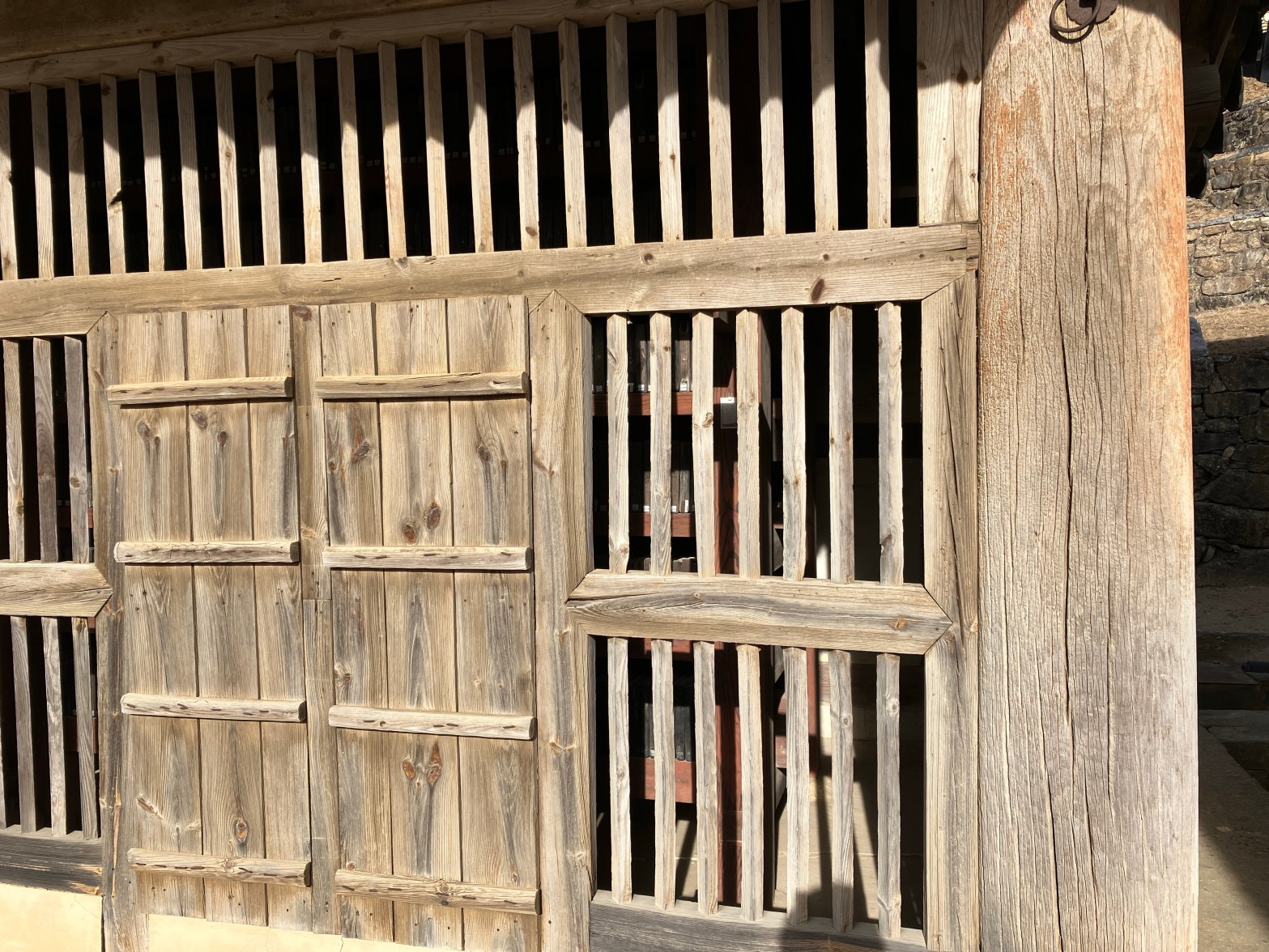
Brief musing on my visit:
Audio: Visiting The Wood Block Tripitaka At Haeinsa

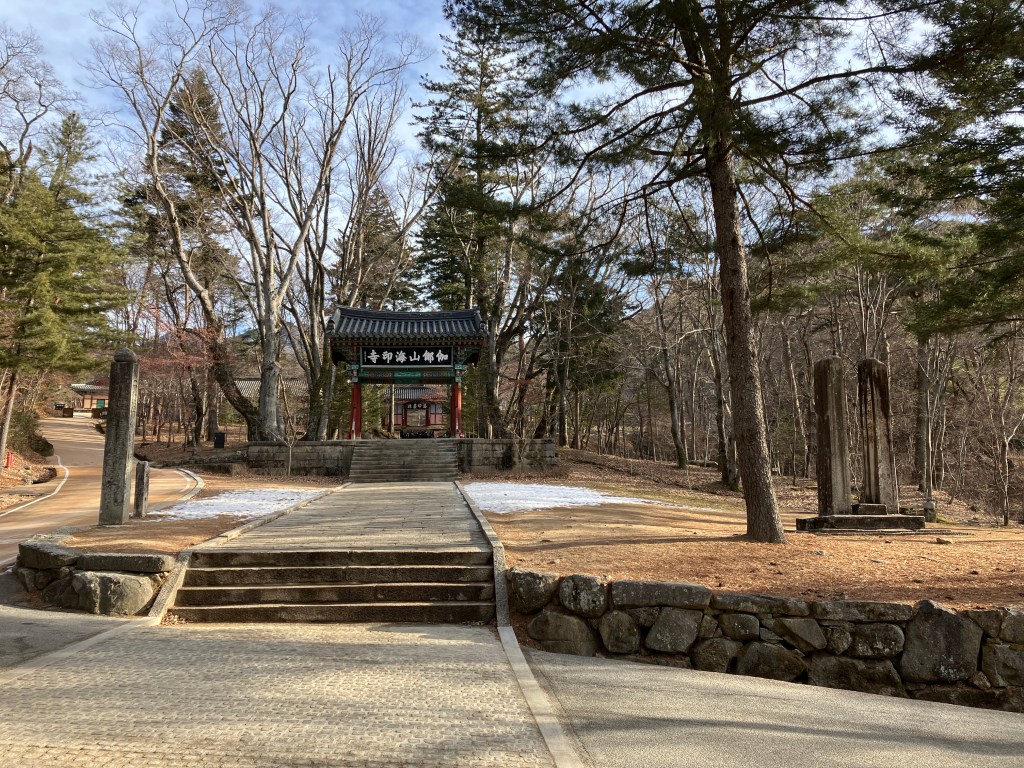


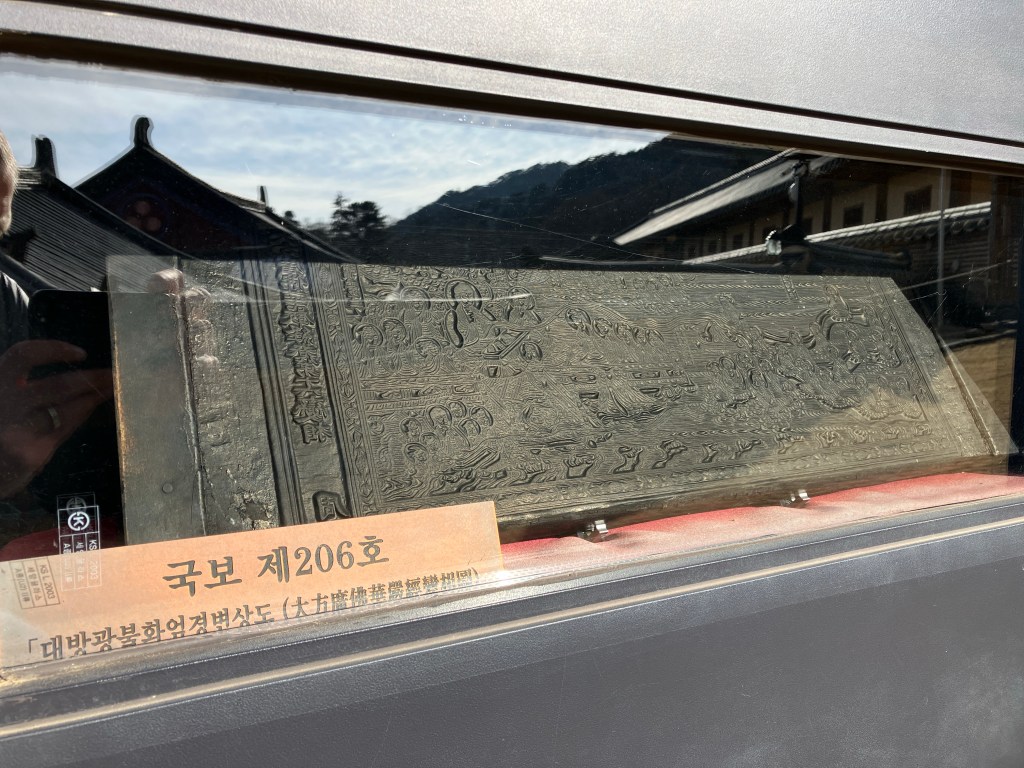
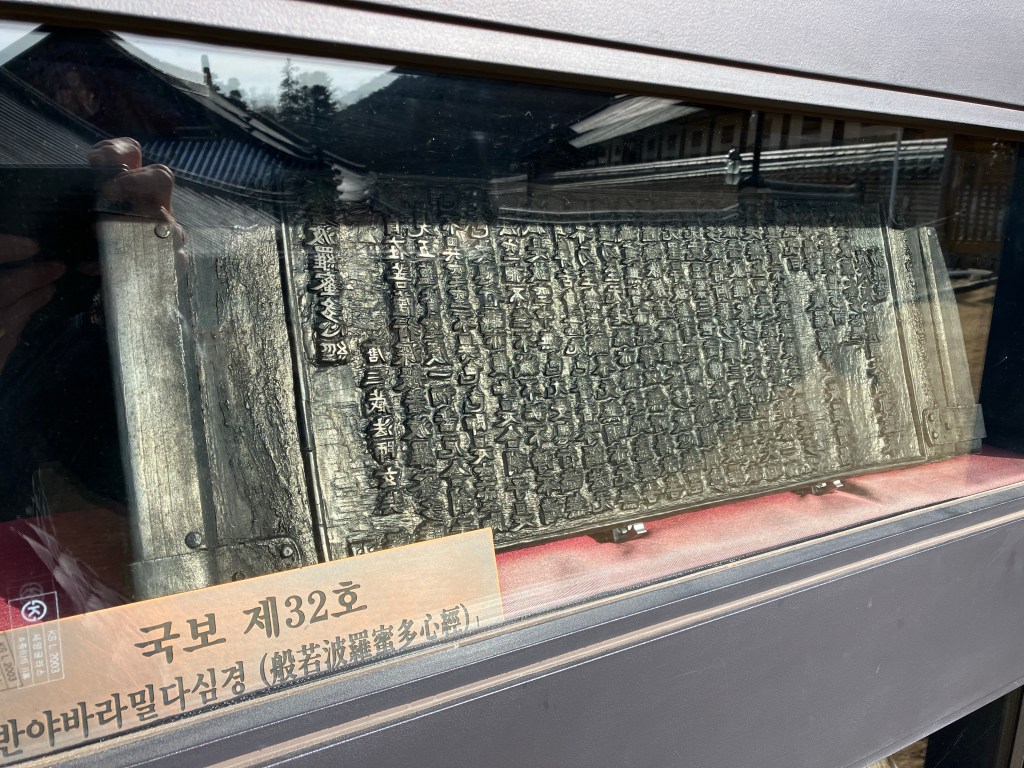
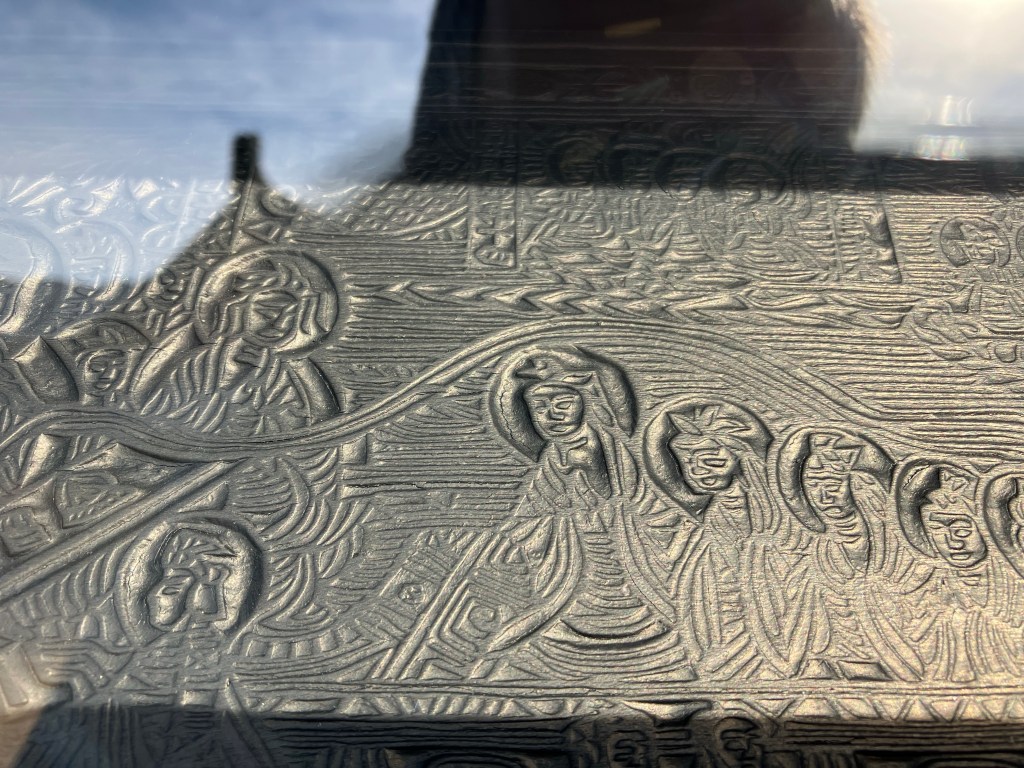

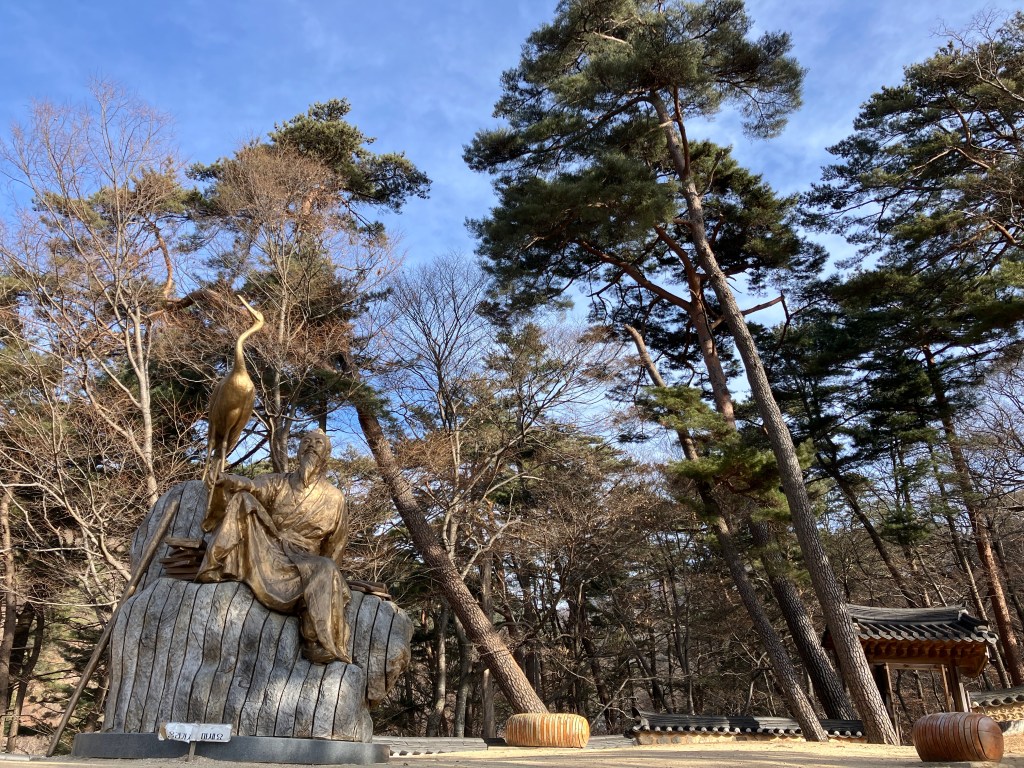

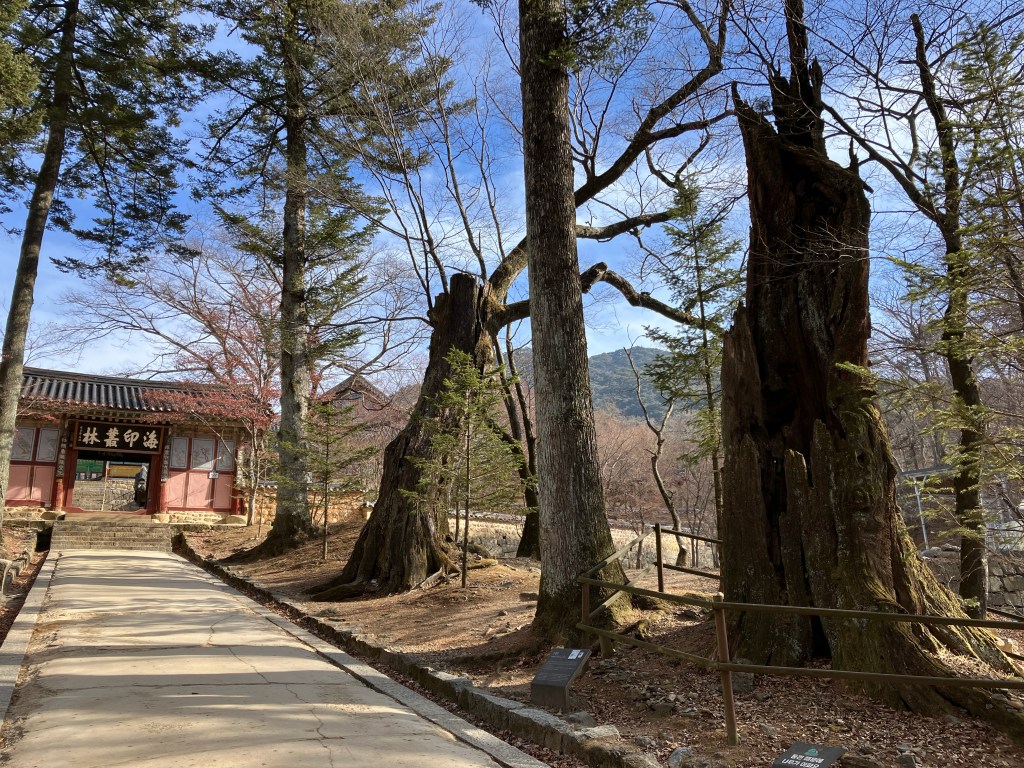
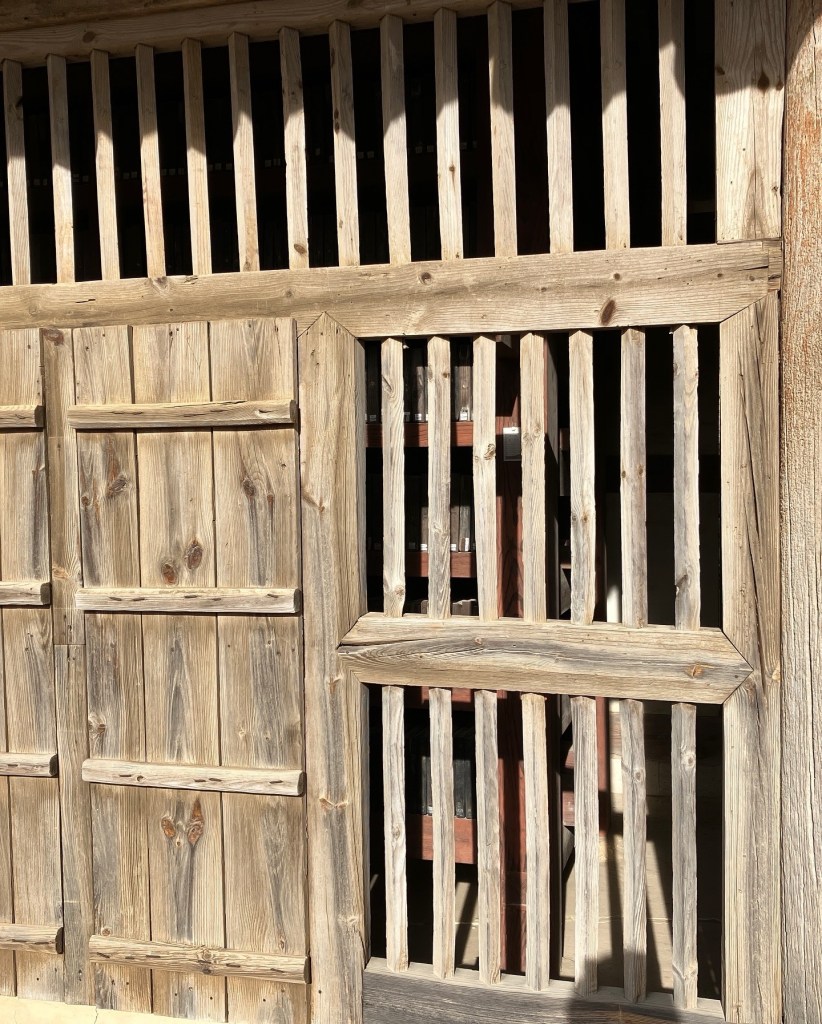
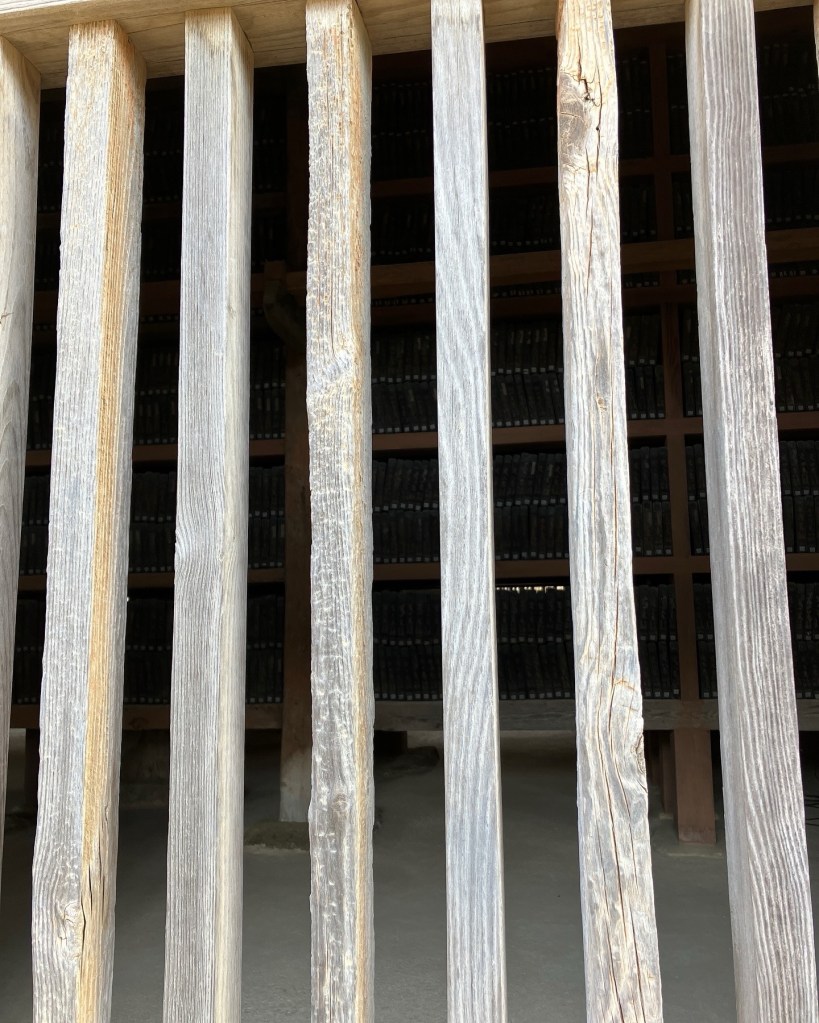
via https://en.wikipedia.org/wiki/Tripitaka_Koreana and https://en.wikipedia.org/wiki/Haeinsa
The Tripiṭaka Koreana[a] is a Korean collection of the Tripiṭaka (Buddhist scriptures), carved onto 81,258 wooden printing blocks in the 13th century. They are currently located at the Buddhist temple Haeinsa, in South Gyeongsang Province, South Korea.[1] It is the oldest intact version of Buddhist canon in Hanja script. It contains 1,496 titles, divided into 6,568 books, spanning 81,258 pages, for a total 52,330,152 Hanja characters.[2] It is often called the Palman Daejanggyeong (“Eighty-thousand Tripitaka”) due to the number of the printing plates that comprise it.[3] It is also known as the Goryeo Daejanggyeong (Goryeo dynasty Tripitaka)
Haeinsa (Korean: 해인사) is a Buddhist temple in Gayasan National Park, South Gyeongsang Province, South Korea. It is the head temple of the Jogye Order of Korean Seon Buddhism. Haeinsa is most notable for being the home of the Tripitaka Koreana, the whole of the Buddhist Scriptures carved onto 81,350 wooden printing blocks, which it has housed since 1398
The historical value of the Tripiṭaka Koreana comes from the fact that it is the most complete and accurate extant collection of Buddhist treatises, laws, and scriptures.[4] It is a popular misconception that the Tripitaka Koreana does not contain a single error;[23] a survey found that the text does indeed have missing characters and errors.[24][25] The compilers of the Korean version incorporated older Northern Song Chinese, Khitan, and Goryeo versions, and added content written by respected Korean monks.[4][26] Contemporary scholars are able to conduct research about the older Chinese and Khitan versions of the Tripiṭaka using the Korean version. The quality of the wood blocks is attributed to the National Preceptor Sugi, the Buddhist monk in charge of the project,[4] who carefully checked the Korean version for errors.[26] Upon completing the Tripiṭaka Koreana, Sugi published 30 volumes of Additional Records which recorded errors, redundancies, and omissions he found during his comparisons of the different versions of the Tripiṭaka.[12] Because of the relative completion of the Korea edition of the Chinese Buddhist Tripitaka, the Japanese Taisho edition of the Tripiṭaka was said also to have been based on the Korean edition.[4] Some of the Tripiṭaka Koreana’s texts were even used in the Chinese edition of Zhonghua dazangjing which was based on the Jin edition which in turn was a sister edition sent to Korea.
Work on the first Tripiṭaka Koreana began in 1011 during the Goryeo–Khitan War and was completed in 1087.[12] Choi’s Goryeo Military Regime, which moved the capital to Ganghwa Island due to Mongol invasions, set up a temporary organization called “Daejang Dogam”.
The act of carving the woodblocks was considered to be a way of bringing about a change in fortune by invoking the Buddha’s help.[13][14] The first Tripiṭaka Koreana was based primarily on the Kaibao Canon completed in the 10th century,[15][14] but other scriptures published until then, such as the Khitan Tripiṭaka, were also consulted in order to identify items in need of revision and adjustment.[12] The first Tripiṭaka Koreana contained around 6,000 volumes.[12]
The original set of woodblocks was destroyed by fire during the Mongol invasions of Korea in 1232, when Goryeo’s capital was moved to Ganghwa Island during nearly three decades of Mongol incursions, although scattered parts of its prints still remain. To once again implore divine assistance with combating the Mongol threat, King Gojong thereafter ordered the revision and re-creation of the Tripiṭaka; the carving began in 1237 and was completed in 12 years,[4] with support from Ch’oe U and his son Ch’oe Hang,[16] and involving monks from both the Seon and Gyo schools. This second version is usually what is meant by the Tripiṭaka Koreana.[17] In 1398, it was moved to Haeinsa, where it has remained housed in four buildings.
 Integrating Presence