
On September 11, 2023 I spoke with author, researcher, and therapist Jake Eagle about his background, work and transitions, various research and studies, transcending our everyday reality, brevity of the A.W.E. technique, better connections due to the prosocial emotion of awe, (the lessening of) external validation, the awe of nature, the positive and negative notions and fear and wonder of awe, sensorial awe, perceptual / conceptional awe, interconnected awe, awe’s energized and play-like state that can release tension, how awe works physiologically via cytokines and inflammation reduction, awe spectrums ranging from numb to grandiose, how even though meditation practice provides more benefits the a.w.e. technique is considered a shortcut to transcendence via elevating consciousness by going from safety consciousness through heart consciousness to spacious consciousness, calming the nervous system and changing perspective, perception language, praise and blame, how to do the technique of A.W.E. [Attention, Wait, Exhale / Expand] for one or two breath cycles, long exhale activating the vagus nerve, polyvagal theory, etc.
Background blurb:
In May 2020, at the height of the pandemic, two trial groups embarked on a study through UC Berkeley to test a new method for “micro-dosing mindfulness.” One group was comprised of frontline healthcare workers; the other consisted of patients at a local medical center, as well as any of their friends and family who wished to participate. Almost immediately, both groups reported significant improvement in symptoms of stress, anxiety, depression, and chronic pain—results that bore out over the course of the study and beyond. Jake Eagle, LPC and Michael Amster, MD, knew that they were on to something.
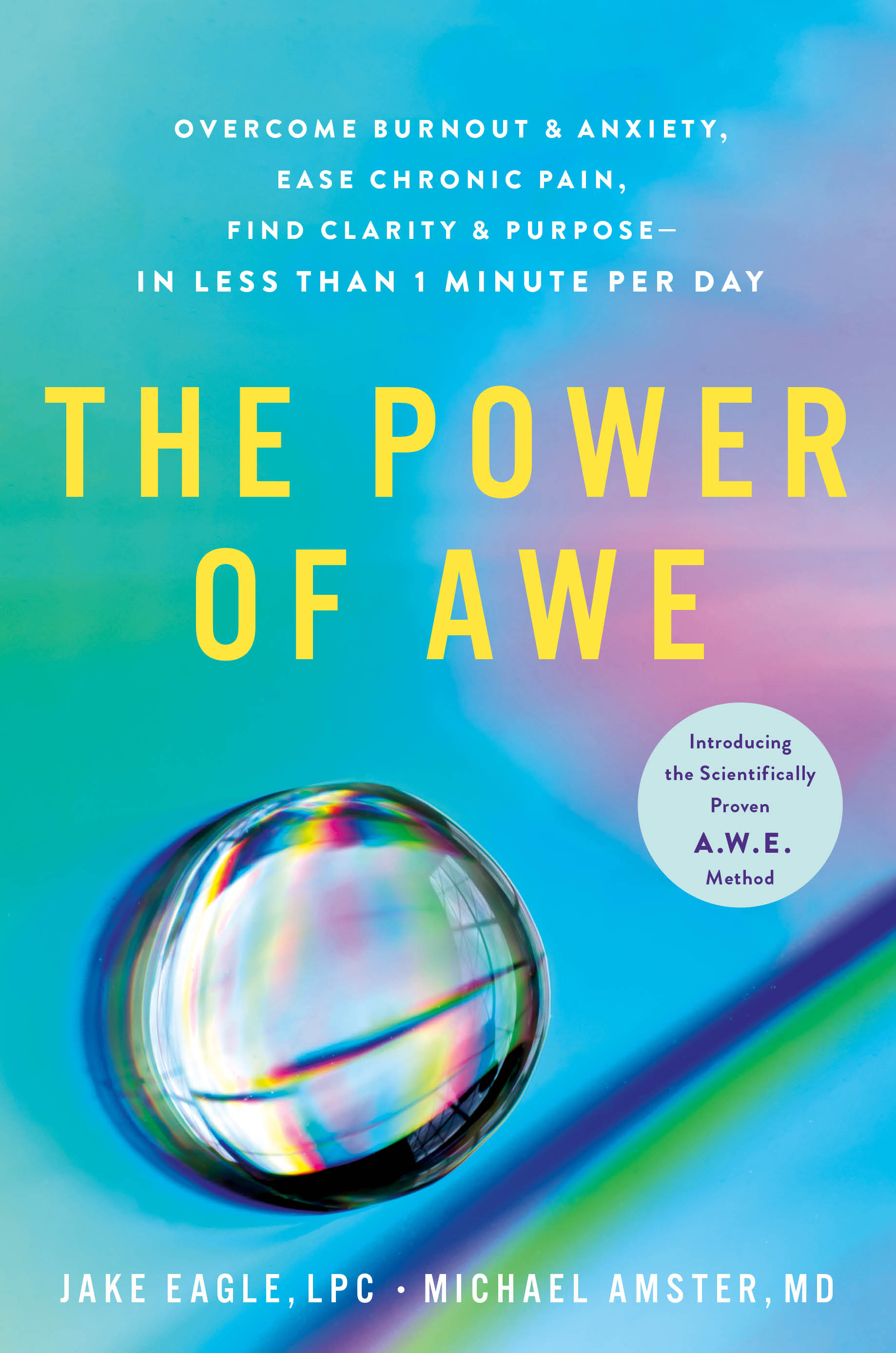
The benefits of mindfulness meditation have been well-documented but are not accessible to everyone. Health care workers during the pandemic, not to mention many busy parents and other professionals, simply can’t find time to sit in silence for 20 minutes a day. For others, intrusive thoughts make meditation painful or even impossible. So Eagle and Amster were ecstatic to have found a clinically proven alternative, which they are introducing to the public now in a new book, The Power of Awe – Overcome Burnout and Anxiety Ease Chronic Pain Find Clarity and Purpose — In Less Than 1 Minute Per Day
A few thoughts after the talk:
- Such as in some of the medical profession, science and academia, can/could relentlessly quantifying (and/or feeling obligated and/or trained to scientifically explain) everything wipe out one’s sense of awe?
- How much is finding awe in the mundane aspects of life helping us and how much could it be holding us back from higher levels of awe?

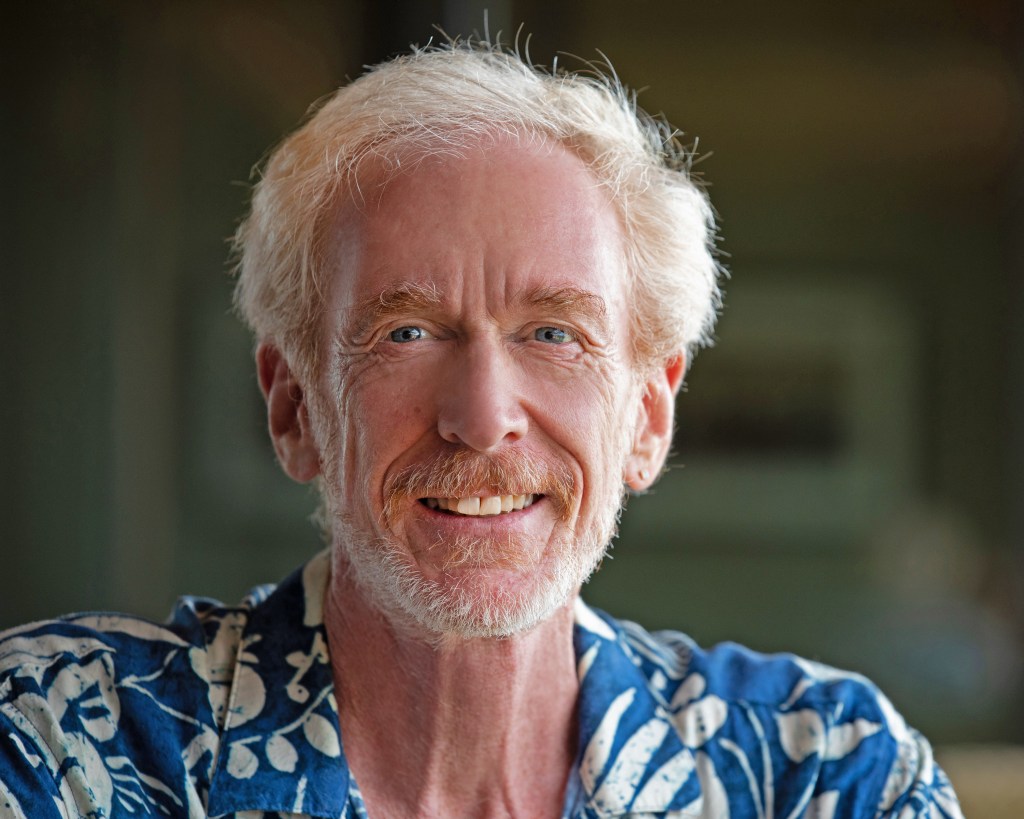

About the Authors:
JAKE EAGLE, LPC, is a psychotherapist, mindfulness instructor, fellow member trainer of the International Association of NeuroLinguistic Programming, and cofounder of Live Conscious. After thirty years in private practice, Jake now works part-time as a meta therapist, working with people who want to go beyond the bounds of traditional therapy. Together, he and his wife, Hannah, lead life-changing small group retreats at awe-inspiring locations around the world.
MICHAEL AMSTER, MD, is a physician and faculty member at the Touro School of Medicine. With twenty years of experience as a pain management specialist, he is currently the founding director of the pain management department at Santa Cruz Community Health. He’s been a student of meditation for over thirty years, as well as a certified yoga teacher and meditation teacher. He splits his time between clinical work, research on awe, teaching mindfulness, and leading awe-inspiring retreats around the world.
The three-step A.W.E. process — short for Attention, Wait, Exhale and Expand—may sound too good to be true, but the results are very real. Bolstered by the success of the initial studies, plans are now underway at UC Davis to look at how A.W.E. can be used as a medical intervention to help COVID-19 long haulers and patients with heart failure. Not bad for a practice that arose from an epiphany while making pancakes! In THE POWER OF AWE, readers will learn:
• Exactly how to enter a state of A.W.E. at home – no trips to the Grand Canyon or virtual reality equipment are required. It’s all about finding inspiration in the everyday.
• The science of A.W.E. on a cellular level—exactly how and why this practice works to reduce inflammation in the body (as measured by levels of the compound interleukin-6), and to optimize the nervous system for a heightened state of consciousness.
• What A.W.E. looks like in practice – through a combination of results from the study, their own lives, and their work with clients, Eagle and Amster show exactly how the A.W.E. method is significantly improving people’s lives, and how readers can reap those benefits for themselves.
To learn more, go to https://thepowerofawe.com
Instagram – @thepowerofawebook
Facebook – The Power of AWE
Twitter – @ThePowerofAWE
TikTok – thepowerofawe
Audio: The Power Of A.W.E. with Jake Eagle

Or listen via Insight Timer (app or website)
The raw unedited YouTube transcription of this podcast:
easiest way [Music]
homeless welcome this is Josh dippolt of integrating presence and today I’ve Got
Jake eagle with me and Jake how’s it going today it’s good I’m happy to meet
you likewise and what I usually do at the beginning of
these if people aren’t familiar with the format is I throw it back to the guest and say who is Jake eagle and what does
he do a small question so
um yeah my name is Jake Eagle I have been a psychotherapist for the past 30
years and was in private practice in Santa Fe New Mexico and then about six
and a half years ago my wife Hannah and I moved to the big island of Hawaii so that’s where I am now
and since we moved here I have been doing less private work private
counseling and I got involved in a large research project with my co-author Dr
Michael amster he and I did a research project at the University of California
Berkeley uh for two reasons we did it during the pandemic and we were very interested in
seeing if we could help people that were on the front line of health care because they were under unbelievable stress they
didn’t have a lot of resources they didn’t have any time so we were trying to figure out how could we help them
before that I had been teaching a course and Michael was a participant in that
course and in the course we were asking I was asking people to meditate as part
of the program about 10 or 15 minutes a day and what shocked me was how few people were willing to do that they just
said I don’t have 15 minutes a day and so I asked people if they would do
what at the time I called a micro meditation which was 30 to 60 Seconds
and it was just an idea that I threw out and what happened is that I tracked
results before I teach a course I always do certain survey instruments and then when it’s over I do the instruments
again and what I saw in the measurements is that the people who were doing these
what we were calling micro meditations they were getting results that were comparable to the people the few people
who were meditating 15 minutes a day and Michael was in the course he was a
mindfulness instructor as well as a physician and he and I both got very curious how could these people get such
great benefits doing these brief meditations we ended up calling it micro dosing and
we recognized that what people were accessing when they were micro dosing
was the emotion of awe they were experiencing awe and so then we got very
curious about what is the emotion of awe which has been studied for about 20 years and there was a researcher Decker
Keltner at UC Berkeley who kind of did the original research in early 2000s
exploring what the emotion of awe can do for people so we reached out to him
he’s very interested in our work and the results we had gotten and after I taught
my first course Michael and I did a couple pilot projects and we continued to see people getting these great
results and so then dacker helped us facilitate putting on a large
study through UC Berkeley and the results were so good that it
ended up in us being invited to write a book for a large publisher which is now being translated into
uh Arabic and German and Russian and Chinese so there’s something about this
that’s really captivating people’s attention and I think it’s three things
um accessing uh is a really delightful experience you feel good when you access
the emotion of awe and it’s an it’s an our definition of Oz that it’s an emotional experience
where we’re in the presence of something that allows us to transcend our normal experience of reality we go beyond our
everyday what I would call autopilot existence the second reason this has been so
popular is it only takes 10 15 20 seconds which is pretty remarkable and then the
third thing is that it’s a it’s called a pro-social emotion so when we access awe
we’re much better able to connect with other people so that’s one of the significant
benefits and it seems to make people very receptive to doing the practice so
anyway it’s a little bit of a long story but that is what I’ve been doing for the last
four years we had a book that came out of just early in 2023
and now we’ve gone on and we’ve done another research project at UC Davis we’re still waiting to get the results
but that’s where we wanted to see if the emotion of awe could help people who are suffering with long covet
because long covet is a really tough tough illness disease
and Western medicine so far has not come up with great strategies so we were
invited to participate in a study and see if our approach to mindfulness could help people who are dealing with long
coven we’re waiting to get the results on that we’ll have them very soon well lovely and that’s exciting as well
I guess the I would for continuity’s sake here I want to um go back and it if it would be
appropriate the the class that you two met at um our course is could we say what that
was and um yeah yeah so um
the basic story is that when I was in Santa Fe doing my work life was great
and I was very happy and productive and felt good excuse me we moved to Hawaii
and I kind of semi-retired but I still was looking to do some work however when we moved to Hawaii uh my my work with
private clients pretty much disappeared um I kind of expected I’d be working with people but that didn’t happen and I
had been the chairman of the board of a small company in New Mexico and that went away and I found myself pretty
unhappy and it was shocking because here we are I’m with my wife we’re living in Hawaii but I’m not happy so I developed
a process called thrilled to be alive it was a 21 day program and that’s the
course I taught where I was inviting people to look at themselves and their lives from a different point of view
excuse the telephone it’ll stop ringing do you want me to wait no it’s up to you
yeah okay um so I was I was teaching this course that you pair up with a partner and you
focus on things in your life that would that would encourage you to be thrilled
that you are alive and that you’re having the experiences you’re having and the course was very well received and it
helped me come out of my own what I would call Mild depression and that’s why I was sharing it with other people
and I was doing it online that’s the course that Michael joined and it
relates to awe in the following way part of the reason that I was struggling
is when we moved to Hawaii I was no longer getting the external validation that I was used to
and I was really having a surprisingly hard time with that how does that relate to awe
when we experience the emotion of awe there’s a tendency to feel connected to
something Beyond ourselves it’s bigger than self and so the sense of self that
we have tends to diminish and as it diminishes our attachment to
our ego our reputation our status all of that diminishes as well and so that was
really helpful for me to stop looking outside of myself for validation and to
connect with something at a much deeper level and and that is how the that was
my experience that’s why I was sharing it with other people and I didn’t at the time I didn’t really understand a lot
about awe but ultimately the two connected well let’s jump into all itself
um it’s interesting I’ve never considered it as an emotion before and
it quite clearly the way you described it at least that portion of all is it’s
a clear clearly an emotion um I’m sure it probably even goes beyond
that it can be experienced on other levels like an intellectual level you know mental level maybe even a psychic
level um physical level perhaps I’m not sure but yeah the kind of the the raw
visceral-ness of awe does can strike as
an emotion I’m thinking you know some of the more external experiences of all I
have is in nature you know that’s that’s obvious I think that’s one that everyone can immediately connect with just these
Grand Vistas or just sitting and contemplating you know how nature comes
about and does what it does as it has its own inbuilt intelligence and how
sometimes we or some humans think that they can ultimately control nature you
know maybe I’m going a little bit too much on a tangent here but what I see a lot of times in nature is that it has
such a huge powerful force and this is just a theory but it seems like because
of that a huge power man wants to control it and so they will do things like maybe cut down forest or
micromanage um parts of the Earth in the way they
want to see it and I think some of that is you know helpful and not helpful
um you know but at the end of the day nature is going to do what it wants you know I don’t think we can ultimately
control nature um you know there’s there’s a lot of people doing a lot of things to to
manipulate parts of nature but the all portion of it is amazing so the the
emotional aspect of of all as it relates to Nature um
has this historically been considered an emotion you you talked about
um Decker Kelty I don’t know if I’m pronouncing the name right but like uh I
guess really briefly or what did he draw on when he was doing his work and why was he interested in
this and what else is there to say about this as an emotion and how most people
already know how to connect with awe and then maybe we can transition into kind
of what your work has added to it or kind of
um entered into it and maybe a novel way yeah well
Decker was looking to Dr Keltner excuse me was looking to do a a thesis when he
was a grad student and he ended up focusing on the subject the the of awe the emotion of awe so he did kind of the
groundbreaking research this is I think back in 2003 and he recognized that ah
traditionally had been perceived as both positive and
negative so there was the fear aspect that could evoke awe and then there was
the wonder that you’re talking about when we go out in nature what we do is we think of them really as different
emotions they both arise from something that is
generally extraordinary but our focus is on the positive what what is the awe
that induces a state that is generative and healthy and constructive and pro-social
and what you described was interesting because you’re talking about nature and that is the primary way people
access on we call that sensorial awe it’s odd that we experience through our
senses when we’re in an environment that wakes us up now what’s unique about our
approach and this is what’s really new is we were inviting people to access awe
in the ordinary you don’t need to go sit on the edge of the Grand Canyon you don’t need to go to the moon and look
back and see the Earth you can do it when you’re making a cup of coffee you can do it when you’re
sitting in a traffic light you can do it when you hug your partner in the morning when you pet your dog right all the time
all is available if we wake up to the things that we value appreciate and find
to be amazing and those are around us all the time now the second thing that you mentioned
was contemplating nature and and that’s a different kind of awe that we call
conceptual awe that’s the awe that we access through our mind and the
amazement that we can have with a thought or an idea or A New Concept so
there’s sensorial law then there’s conceptual awe and then the third way to access ah is called interconnected
and that would be where you take an extra 10 seconds when you’re hugging your partner or again petting your dog
or connecting with another human being in a way that really is Rich and
meaningful so those are three different ways to access awe in all three cases we
we have the same basic physiological response and the physiological response is very
unique in that it’s not a completely relaxed state
a completely parasympathetic state that our nervous system goes into in traditional forms of meditation
it’s like it’s a slightly energized state so think of it more as how you feel when
you’re playing that’s a quality that awe has within our nervous system
so it wakes us up it’s good for our uh reducing anxiety in our study we we
demonstrated that it reduced depression it reduced loneliness it reduced sensations of physical pain
and and one of the reasons that’s true is because it’s it’s altering our physiology
and there was a study done and I think it’s 2015 or 18 it was published in the
Journal of motion and they determined that the emotion of awe actually can
reduce inflammation within our within our body and inflammation as most people know is
a PR is a part of pretty much all disease it involves inflammation and so
the ability to reduce inflammation has significant physiological and emotional
benefits and all of this is happening every time we access all and so what we do and go ahead no please
finish yes I was just going to say what we do with our practice which again takes 15 20 30 seconds is we ask people
to do it three times a day now sometimes people will do it more than that which is great but the idea is that imagine
that you wake up in the morning and your nervous system is like a loose spring and then as the day goes by each time
you have to deal with something challenging the spring gets Tighter and Tighter and Tighter and by the end of
the day we’re wound up pretty tightly when we access all we’re releasing the
tension on the spring we’re releasing the tension and we’re resetting our nervous system
and so if we can do that in 20 seconds um literally takes no time right 20
seconds 15 seconds uh why not try it well maybe I’ll ask you here in a little
bit how we might do that and if you’re willing to to share this practice with us there’s a lot of things though that I
want to pick up are several things I would like to pick up on too and maybe working backwards here so how does this
trigger this effect that it reduces inflammation how does at
practice then have a physiological effect like this I mean I I’m assuming
that there’s lots of chemicals involved here or something like this that releases but it just amazes me so much
how there’s certain words and actions and cognitive processes well then
translate all the way down to pain relief right exactly so yeah yeah we we
I mean I’m sure a lot of people are familiar with inflammation but the the process leading up to how that works I
think maybe might be a little more complex but yeah well I I do just a kind
of a a simplistic version of it because you can go pretty deeply into the physiology but our bodies produce
something called cytokines which are small proteins and they are a signaling system throughout our entire body and
again on a simplistic level there’s two kinds of cytokines there’s threat cytokines which
produce inflammation produce a response when there’s threat or damage to our
physical being and that response is appropriate and necessary at times but
it should be an acute response that’s short-lived the problem is because we’re
feeling in our culture many people are feeling threatened much of the time we get into a chronic state where the
threat cytokines continue to work through our system and we stay in in inflamed state
you can think of that in flame State as both physical as well as emotional
when we access ah we produce a different kind of
cytokine that has been referred to as safety cytokines so when we feel safe
and nurtured and comfortable then our body sends different signals throughout
our body throughout affecting our immune system and now we are shifting our
physiology no different than when you sit and meditate for 15 minutes you alter your physiology you alter your
brain but we’ve found a way to do that in this very very brief practice
and there’s a particular cytokine called interleukin-6 and that is what’s
responsible for inflammation and when people access awe in the study done in
2015 they measured that the levels of interleukin-6 were lower
as a result of people accessing the emotion of all so that’s why we see a
reduction in inflammation and this is not our research this is prior research but what we saw in our research was a
reduction in pain which suggests that yes there’s probably a decrease of inflammation
I see now I just to to wrap this up on the
inflammation from what I understand there’s certain times when certain types of inflammation can actually help the
healing process and then certain types that can uh not do that right exactly
right so if you if you sprain your ankle you’re going to have some swelling that’s inflammation it’s actually a
protective mechanism it is is part of the healing process it’s very constructive the problem is when we get
into that kind of state and we stay there for an extended period of time then we can actually do damage to our
body if we stay in a state with chronic inflammation okay now you mentioned these um
the effects that this have and the different types I imagine this is on a spectrum too right in all spectrums so I
can imagine that on one end we have people that are so numbed out
that I mean you could go and park them in front of the Grand Canyon or you know
bring them to Niagara Falls or you know have the most amazing things happen and
that for whatever reason I mean this is the extreme version right they’re numbed out right they there’s over maybe
they’ve had too much sensory input and nothing really does it for them anymore they’re so desensitized to so many
things so much exposure from the Internet or who knows maybe trauma or something like this although that
doesn’t really apply out although yeah trauma is a whole other thing that I’m not trained in and a lot of my things
don’t apply to trauma because it’s a whole entire different beast but on the other end of the spectrum I think maybe
we have what could be overly grandiose right uh I mean this is probably quite
rare just like the the numbed out but can have people maybe oh I don’t know
delusions of grandeur or you know extreme fantasies or something that’s
that’s interfering with one’s life something like this right but for the most for the most part I guess that’s at
least one line of the of the spectrum um and I don’t know if that’s vertical or horizontal but so what would you
where would what would you say about this as is on a spectrum right
well there’s two aspects to it so sort of take the average person that’s in the
middle of the spectrum they can experience awe that is very mild just
kind of sweet and relaxing or they can experience awe that is very dramatic and intense and we call that orgasmic and
that’s where a person is accessing the emotion and they’re literally feeling chills in their body and energy moving
in their spine um the more one practices the more likely they are to have that kind of an
experience but it’s not always the case the the other question you’re asking
about is people who are more or less prone to experience off
and you’re absolutely right that there are people who are either numbed out or
they are so used to extreme stimulation that it’s hard to wake their nervous
system up right it’s hard to get them off of autopilot essentially what we found is that different people
respond to the different ways of accessing awe so nature seems to be the most reliable way
for people to wake up to awe the the next most common is
interconnected that even when you’re dealing with somebody who’s pretty numbed out if you can connect with them
on a deep personal basis that seems to be the way that we get through the barrier where people essentially are
protecting themselves through the defensive mechanism of shutting down
if we can reach those people on an emotional level we can help them experience awe and then the conceptual
eye is um is most constructive for people who are
sometimes very emotionally guarded but when they access awe through their
intellect that’s acceptable that feels safe right
yeah go ahead yeah and I just love this as an exercise too the conceptual all
and something like as simple as mindfulness of eating right just it’s
just amazing to just consider and contemplate you know well there has to be a sun there and you know what a big
mystery just the sun is you know the right conditions of soil and water you
know um that then this is the farmer that had the plant it and maybe they had to go and find the seed and you know the
the the mystery of germination you know and then and then of course then there’s cultivation and there’s planning and
then once that’s done then there’s the shipping off to maybe it gets stored or processed then there’s maybe people even
speculating on crops you know uh and on and on it goes to to the delivery to the
people that stock the shelves and and then going to the supermarket or or the
market a farmer’s market and then getting that and then cooking and and then making all the flavors and then and
then we live on this stuff it animates it helps animate that whatever this is you know and just all these causes and
conditions that have to come together it’s just in a way it’s it’s mind-blowing and it’s it’s awe-inspiring
something that we just take for granted pretty much every day you know the deeper we the deeper we look at just the
things we take for granted every day uh and and deeply probe into them even if we’re not really capable of that someone
is and someone can you know with the right Charisma or the right way of putting things can really bring the
ordinary to life and it it does seem really in awe encoded in just about
everything we do if we spend the time to just look a little bit deeper a lot of
times our perceptions you know oh that’s a coffee table I don’t need to know anything about it I know everything
there is well yeah if that’s if we consider it that right the our
perceptual faculties here um as our perceptual faculties expand
the more access we have of seeing things in different ways um yeah you know just one other quick
example that’s from a meditation teacher I like like um a singing bowl you know our
meditation Bell well that’s what most people think of it as but I mean somebody could have a joke and wear it
as a hat someone could be chewing tobacco and use it as a spit tune you know our plant of flower in it
um you know use it as a bowl so what we normally think is just something we already know it simple
and playing and then we write it off well not necessarily it doesn’t have to be like that right
yeah what you did is just a beautiful example of how you access conceptual awe
you take that piece of food that’s on your table that you take for granted and you trace it all the way back to the
origins starting with the soil and the rain Etc and when we take the time to do
that it is in awe inspiring exercise
um and it’s it’s as simple as what you just did I mean listening to you for me it wakes me up I wake myself up when I
hear that Journey that the food goes through before I consume it and then even after
yeah so that’s a great example of conceptual law well beautiful so let’s let’s tap into
this well actually before we we do that um you’re also a meditation practitioner
and so how how does this play into your own practice and I mean maybe where does
it fit in on the spectrum of different types of meditation practices you know the common ones or maybe like a summit
to practice this more of a concentration Practice coming back again and again to an object of a possuma practice well
people have a lot of different definitions of a possum but basically clear seeing it can be some people
Define it as very simple some people there’s a huge long methodology and processes and then there’s kind of
practices that are more of awareness-based practices right noticing what’s noticing
um you know being aware of what’s aware and so how does this fit in to all that and then I wanted to ask another
meditated related question after that if you don’t
um well a couple of things so uh as a full disclosure I’m a terrible meditator I’ve always found meditation to be very
very difficult I’m highly auditory and it’s really hard for me to stop the internal dialogue
um so always a relief to me it was a short way to quiet my mind and the more I do
it ironically the better I’ve gotten at my sitting practice I don’t know if I can explain why all I
know is that since doing an awe practice I’m much more relaxed on the cushion
and so it’s been a compliment for me to my sitting practice as far as where it
fits into mindfulness I think it’s in the awareness Realm we’re in we’re enhancing our awareness
and the the practice we use is very simple we’re asking people to notice things that they value appreciate or
find to be amazing all of that’s based on awareness right
beautiful the starting point yeah very cool and so now what might you say
to this detractors who say well isn’t this kind of bypassing right if is this
like a shortcut you know I think it was um said that this is known as maybe
perhaps a shortcut to Transcendence but is it are we what are we missing
anything and then maybe how this plays into you’re probably familiar with this notion in meditation practice of like
sudden Awakening and then gradual Awakening right this um and how does it
play into that or if that’s even significant I think that
um when we use uh and it’s actually I think it’s the first line of our book we
said we were embarrassed that we kind of think we stumbled onto a shortcut to Transcendence
and both Michael and I have been long time meditators he’s very good at meditating I haven’t been but we’ve been
doing it for years and neither of us really believe in shortcuts but we
actually think We Came Upon one and what I really mean by that is that when I experience the emotion of awe it’s a
shortcut that elevates my level of consciousness I go from what I refer to as safety
consciousness through heart Consciousness into what we call spacious Consciousness it’s a state
of no words and no sense of time it’s there’s an emptiness and an
expansiveness to it and I can go there in 10 15 seconds
with very minimal effort if any so I think that’s what we mean when we
say a shortcut to Transcendence it is not the same I think as what long-time
meditators talk about in terms of their experience there are additional benefits from a rigorous meditation practice that
awe does not provide but it is a very quick and easy way to
have those moments where we reset our nervous system and perspective change
our perspective very cool so
let’s lead into this with how to do this with how it was discovered in the first
place I mean like was there an aha moment a breakthrough was there a lot of trialing on different techniques and one
of them stuck or how did it actually come about to develop the technique it came about I think there were
probably three steps first I was teaching a course and people were having these great results and I just started
to write down what people were saying about their experience and I wasn’t really familiar with awe although I had
read Michael pollin’s book which is I think called change how to change your brain change your mind the book is about
using psilocybin to advance people’s well-being
and in that book he refers to awe repeatedly so I was aware of it but had
never really thought much about it never like you I didn’t really even think of it as an emotion until I got into this
work so we started to realize people were describing awe then Michael flew out
here to Hawaii and spent a week with me and my wife who’s a very strong meditator and we would meditate we would
go on walks we would do variety of things to see if we could stimulate this experience of awe and we’re in Hawaii so
it wasn’t hard to do but then one morning Michael was making pancakes and
he had a moment of awe while making the pancakes and that’s when we had this Epiphany
which is we don’t need to go out and look at some amazing Vista we don’t need to go
climb a 60-foot tree to have this experience we can have it in the
ordinary sorry about the phone ringing in the background we can experience awe in the
ordinary and that was really the turning point where we realized
if we can help people access ah no matter what’s going on around them
we’ve really taken this work and made it accessible and
that was our goal so what did he see in those pancakes they weren’t there weren’t mushrooms in
there were there no I’m scared there weren’t mushrooms in there no it was it was he talks about watching this liquid
turn into a solid and that every time he’d ever made pancakes before that he was multitasking and he
never paid any attention to what happened but he watched this liquid turn into a solid and then he realized we
were going to consume that solid and enjoy eating it and it kind of like you did before it just blew his mind
and he came to the table and he served Hannah and me the pancakes and he said this is so astounding if you stop and
just contemplate what happened and what we’re doing and we all we all got it we’re like yeah
this is amazing it really is and one of the things that I’ve heard that I just kind of blew off
but the more I I sit with it and realize that it said
that the most profound thing we’ll ever do is talk to another human being and I
can’t even it doesn’t at on the surface of it it doesn’t seem like anything
because you know access to people is just so abundant these days you know but
I think if if drawing on I think Terence McKenna first I heard him say like we’re
making we’re like these upright Apes with with certain amounts of hair and not and we’re making these
little mouth noises and we understand each other by making these little mouth
noises language in itself is just kind of mind-blowing you know how not only
how did it originate um but you know our word choices of all
the huge vocabulary some of us have and it just comes almost spontaneously the
word choices I don’t have to think okay now what word am I going to choose next you know of course
you know a lot of it’s habit or however all this works with Linguistics and stuff but it is really quite amazing you
know trying to learn a foreign language now and that is an interesting process I’ll just leave it at that so how do you
how how would you guide um you’re welcome to address that but then and if you’d like to just explain
the process to us of how to do this um I I’ll just say one thing about
language because that’s my background is in linguistics and my wife and I were
fortunate 20 some odd years ago to meet a couple their names were John and Joyce Weir and they developed their own
language model called percept or perception language and percept is a way of using language
to shift from thinking and talking about the world as if it’s doing something to
us to seeing ourselves as the actor to seeing ourselves as creating everything
including our emotions so instead of saying for example you make me angry
I would say I anger myself now it sounds very subtle it’s like yeah
whatever but it’s actually a huge distinction if I start realizing that whatever emotional state I’m in I’m
creating and it’s also a language where you stay in the present tense you only talk about
what’s going on now so if you did something to me three weeks ago or I I perceive it that way
instead of going back and talking or arguing about what happened I would stay
in the present and talk to you about how I’m making myself feel right now in this
moment because that’s the only thing we can change we can’t change what you did or didn’t do three weeks ago
but if I tell you how I’m constructing meaning in the moment you can address
that so it’s a very powerful way of subtly
altering language so that we Empower ourselves so I I appreciate what you
said about language because it is if you stop and think about it it’s just extraordinary right it really isn’t let
me pick up on that really briefly because I saw in your bio where you um
are into neuro-linguistic programming I don’t know how deep we want to go into this I’m not too from Hell let’s just
address this the the pr the precept or the the perception percept
um language and this is a really important thing I feel especially for you know individuals like me who tend to
blame other people um for how they’re feeling a lot of times right or how I’m feeling
so this is it’s it’s um whether it’s true or not if if I’m in
a habit of blaming someone for you make me feel like this just switching that
180 whether it’s true or not as an as an exercise and just as an experiment and
see how it is I think that’s brilliant um now I wonder if the next step is just dropping
subjects all together a me and a you and just saying you know it it doesn’t
Accord with the English language so much but there’s feelings of anger right now you
know right um it doesn’t have to be uh now and then there’s the next thing of
well who’s responsible for this I’m a big advocate of taking self-responsibility you know
um do I need to blame anyone including myself for for what’s happening can it
just be this is an experience happening does I can take responsibility for it
um but it doesn’t I don’t need to pin a blame on anybody I don’t I feel it’s a
real interesting thing and I love talking about I don’t do this as much but talking about
um emotions because they can’t be right or wrong and they can’t be argued with either right
and it helps it helps us all uh communicate as well right because people can really uh connect with that yeah
yeah what you’re saying is beautiful and and uh I agree with you completely one of the
constructs within percept language is that there is no blame or no praise no
blame and no praise you take that out of the equation it changes the tone of a conversation dramatically it also makes
it easier for the person like you to take responsibility for however you make
yourself feel and sometimes people will say well make myself feel sounds kind of heavy but if
you take the blame away it’s simply an experience and it’s a temporary
experience that’s another aspect of percept that all experiences and I know
you’re familiar with this all experiences are temporary all emotions are temporary and so we
release our attachment to them we realize that I’m doing this to myself you’re not doing this to me
you could say something and I might get upset but if you said exactly the same thing to my wife she wouldn’t get upset
so how can I hold you responsible for making me upset I can’t
I’m doing this to myself right it’s really brilliant and then this is I
tell people this is kind of a crash course in Psychology but the boot of these worldly wins these eight worldly
wins or vicissitudes and one of them is praiser blame you know the other ones are gain and loss
Pleasure and Pain and fame and ill repute and you know these forces they
drive the the lives of most people I would say the most the the terminology
is uninstructed worldlings you know which is I think very accurate it’s not demeaning or anything it’s just you know
yeah people are at the at the mercy of these forces constantly unless there’s some kind of training and or um at least
education I feel so yeah these are very important points that yep so now how might that uh relate
to to to this practice of all though too does it does it can it tie into that
yeah so um I’ll try and connect the dots so we have a model where we represent
there’s three levels of consciousness one is safety which is where we are most of the time that is the one where
language is most important that’s the one where we’re trying to reach agreements and set boundaries and make
sense of the world and so that’s where how we use language is very significant
we then go to the next level heart Consciousness which is basically a gratitude practice people are generally
familiar with that a gratitude practice typically involves a fair amount of thinking we’re saying
and communicating things to help ourselves feel grateful if we go beyond that we go to spacious Consciousness and
we’ve accessed the state where the words and the thinking drop away that’s where
awe resides because when we really access a state of awe
I don’t have words I actually can’t convey to you exactly
what I experienced and trying to is often a mistake in my opinion it’s reductionistic don’t don’t
try to explain it just allow yourself to have the experience
so yeah no I totally agree and it a lot of times it does it can do it in a disservice and
pull me out of it right now later on the some of the beautiful poets and artists
they can point at it but we realize that the finger pointing to the Moon you know the classic zinsang is not the same
thing as the moon but yeah a lot of times if we’re going to do it in language It could only be like in poetry
and in works like this where it doesn’t do it directly or try to explain it linearly you know and how we would you
know mansplain or whatever right right yeah yeah and then and then I guess the last
thing and probably we’ll wrap up with it is the how to and the how-to is very simple it’s a three-step process we took
the word on we turned it into an acronym a w e the a I kind of talked about it’s
where we place our attention on something we value appreciate or find amazing and and you can look around and
do that or you can think of a concept or you can think of a person you love deeply and give that your full undivided
attention the W stands for waiting and waiting in my opinion is
deeply undervalued in our culture and so if you think about you’re going
to enter into a building and somebody Waits and holds the door for you you just think about how nice that is
what that feels like it’s a certain regard that we have for another person well in the on method we’re waiting for
ourselves we’re just giving ourselves space
and during that space that’s when the mind the default mode Network in the mind quiets down because we’re giving
our full attention to something we appreciate we’re waiting and experiencing this
quiet State and then when we exhale we instruct people to have your exhalation
be a little bit longer than normal because at the very end of that we activate something called the vagus
nerve and when we activate the vagus nerve whatever Sensations we have in our body
will be Amplified and so because I was focused on something I value and appreciate
I’ve waited and now I exhale I’m going to have this it it could be even like an
endorphin release where I’m marinating in these positive
Sensations and feelings that’s the practice it typically is one or maybe
two breath Cycles it can be extended in in a book that we
wrote about this we have 30 exercises that are extended ah practices
where you can carry this through an entire experience for example taking a shower and the whole experience taking a
shower can be an experience of awe but generally speaking we we suggest to
people this is one or two breath Cycles 10 15 seconds maybe 20.
I love this and nobody has an excuse now of not having enough time to meditate so
I love these brief practices you know even these things like the the three breath highway right just be fully
present for three breaths but the one thing that fascinates me about this is I didn’t know this and I was just doing
this along um with it and contemplating on it this this slow extended breath and you’re
saying it it amplifies whatever experience we’re having could you could you say or tell me a little bit more
about how the the slower extended exhale correlates into the effect it has
so in a normal inhale exhale cycle there’s very minimal activation of
something called the vagus nerve but if we push the exhale just a little bit it shouldn’t be uncomfortable then we
really turn the vagus nerve on and when we turn the vagus nerve on we’re pushing ourselves into a very
specific place within our nervous system our autonomic nervous system and it’s
that playful place that I mentioned earlier and when we’re there we experience an amplification of the
sensations in our body whatever they are and that’s why if you do it when you’re
focused on something that you appreciate or value it’s going to be a really positive response that you have and it’s
it’s relatively short-lived but it is measurable and noticeable
and it is also something that is part of many breath practices it’s why many of
the breathing practices encourage the long exhalation are there any theories why this will
would um have extra activation on the vagal nerve biggest nerve yeah there’s a whole
uh a whole discipline around this developed by Dr Stephen porges he created
something called polyvagal Theory and uh Michael and I are in a group that meets
every two weeks and Dr porges is part of that group so he’s been a real Mentor
for us in terms of helping us understand what’s the physiological impact of
accessing the state of awe and if people are interested in learning about it
polyvagal theory is there’s lots of material out there on the internet about it and
um it’s been around probably 20 years and he’s kind of changing the construct of
how people think about the autonomic nervous system we used to think about it strictly as
the parasympathetic parasympathetic rest and digest or the sympathetic fight
flight freeze and he’s presented a more nuanced understanding of how it works
and that’s the polyvagal theory and uh had a co-host we’re doing uh ask
us anything Lydia Grace She’s a Body worker and she was really big into this
poly Bagel Theory mentioned it quite a few times so I probably need to get up on this now
well um Jake is there anything you’d like to to leave us with tell people how they
can get in touch with you if you’d like to do that where people can find out more about your work the name of the
book again where they can get it and any events you might have it coming up any
calls to action and then any message you’d like to leave people with
yeah great thank you I will do all of that um so the book that Michael and I wrote is called the power of awe it’s uh
available pretty much everywhere and we will be teaching a course starting in
January uh it’ll be an online program it’ll be four sessions that take place once a week
our website is the power of odd.com and if you have questions for either of us
and you send an email we will get back to you and if you’re interested in perceptual
language which Josh and I talked about I wrote a book 10 years ago called get
weird and in get weird I explain how perceptual language works and how people
can start to practice that and then I think the final thought I’d
like to leave people with is that awe can be used in a very proactive way
so one example is if I’m going to have to have a conversation with someone and
I feel like it’s potentially going to be tense or there’ll be conflict
I’ll go and access a state of awe before I have the conversation
and it’s I shift my physiology I shift my emotional state and I go into that
conversation in a more pro-social manner which means my voice is different my
breathing pattern is different I’m more available to connect and it makes a powerful difference to
access that state before going into something that we think may be challenging
so this is a it’s a tool that I use therapeutically when people come in and
they have a complaint about something before I’ll ask them to talk about it I’ll say I want to talk about that I
want to know more about it but before we do that I’d like to take a moment of awe
we’ll access a moment of awe come back to the topic and their whole demeanor
has shifted and we now have a different conversation than what I believe we would have had
had we not accessed a moment about so I really encourage people if you’re interested in this to think of it as a
tool that you can use very proactively and awe is around us all the time it’s
just that we have become tunnel focused and as an invitation to widen your
perspective and see the beauty and see the Miracles that are around us all the time no matter what’s going on even when
things are difficult and troubling there’s still Beauty and and there’s still simply the miracle of being alive
so I just really encourage people to give this practice a try it’s very easy
it takes no time yeah well beautiful Jake thanks so much
for joining and may you all be blessed with the most awe-inspiring experiences bye now thanks
for listening check out integratingpresence.com for show notes and similar material
 Integrating Presence